Homily for Palm Sunday of the Lord’s Passion (Year A) (go to readings)
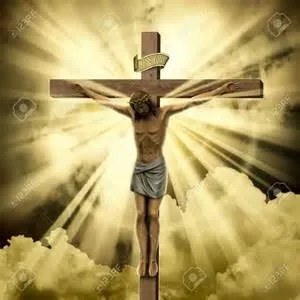
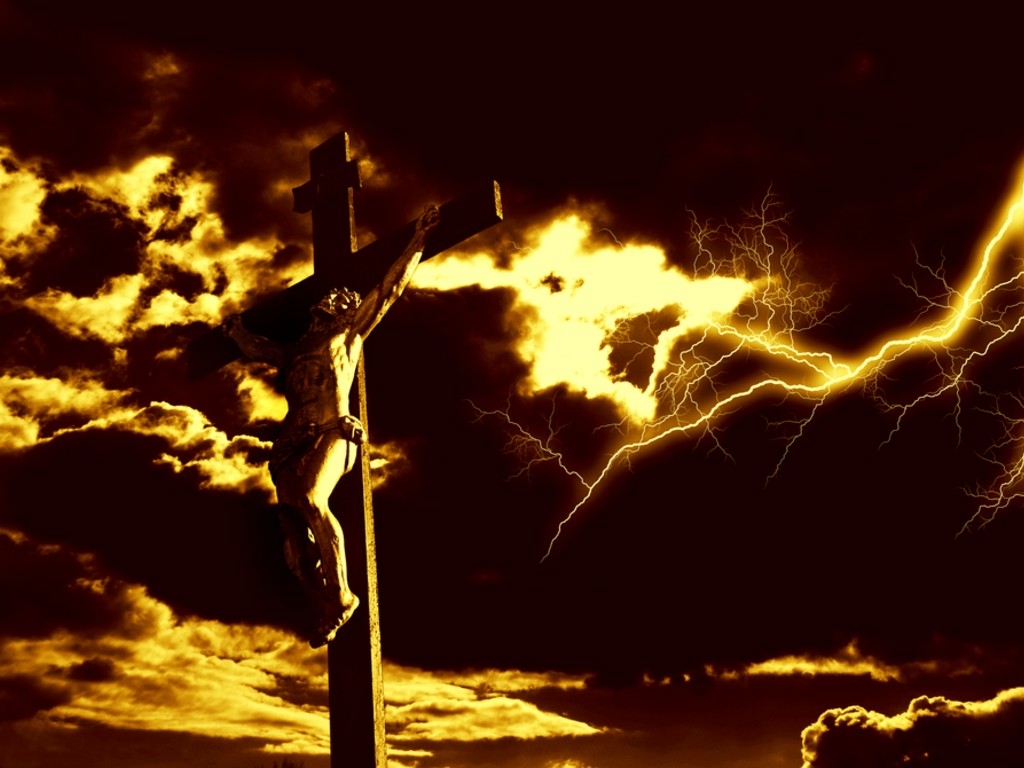
There are people who struggle with what it might mean that among the last words of Christ on the Cross were his crying out, “My God, My God, why have you abandoned me?” Some interpret this to mean that the Father had truly turned his face away from his Son, and that this was the depth of despair of Jesus in his Passion: that he was abandoned—even by God.
But this interpretation is a mistake. It was the Father’s will that the Son endure the crucifixion. It was in this act that the Son most pleased the Father: That he had taken on himself all of the consequence of sin, and was putting that sin to its horrible, hideous death out of divine love for humanity, that by this, we have the gates of paradise and the life of grace reopened to us.
What Jesus is really saying in shouting out “My God, My God, why have you abandoned me?” is to tell all those gathered that the Psalm that starts with these words is the interpretive key to truly understand what they are witnessing. The Psalms weren’t numbered, so he couldn’t shout out “Psalm 22!” The Psalms were known by their first words, and all Israel knew them by heart. And not only does Psalm 22 begin with this lament of agony and terror and feeling of abandonment, but also the events of the crucifixion are foreshadowed in the Psalm. And most importantly, the psalm ends with the poor being fed, the one crying out being answered, God being praised, and all nations coming to faith in the One True God.
So I want to give you Psalm 22 in one whole piece, rather than just assorted chunks of it, so you can know the profound insight that the Jews received at hearing Jesus call out this psalm.
Psalm 22 is called a “Todah” psalm, which accompanies a “Todah” sacrifice in the Temple, offered out of thanksgiving for some act that the LORD had done for the worshiper. You began in a situation of distress, cried out to God, you made a vow to offer the Todah sacrifice if God saves you, God saved you, you paid your vow by offering the Todah sacrifice, you had a festive party as you and your family and friends (and the poor) ate the flesh/meat and the bread of the sacrifice, and you shared your story to all those assembled concerning how God saved you.
The Hebrew “Todah” was translated into Greek as “Eucharistia” which in English is “thanksgiving”—offered for what God had done for us when we were blind and were given sight, when we were isolated by shame or leprosy, and restored to dignity and communal life, when we were lost in the despair of sin and we were rescued, forgiven, and restored.
Jesus in the Eucharist is the Church’s “Todah sacrifice,” the infinitely perfect sacrificial Lamb, given to us by God so that we can offer it (him) back to God as our perfect sacrificial thanksgiving offering to him. And the Mass is the ritual meal that shares the blessing of our sacrificial offering. We all partake in eating the sacrificed lamb with our family and friends. And then we are sent out to tell the good news to the world, especially those in distress, of how we once were lost, and we turned to God, who saved us. Ultimately, the Mass is the foretaste of the Supper of the Lamb in the eternal banquet in heaven, our ultimate eternal thanksgiving for God granting us salvation and eternal life. And so, here is Psalm 22.
My God, my God, why have you abandoned me? Why so far from my call for help, from my cries of anguish, My God? I call by day, but you do not answer; by night, but I have no relief.
Yet you are enthroned as the Holy One; you are the glory of Israel. In you our fathers trusted; they trusted and you rescued them. To you they cried out and they escaped; in you they trusted and were not disappointed.
But I am a worm, not a man, scorned by men, despised by the people. All who see me mock me; they curl their lips and jeer; they shake their heads at me: “He relied on the LORD—let Him deliver him; if He loves him, let Him rescue him.”
For you drew me forth from the womb, made me safe at my mother’s breasts. Upon you I was thrust from the womb; since my mother bore me you are my God.
Do not stay far from me, for trouble is near, and there is no one to help. Many bulls surround me; fierce bulls of Bashan encircle me. They open their mouths against me, lions that rend and roar.
Like water my life drains away; all my bones are disjointed. My heart has become like wax, it melts away within me. As dry as [baked clay] is my throat; my tongue cleaves to my palate; you lay me in the dust of death. Dogs surround me; a pack of evildoers closes in on me.
They have pierced my hands and my feet; I can count all my bones. They stare at me and gloat; they divide my garments among them; for my clothing they cast lots. But you, LORD, do not stay far off; my strength, come quickly to help me. Deliver my soul from the sword, my life from the grip of the dog. Save me from the lion’s mouth, my poor life from the horns of wild bulls.
Then I will proclaim your name to my brethren; in the assembly I will praise you: “You who fear the LORD, give praise! All descendants of Jacob, give honor; show reverence, all descendants of Israel! For he has not spurned or disdained the misery of this poor wretch, Did not turn away from me, but heard me when I cried out.
I will offer praise in the great assembly; my vows I will fulfill before those who fear him. The poor will eat their fill; those who seek the LORD will offer praise. May your hearts enjoy life forever!”
All the ends of the earth will remember and turn to the LORD; All the families of nations will bow low before him. For kingship belongs to the LORD, the ruler over the nations. All who sleep in the earth will bow low before God; All who have gone down into the dust will kneel in homage. And I will live for the LORD; my descendants will serve you. The generation to come will be told of the Lord, that they may proclaim to a people yet unborn the deliverance you have brought.