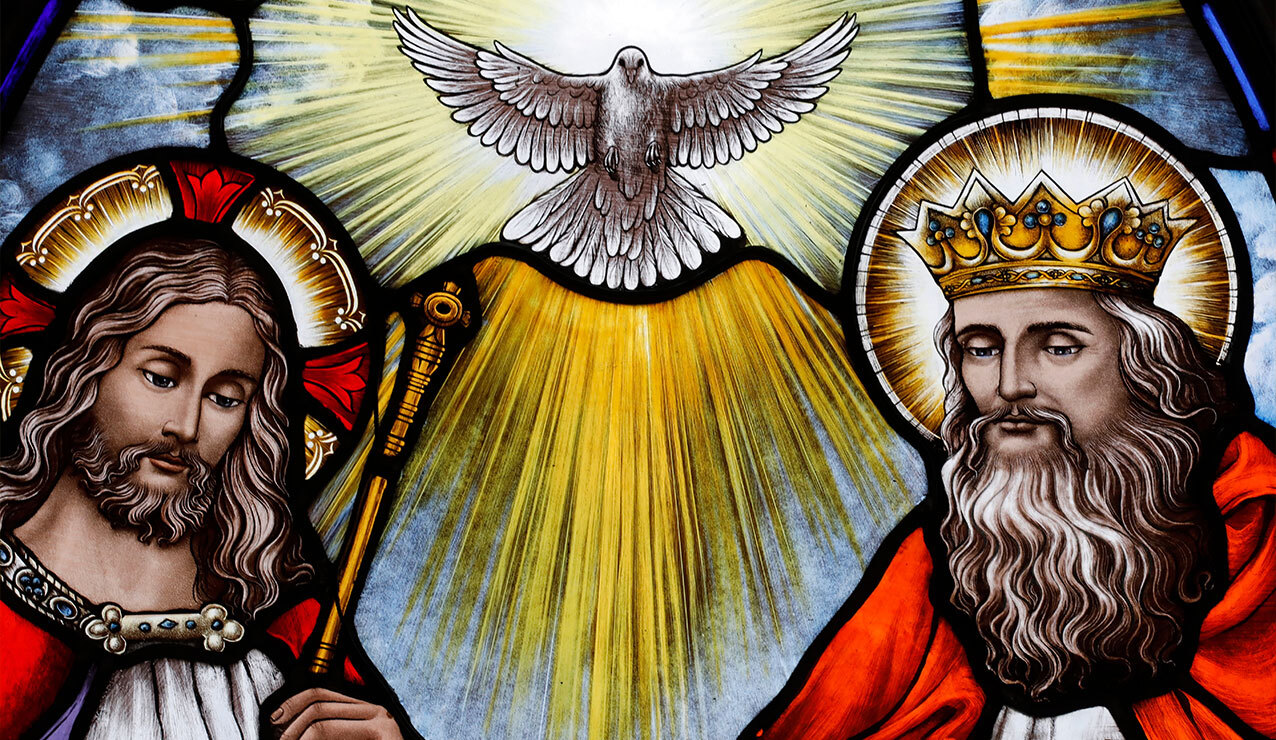
Solemnity of the Most Holy Trinity

Go to the readings first.


The mystery of the Most Holy Trinity is the central mystery of Christian faith and life. It is the mystery of God in himself. It is therefore the source of all the other mysteries of faith, the light that enlightens them. It is the most fundamental and essential teaching in the ‘hierarchy of the truths of faith.’” If we were asked, “What is the central mystery of the Christian faith?” we might say, the Eucharist, called “the source and summit of the Christian life,” or the Resurrection of Jesus, the vindication of all that Christ said and did and claimed about himself during his earthly ministry. But this quote from the Catechism, paragraph 234, teaches us that the mystery we celebrate and contemplate today, the Most Holy Trinity, is the central mystery of the Christian faith and life. All the other teachings of what we believe in, in some way have their origin in, are understood in light of, and lead back to, this central reality: the highest truth, the highest good, the highest beauty, which is the mystery of God in himself.

Saint Augustine said, “If you can understand it, it’s not God.” Some people might say, “Why say anything about God, because he is infinitely incomprehensible?” Because while that is true, God does reveal himself to us in some ways, because he wants us to know him, so that we can love him, which is what we are made for. So, there are things we can say. But yes, there is infinitely more. If we claim we understand it, it’s not God.
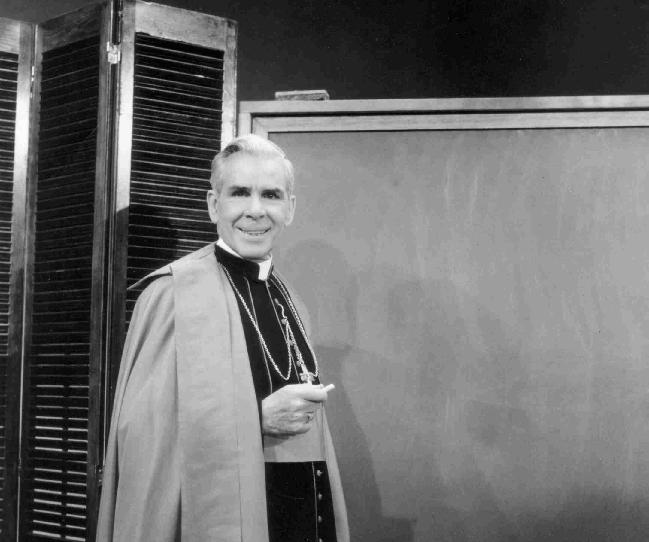
Archbishop Fulton Sheen used to teach the Holy Trinity in terms of nature and identity. Nature is what something is. I am a human being, we have human nature, God has divine nature, that’s what He is. Identity is who someone is. I am Fr. Kelley. That’s who. Who is God? The Father, Son, and Holy Spirit. And so, Fulton Sheen would say that “the Holy Trinity is three who’s in one what.” They are three divine persons, but they are all of the same divine substance, they are con+substantial with one another as one God, but they eternally exist without beginning or end in a communion of divine love. That’s the divine nature of the one God who is the Holy Trinity: Tri+Unity=Trinity.

God revealed himself slowly to humanity through History, although he revealed hints of his triune nature, too, which would be more fully revealed as time went on. He revealed to Moses at the burning bush that he is, “I AM,” as it is translated from the ancient Hebrew (Exodus 3:14). Or to unpack how they would have understood that divine name revealed by God, in the rich complexity of Hebrew, it was more like, “I AM to you as I always have been, I am presently, and always will have been, forever.” Implicit in the divine name is not only a sense of relationship, but a sense of favor, characterized by mercy. He revealed himself as one God: initially one god among others, then their particular god, then the greatest of all gods, and then the one and only true God, as he led his chosen people through their cycles of rebellion, repentance, faith, and flourishing.


In our first reading, from the Book of Exodus, we see Moses worshiping God, and God, using that revealed name that neither Israel nor the Church uses in reverence of the holy name, praises his own divine qualities. God himself says, “The LORD, the LORD, a merciful and gracious God, slow to anger and rich in kindness and fidelity.” This may strike us as somewhat prideful, but that doesn’t apply to the infinite greatness of God, beyond all praising. Moses then asks God to show them mercy and patience and guide them as his people.
Our Responsorial, which is usually a Psalm, today comes from a canticle in the Book of the Prophet Daniel, and it is from the scene in Chapter 3 of Daniel of the three young men who were thrown into the white-hot furnace for worshiping and obeying the God of Israel instead of the King of Babylon. While they are in there, they are seen with what is described as a fourth, like a Son of Man. They are all dancing in the furnace, singing this canticle of divine praises. And when the three are released from the furnace they are not dead, not burned at all, and do not even have a smell of smoke on them. And so, this may be chosen as a reading for today because this mysterious fourth is described as a Son of God, a common title for angels, but perhaps an Old Testament preview of the Divine Son.

In our Gospel reading, the revelation of the Divine Messiah, the Son of God, is made manifest, come in the flesh of our humanity, Jesus, not to condemn the world for its sins, but to save the world from its sins, and to give the possibility of eternal life. In the mystery of the Son of God Incarnate, we have a new Holy Name: “Jesus,” the name given to him by which we can invoke the power of God through the Son of God. Also, at his conception he is called, “Emmanuel,” which means, “God with us,” which means something very similar to what we just said is the fuller understanding of the holy name, “I AM,” given to Moses. So God didn’t change his name, it’s still, “I am with you, as it was in the beginning, is now, and ever shall be.”

Interesting to note here in our reading is that God sent his Son into the world. You and I and all humans and animals came into existence at our conception. The sperm and egg of our parents are met with the spark of life with the soul given by God, and we come into existence with our own identity, both physically and spiritually, forever. However, God sent his Son into the world for his conception in the Blessed Mother. He existed as God before his conception, and he acquired human nature, now united to his divine nature, miraculously in his mother’s womb, but that’s another mystery for another time.

And our final reading for today, the closing of Saint Paul’s second letter to the Corinthians. This is of course after the event we celebrated last weekend, the gift of the Holy Spirit into the Church, the revelation of the Third Person of the Holy Trinity in the rushing wind, the tongues of fire, and the spiritual gifts he poured into the Church. The Spirit’s work was certainly operative in Paul, inspiring him in his writing and in his ministry. The Holy Spirit is within us and working in us, too, and will continue to work (inspire, guide, protect) the Church through the end of the ages. Saint Paul here encourages the Church to live by the Spirit, in the peace of God, which surpasses all earthly peace. But an interesting part of this reading for our feast today is that he gives us the scriptural source for the priest’s greeting we use at the beginning of Mass. We bless ourselves with the sign of the cross, invoking the Name of the Holy Trinity, and then the greeting, “The grace of our Lord Jesus Christ, and the love of God, and the communion of the Holy Spirit be with you all.” There’s a lot more scripture in the Mass than most of us suspect, it’s not just the readings.


The creed we recite in the Mass is the result of the Early Church sorting out what we believe about the truth of God in the face of controversies and incorrect claims. There wasn’t much debate about the Father, so that section is pretty short: God the Father is the source of all goodness, all truth, all blessings, all love. The Father, the divine lover, expressed himself in love. Because of his divine perfection, his expression is so perfect that it is a perfect reflection of his own image, his own being, sharing in his divinity, his will, his goodness, as the eternal Beloved, the Son, the recipient of the Father’s love.

The real controversies in the early Church were about the nature of Jesus, and so that section is much longer. It says, “I believe in one Lord Jesus Christ, the Only Begotten Son of God, born of the Father before all ages. God from God, Light from Light, true God from true God, begotten, not made, consubstantial with the Father.” Hopefully that makes more sense to you now, so we can profess the creed a bit more contemplatively, and a bit less rushed, as if they were just words to get through. The Son of God is also God. We beget something like us, of our own nature, a son, but we make something unlike us, of a lower nature, a chair. So, the creed teaches that the Only (or “Uniquely”) begotten Son was not made, he is true God from true God, of the same divine nature as the Father. That section ends with “through him all things were made.” So all the rest of creation was made, came into being, by the Father through the Son, to everything else. The Son is like an interface to the Father, the Son is the Word of God, the encounter with God. The Father relates to all of creation (all that is not God) through the Son, and shares his gift of existence and sustenance and guidance by the outpouring, or overflowing, of the Holy Spirit.

The rest of this section of the creed is about Jesus as the Son incarnate. And the third section of the creed is the Holy Spirit, the Lord the Giver of Life, who shares all that the Spirit makes possible for us: the Church, the Scriptures, the Sacraments, the forgiveness of sins, the gift of grace, resurrection, and eternal life. So, the Creed is trinitarian both in structure and in teaching that central mystery of our faith, the divine life of God, the Holy Trinity.


And we’ll end with another quote from the Catechism, paragraph 260: “The ultimate end of the whole divine economy is the entry of God’s creatures into the perfect unity of the Blessed Trinity.” So, the Holy Trinity is not some theological math problem where 1+1+1=1. The Holy Trinity is our eternal destiny of holy relationship, eternal love. The everlasting joy and peace of the communion of saints, the new heavens and the new earth, the life of grace we hold now in earthen vessels, to be fully revealed at the end of time, is all about the entry of God’s creatures, our entry, into the perfect unity of the Blessed Trinity. Because at the end of the day, Christianity isn’t about an idea, it’s about God, who is personal. In fact, God who is in Himself a communion of personal love. That’s why we were made, who made us, why we exist, and where we’re going. Into the unimaginable joy of the love of God.

Homily: Through the Holy Spirit, Jesus is the Answer

(Go to readings for Pentecost Sunday)


It is said that humanity is a question. And God is the answer. Throughout Christianity from the first centuries to now, there have always been people who have suggested that we should just jettison the Old Testament, because Jesus is all we need. But the Old Testament is a question. And the New Testament is the answer.

In the opening pages of salvation history, humanity is given all that we need to flourish. But we accepted the lie that we have to distrust and bypass God and his word to get what we really want. And because of that, we found out that God had really provided what we really want, and we lost it by trying to avoid him. Our encounter with him then filled us with shame at our disgrace. As Deacon Michael often says, the effect of the original sin was not so much the addition of sin to our nature, but the subtraction of the original holiness we were given and told to protect.

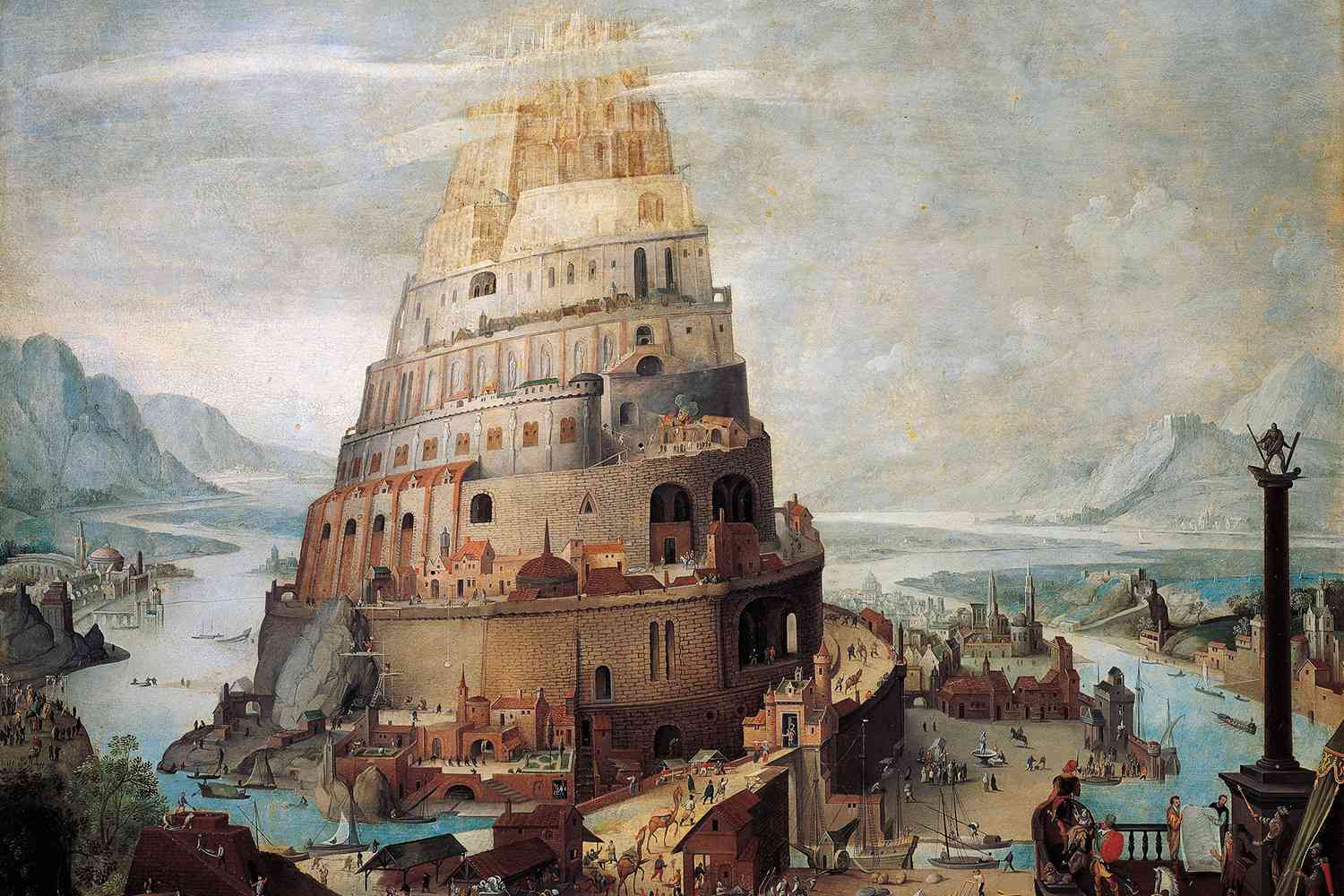
A few chapters later, humanity conspires to try to seize through violence what we had lost. The Tower of Babel is symbolic and symptomatic of humanity’s willful and prideful desire to reclaim paradise by bypassing the only true way to get it: we have to receive it, as a gift, from God. As a result of attempting to raise our might against the might of God, the result was the chaos (in Hebrew, “bavel”) that divided the nations into groups unintelligible and foreign to each other—not as a punishment from God, but as a natural consequence of the disordered intent of our disordered human nature.

Of course, we can see this as a spiritualized explanation of why the nations of the world speak different languages. And we know from linguistic studies and philology how different languages developed. But the bible is not telling a false story, but rather a true story from the point of view of an ancient religious society, Israel, who saw God as the prime mover of the human story, for the one and the many. And from that perspective, the genesis of the world as we know it, full of sin, division, violence, and suffering, is because humanity, created in and for original goodness, rebelled against the good Creator.

Where does that leave us then? What is the answer to the human question? One Sunday morning, a pastor of a church was invited into the Sunday school class to share a lesson. When all of the children were seated and quiet, for sake of an illustration, the pastor began by saying, “I am going to describe something and I want you to raise your hand when you know what it is.” The children nodded eagerly. The pastor continued, “This thing lives in trees… and it eats nuts… and it has a long bushy tail…” No hands went up. The pastor was shocked. Finally, one little boy tentatively raised his hand. The pastor breathed a sigh of relief and called on him. The boy said, “Well, it sounds an awful lot like a squirrel to me… but I know the answer must be Jesus!”

Correct! Our answer is Jesus. The promised the long-awaited divine messiah, who would be the good creator, God, who would come into our humanity and restore the world from the mess we’ve made of it, including ourselves. Jesus in his Easter (or Paschal) mystery—his passion, death, resurrection, and ascension—accomplishes our rescue, our salvation. And through the gift of the Holy Spirit into the Church, what Jesus accomplished ripples out into all humanity. Father Mike Schmitz, in his “Catechism in a Year,” repeated the phrase, “What Jesus made possible, the Holy Spirit made actual.” And this is how Jesus answers our question.

Just as the Easter (or Paschal) mystery begins the Easter season, Pentecost is the end and fulfillment of the Easter season. Passover was a pilgrim festival, one of the feasts of the Jewish calendar in which God’s people were called to make a pilgrimage to celebrate the feast at the Jerusalem temple. So also, fifty days later was the pilgrim feast of Shavuot, a harvest festival, the Feast of Weeks. Seven weeks of seven days (49), plus one, after Passover, called in Greek, “Pentecost” meaning the “fiftieth” day. As Passover was the ritual memorial of Israel’s rescue from captivity in Egypt, Pentecost was celebrated as the day at Mount Sinai fifty days later when Israel entered into the covenant with God to be his holy people, and received the divine gift of the mosaic law, which, if followed, would allow them to be a uniquely blessed society flourishing with justice and peace.

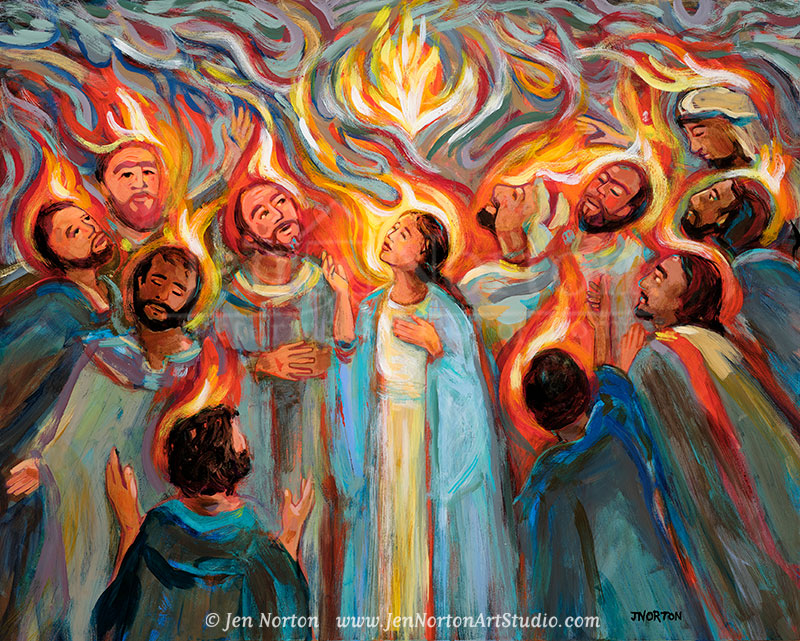
And so it no coincidence that the descent of the Holy Spirit, the revelation of the third person of the Holy Trinity, presented himself as a rushing wind, the divine breath, and as tongues of fire (reminiscent of the fire that surrounded the top of Mount Sinai as the presence of God) which lighted upon the disciples of Jesus, transforming their hearts, not with the law of Moses written on stone tablets, but writing the law of Christ on the flesh of their hearts. They were now Apostles, those “sent” by Jesus, as Jesus had been sent by the Father, to set the world afire by the divine presence within them. This is the birthday of the Church. Pentecost is the big bang of the new creation.

And so the first thing they did was to go out and preach the good news to all those gathered in Jerusalem from every nation and language, and what they said was miraculously understood by everyone. Why? Because the Church had now received in humility God’s blessing of his holiness in them as a gift. The day of Pentecost is the reversal of the Tower of Babel. Their tongues were united in every language to praise and share the glorious gift of God. It was the Pentecost harvest festival, this time of souls, gathering them into the Church through the inspired preaching of Peter. Note the change in attitude of the crowd; from confused, to astounded, to amazed. And these pilgrims would of course return to their homes around the world and share their experience of what they saw and heard. This is the initiation of the gospel being brought to all the ends of the earth.

Our psalm, our only reading today from the Old Testament, is a prayer asking for this renewal. “Lord, send out your Spirit, and renew the face of the earth.” That is a prayer for God to renew creation through the gift of his Spirit. If you look at the beginning of creation, God’s Spirit hovers over the waters of primordial chaos. And by his Word, he creates the world.  So this psalm is a prayer for God’s Spirit to renew creation. The Old Testament is a question. The New Testament is the answer.

In our second reading, Saint Paul is teaching the Church about the gifts (and fruits) of the Holy Spirit and how these gifts are to be used to promote the common good. He points out that the human body needs different parts to perform different functions; all of which benefit the body. Since the Church is the Body of Christ, it too is formed of many different members who are to work together for the benefit of the whole.

In the Catechism, in paragraph 768, we read these words in the section on the Holy Spirit, the article of the Creed “I believe in the Holy Spirit.” It says: So that she can fulfill her mission, the Holy Spirit “bestows upon [the Church] varied hierarchic and charismatic gifts, and in this way directs her.” And related to that, the Catechism describes grace: “Grace is first and foremost the gift of the Spirit who justifies and sanctifies us. But grace also includes the gifts that the Spirit grants us to associate us with his work, to enable us to collaborate in the salvation of others and in the growth of the Body of Christ, the Church. There are sacramental graces, gifts proper to the different sacraments. There are furthermore special graces, also called charisms after the Greek term used by St. Paul and meaning ‘favor,’ ‘gratuitous gift,’ ‘benefit.’ Whatever their character… charisms are oriented toward sanctifying grace and are intended for the common good of the Church. They are at the service of charity which builds up the Church” (CCC 2003). Since we just celebrated on Wednesday the Feast of St. Bernardine of Siena, he has a very fitting quote to conclude this section: “When the divine favor chooses someone to receive a special grace, or to accept a lofty vocation, God adorns the person chosen with all the gifts of the Spirit needed to fulfil the task at hand.” So, whether you’re called to be a parent, a pastor, a president, a painter, a paramedic, or a pope, God will give you what you need from him to fulfill, and be fulfilled, in that call.

The Gospel reading of course isn’t about Pentecost, because it doesn’t appear in the gospels; it only appears in our first reading, from the beginning of the Acts of the Apostles. Our gospel reading is from John, of an initial outpouring of the Holy Spirit by Jesus on the first evening of the resurrection, giving the apostles the authority to forgive or bind sins in his name. I want to consider not the Gospel of John, but the Gospel of Luke. Because we know that Saint Luke also wrote a second book: the Acts of the Apostles. They have the same introduction, the same vocabulary, and the same structure. And the point Luke is making in the parallelism of these two books is that the Church is the continuation of Christ in the world. The Gospel book ends, and the Book of Acts begins, with the Ascension. And then immediately after that (well, ten days after that), is Pentecost, with the Blessed Mother, as the Church is given birth in its mission to bring the good news and the grace of God won by Christ, and poured out by the Holy Spirit, to all the world. The Holy Spirit is the active principle of the Church, like the soul, uniting the members into the Body of Christ. The Spirit of unity, the spirit of divine love, within and among us.

The Holy Spirit is also what empowers the Sacraments of the Church. Every Sacrament has an epiclesis—a calling down of the Holy Spirit to be the active agent of the celebration of the various seven sacraments: Through Baptism He makes us children of God, temples of the Holy Spirit, and heirs of Heaven. Through Confirmation, He makes us courageous witnesses and defenders of the Faith. Through the Sacraments of Reconciliation and Anointing, He enables us to be reconciled with God by the forgiveness of our sins. Through the Sacrifice and Sacrament of the Holy Eucharist, He gives us spiritual nourishment by changing bread and wine into Jesus’ Body, Blood, Soul, and Divinity. And through the Sacraments of holy orders and matrimony, He makes the community holy with the call to self-giving service in life-giving love to one another. Let us beg God to help us to allow the gifts and fruit of the Holy Spirit to blossom within us and bear abundant fruit.

All of these things were instituted by Christ, and given to us through the Holy Spirit, guiding us as the Church. “What Jesus makes possible, the Holy Spirit makes actual,” inviting us to participate personally and actively in the new life made available by Christ. Pentecost is our invitation to continue in ourselves the presence, life, and ministry of Jesus. By the Holy Spirit of his love, he gives us the power to deny ourselves, pick up our cross, and follow him. We are a question, and through the outpouring of the Holy Spirit, Jesus is the answer.


Bonus section: someone pointed out that the Church was born of the side of Christ on the cross on Good Friday, which is an excellent point. I know both of these things are true (good ol’ Catholic “both/and”), and had to really struggle to try to reconcile them. So this is what I figured out:

Gen 2:21 – “So the Lord God cast a deep sleep on the man, and while he was asleep, he took out one of his ribs and closed up its place with flesh. The Lord God then built the rib that he had taken from the man into a woman.”

It’s exactly what Fr. Mike said, “What Jesus makes possible, the Holy Spirit makes actual.” The reason it is said that the Church is born from the side of Christ, the New Adam on the cross, is because of the water and blood from the side of Christ, which are the physical (but in that moment lifeless, flowing from the lifeless body of Christ) matter/materials of the sacraments of Baptism and Eucharist. But the sacraments don’t actually become operative (full of life, and life-giving) until they receive their particular sacramental graces at Pentecost.

Jesus instituted the sacraments in his ministry, and instituted the Church on the cross with his death and pierced side, making the life (birth) of the Church and her sacraments possible (in what he had accomplished).

Eve, the primordial bride of Adam, was “built” (Hebrew “banah,” as in, built a city, built an ark, built an altar) from the sleeping Adam’s side (in a sense, born of Adam), and then given the breath of life (in another sense, born of the Spirit). The Church, the mystical bride of the “sleeping” New Adam was “built” on Good Friday (“What Jesus makes possible…”), but it was in the infusion of the Holy Spirit (“ruah”, the divine breath, the strong wind in the upper room) as the soul and active principle of the Church and the sacramental grace of Baptism and Eucharist, at Pentecost, that she is given breath and comes to life, and can share with others the life (Spirit) of Christ in her (“…the Holy Spirit makes actual.”). 

God bless, happy birthday to the Church, and happy Pentecost to you!

Homily: The Solemnity of the Ascension

The great Italian composer Puccini, during his battle with cancer in 1922 began to write the opera Turandot, which many now consider his best work. He worked on it day and night, despite his friends’ advice to rest, and to save his energy. When his sickness worsened, Puccini said to his disciples, “If I don’t finish Turandot, I want you to finish it.” He died in 1924, leaving the work unfinished. His disciples gathered all that was written of Turandot, studied it in great detail, and then proceeded to write the remainder of the opera. The world premier of the opera took place in Milan, Italy in 1926. Arturo Toscanini, Puccini’s favorite student, conducted it, and the opera went beautifully. When Toscanini came to the end of what Puccini had written, he stopped the music, put down the baton, turned to the audience, and announced, “Thus far the master wrote, but then he died.” There was a long pause; no one moved. Then Toscanini picked up the baton, turned to the audience again, and announced, “But his disciples finished his work.” The opera closed to thunderous applause, and to a place in the collection of great works. In his Ascension message, Jesus instructs us, his disciples, to finish his work of saving mankind by proclaiming His Good News by words and deeds till the end of the world.

Leonardo da Vinci had started to work on a large canvas in his studio.  For a while he worked at it – choosing the subject, planning the perspective, sketching the outline, applying the colors, with his own unique genius. Then suddenly he stopped working on it.  Summoning one of his talented students, the master invited him to complete the work.  The horrified student protested that he was both unworthy and unable to complete the great painting which his master had begun.  But da Vinci silenced him, asking, “Will not what I have begun inspire you to do your best?” 

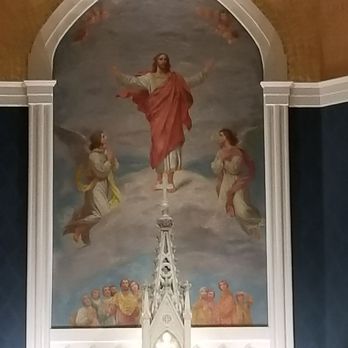
The great difference, however, between Puccini and da Vinci, compared to Jesus, of course, is that while Puccini and da Vinci are no longer with us, Jesus lives forever. It can be very confusing for us to hear Jesus say to the Church in our gospel reading that he will be with us always, and then whoosh, he gets whisked up to heaven on the clouds. And the apostles are looking up, maybe thinking, “Wait, he just said he would be with us always, why did he just leave and go to heaven?” Of course, here at Saint Patrick we’re extraordinarily blessed because this scene in the scriptures is what’s displayed in the gigantic painting at the front wall of our church! The scene of the mystery of the Ascension of Jesus!

The answer to the disciples’ question, and our question here, is given to us in our first reading from the very beginning of the Acts of the Apostles. It says: “He presented himself alive to them by many proofs after he had suffered, appearing to them during forty days and speaking about the kingdom of God. While meeting with them, he enjoined them not to depart from Jerusalem, but to wait for the promise of the Father about which you have heard me speak.” Of course he’s talking about his teaching at the Last Supper (which we’ve been hearing all week in our Daily Mass readings of the Gospel of John) promise of the gift of the Holy Spirit into the Church at Pentecost. Notice here it says that he appeared to them during forty days. Today is forty days after Easter, when we celebrate the Ascension. And then in ten days after today, on the fiftieth day, (the Greek word for “fiftieth” is Pentecost,” we will celebrate that gift of the Holy Spirit Pentecost Sunday. And another beautiful gift of the Church is that in the nine days between the Ascension and Pentecost we see the Church in intense prayer. This is the scriptural basis for praying a novena, nine days of prayer for a particular prayer intention. The oldest novena in the Church is the Holy Spirit Novena, which echoes the apostles, disciples, gathered with Mary, praying to be prepared to receive the gift of the Holy Spirit, and on the tenth day, was Pentecost. So perhaps you can begin today to pray the Holy Spirit Novena and prepare your heart for the celebration of the gift of the Holy Spirit, and that you would be more open to receive, listen to, and respond to the Spirit in your heart and your life.

But let’s get back to the importance of our celebration today of the Ascension. Jesus gave us by his life and words and example the life we are to live as his followers, a life of superabundant love, grace, generosity, mercy, hope, and truth. This example is, like that of Christ, to give evidence of the reality of our message of sharing the gospel of Jesus to those around us. It’s not words without actions, or actions without words, but both together. It’s a big challenge Jesus gives us, to follow him and his example. But as Divinci said to his disciple, his student, “Will not what I have begun inspire you to do your best?” Of course! And not only that, but we continue to have Jesus with us, in his Holy Spirit within us, and his help from heaven above us. So we don’t need to just look up to God in prayer, we can look within us to God as he puts his live of grace in us, for us to live by his supernatural divine love.

Jesus in his Ascension returns in his humanity and divinity to God the Father. I recently read that the Ascension fulfills the mystery of Christmas, which is kind of a surprising connection. At Christmas, or to go even further back, at the Annunciation, when Jesus was conceived in his human nature, united to his divine nature, and at Christmas, when he was born, the fulfillment of that moment is the completion of his Paschal, or Easter Mystery – his suffering, his Crucifixion and death, his Resurrection, and his Ascension, all as both human and divine. And now our humanity which he has as part of himself, is lifted up into the divine life of God in heaven. Our humanity, all humanity, is radically different now, because it is in our humanity, body, soul, and spirit, that we have unity with God, a participation in the divine life and love, the truth, goodness, and beauty, of the Holy Trinity.

When the Eucharistic prayer (and the creed) speaks of the Paschal mystery, it includes the Ascension, because this is its fulfillment. In the Crucifixion, Jesus paid the ransom that set us free from sin and separation from God. In the Resurrection, he establishes the life of reconciliation and unity with God. And in the Ascension, he enters victorious and glorious to the presence of God the Father, into the heavenly sanctuary to present himself to God both as the eternal high priest also as the eternal perfect lamb of sacrifice for us, who willingly offered himself in love as our savior and redeemer, whose name is above every other name. And Jesus is preparing us to fruitfully receive his Holy Spirit into us, to bring us into all that he accomplished, to share with us all his blessings, that we might follow him where he has led the way: to enjoy the gifts of our holy life in this world, and heavenly victory through him forever in the eternal joy of holy life in heaven.

Because he didn’t go to heaven to separate himself from us! And he promises he does not leave us as orphans. But he has lifted our eyes and hearts to heaven, where he is, and where he prepares a place for us, his beloved. And he draws us to himself in love and glory. One of the most beautiful things I ever read about the Ascension is that the definition of the Ascension is the raising of Jesus Christ body and spirit into heaven. And what is the body of Christ? It’s the Church. We are the members of the Body of Christ. And so the Ascension is an ongoing mystery. As members at our earthly death rise to heaven, the joy of the heavenly feast increases, and continues to the end of time until the last member of the Church, the full stature of Christ, is fully alive in the glory of heaven, and heaven’s joy is fulfilled and perfect, the final completion of the mission of Christ, that the Word of God has accomplished what it was sent for, spoken to accomplish. That he embraced our humanity for us, that we might be blessed with his divinity in him. This is the beautiful mystery of the Ascension.