Go to the readings first.
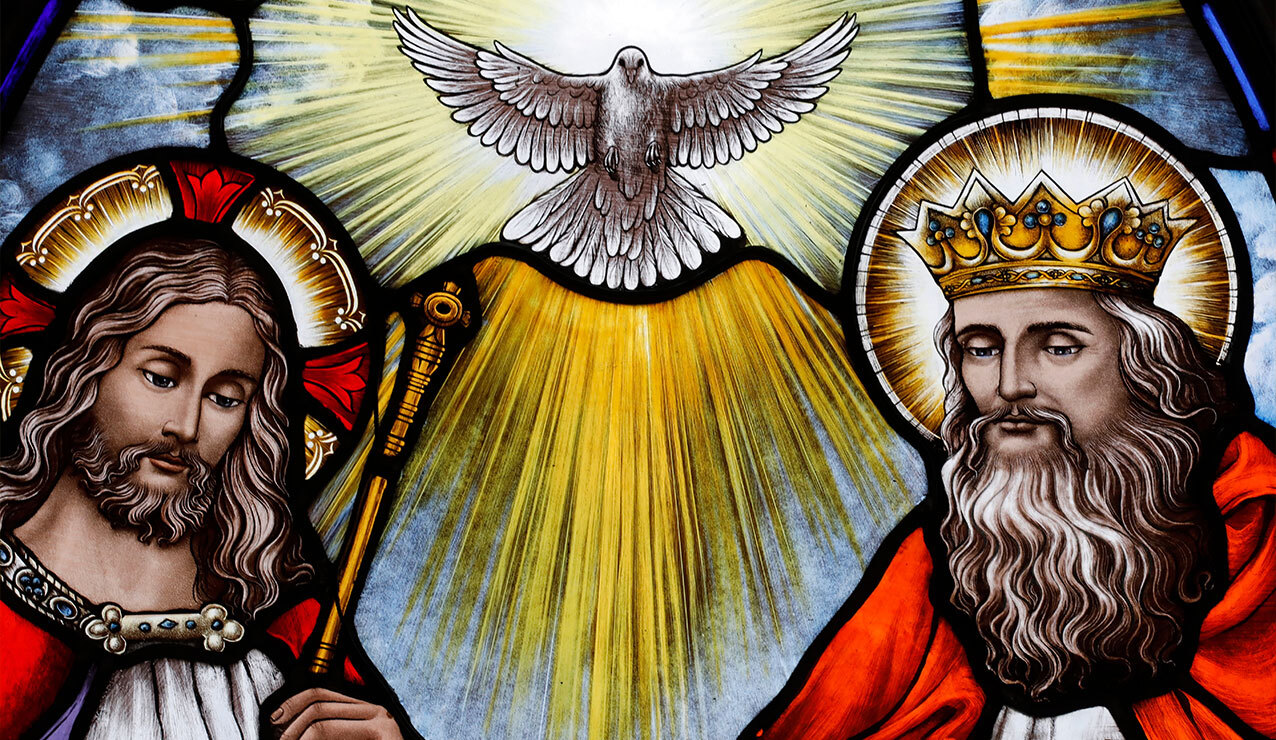
“The mystery of the Most Holy Trinity is the central mystery of Christian faith and life. It is the mystery of God in himself. It is therefore the source of all the other mysteries of faith, the light that enlightens them. It is the most fundamental and essential teaching in the ‘hierarchy of the truths of faith.’” If we were asked, “What is the central mystery of the Christian faith?” we might say, the Eucharist, called “the source and summit of the Christian life,” or the Resurrection of Jesus, the vindication of all that Christ said and did and claimed about himself during his earthly ministry. But this quote from the Catechism, paragraph 234, teaches us that the mystery we celebrate and contemplate today, the Most Holy Trinity, is the central mystery of the Christian faith and life. All the other teachings of what we believe in, in some way have their origin in, are understood in light of, and lead back to, this central reality: the highest truth, the highest good, the highest beauty, which is the mystery of God in himself.
Saint Augustine said, “If you can understand it, it’s not God.” Some people might say, “Why say anything about God, because he is infinitely incomprehensible?” Because while that is true, God does reveal himself to us in some ways, because he wants us to know him, so that we can love him, which is what we are made for. So, there are things we can say. But yes, there is infinitely more. If we claim we understand it, it’s not God.
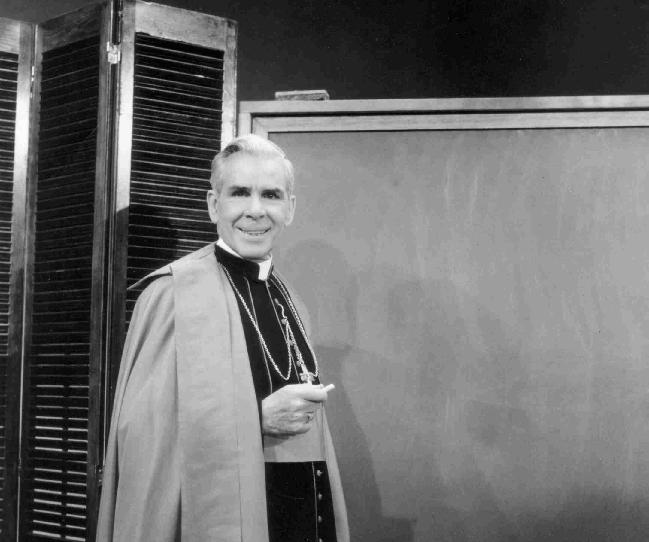
Archbishop Fulton Sheen used to teach the Holy Trinity in terms of nature and identity. Nature is what something is. I am a human being, we have human nature, God has divine nature, that’s what He is. Identity is who someone is. I am Fr. Kelley. That’s who. Who is God? The Father, Son, and Holy Spirit. And so, Fulton Sheen would say that “the Holy Trinity is three who’s in one what.” They are three divine persons, but they are all of the same divine substance, they are con+substantial with one another as one God, but they eternally exist without beginning or end in a communion of divine love. That’s the divine nature of the one God who is the Holy Trinity: Tri+Unity=Trinity.
God revealed himself slowly to humanity through History, although he revealed hints of his triune nature, too, which would be more fully revealed as time went on. He revealed to Moses at the burning bush that he is, “I AM,” as it is translated from the ancient Hebrew (Exodus 3:14). Or to unpack how they would have understood that divine name revealed by God, in the rich complexity of Hebrew, it was more like, “I AM to you as I always have been, I am presently, and always will have been, forever.” Implicit in the divine name is not only a sense of relationship, but a sense of favor, characterized by mercy. He revealed himself as one God: initially one god among others, then their particular god, then the greatest of all gods, and then the one and only true God, as he led his chosen people through their cycles of rebellion, repentance, faith, and flourishing.
In our first reading, from the Book of Exodus, we see Moses worshiping God, and God, using that revealed name that neither Israel nor the Church uses in reverence of the holy name, praises his own divine qualities. God himself says, “The LORD, the LORD, a merciful and gracious God, slow to anger and rich in kindness and fidelity.” This may strike us as somewhat prideful, but that doesn’t apply to the infinite greatness of God, beyond all praising. Moses then asks God to show them mercy and patience and guide them as his people.
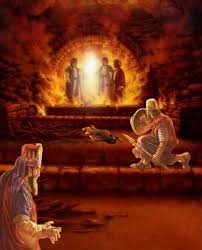
Our Responsorial, which is usually a Psalm, today comes from a canticle in the Book of the Prophet Daniel, and it is from the scene in Chapter 3 of Daniel of the three young men who were thrown into the white-hot furnace for worshiping and obeying the God of Israel instead of the King of Babylon. While they are in there, they are seen with what is described as a fourth, like a Son of Man. They are all dancing in the furnace, singing this canticle of divine praises. And when the three are released from the furnace they are not dead, not burned at all, and do not even have a smell of smoke on them. And so, this may be chosen as a reading for today because this mysterious fourth is described as a Son of God, a common title for angels, but perhaps an Old Testament preview of the Divine Son.
In our Gospel reading, the revelation of the Divine Messiah, the Son of God, is made manifest, come in the flesh of our humanity, Jesus, not to condemn the world for its sins, but to save the world from its sins, and to give the possibility of eternal life. In the mystery of the Son of God Incarnate, we have a new Holy Name: “Jesus,” the name given to him by which we can invoke the power of God through the Son of God. Also, at his conception he is called, “Emmanuel,” which means, “God with us,” which means something very similar to what we just said is the fuller understanding of the holy name, “I AM,” given to Moses. So God didn’t change his name, it’s still, “I am with you, as it was in the beginning, is now, and ever shall be.”
Interesting to note here in our reading is that God sent his Son into the world. You and I and all humans and animals came into existence at our conception. The sperm and egg of our parents are met with the spark of life with the soul given by God, and we come into existence with our own identity, both physically and spiritually, forever. However, God sent his Son into the world for his conception in the Blessed Mother. He existed as God before his conception, and he acquired human nature, now united to his divine nature, miraculously in his mother’s womb, but that’s another mystery for another time.
And our final reading for today, the closing of Saint Paul’s second letter to the Corinthians. This is of course after the event we celebrated last weekend, the gift of the Holy Spirit into the Church, the revelation of the Third Person of the Holy Trinity in the rushing wind, the tongues of fire, and the spiritual gifts he poured into the Church. The Spirit’s work was certainly operative in Paul, inspiring him in his writing and in his ministry. The Holy Spirit is within us and working in us, too, and will continue to work (inspire, guide, protect) the Church through the end of the ages. Saint Paul here encourages the Church to live by the Spirit, in the peace of God, which surpasses all earthly peace. But an interesting part of this reading for our feast today is that he gives us the scriptural source for the priest’s greeting we use at the beginning of Mass. We bless ourselves with the sign of the cross, invoking the Name of the Holy Trinity, and then the greeting, “The grace of our Lord Jesus Christ, and the love of God, and the communion of the Holy Spirit be with you all.” There’s a lot more scripture in the Mass than most of us suspect, it’s not just the readings.
The creed we recite in the Mass is the result of the Early Church sorting out what we believe about the truth of God in the face of controversies and incorrect claims. There wasn’t much debate about the Father, so that section is pretty short: God the Father is the source of all goodness, all truth, all blessings, all love. The Father, the divine lover, expressed himself in love. Because of his divine perfection, his expression is so perfect that it is a perfect reflection of his own image, his own being, sharing in his divinity, his will, his goodness, as the eternal Beloved, the Son, the recipient of the Father’s love.
The real controversies in the early Church were about the nature of Jesus, and so that section is much longer. It says, “I believe in one Lord Jesus Christ, the Only Begotten Son of God, born of the Father before all ages. God from God, Light from Light, true God from true God, begotten, not made, consubstantial with the Father.” Hopefully that makes more sense to you now, so we can profess the creed a bit more contemplatively, and a bit less rushed, as if they were just words to get through. The Son of God is also God. We beget something like us, of our own nature, a son, but we make something unlike us, of a lower nature, a chair. So, the creed teaches that the Only (or “Uniquely”) begotten Son was not made, he is true God from true God, of the same divine nature as the Father. That section ends with “through him all things were made.” So all the rest of creation was made, came into being, by the Father through the Son, to everything else. The Son is like an interface to the Father, the Son is the Word of God, the encounter with God. The Father relates to all of creation (all that is not God) through the Son, and shares his gift of existence and sustenance and guidance by the outpouring, or overflowing, of the Holy Spirit.
The rest of this section of the creed is about Jesus as the Son incarnate. And the third section of the creed is the Holy Spirit, the Lord the Giver of Life, who shares all that the Spirit makes possible for us: the Church, the Scriptures, the Sacraments, the forgiveness of sins, the gift of grace, resurrection, and eternal life. So, the Creed is trinitarian both in structure and in teaching that central mystery of our faith, the divine life of God, the Holy Trinity.
And we’ll end with another quote from the Catechism, paragraph 260: “The ultimate end of the whole divine economy is the entry of God’s creatures into the perfect unity of the Blessed Trinity.” So, the Holy Trinity is not some theological math problem where 1+1+1=1. The Holy Trinity is our eternal destiny of holy relationship, eternal love. The everlasting joy and peace of the communion of saints, the new heavens and the new earth, the life of grace we hold now in earthen vessels, to be fully revealed at the end of time, is all about the entry of God’s creatures, our entry, into the perfect unity of the Blessed Trinity. Because at the end of the day, Christianity isn’t about an idea, it’s about God, who is personal. In fact, God who is in Himself a communion of personal love. That’s why we were made, who made us, why we exist, and where we’re going. Into the unimaginable joy of the love of God.

 The Snarky Vicar