Go to the readings for the 17th Sunday of Ordinary Time (Year A)
“The LORD appeared to Solomon in a dream at night. God said, “Ask something of me and I will give it to you.” Solomon answered: “O LORD, my God, you have made me, your servant, king to succeed my father, David; but I am a mere youth, not knowing at all how to act. I serve you in the midst of the people whom you have chosen, a people so vast that it cannot be numbered or counted. Give your servant, therefore, an understanding heart to judge your people and to distinguish right from wrong.” (1 Kings 3:5-9)
I had a moment like this in my life. A while after I had graduated college, with a degree for a role I found that sadly I didn’t really enjoy, I found myself working for a temp agency. I ended up at a company that was digitizing their file room, and a small army of temps were contracted for this, and they said that they were looking to hire five temps permanently to run the filing system. I was tired of doing job interviews, and tired of the unreliability of temp work, and I made it my goal to be one of those five. Anything they asked me to do was going to be my new favorite thing in the world to do. Remove staples from old forms? That’s my new favorite thing! Run the scanners!? That’s my new favorite thing! And I was one of the first temps to get hired.
I was in my late 20s, but I still kind of felt that I had some growing up to do, to be a “real adult.” But being recruited into the corporate world seemed to me the time to grow up and step up into the call of who I was made to be. I started getting serious about my Catholic faith, was going to Church, and reading Catholic teaching I wanted to understand better; in other words, to mature into an adult Catholic faith.

And this is when God dropped into my lap the book, “Seven Habits of Highly Effective People,” by Dr. Stephen Covey. It was exactly what I needed at that moment. It gave me the principles for building the kind of life I was looking for. He calls them “first principles,” in Catholic terms we call it “natural law.” When we work with how things work, things work better. And Dr. Covey deeply connected his Christian faith into his writing, which was of great benefit to me. It recently happened, almost by accident, that I came across a video reviewing the seven habits, and it blew my mind how much of my life, and how much of my priestly ministry, is connected to what I had gotten from this book.
When I read that paragraph from Solomon, “O LORD, my God, I am a mere youth, not knowing at all how to act. Give your servant, therefore, an understanding heart to distinguish right from wrong,” I thought, I know that sentiment. And so, looking through today’s readings in preparation for this, I was like, “Oh, yes, I can definitely tie all this into the Seven Habits.
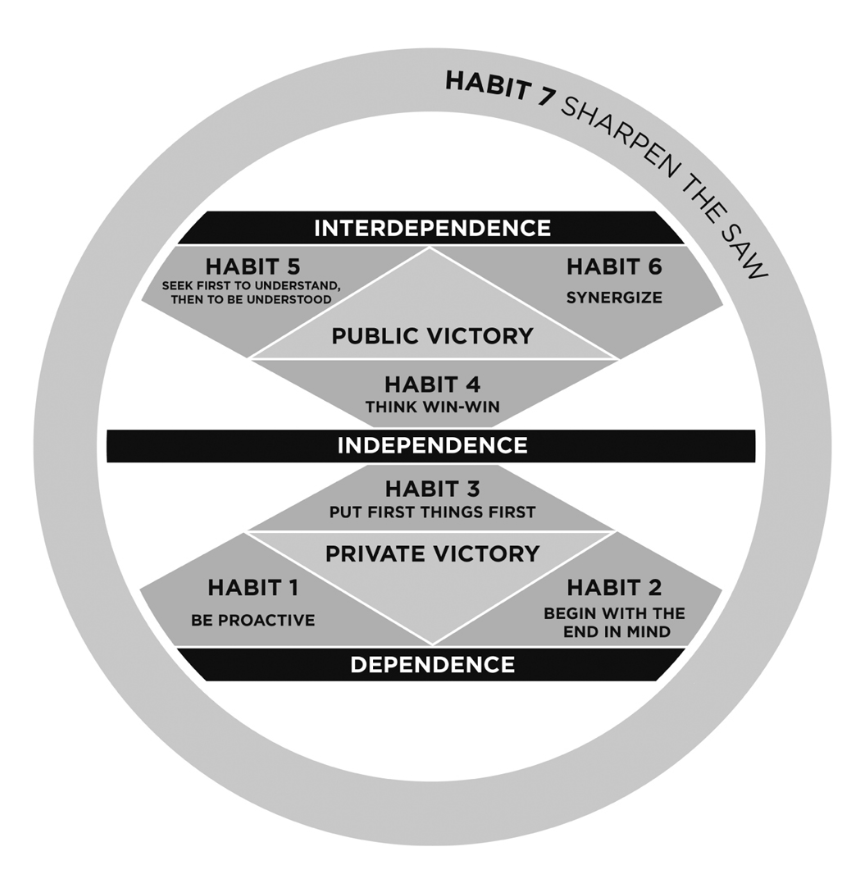
The First Habit: “Be Proactive.” Take responsibility for your particular choices, and your life, and focus your energy on things you can change. There are things we cannot choose, that are given in situations we are in. But we have the capacity to choose how we respond to them. We are not machines running programs, we are God-created people with free-will. We have to look at our habits, our upbringing, our scripts and assumptions, and strengths, and weaknesses, and make good choices, holy choices, about who we are going to become. If we focus on things we can’t change, we waste our energy and opportunity to change the things we can. We can’t change much about the politics and things we see on the news. So don’t focus a lot of energy on that. Focus on what is directly around you. How you respond in your relationships: family, co-workers, and especially with God. How you prioritize your time and energy to what you can make choices about. When you focus on where you can have responsibility – “response ability,” you find that you can change a lot more than you thought you could.
The Second Habit: “Begin with the End in Mind.” What do you want people to remember about you after you’re gone? We’ve talked before about “Memento Mori,” The traditional Latin motto, “Remember you are to die.” Remember that you will have to answer not only for your sins, but who you have made yourself to be, what fruit you have yielded from the seeds of graces you have been given, what effects you have had on those around you. As someone recently pointed out to me, the other side of the coin of “Memento Mori” is “Memento Vivere,” remember to live. Live the life of the gifts and blessings and calling God has given you to have an abundant life of grace, love, joy, and peace.The first habit is that you are the driver of your life. The second habit is, what is your destination?
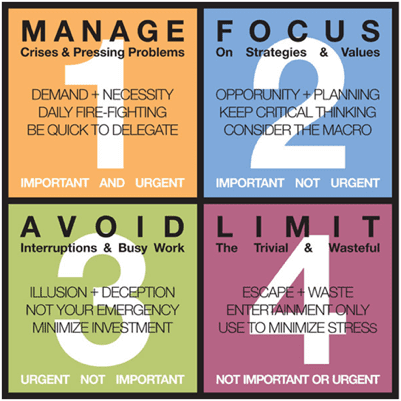
The Third Habit: “Put first things first.” It’s always bothered me that this wasn’t the first habit. The main theme of this habit is to picture a square with two rows and two columns. The top row is urgent and the bottom row is not urgent. The left column is important and the right column is not important. The first quadrant is both important and urgent. You must do these, and must do them now, things that are on fire. Go to work, pay your bills, especially the late ones, buy groceries. The second quadrant is important but not urgent. This is the key, things that are the most important, your real first things, but since they’re not yelling at you, they get put off too long in order to take care of the urgent things. Quadrant 2 things that are taking care of your spiritual life, your retirement, your health, preventative maintenance tasks, continual learning, long-term goals, etc. The key to this habit is to manage your time proactively around your goals rather than to just living reacting to minor urgent events. We know the phrase, “Seek first the kingdom of God, and all these other things will be added unto you.” That is Quadrant 2 in biblical terms. In our gospel reading, the kingdom of God is like a buried treasure, and so we sacrifice the non-important stuff (which doesn’t matter as much whether it’s urgent or not if it’s not that important) to acquire what is most important. So a great example of the third habit, of putting first things first.
The Fourth Habit: “Think Win-Win.” Seek solutions that benefit everyone involved so all parties feel heard, feel invested going forward. It’s based on an abundance mentality that someone doesn’t have to lose in order for someone else to win: everyone can win; shifting from a competitive mindset to cooperative one, creatively looking for new options. Also involved in this is our character: integrity (aligning our actions with our core values), maturity (balancing courage with consideration, or what I need with what others need), holiness. We are our brother’s keeper, we can’t step on him or ignore him to get ahead. This is perhaps the habit of holy loving service to others. I can’t consider it a win if it’s unjust to someone else.
In the Fourth Habit (and revisited in the Fifth) Dr. Covey develops the idea of the “Emotional Bank Account.” I didn’t include it in the actual homily as it wasn’t directly connected to explaining the habit, but it’s something that I use and share all the time, and I had forgotten it had come from this book. The idea is that to make a withdrawal in our account with another person–not just a lapse, like breaking a promise or getting into an argument, but even correcting them, giving them tough love–we have to have a positive balance in our account. Deposits are made in the account by acts of loving them, affirming them, spending quality time, sharing positive moments, etc. The higher our balance, the better the relationship will weather a withdrawal without getting into a negative balance, which is a dire threat to the ongoing survival of the relationship. This isn’t just about “buttering someone up” to make a big ask, but that’s a short-term version of this. This is more like having to tell someone they were very wrong in what they did. If there is already a high balance, a high level of trust and affection, then the relationship will still be solid. But if the balance was already low, this might cause the separation of the relationship.
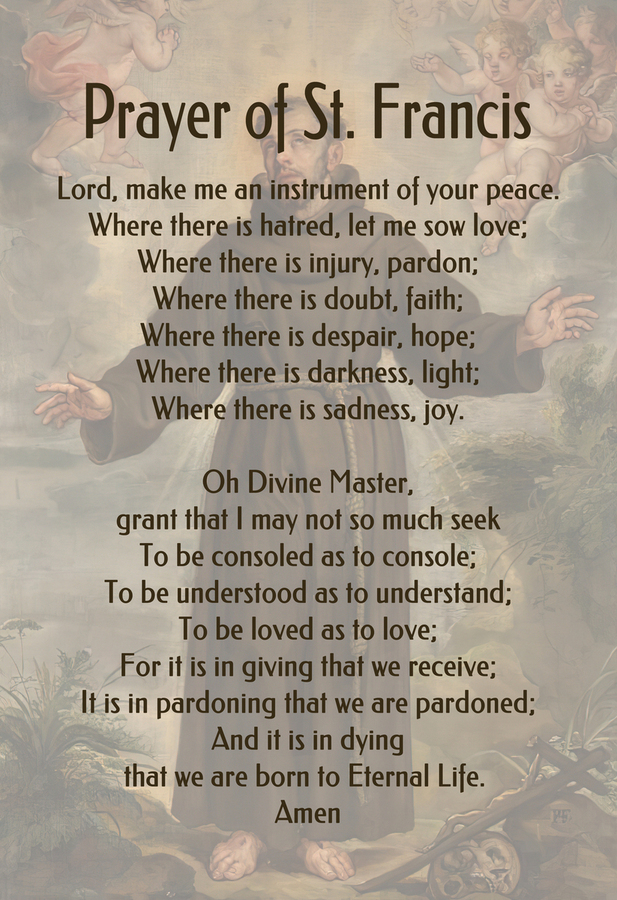
The Fifth Habit: “Seek First to Understand, Then to Be Understood.” This is a line right out of the prayer of Saint Francis. “Make me an instrument of your peace,” which connects to the fourth habit. But the end of that prayer: “O divine Master, grant that I may not so much seek to be consoled as to console, to be understood as to understand, to be loved as to love.” If I love someone, I really want to actively and compassionately listen to their story, their heart, their world, to build a win-win relationship with them, to know what they really value, who they are, and only then can we really have meaningful communication. And that includes God: are you really listening to understand, listening to hear his heart, or is it just trying to get what you want?
The Sixth Habit: “Synergize.” This means 1+1 doesn’t equal 2, but can equal 3, or 10, or more, because combining the complementary strengths of multiple people, filling in the skill gaps in a team, has a multiplier effect of the efforts. York Catholic School Board had to replace an outgoing member, and they didn’t ask, “Who would be a good person to recruit?” They asked, “What skill area are we weak in that we need to strengthen with a new member?” That’s a synergistic approach to the question. It’s progressing from shunning diversity (which is suspicious of differences of background and opinions), to tolerating diversity (coexisting, but not leveraging differences), to celebrating diversity (valuing unique strengths as creative fuel), communicating in a creative and brave exchange of ideas, and choosing the “high road” of a new, mutually beneficial path, so this is tied to the previous habit of win-win. The opposite of this is a negative synergy, based on insecurity, fear of conflict, desire for control, or strict conformity of ideas and perspectives, tearing down others, gossiping with others, silos or camps within an organization that work against each other at the cost of the whole. Heaven is mutual respect, love, and service in humility for the good of others; hell is tearing down others, climbing over others, attacking others. It’s obvious which of these a church, or a family, or any group should work that wants to be successful. Synergy.
The first three habits are “Private Victories,” they have to do with your interior disposition to set right perspectives and goals, and being proactive to pursue them. The second three habits are “Public Victories,” they have to do with interpersonal relations and working together better with others. Of course there’s overlap, because proficiency in each habit help builds proficiency in the other habits.
And the Seventh Habit is called, “Sharpen the Saw,” and it’s in its own category of “Renewal.” Which is to occasionally go back to the basics, revisit the wisdom in the habits, how they’re described, how to build them, what the bad habits are which weaken them. Sometimes you’ll need to re-calibrate your goals, your path, as you grow in wisdom, perspective, and with changes in your life. Every once in a while, take a day and spend it in prayer, reading a holy book about faith, or the scriptures. And once a year or so go away to a Catholic retreat center for a spiritual recharge and renewal.
So these are Seven Habits of Highly Effective People, and Christians we are called to be highly effective people. We’re also called to be highly holy people, applying natural wisdom to our supernatural calling to be a light for others. And the first step of that is to see how we are not who and what we could be, we are not the saints we could be, and to respond to the call of grace, the call of God’s love for us, to max out our response to that upward call. To quote the Chinese philosopher Lau Tzu: “Watch your thoughts, they become your words; watch your words, they become your actions; watch your actions, they become your habits; watch your habits, they become your character; watch your character, it becomes your destiny.” Or to quote Pope Benedict XVI: “The world offers you comfort. But you were not made for comfort. You were made for greatness.”
Bonus: While I was creating this post, I found this little gem, “Seven Habits of Highly Effective Catholics” from the great Catholic teacher Dr. John Bergsma. Enjoy!