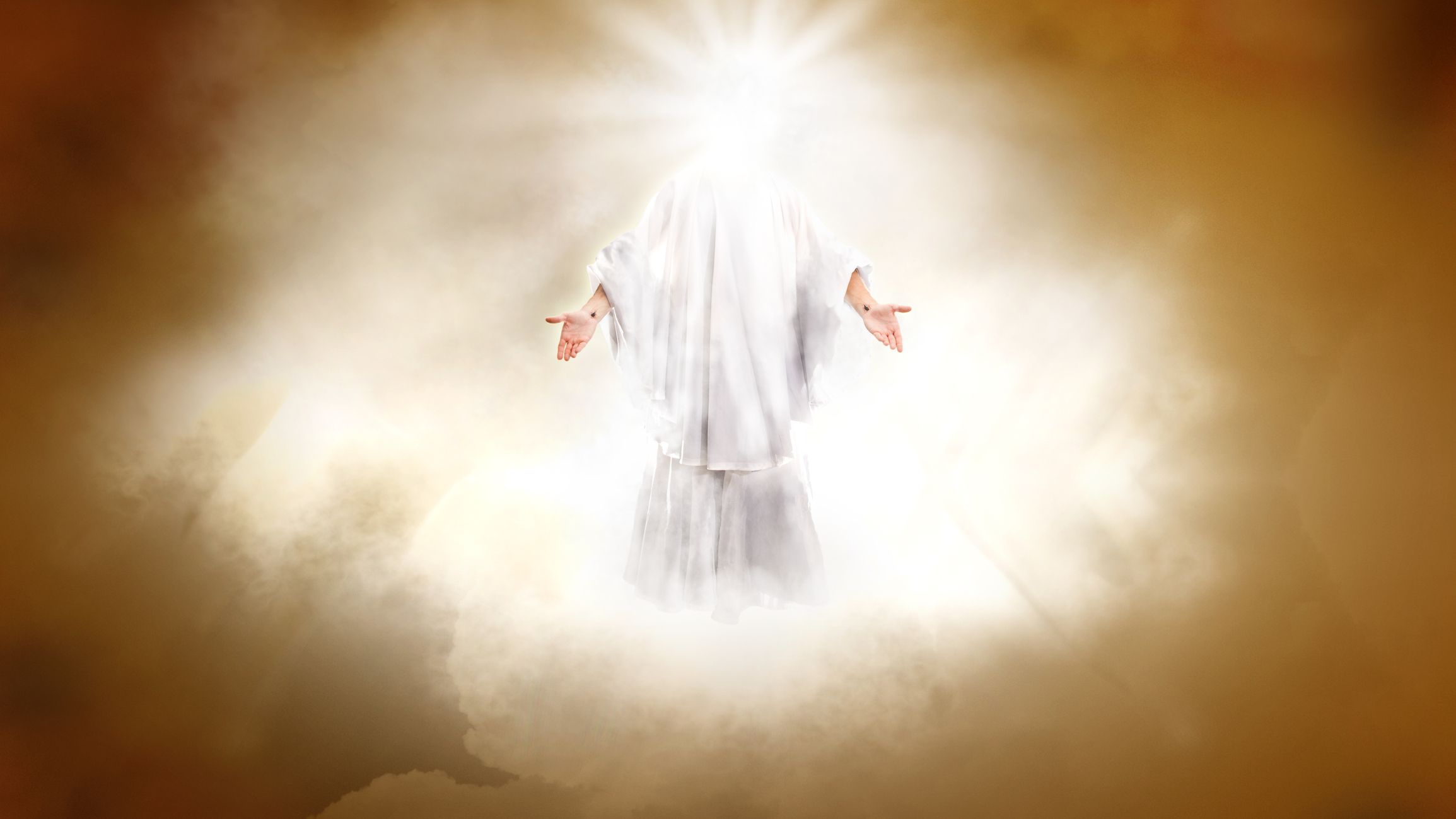
The great Italian composer Puccini, during his battle with cancer in 1922 began to write the opera Turandot, which many now consider his best work. He worked on it day and night, despite his friends’ advice to rest, and to save his energy. When his sickness worsened, Puccini said to his disciples, “If I don’t finish Turandot, I want you to finish it.” He died in 1924, leaving the work unfinished. His disciples gathered all that was written of Turandot, studied it in great detail, and then proceeded to write the remainder of the opera. The world premier of the opera took place in Milan, Italy in 1926. Arturo Toscanini, Puccini’s favorite student, conducted it, and the opera went beautifully. When Toscanini came to the end of what Puccini had written, he stopped the music, put down the baton, turned to the audience, and announced, “Thus far the master wrote, but then he died.” There was a long pause; no one moved. Then Toscanini picked up the baton, turned to the audience again, and announced, “But his disciples finished his work.” The opera closed to thunderous applause, and to a place in the collection of great works. In his Ascension message, Jesus instructs us, his disciples, to finish his work of saving mankind by proclaiming His Good News by words and deeds till the end of the world.
Leonardo da Vinci had started to work on a large canvas in his studio. For a while he worked at it – choosing the subject, planning the perspective, sketching the outline, applying the colors, with his own unique genius. Then suddenly he stopped working on it. Summoning one of his talented students, the master invited him to complete the work. The horrified student protested that he was both unworthy and unable to complete the great painting which his master had begun. But da Vinci silenced him, asking, “Will not what I have begun inspire you to do your best?”
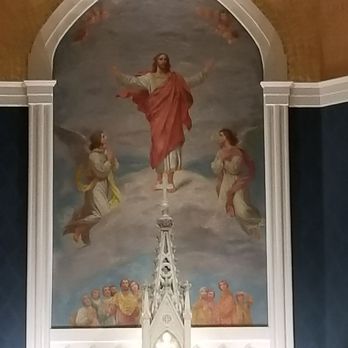
The great difference, however, between Puccini and da Vinci, compared to Jesus, of course, is that while Puccini and da Vinci are no longer with us, Jesus lives forever. It can be very confusing for us to hear Jesus say to the Church in our gospel reading that he will be with us always, and then whoosh, he gets whisked up to heaven on the clouds. And the apostles are looking up, maybe thinking, “Wait, he just said he would be with us always, why did he just leave and go to heaven?” Of course, here at Saint Patrick we’re extraordinarily blessed because this scene in the scriptures is what’s displayed in the gigantic painting at the front wall of our church! The scene of the mystery of the Ascension of Jesus!
The answer to the disciples’ question, and our question here, is given to us in our first reading from the very beginning of the Acts of the Apostles. It says: “He presented himself alive to them by many proofs after he had suffered, appearing to them during forty days and speaking about the kingdom of God. While meeting with them, he enjoined them not to depart from Jerusalem, but to wait for the promise of the Father about which you have heard me speak.” Of course he’s talking about his teaching at the Last Supper (which we’ve been hearing all week in our Daily Mass readings of the Gospel of John) promise of the gift of the Holy Spirit into the Church at Pentecost. Notice here it says that he appeared to them during forty days. Today is forty days after Easter, when we celebrate the Ascension. And then in ten days after today, on the fiftieth day, (the Greek word for “fiftieth” is Pentecost,” we will celebrate that gift of the Holy Spirit Pentecost Sunday. And another beautiful gift of the Church is that in the nine days between the Ascension and Pentecost we see the Church in intense prayer. This is the scriptural basis for praying a novena, nine days of prayer for a particular prayer intention. The oldest novena in the Church is the Holy Spirit Novena, which echoes the apostles, disciples, gathered with Mary, praying to be prepared to receive the gift of the Holy Spirit, and on the tenth day, was Pentecost. So perhaps you can begin today to pray the Holy Spirit Novena and prepare your heart for the celebration of the gift of the Holy Spirit, and that you would be more open to receive, listen to, and respond to the Spirit in your heart and your life.
But let’s get back to the importance of our celebration today of the Ascension. Jesus gave us by his life and words and example the life we are to live as his followers, a life of superabundant love, grace, generosity, mercy, hope, and truth. This example is, like that of Christ, to give evidence of the reality of our message of sharing the gospel of Jesus to those around us. It’s not words without actions, or actions without words, but both together. It’s a big challenge Jesus gives us, to follow him and his example. But as Divinci said to his disciple, his student, “Will not what I have begun inspire you to do your best?” Of course! And not only that, but we continue to have Jesus with us, in his Holy Spirit within us, and his help from heaven above us. So we don’t need to just look up to God in prayer, we can look within us to God as he puts his live of grace in us, for us to live by his supernatural divine love.
Jesus in his Ascension returns in his humanity and divinity to God the Father. I recently read that the Ascension fulfills the mystery of Christmas, which is kind of a surprising connection. At Christmas, or to go even further back, at the Annunciation, when Jesus was conceived in his human nature, united to his divine nature, and at Christmas, when he was born, the fulfillment of that moment is the completion of his Paschal, or Easter Mystery – his suffering, his Crucifixion and death, his Resurrection, and his Ascension, all as both human and divine. And now our humanity which he has as part of himself, is lifted up into the divine life of God in heaven. Our humanity, all humanity, is radically different now, because it is in our humanity, body, soul, and spirit, that we have unity with God, a participation in the divine life and love, the truth, goodness, and beauty, of the Holy Trinity.
When the Eucharistic prayer (and the creed) speaks of the Paschal mystery, it includes the Ascension, because this is its fulfillment. In the Crucifixion, Jesus paid the ransom that set us free from sin and separation from God. In the Resurrection, he establishes the life of reconciliation and unity with God. And in the Ascension, he enters victorious and glorious to the presence of God the Father, into the heavenly sanctuary to present himself to God both as the eternal high priest also as the eternal perfect lamb of sacrifice for us, who willingly offered himself in love as our savior and redeemer, whose name is above every other name. And Jesus is preparing us to fruitfully receive his Holy Spirit into us, to bring us into all that he accomplished, to share with us all his blessings, that we might follow him where he has led the way: to enjoy the gifts of our holy life in this world, and heavenly victory through him forever in the eternal joy of holy life in heaven.
Because he didn’t go to heaven to separate himself from us! And he promises he does not leave us as orphans. But he has lifted our eyes and hearts to heaven, where he is, and where he prepares a place for us, his beloved. And he draws us to himself in love and glory. One of the most beautiful things I ever read about the Ascension is that the definition of the Ascension is the raising of Jesus Christ body and spirit into heaven. And what is the body of Christ? It’s the Church. We are the members of the Body of Christ. And so the Ascension is an ongoing mystery. As members at our earthly death rise to heaven, the joy of the heavenly feast increases, and continues to the end of time until the last member of the Church, the full stature of Christ, is fully alive in the glory of heaven, and heaven’s joy is fulfilled and perfect, the final completion of the mission of Christ, that the Word of God has accomplished what it was sent for, spoken to accomplish. That he embraced our humanity for us, that we might be blessed with his divinity in him. This is the beautiful mystery of the Ascension.


