Go to the readings for All Saints Day.
In ancient Rome, unless you were rich and famous, you were forgotten after your death. Many commoners and the poor were just dumped in the river or left out to rot. On the other hand, Christians were well-known for burying their dead with great respect, and tending to the graves of their dead with veneration and prayer. This was one of the many reasons that Christianity spread. People didn’t want to be forgotten; they wanted their remains cared for, and their lives to be remembered, and their souls to be prayed for. Christians were known for their care of the graves especially of those who were martyred for their faith. Many of the stories of the martyrs involve their being visited by earlier martyrs to be consoled and healed during their trials, such as St. Peter visiting the 3rd century martyr St Agatha in prison, and healing her wounds from her tortures. It’s little wonder the early Church developed a great devotion to the saints! Their tombs were visited by pilgrims. Their relics were venerated as sharing in the holiness and grace of their lives. As we know, the Greek word “martyr” means “witness,” someone who witnessed to their faith in Christ with the full devotion of their life, and even their death. They were often especially celebrated on the anniversary of their death, or their heavenly birthday. Masses would be offered using their tombs as the altar table, which is the foundation for having the relics of saints in church altars.
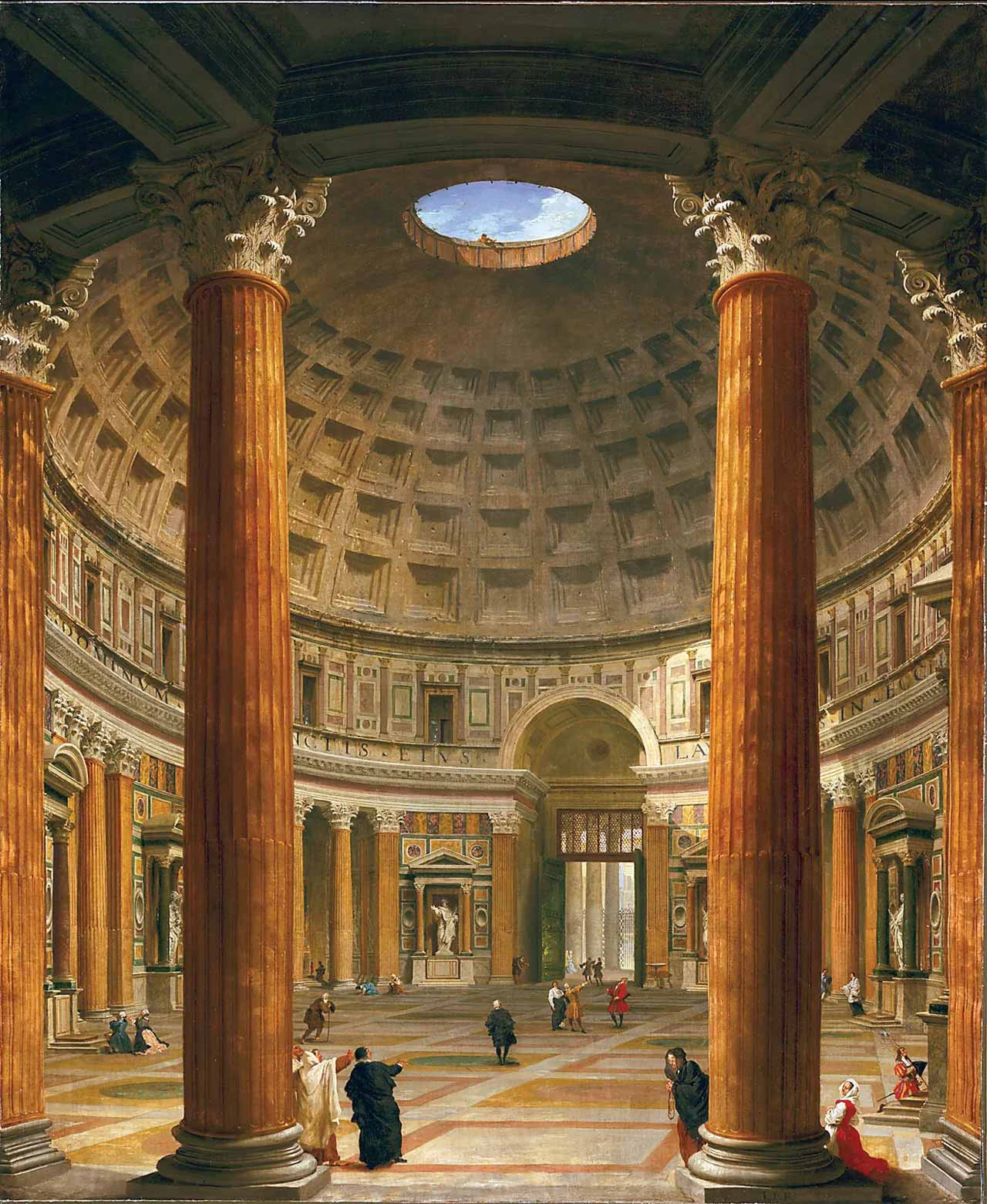
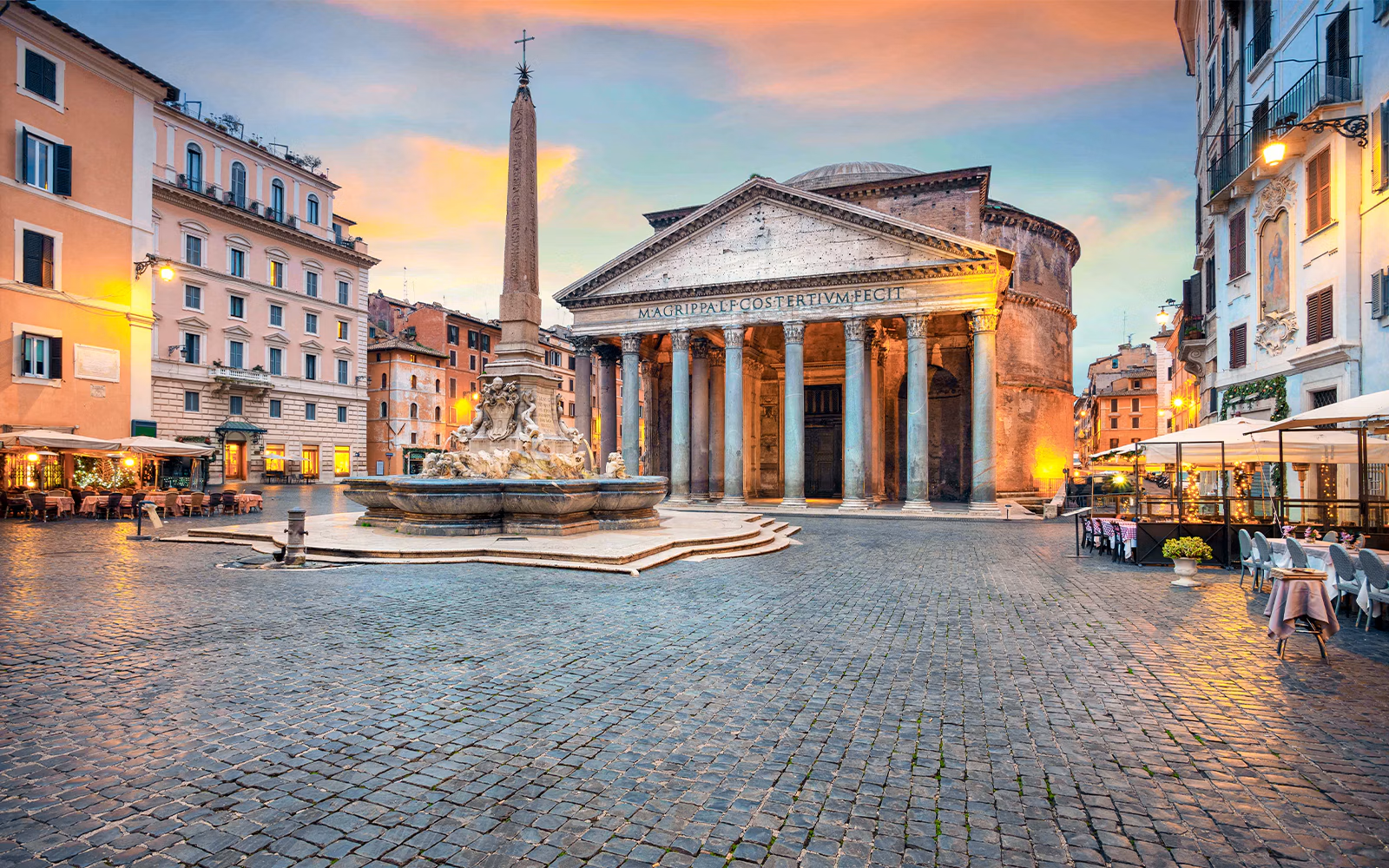
As early as the fourth century, after the end of the major Roman persecutions of Christianity, a feast day was celebrated for all the Christian martyrs, known and unknown. In the seventh century, Pope Boniface IV asked the emperor in Constantinople for the use of the abandoned pantheon temple in Rome, which the emperor then gave as a gift to the Church. The name “Pantheon” comes from the Greek pan-theion, for “all-gods,” but which more likely could also mean “superhuman,” “heroic,” “excellent,” and may have just been built to honor all Roman heroes and great historic figures. But Pope Boniface IV re-consecrated the temple as a church, on May 13, in honor of Mary and all the Holy Martyrs (so the same idea as the heroes of ages past, but Christianized). Twenty-eight cartloads of holy relics of martyrs were said to have been removed from the catacombs and placed beneath the high altar. In the eighth century, Pope Gregory III dedicated a side chapel of the old St. Peter’s Basilica to All Saints, on November 1, and that merged with the feast of All Holy Martyrs, throughout the universal Church, with the May 13 date being removed.
It happened coincidentally in some areas of the world, such as the British isles, that the feast, or its vigil, lined up with seasonal pagan feasts, such as Samhain (the celtic god of death), which were then “baptized” and re-interpreted in Christian terms. Celebrations of ghouls and ghosts and goblins and even visits from the dead were reinterpreted to be both Christ’s victory over evil spirits by mocking them for the fear they used to conjure, and dressing up in honor of the saints. So, it’s fine for Catholics to celebrate Halloween, provided it’s celebrated in a way that increases Christian faith and devotion, not a glorification of sin and the occult. Halloween comes from the words “All Hallows’ Eve, with hallows meaning holy ones, saints. Along with the Feast of All Saints developed the Feast of All Souls, but we’ll talk about that on Monday, when we have our All Souls’ Day Mass at 5:30.
Our readings for our feast day today are kind of unusual, in that the important reading is the first reading, from the Book of Revelation, rather than the Gospel reading, which is still important. Just that the first reading is importanter.
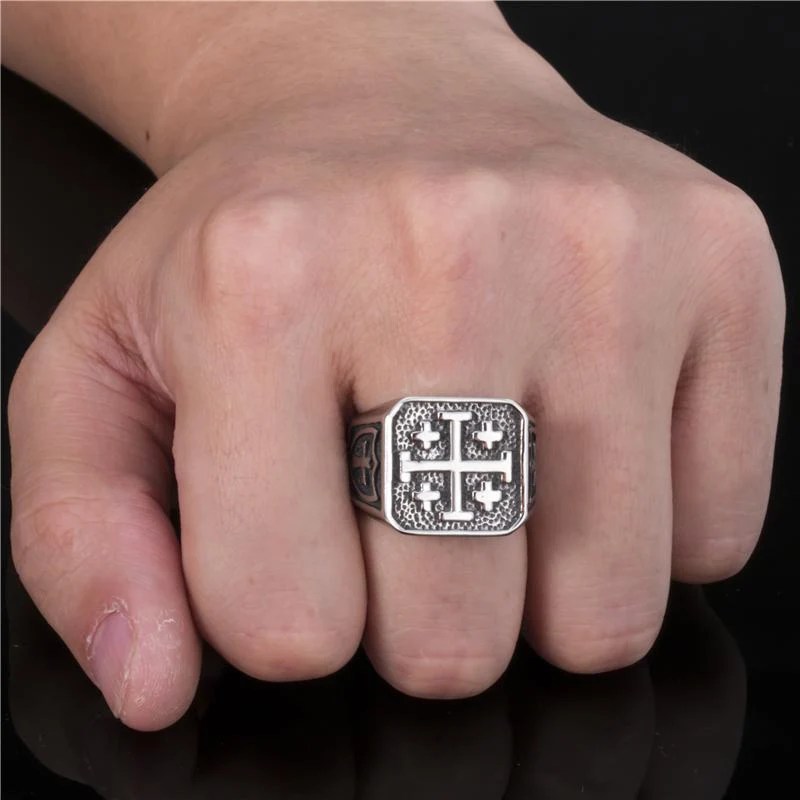
In our first reading, our author, Saint John, is describing a vision of the apocalypse, the end times. He sees angels ready to destroy the world, particularly Jerusalem, with its sin and corruption, and prepare for the New Jerusalem and the New Heavens and New Earth of the Messianic fulfillment. He sees a commanding angel come from the east, the direction of the sunrise, the dawning of the New Day (and the coming of the light of the world, spiritually speaking), and he orders the destroying angels to wait, as he says, “Do not damage the land or the sea or the trees until we put the seal on the foreheads of the servants of our God.” A seal is like the imprint of a signet ring, which marks something under the authority of a person of power, in this case, God. Those that are marked belong to God. And they will be spiritually marked, sealed with the Spirit. So there’s a lot going on here. First, people argue about whether Revelation is talking about the destruction of Jerusalem by the Romans in the year 70, in a secret code so as to not be arrested for treason, or if this is talking about the end times. Sometimes it’s clearly one, sometimes it’s clearly the other, and sometimes it’s not clear, in which case it can be understood to be speaking about the first in a lesser way, and the last in a greater way. Also, the Book of Revelation is highly mystical and symbolic, which makes understanding challenging and open to different interpretations. And also, the Book of Revelation has hundreds of references to the Old Testament. For example, this verse we just read is an echo of a vision from the Old Testament prophet Ezekiel. In Ezekiel chapter 9, we read, “Then he cried aloud for me to hear: ‘Come, you scourges of the city!’ And there were six men coming from the direction of the upper gate which faces north, each with a weapon of destruction in his hand. In their midst was a man dressed in linen, with a scribe’s case at his waist… and the LORD said to him: ‘Pass through the city, through the midst of Jerusalem, and mark an X on the foreheads of those who grieve and lament over all the abominations practiced within it. To the others he said in my hearing: Pass through the city after him and strike! … But do not touch anyone marked with the X.” What’s very interesting about this is the mark on the foreheads of those who do not celebrate, but lament the abominations going on in Jerusalem. The original doesn’t say X, but rather the Hebrew letter Tav, which looks like a small cross.
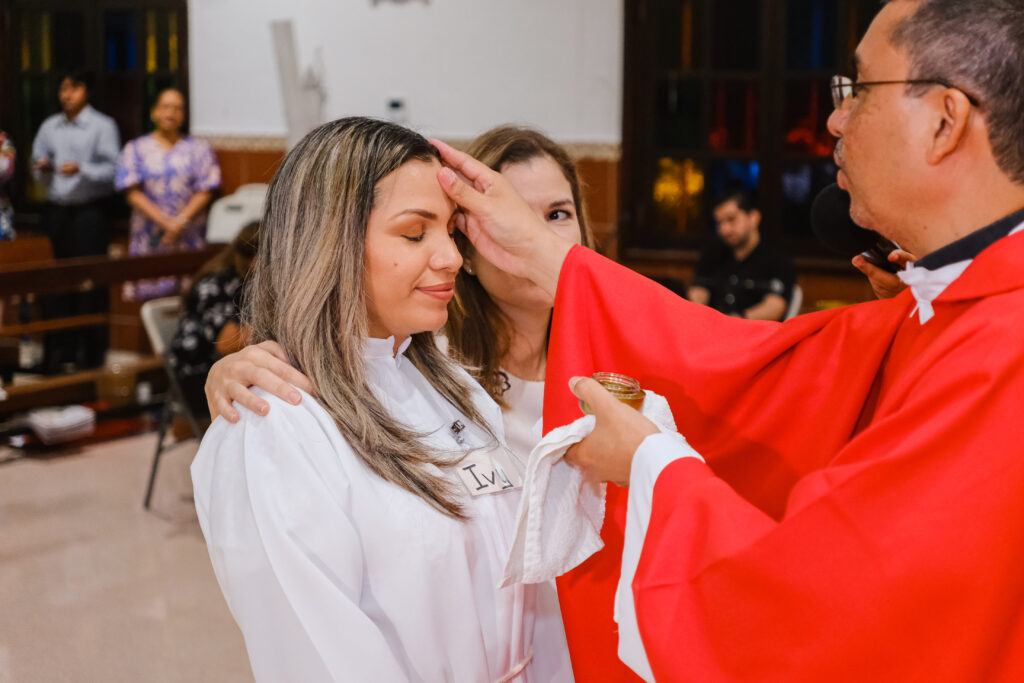
Who remembers what happens in the sacrament of Confirmation? The ordinary minister of the sacrament is the Bishop, the spiritual leader of the local church, the diocese. With holy chrism, he imposes his hand over the one or ones to be anointed, and then he traces with chrism a small cross on the forehead of the faithful, and addressing the person with the name of the saint they have chosen as their patron, the bishop says “Be sealed with the gift of the Holy Spirit.” If you were not taught well, you might think that Confirmation means that we confirm our consent to be Christian. But that would make us the active agent of the Sacrament. No, the active agent of the sacrament is God, who confirms the gifts and charisms of the Holy Spirit, for each person’s personal role in the divine plan, to share their gifts for building up the Body of Christ, and for the glory of God, to be a witness to their faith with their life, and if necessary, their death. Our first reading today is the scriptural foundation for our faith about the Sacrament of Confirmation. We are sealed with the spiritual mark of God, the Holy Spirit, as belonging to him, and called and empowered to live out our faith in the world, it’s struggles, and its great need for the truth and grace of God.
“I heard the number of those who had been marked with the seal, one hundred and forty-four thousand marked from every tribe of the children of Israel. After this I had a vision of a great multitude, which no one could count, from every nation, race, people, and tongue.” So we see a special number here, the mysterious 144,000. What is that? It says, “marked from every tribe of the children of Israel.” So these are the Jews, the Israelites, who recognize and accept Jesus Christ as the fulfillment of the Messianic promises as “God with us,” the redemption of humanity, the unraveling of the Fall, the restoration and glorification of Israel… which of course is that Israel was the context of the coming of the Messiah for the whole world. 144,000 is the twelve tribes of Israel times the twelve apostles of Christ times a thousand, which is just code for a lot of people. It’s a figurative, not a literal image. But then it says, “After this I had a vision of a great multitude, which no one could count, from every nation, race, people, and tongue.” That’s us. That’s the whole rest of humanity, who received the gospel and came to believe, and lived the life of spiritual holiness and fruitfulness.
“Then one of the elders spoke up and said to me, ‘Who are these wearing white robes, and where did they come from?’ I said to him, ‘My lord, you are the one who knows.’ He said to me, ‘These are the ones who have survived the time of great distress; they have washed their robes and made them white in the Blood of the Lamb.’” These are the martyrs, special even among all the saints, as those purified in their sufferings, and their special closeness to Christ in their offering of themselves in the cross of their particular martyrdom.
“They [all] cried out in a loud voice: ‘Salvation comes from our God, who is seated on the throne, and from the Lamb.’ …They prostrated themselves before the throne, worshiped God, and exclaimed: ‘Amen. Blessing and glory, wisdom and thanksgiving, honor, power, and might be to our God forever and ever. Amen.’” If you ever wonder what we do in heaven for all eternity, here’s your sign. We celebrate the Mass. We worship as the Church, singing with the angels, “Holy, Holy, Holy! Glory to God in the Highest! Blessing and glory, wisdom and thanksgiving, honor, power, and might be to our God forever and ever!” and we experience the reality that this joyful holy worship of God is what we are made for, this is the fulfillment of our deepest desires and purpose, peace and happiness. This is home, this is where we belong. And we even get to experience that, by the grace of God, here in this life, here as the people of God, in the Church, because it is one celebration of worship of God by those on earth and those in heaven as one communion of saints, one Church.
Saint Paul in our second reading marvels at the graciousness of God: “Beloved: See what love the Father has bestowed on us that we may be called the children of God. Yet so we are… Everyone who has this hope based on him makes himself pure, as he is pure.” We are called to holiness, to do what he says: to deny ourselves, to pick up our cross daily, and to follow him, however that might look in the context of our own lives.
The gospel reading of the beatitudes is an image of this. It is a litany of the virtues of the character of Jesus, which should be the virtues of the character of the followers of Jesus, the children of God, us. We should be able to put the beatitudes next to our bathroom mirror, and one is a reflection of our physical self, and the other is a reflection of our spiritual self.
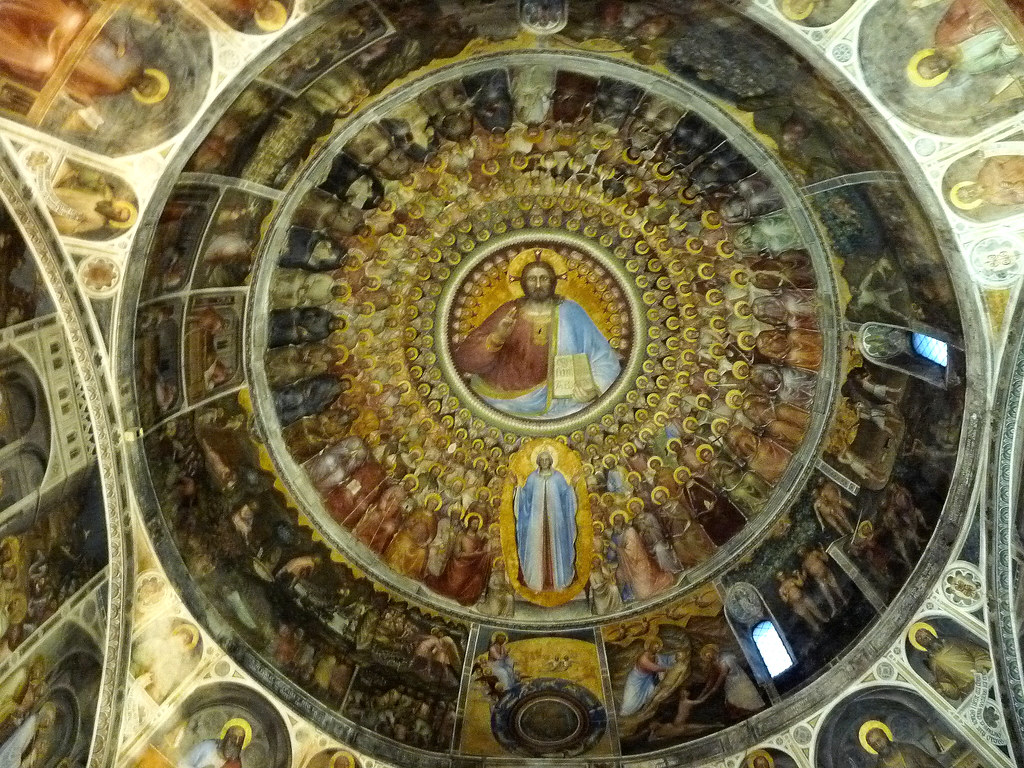
As we continue the joy of this solemnity of All Saints, we rejoice that we have so many great and holy examples in the saints who gone before us as signposts along the way. And they are joined by the countless unknown saints, the quiet, holy, reverent saints not recorded by history, who are also among the victorious and holy cheerleaders and intercessors for us in heaven. And we get to see through the inspired Word the joyous multitude, each with their own personal relationship with God and with each and all of the other saints, in the eternal celebration of the glory of God, that everlasting celebration of the Lamb and his Church, in which life is ever ancient, ever new. And we heard the call of grace, even in our life in the world, to strive to be living saints, to celebrate these mysteries of the holy communion and worship of the Church, and to purify ourselves through God’s love for us, and our love for God. Rejoice and be glad, for your reward will be great in heaven.


