Go to the readings for the 21st Sunday of Ordinary Time (Year A)
You know what a dilemma is. A dilemma is a difficult choice between two options. It’s either this or that. The great Christian writer C. S. Lewis presents a famous trilemma: a choice with three options. He describes it this way: “I am trying here to prevent anyone saying the really foolish thing that people often say about Him: [that] I’m ready to accept Jesus as a great moral teacher, but I don’t accept his claim to be God. That is the one thing we must not say. A man who was merely a man and said the sort of things Jesus said would not be a great moral teacher. He would either be a lunatic — on the level with the man who says he is a poached egg — or else he would be the Devil of Hell. You must make your choice. Either this man was, and is, the Son of God, or else a madman or something worse. You can shut him up for a fool, you can spit at him and kill him as a demon or you can fall at his feet and call him Lord and God…”
Those are the options of the trilemma: Jesus is lunatic, liar, or Lord. We see in scripture, like in our Gospel reading, Jesus clearly teaching that he is God, he is divine, he is the Son of Man from the prophet Daniel who receives everlasting dominion, splendor, and kingship over all nations. So either Jesus claims to be God and he’s wrong, and he doesn’t know he’s wrong, so he’s a lunatic; or Jesus claims to be God and he’s wrong, and he knows he’s wrong, and so he’s a liar; or Jesus claims to be God, and he’s not wrong, he is the Lord. One of the questions we each have to wrestle with is, who do you say that I am? Who do you say that Jesus is? Is he the Lord God, perfect, true, and good, to be obeyed, worshiped and adored and praised? Or do we disagree with what he has taught us? Do we hear his teaching on the indissolubility of marriage and say, “Jesus is crazy for teaching that! He doesn’t know how hard it can be.” Do we hear his teaching that he is the only way to the Father, no one comes to the Father except through him, and say, “That’s not very tolerant, we can’t say that today. There are many ways to heaven, so we’re not going to say Jesus was absolutely right about that.” Or do we unapologetically believe, profess, live, and defend everything that Jesus taught as true as the incarnate God of truth, goodness, and love? We cannot put all of our faith, the full weight of our need for mercy and forgiveness for salvation, on someone who might be a lunatic or a liar. We must profess him, and follow him, and worship him as Lord. Only then can we find rest in the peace of his love.
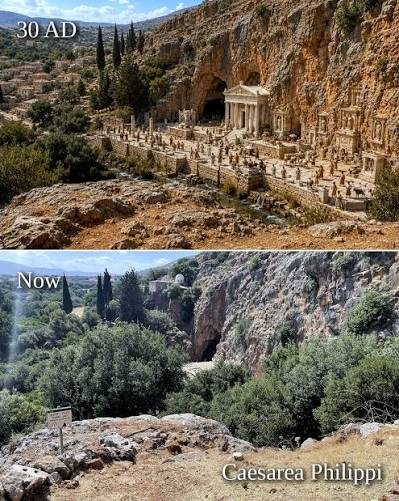
“Jesus went into the region of Caesarea Philippi…” It was in the northern most area of Jewish territory. It was a Greek city, Panias, which was renamed by the Romans Caesarea Phillipi. Panias is derived from the Greek pagan god Pan, who was worshipped there at a shrine with a giant rock, 100 feet tall and 500 feet wide, with a gaping hole in it that they used to throw in human sacrifice to Pan. The gaping hole was called the gates of hades (or the netherworld, the abode of the dead). This scene in the gospel of Matthew is a 20-mile walk from the previous scene. Jesus brought his disciples to this place to teach this lesson.
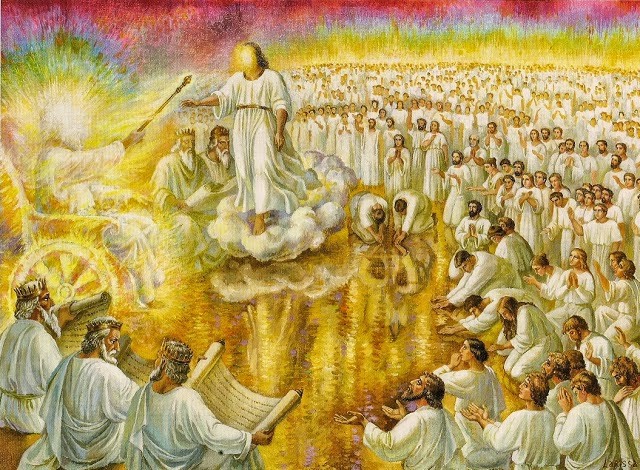
He asked his disciples, “Who do people say that the Son of Man is?” I mentioned a few minutes ago. Jesus is referencing the Old Testament prophet Daniel, who had a vision of the heavenly throne room, with God on his glorious throne, served by thousands of angelic attendants, and it says, “As the visions during the night continued, I saw coming with the clouds of heaven one like a son of man. When he reached the Ancient of Days and was presented before him, He received dominion, splendor, and kingship; all nations, peoples and tongues will serve him. His dominion is an everlasting dominion that shall not pass away, his kingship, one that shall not be destroyed.” This is a prophecy of the Messiah, the promised and long-awaited anointed one who would fulfill all of God’s promises, restore Israel, heal humanity, and bring all the world to worship of the one true God.
They replied, “Some say John the Baptist, others Elijah, still others Jeremiah or one of the prophets.” John the Baptist was hailed as a prophet, who dressed, acted, and spoke very much like Elijah, who was promised in the last verses of the Old Testament to return to prepare the way for the Messiah; and John the Baptist just shortly before this had been martyred by Herod. And Jeremiah was an Old Testament prophet who embodied and perhaps inspired the suffering servant described by Isaiah, which looking back through our Christian faith we can see also very well describes Jesus: “Surely he has borne our griefs and carried our sorrows; yet we esteemed him stricken, smitten by God, and afflicted. But he was wounded for our transgressions, he was bruised for our iniquities; upon him was the chastisement that made us whole, and with his stripes we are healed… he was afflicted, yet he opened not his mouth; like a lamb that is led to the slaughter… when he makes himself an offering for sin.”
He said to them, “But who do you say that I am?” Simon Peter said in reply, “You are the Christ, the Son of the living God.” Jesus knows both who he is, who the people say he is, and who is disciples believe he is. He is God, and he can read minds and hearts. But here we see that Peter, taking the lead among the disciples, professes something far more bold and far different than what the people are saying. This is something welling up from within them as his closest friends and followers: “Christ, Messiah, Son of the Living God.”
Jesus said to him in reply, “Blessed are you, Simon son of Jonah. For flesh and blood has not revealed this to you, but my heavenly Father.” The Church teaches that the three theological virtues are faith, hope, and love. Faith is a supernatural gift; a gift that must be given and accepted. You can have all the facts, know all about Jesus and the bible and the Church, and not be a Christian believer. Peter, speaking for the apostles, shows that he has both received and accepted the gift of this theological virtue of faith. “For flesh and blood has not revealed this to you, but my heavenly Father.” Of course, our obligation upon receiving and accepting the gift is that we must care for it, protect it, nurture it, and use it.
“And so I say to you, you are Peter, and upon this rock I will build my church.” This part somewhat gets confusing in translation. The Greek word for rock is “petra.” But Greek, like Latin and the languages that developed from it, have gendered word forms. Petra is a feminine noun. So when Jesus changes Simon’s name to Peter, the new Greek word is “petros.” Now some say that petros in Greek had a different meaning, which was “stone or pebble,” a different meaning than “rock,” and so Jesus wasn’t saying that Peter was the rock on which Jesus would build his church. They say Peter’s statement of faith that Jesus was the Christ was the rock on which the church would be built. However, in the ancient world, it would have been easily understood that Jesus was just adapting “petra” to a man, and so changed the form to “petros” without changing the meaning: You are petros, and on this petra I will build my church. Also, the Aramaic word for petra is Kephas, and Aramaic doesn’t have gendered words, so it would have been, you are Kephas, and on this kephas I will build my church. And we do see Peter being called Rock, Kephas, several times in the New Testament, so obviously the early Church understood the reference to the Rock as being Peter himself. I also went down a little rabbit hole and found out that the Greek word kepha, meaning head, which would seem to also make sense for Peter, is not related; the fact that the Aramaic word for Rock, kephas, and the Greek word for head, kepha, are so close is just coincidental and random.
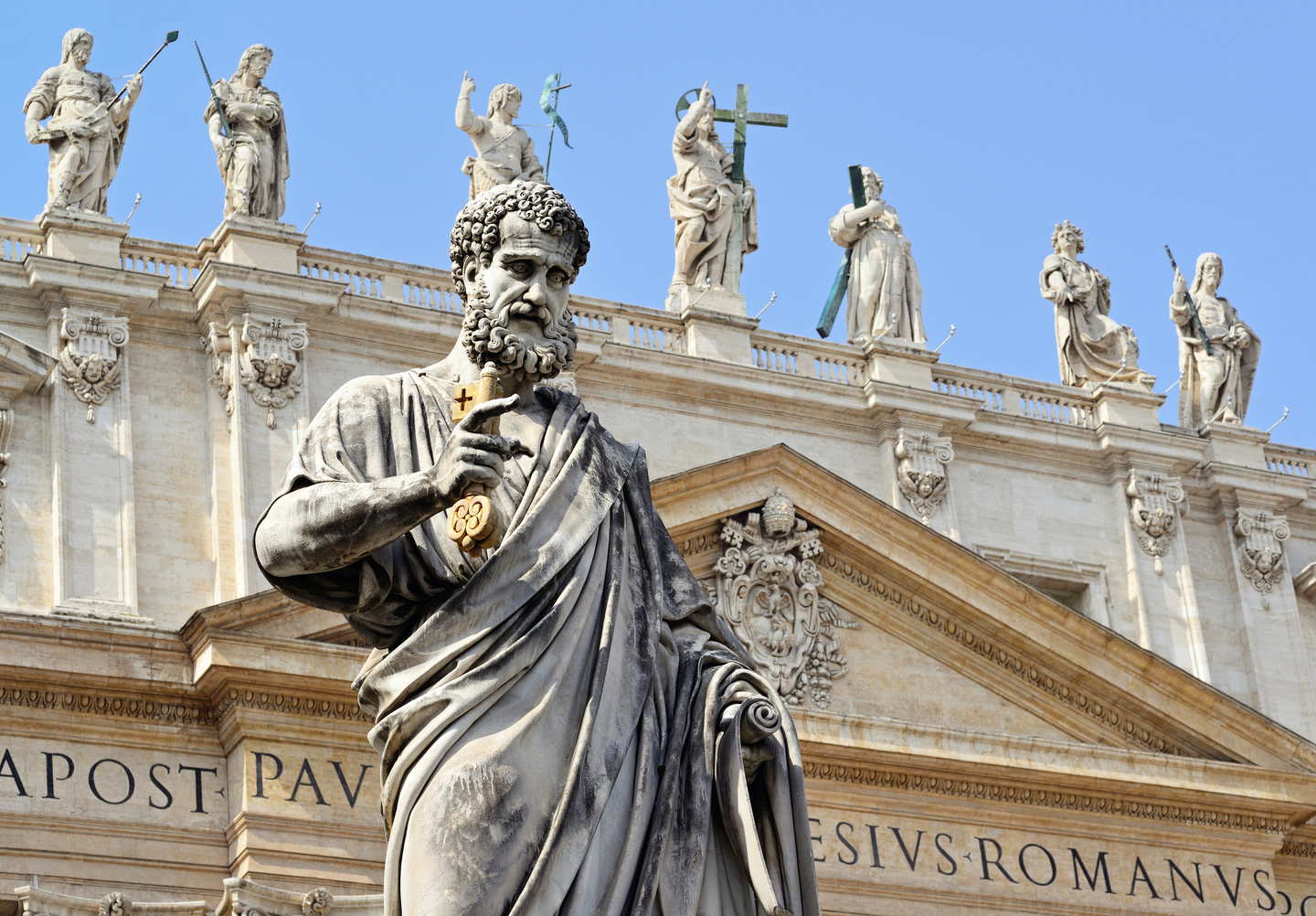
But also, the word, “church.” We often think of a big beautiful church building, like Saint Peter’s Basilica in Rome, or a cathedral, or our parish church. The Catechism (751-780) has a very beautiful reflection on our use of the word “church,” but the Greek word here is “ekklesia,” which doesn’t refer to a building, but rather an assembly of people. It was used all throughout the Greek Old Testament for the “assembly of Israel.” “Ekklesia” (ek + kaléō) means “called out,” such as Israel, or the church, being called out to be different than the world around us, or perhaps more literally, our being called out of our homes to come together as the assembly of believers. And so Jesus is foretelling that the unity of the church will be established on the rock-solid charism given to Peter (at Pentecost).
“and the gates of the netherworld shall not prevail against it.” We already brought up the gates of the netherworld. This giant rock dedicated to pagan worship with abominable human sacrifice. The message of Jesus showing the disciples the gigantic rock formation hosting so many pagan temples, including the abomination of human (often child) sacrifice, was that as powerful as any human or pagan or demonic power might seem to be, the rock of the Church is infinitely more powerful and steadfast. The forces of evil and the world will not prevail against the church of Christ. Someone pointed out to me that gates are not weapons of attack, they’re part of defensive fortifications. Which also means that the gates will not withstand the incoming force of Christ’s church, as it attacks demonic and sinful strongholds to free those held captive.
“I will give you the keys to the kingdom of heaven. Whatever you bind on earth shall be bound in heaven; and whatever you loose on earth shall be loosed in heaven.” This is perhaps the most important part, and also the obvious link to our first reading from the Prophet Isaiah. In our first reading, Isaiah is addressing a man named Shebna, with the title of “master of the palace.” The Hebrew word there is the al bayith. The al bayith was for all practical purposes the prime minister of the Kingdom of (the house of) David. He gave orders on behalf of the king, and was second to the king in authority. Basically, he was the vicar of the king, he was the administrator of the kingdom, and he would be treated with the same respect as the king. Except Shebna wasn’t a good al bayith. He was getting arrogant and greedy, and was not serving the interests of the king or the people under his care. And so God tells him, “I will thrust you from your office and pull you down from your station. On that day I will summon my servant Eliakim, son of Hilkiah; I will clothe him with your robe, and gird him with your sash, and give over to him your authority. He shall be a father to the inhabitants of Jerusalem, and to the house of Judah. I will place the key of the House of David on Eliakim’s shoulder; when he opens, no one shall shut, when he shuts, no one shall open.” We can see Jesus in the gospel drawing a clear connection in his appointment of Peter to this more ancient (at least 600 years before Jesus) practice. In the Old Testament, in the Kingdom of David, God gives Eliakim the key to the kingdom, and says when he opens, no one shall shut, and when he shuts, no one shall open. In the New Testament, God Incarnate, Jesus, the Son of David, gives Peter the keys to the kingdom of heaven, and tells him, “Whatever you bind on earth shall be bound in heaven; and whatever you loose on earth shall be loosed in heaven.” So it seems pretty clear to me, and to the church, that Jesus is setting up Peter as a new kind of al bayith, a prime minister of the kingdom of Christ the king. Jesus is giving Peter, and through him, the Church, the authority to make rulings of binding and loosing in terms of teaching faith and morals, and the forgiveness of sins (with the later gift of Jesus breathing on them, giving them the Holy Spirit for the forgiveness of sins). Jesus tells his disciples elsewhere that the pharisees bind heavy burdens on people’s shoulders, but they will not lift a finger to move them, which is the pharisaical imposition of their moral/legal code. And he tells the disciples to obey them, because they sit in the legitimate seat of authority, but not to imitate them. And here in our gospel reading today Jesus gives Peter (and after the resurrection, the other apostles, together with Peter) the divine authority to bind and loose. Notice that Jesus says that heaven will follow the authoritative teaching of Peter (and his successors) on what is bound or loosed.
But there’s two more things I want to quickly draw out of the old testament original text: first, God tells Shebna, “I will thrust you from your office and pull you down from your station.” So this office of prime minister is an office, a station, with a succession of people who hold that office. When one person vacates the office, another one is chosen to fill it, and it goes on. So if Jesus is establishing Peter in a new version of this office for the new kingdom, it is not just Peter who is receiving the keys and the authority, but his successors who follow him in his position as first among the apostles, the rock that brings unity to the church. And second, God tells Shebna about his successor Eliakim, “He shall be a father to the inhabitants of Jerusalem, and to the house of Judah.” So Shebna is being kicked out this important office of authority in the Kingdom of David because he is not holy, he is unable to represent the goodness of the king, and lead with virtue. And his successor will represent the king, and lead with virtue, he will be holy, and will be a father. A holy father. What do we call the one who holds the office of the successor of Saint Peter? The holy father. Because it’s biblical. It’s what God instituted in the church. We might also remember the end of the Gospel of John, that it was only Peter who Jesus took aside, and three times said to him, “Shepherd my sheep, feed my lambs, tend my sheep.”
“Then he strictly ordered his disciples to tell no one that he was the Christ.” This goes back to the beginning of the reading of the Gospel. He wants each person to encounter Christ with their own faith, and come to their own realization and acceptance of who he is, without the disciples providing them the answer, letting each person exercise their faith in answer to the question, “Who do you say that I am?” And so even knowing all of this, we each still must decide for ourselves, by how we live, how we speak, how we act, what we believe, how we respond to the challenge of the trilemma of who Jesus truly is. Do you believe he is Liar? Lunatic? Or Lord?