

The Thirty-first Sunday of Ordinary Time (Year C)
Wisdom 11:22-12:2
Psalm 145:1-2, 8-9, 10-11, 13, 14
2 Thessalonians 1:11-2:2
Luke 19:1-10
Our first reading for this weekend, from the Old Testament book of Wisdom, gives us a beautiful prayer to the Lord. It says, “For you love all things that are, and loathe nothing that you have made; for what you hated, you would not have fashioned. And how could a thing remain, unless you willed it… But you spare all things, because they are yours, O LORD.” And the use of the word, “LORD” is not a call to some generic supernatural force, but the reverential substitution for the holy name of Israel’s God, who revealed His particular and personal love for His people.
So first, we can get from this the assurance that if we feel distant or unloved by God, that this is our feelings misleading us. God, who is love, loves us, or we wouldn’t exist. Not because He has to, but because He willingly chooses to. We are His beloved, each individual one of us, infinitely. We respond to His love by surrendering our lives to Him, and conforming our lives to His grace, which purifies us of every imperfection and sin.
But, we might protest, what about spiders, and mosquitoes, and oatmeal raisin cookies? Why do these vile things even exist? Or more to the point, what about terrorists, and pedophiles, and cancer cells? What’s up with that? Does God love cancer? Is that why it exists? No. Of course not. God creates all things good.
What is cancer? It’s cells of life, whose internal instruction code gets corrupted, and they start multiplying out of control, like a biological meltdown, where the very mechanism that was designed to regulate becomes the problem. That the cells exist is good. That they have become corrupted from their intentional goodness is not. The same with terrorists and pedophiles. Their existence, their nature, is good. That they have gone down the path of sin and error, and corruption of their goodness, is not.
That is why, except under very particular and rare conditions, the Church rejects the death penalty. Even the most vile criminal, who has twisted and corrupted their moral character, cannot diminish the inherent goodness of his or her human nature and dignity, which has inviolable rights, such as the right to life.
It goes all the way back to Satan, the most beautiful of the seraphim angels, who pridefully rejected the goodness of the very plan that his own existence was part of. So in the sinful jealousy of his corruption, he led Adam and Eve, the holy stewards of creation, into sin, and so corrupted the order of nature of both humanity and of the created world, which continues to groan in anticipation of its redemption, and its freedom from corruption. God loves the things he has made, and so they continue to exist, even with their corruption. First, because he loves the goodness of their nature; and second, because his plan of restoration and redemption uses even corruption, suffering, and death for healing, love, and eternal life. God’s got it all in his plan, even allowing for our stupidity and misuse of our freewill, and the naturally occurring corruptions of disease and disaster. He uses it all for the goodness of his beautiful plan of love for each one of us, with whom he is especially close when we are suffering and brokenhearted.
Like a society under a corrupt ruler begins to share in and reflect the ruler’s corruption, Adam and Eve were given the divine authority as king and queen of creation, and so in their corruption, all of creation suffers the effect of humanity’s fall from original order.
“Therefore you rebuke offenders little by little, warn them and remind them of the sins they are committing, that they may abandon their wickedness and believe in you, O LORD!”
Speaking not of natural evil, like disease, but of moral evil, which is sin, God is praised for his gentleness and patience, yet his firm intent to turn offenders, sinners, from their sin and wickedness to the life of grace. He doesn’t overpower our wills, he doesn’t bully our freewill. He prompts us, through our conscience, our conversations, our circumstances, to give up our sin, our voluntary corruption, our wounds caused by the sin of others, and to abandon ourselves to the mercy of his healing love and care for us, to live according to the goodness of our created nature (for, as he says on the sixth day, “it is very good”).
Our psalm echoes the praise in our first reading. “The LORD is gracious and merciful, slow to anger and of great kindness… compassionate toward all his works. Let all your works give you thanks, O LORD… The LORD lifts up all who are falling and raises up all who are bowed down.”
Our second reading, as we know, isn’t chosen to reflect the theme of the other readings, but is progressing independently through the letters of the New Testament. But today we hear St. Paul tell the Thessalonians, “We always pray for you, that our God may make you worthy of his calling and powerfully bring to fulfillment every good purpose and every effort of faith, that the name of our Lord Jesus may be glorified in you, and you in him, in accord with the grace of our God and Lord Jesus Christ.”
It is through Jesus Christ that human nature is called to redemption and restoration to original glory and grace. We have not fully accepted the invitation to allow the kingdom of God to rule over our hearts and minds. We still want to retain some relationship with our sinful attachments, because we’re just not ready to hand over every last bit ourselves in complete trust to him; to do what we are supposed to do, and to be what we are supposed to be, for his glory and for our salvation.
The Thessalonians were obsessed with end-times predictions. In this letter is where Paul writes the most about the end times, and so we read from this letter the last four weeks of the liturgical year, leading up to the feast of Christ the King on the last Sunday. St. Paul is responding to the disordered way that the Thessalonians were responding to thinking the end times had come, or were about to come. They cannot think the end is nigh, so work is pointless and slacking off, nor that they might be like the wicked servant, who thinks the master is long delayed in coming, and begins growing in sinfulness. And Paul corrects them to always be prepared for the coming of Christ by always being faithful in living out the Christian life, always bearing fruit, always carrying out their witness of the virtuous and holy life of grace.
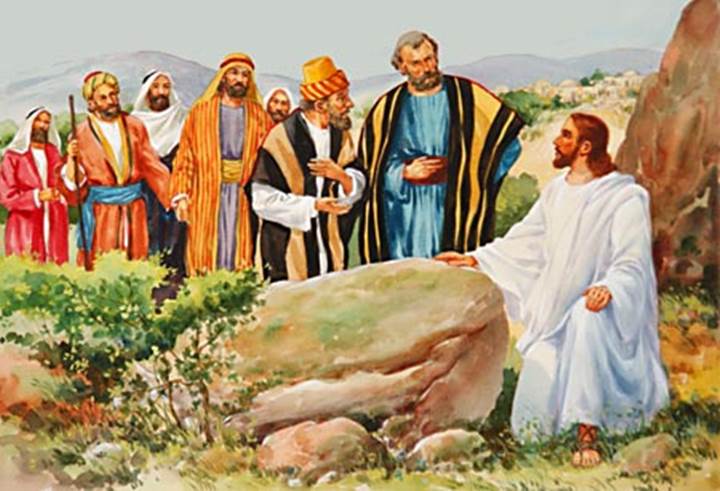
And finally, in our gospel, all of this comes together in the encounter between Jesus and Zacchaeus. We remember from last week how much tax collectors were despised as unclean thieves and traitors against their own people. Zacchaeus is a chief tax collector, a regional director. And a wealthy man. And he’s short.
So Jesus is coming to town, and Zacchaeus wants to see him. Perhaps because of Jesus’ reputation of mercy and kindness toward tax collectors, even naming one among his twelve special apostles. So he runs ahead of where Jesus is going, and climbs a tree, maybe hiding in the leaves. Here’s a rich chief tax collector, climbing a tree like one of the village children.
Children can experience and participate in the celebration of the Mass more easily without rows and rows of adults in front of them blocking their view of the sanctuary, and Jesus on the altar.
Jesus looks up and sees him, and invites himself to have dinner with Zacchaeus. And everyone grumbled. Why is he going to that house? Why doesn’t he go to the poor? Why not with the prayerful ones? How can Jesus be who people say he is, if this sinner is the kind of person he’s going to have supper with?
But Jesus is expressing God’s desire to be in communion with those lost in sin, to seek them, find them, and bring them back to life. Zacchaeus had only hoped to see Jesus. Now he’s overwhelmed being the recipient of God’s divine attention and care. God did not just see the corruption of Zacchaeus’ moral character. God also knows Zacchaeus down beneath the corruption to the goodness of his very being; goodness that God wanted to draw out; the life of generous communion he was made for, which is perfected in the communion of heaven. And the effect on Zacchaeus is not just perfect contrition, but also superabundant reparation for his sinful ways. The reading says, “Zacchaeus stood there and said to the Lord, ‘Behold, half of my possessions, Lord, I shall give to the poor, and if I have extorted anything from anyone, I shall repay it four times over.’”
Think about what you have in the bank right now, what you own, what your assets are, whatever. Think about saying, I’m cutting that in half, half of that, it goes to the poor right now and you don’t look back. That’s Zacchaeus.
This reparation is like the penance that is assigned in the Sacrament of Reconciliation. The penance does not earn the forgiveness of sins. The penance is the reparation done in thanksgiving, as the response to having been forgiven. It is meant, on the one hand, to be therapeutic, to help the penitent grow in holiness and not fall into sin again; and on the other hand, to put good into the world, into the community, to “repair” the effects of the sins they’ve done and now been forgiven for. The Sacrament of Reconciliation forgives the sin in the eyes of God, on the supernatural level. But the effects of sin, the wounding done to the relationships and the community, and an increased attachment to sin, must be amended on the natural level.
So when Zacchaeus responds in this way to Jesus, what does Jesus say? “Jesus said to him, ‘Today salvation has come to this house…’” There’s a play on words, a double meaning.
First, Zacchaeus being restored to righteousness and communion with God by God’s mercy, and Zacchaeus’ response of perfect contrition for his sin, and his abundantly generous reparation shows “that today salvation has come to this house.”
But also, Jesus says this in the context of He Himself coming to Zacchaeus’ house. Jesus himself is the salvation that has come to this house. Jesus is the cause of Zaccheaus’ conversion, his restoration to the communion of the children of Abraham, God’s people. Zacchaeus belongs to God, and God has always loved him, and now calls that love to come bursting forth out of Zacchaeus in the form of joyful generosity. And that’s what ties all our readings together. God knew of the evil and corruption of Zacchaeus, and the suffering that he caused, especially to the poor. And now Jesus doesn’t help the poor by destroying their oppressor Zacchaeus, but by lovingly removing the corruption in Zacchaeus, he now becomes a generous blessing and provider to the poor.
“For the Son of Man has come to seek and to save what was lost.” And this might remind us of the three parables about God’s joy at recovering the beloved thing that had been lost, the lost sheep, the lost coin, and the lost (prodigal) son. One might imagine, with the hatred and resentment the people expressed toward Zacchaeus, and his corruption keeping him away from the liturgical and communal life of worship, which held the community of Israel together, that Zacchaeus might have struggled to see himself as a divinely loved member of God’s people, the children of Abraham. He was lost and separated, by sin and by hatred. And Jesus, salvation incarnate, came to heal the sin and reconcile the separation, that this lost son of Abraham might indeed know himself principally in terms of God’s love for him, and his call to live out that love in holy and generous care for the community, using his gifts and resources for the good of all, especially those most in need.
I love the quote that I saw that says,

God works all things for good for those who love him and follow his ways. And Zacchaeus didn’t even love him when that tree was planted. God continues to love us, even when we do not love Him in return. God was prepared and ready for Zacchaeus. If God could do this with corrupt, selfish little Zacchaeus, what could he do with you? What would be the effect for the world of your Zacchaeus-like repentance and superabundant restoration? He doesn’t need us, but calls us to exist and sustains us out of sheer generous love for us, that we might repent of our sin, and share in the joy of his divine goodness. We are made to let loose all our potential into his divine service, for his glory, and for the welfare and salvation of others.
God loves you, and he is not angry with you. He wants you—He created you—to share in His joy, and let go of the sin that limits His life in you. Trust in him. Do not be afraid. Let your light shine.
“Before the LORD the whole universe is as a grain from a balance or a drop of morning dew come down upon the earth. But you have mercy on all, because you can do all things; and you overlook people’s sins that they may repent… Therefore you rebuke offenders little by little, warn them and remind them of the sins they are committing, that they may abandon their wickedness and believe in you… O LORD and lover of souls.”


 And then this is where our reading picks up.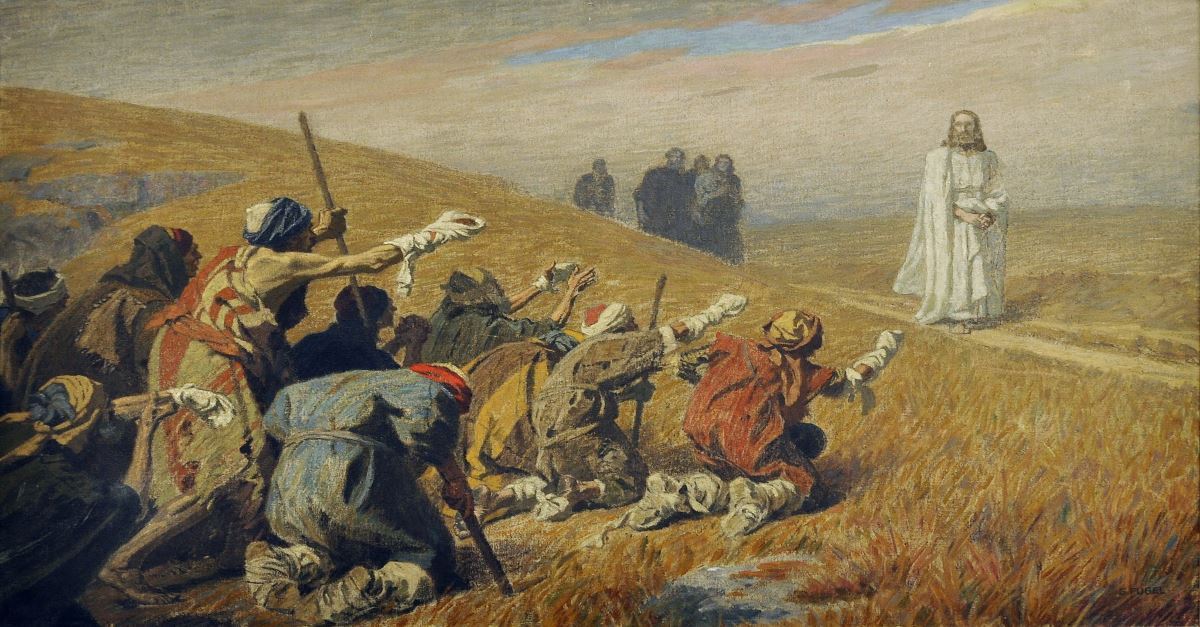
 Over this “cup of salvation” Jesus will later speak: “This cup is the new covenant in my blood.” In the Liturgy of the Eucharist, we bring bread and wine to the priest. The priest offers it to God. God accepts the sacrifice, and changes it into the even greater sacrifice of the meat/substance/reality of the Lamb of God, the perfect sacrifice. God then accepts that sacrifice, and then the priest gives it back to us for our thanksgiving feast with our family and friends, as we share with each other our stories of how God has saved us from our distress.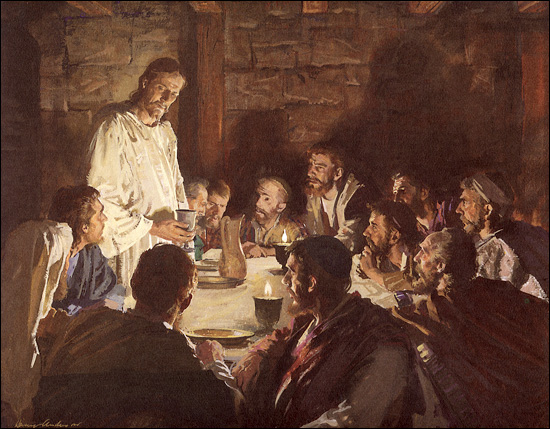

 But for mulberry trees, the distance was doubled to 60 feet, because of how notoriously spread out their roots would grow.
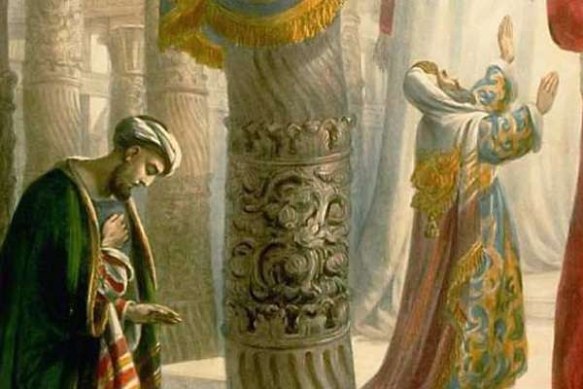
 He teaches us that if we are doing great works of generosity and kindness, and if we are faithfully living the teaching of the Church, and we’re fighting against sin… we shouldn’t be bragging about our greatness, and expecting a gold star sticker. Living out the truth God gave us is simply the expectation. And our response should be, “


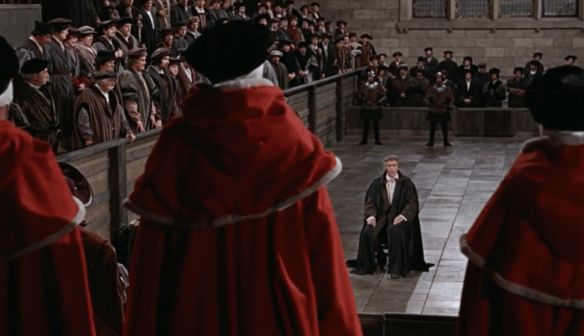
 Having failed to have a son with his wife Catherine, and frustrated that the pope would not grant him an annulment so he could marry Lady Anne Boleyn instead, Henry passed into law the “Act of Succession,” and required his public officials to swear an oath which a) recognized the child of Henry and his second wife Anne Boleyn as the heir to the throne; b) declared Henry’s first marriage with Catherine as null and void, and c) repudiated the authority of the Pope, and declared the king the head of the Church in England. Thomas More refused to take the oath. He spent fifteen lonely months imprisoned in the Tower of London. His family implored him, for his sake and theirs, to take the oath, but Thomas refused. He was convicted of treason and was beheaded. On mounting the scaffold, Thomas More proclaimed that he died as “


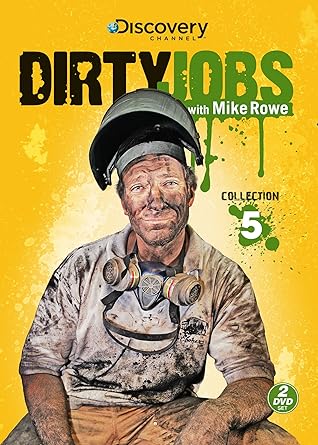 You have to do something you don’t want to do, that’s beneath your dignity? Watch Mike Rowe’s “Dirty Jobs.” There’s a saying, “If serving is beneath you, leadership is beyond you.” Get down in the muck and do what has to be done.