


Last week, in the first reading, we heard the call from God to the prophet Jeremiah. The last two weeks in the gospel we heard Jesus speak about his call to be the Messiah. This week, we hear of two other calls. In our first reading, the call from God to the prophet Isaiah; and in the Gospel, the call to Simon, who Jesus will later give the new name, Peter. So in this weekend’s readings in particular, and here in the beginning of the season of Ordinary Time in general, we’re getting a sense of vocation (being called) and mission (being sent). It applies not just to men called to priesthood or those called to religious orders. It applies to all humanity. Every person conceived in the womb has their own unique call from God to their own unique life, with their own unique personality and gifts. Not one human soul is extra and unimportant. Not one. Every soul, every day, is here for a reason, even if we struggle to see, or understand it, or believe it.
In our gospel and in our first reading, we have two accounts of God calling someone to ministry. What’s important in the parallel between Isaiah and Peter is not that they experience the same steps—but that they experienced the same steps that we often experience when we have a divine encounter.
Just FYI, for those who are available, a few weeks ago we began offering a holy hour of Eucharistic Adoration at noon every Friday, a wonderful opportunity for divine encounter. No prayers, no readings, no homilies. Just you gazing with love at the Lord, and the Lord gazing with love at you. It’s certainly helped me in the last few weeks. So if you’re available at noon on Friday’s, the day of the Lord gave himself to us for our salvation, I encourage you to plan to come here for the divine encounter in Eucharistic Adoration.
So the encounter. The first step is always God making the first move. He’s always reaching out to us, and sometimes we pick up on it (even we think we’re making the choice to do something good, like our choice to go to God, it’s really us finally responding to his grace). So God gave Isaiah this mystic encounter in which he saw the divine throne room, and the worship of God by the heavenly host. 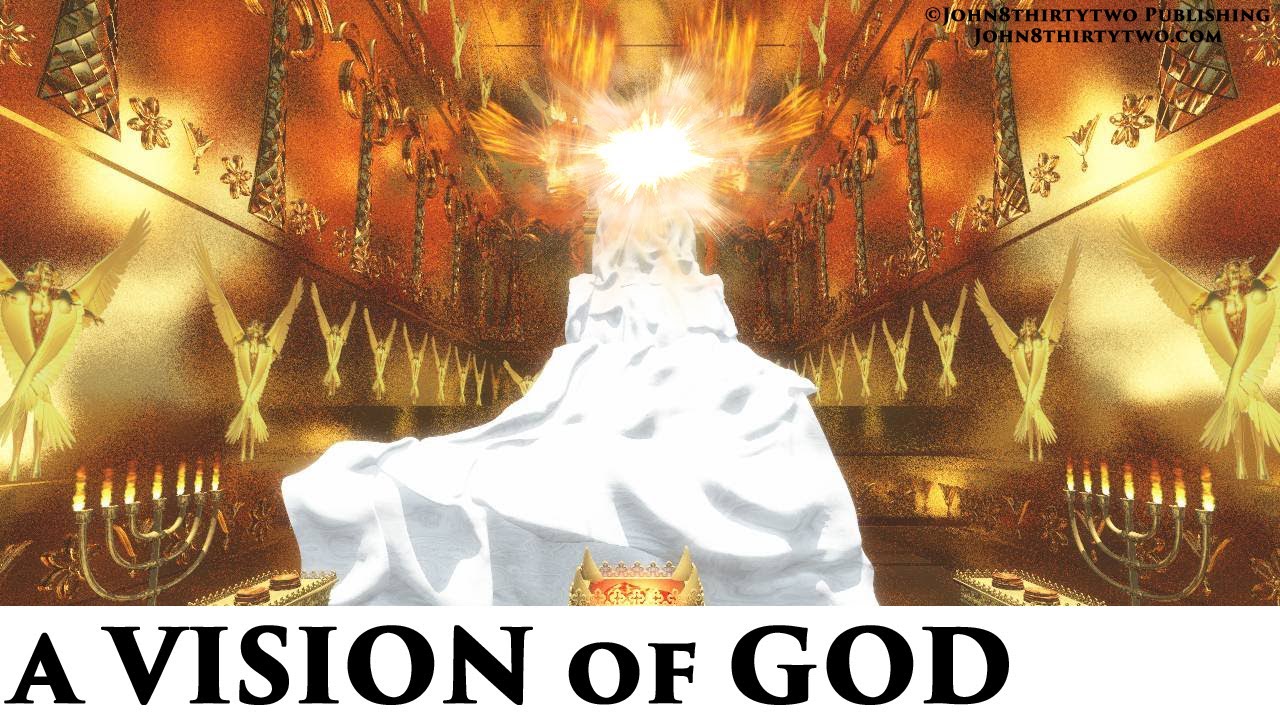 “I saw the Lord seated on a high and lofty throne, with the train of his garment filling the temple. Seraphim were stationed above. They cried one to the other, ‘Holy, holy, holy is the LORD of hosts! All the earth is filled with his glory!’ At the sound of that cry, the frame of the door shook and the house was filled with smoke.” The image is of a king high above any earthly king, wearing not just an impressively regal garment, but so impressive it filled the temple. The Seraphim (or Seraphs) are the highest rank of angels, those closest to God. “Seraph” means “burning one” and in Hebrew, the “-im” ending is plural. So the Seraphim are the angels most intensely burning with God’s love, being the closest to his glory. They are so filled with awe at God’s majesty and burning love that they ceaselessly sing out, “Holy, holy, holy is the LORD of hosts!” (The Hebrew language lacks comparison and superlative modifiers, so the word is repeated to achieve this effect. “Holy, holy, holy” equals “holy, holier, holiest!”) We join our singing to theirs at every Mass, hopefully out of awe, and not just out of routine. The choir of angels sang with such vigor that the temple shook. And the house, the temple, was filled with smoke, which can be said to be the incense used in the Temple, and in the Mass, which is used to signify something consecrated as holy, such as the offerings on the altar, the Paschal candle, or a body before burial. Incense, as described in the Book of Revelation, also signifies the rising prayer of the saints. So Isaiah sees all this glory.
Simon Peter’s encounter was not a mystic vision of heaven, but this strange carpenter getting into Simon’s fishing boat, and telling him how to catch fish, which was not how you catch fish. You catch fish at night, near the shore, not during the day, out in the deep.
On a human level, this is a test for Simon. Simon and Andrew run a fishing business. Zebedee and his sons James and John are co-workers in this business. They’re professionals, who know what they’re doing. Jesus, on the other hand, is a tekton, a carpenter, a builder. And as a general rule, fishermen do not like carpenters telling them how to fish. These fishermen have done everything they knew to do, they fished all night, it’s now morning, they’re tired, they’re frustrated from having caught nothing, and then this carpenter comes along and says, “Well, hey, did you try the deep water? Go out into the deep water and try and put your nets down and see what happens.” It’s a real test. Yet Simon tells Jesus, “Master, we have worked hard all night and have caught nothing, but at your command I will lower the nets.”
 But Jesus had this big crowd following him. Simon, and his brother Andrew, and their co-workers James and his brother John, heard what Jesus was preaching. So when Jesus told Simon to go out to the deep and cast their net, he obeyed. And after not having caught anything all night, they filled two boats to almost sinking. Simon recognized that Jesus had performed this miracle, and that only God could have summoned such a quantity of fish to where there should not have been any. So Simon recognizes that Jesus is not just a strange carpenter, but the God of Israel.
On a deeper level, the ancient Church Fathers saw a spiritual significance in the fact that Christ teaches from the boat of Simon Peter. It’s Peter’s Boat—the “bark of Peter” (“bark” is an old word for a boat).  They saw in this the mystery of the ministry of Jesus through the successor of Peter in the life of the Church. The “Bark of Peter” is an ancient nickname of the Church. The successor of Peter (the Vicar of Christ) would teach the world from the Bark of Peter, and he would navigate the Church through the sometimes stormy waters of the ages. (Read St. John Bosco’s prophetic vision of the Bark of Peter anchored safely between the two columns, protecting it against the attacks of its enemies!) That’s part of the tradition for calling the main area of a Catholic church where the pews are the “nave.” According to Wikipedia, “The term nave is from navis, the Latin word for ship, an early Christian symbol of the Church as a whole, with a possible connection to the “ship of St. Peter” or the Ark of Noah. The term may also have been suggested by the keel shape of the vaulting of a church. In many Scandinavian and Baltic countries a model ship is commonly found hanging in the nave of a church…“
Ok, second step. In the presence of the glory of God, the creator of the universe, the savior of Israel, the God of all majesty, wisdom, and holy glory, Isaiah and Simon become self-conscious of their unworthiness, their sinfulness, their imperfection. That’s the second step: humility, contrition, repentance. Isaiah says, “Woe is me, I am doomed! For I am a man of unclean lips, living among a people of unclean lips; yet my eyes have seen the King, the LORD of hosts!” The lips speak what is in the heart, and so he weeps for the uncleanness of his heart, and the unclean hearts of the people of Israel. He is filled with fear because no sinner can behold God face to face. Simon Peter says, “Depart from me, Lord, for I am a sinful man.” We don’t know what sinfulness Simon is guilty of, but in its place, we can put whatever sinfulness we might be guilty of, whatever we’re ashamed of, if we were to come into an encounter with God who can read and reveal the thoughts of our hearts. This repentance should be our second step. Often we think of the Church, and we are faced with the sorry state of our moral life. Often our way of dealing with this tension is then to stay away from Church (like Adam and Eve recognizing their shame, and hiding from God in the garden of Eden). But our response should be humble contrition and confession. It’s our choice how to respond to the tension, to the disconnect between God’s holiness and our sinfulness: we can choose to turn toward God in repentance, or away from God preferring our comfortable sins. Isaiah and Peter are afraid, not because they love their sins more than God, but because they become super-aware of their sin in God’s presence.
The third step is God’s mercy. Isaiah says, “Then one of the seraphim flew to me, holding an ember that he had taken with tongs from the altar. He touched my mouth with it, and said, ‘See, now that this has touched your lips, your wickedness is removed, your sin purged.’” Now it should be clear that we’re not talking about an actual piece of charcoal. We are speaking in figures of spiritual/mystical realities. So the fire of God’s love, and of the Seraphim, is spiritual fire. And this coal is a figure of cleansing, purifying fire of the altar of prayer; and he takes it and places it on Isaiah’s lips and says “your sins are forgiven.” In a way, this burning ember is like a prefigurement of the Eucharist, which when it is taken from the holy altar and touches our lips, it removes our wickedness and purges our sin (that applies to venial sin—not mortal sin, by which we cut ourselves off from God’s grace; for that we are obligated to go to the particular sacrament given to us by God to reconcile ourselves with Him after committing mortal/deadly sin). But for the venial sins we commit every day, our frequent failures to follow the promptings of our conscience and God’s will, the grace and healing of the Mass give us this mercy. Receiving the Eucharist is a share in the burning love of the Sacred Heart of our Lord. As for Simon, Jesus simply said to Simon, “Do not be afraid.” He doesn’t say, no, it’s ok, your sins aren’t a big deal, you’re basically a good person. Jesus accepts Simons’ confession, and moves him through it.
God is not repelled by our sinfulness. His response is not disgust, but compassion. A parent who sees that his child is wounded is not disgusted and wrathful toward his child, but reaches out in tenderness and love, to give, within his power, comfort and healing. When we sin, we become tangled in that sin. God wants us to be free. But the way to free us from sin is not just to dismiss our sin, but to train us not to choose sin. And being trained, getting disciplined, is not fun, as the author of the Letter to the Hebrews confirms (Heb 12:11). This disciplining can feel like God being wrathful against us, when it is really our pulling away from God’s love trying to heal us. God’s wrath is really God’s love, as experienced through sin. God only loves. But when we’re on the discipline-end of that love, God doesn’t mind using tough love, if that’s what he knows will ultimately help us… even if He knows we’ll be angry at Him for a while.
And lastly the fourth step: commission, vocation. “Jesus said to Simon, ‘Do not be afraid; from now on you will be catching men.’ When they brought their boats to the shore, they left everything and followed him.” When we read other gospel accounts of this event, like Matthew’s, where Jesus just says “Follow me,” and we wonder why they just get up and go, here Luke gives a much fuller version of the encounter. It makes more sense after reading Luke’s gospel why these first disciples left everything and followed him. Jesus gave them reason to believe in him. Then he called them. And over time, he will teach them, form them, and ultimately, send them, to continue his ministry and lead the church.
As Brant Pitre points out, an interesting aspect of the Lord choosing fishermen to be the core of his disciples, is that professional fishermen would need to have cultivated certain virtues in their character that would be essential in their future ministry. First, the need to be observant. They need to pay attention to their surroundings, to conditions, to weather, to patterns. Second, the need to be patient. Fishing involves long times of nothing happening, at least by appearances. Fishermen can’t just pull up their equipment and move every time they get impatient. Third, the need to be persistent. Sometimes, you’re going to fish all night and not catch anything. Sometimes, there might be a rough season. But a fisherman needs to keep at it, keep learning, keep applying what he knows, and not give up. And finally, the need to rely on God. There’s a lot about being a fisherman that’s just out of the fisherman’s control. Weather, storms, safety, the fish biting, the nets not breaking, the market being good, there’s just a lot that the fisherman needs, that only trust in God will provide.
In the Gospel of Matthew (remember, we’re in Luke), Jesus will compare this image of Peter’s great catch of fish to the Kingdom of Heaven: “Again, the kingdom of heaven is like a net which was thrown into the sea and gathered fish of every kind; when it was full, men drew it ashore and sat down and sorted the good into vessels but threw away the bad. So it will be at the close of the age. The angels will come out and separate the evil from the righteous, and throw them into the furnace of fire; there men will weep and gnash their teeth” (Matt. 13:47-50). In this image, Jesus affirms that many fish of different kinds, good and bad, are caught in the “net” of Peter’s boat, the Church. And, as Jesus reaffirms in another image, that of the wheat and the tares, the good and the bad will remain together in the church until the end of the age.
Fr. Cantalamessa, the preacher of the papal household, makes the point that people might find this image a little insulting. No one likes to be fished for. Ordinarily, the fisherman is after his own good, not that of the fish. But in the Gospel, we find the opposite: the fisherman who serves the fish. Being “fished for” is not a disgrace, but for salvation. Imagine, he says, that you have survived a shipwreck, and you are floating in the sea, hoping to be rescued. Along comes a rescue helicopter, and fishes you out of the sea, saving you from death. You’re not insulted, you’re filled with inexpressible gratitude!
And he also makes the point that this is not to put those who are in the role of fishermen in a superior position to those who are in the role of fish. Because every fisherman, every priest, religious, and faithful, are themselves also fish, who the Lord fished for many times before bringing them in.
Isaiah said, “Then I heard the voice of the Lord saying, ‘Whom shall I send? Who will go for us?’ ‘Here I am,’ I said; ‘send me!’” Isaiah, too, was not told that his sins were no big deal, but rather he was humble, confessed his sinfulness, and God’s response was to forgive his sins. And in both cases, of Simon Peter, and Isaiah, and in our case, the forgiveness of our sins is not just for our salvation, but for our mission, our being trained in the way of holiness, that we might respond to the invitation to be sent out. The dismissal of the Mass in English is, “The Mass is ended, go in peace.” But in Latin, the dismissal is, “Ite! Missa est!” “Ite” is the command to “Go!” And “Missa est” is the statement, “it is sent,” meaning the liturgy, the congregation, is sent out, to carry the grace of God’s love into the world.
(1) God comes to us in his glory. (2) We see our sinfulness and we humbly repent. (3) We receive God’s forgiveness. And (4) we are sent to minister to others. I read recently that spreading the gospel is just one beggar sharing with another beggar where to find bread. We can see in Isaiah’s response that having been healed and freed from sin, he shows an eagerness to share the good news, to invite others into God’s mercy. Let us take ownership of our mission to share the good news in our ministry to others—in our words, our actions, our life—for the glory of God, and the salvation of souls.

 When we see Jesus get angry like this, and offends people, we need to remember that Jesus is the living love of God. He loved the stubborn people of Nazareth with divine love, but they frustrated him because they were not open to receive the love that God wants to give them.
 Of course, this is a very popular and trendy reading for weddings, because it uses the word “love” over and over, and is a beautiful poem. But (hopefully) more importantly, it inspires couples to apply these attributes to their own love for one another; building up their dependence on grace to purify their wavering, imperfect, human love into enduring, perfect, divine love.
 They built out this elaborate wooden platform, and had all the men, women, and older children assembled as they recommitted themselves to their once-proud Jewish heritage.





 This is a shorter homily than usual, because our parish was honored to have a guest from

 The third was Herod Agrippa I, nephew of Herod the Great (so cousin of Herod Antipas), who executed St. James the Greater (the Apostle, brother of St. John) and imprisoned St. Peter. And the fourth was his son Herod Agrippa II, who St. Paul went before in Caesarea to be interrogated by Jewish accusers. Back to biggest and baddest, Herod the Great. He was at best half-Jewish, being an Arabian Idumite, descended from Esau (instead of Jacob, who was renamed Israel). Herod was chummy with the Romans, who installed him as a vassal king in Jerusalem. But he was excessively cruel, and excessively paranoid. He executed anyone who he perceived as a possible threat to his power and position, including his wives and children (He was played to the hilt by Ciarán Hinds in the 2006 Nativity movie!). So when it says “
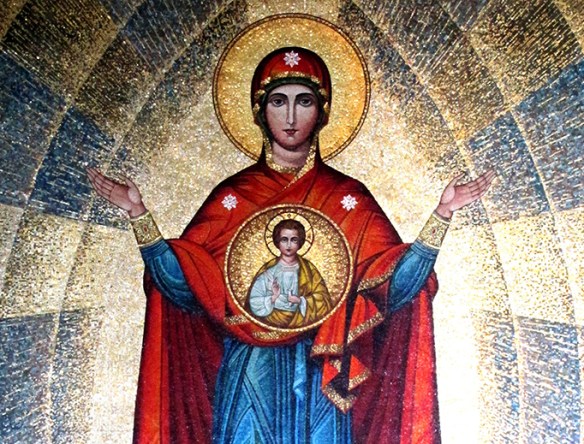 A pastor with a poor memory was watching the Mass on TV one day, and the priest in the Mass started his homily by saying, “Yes, I have spent some of the happiest moments of my life in the arms of another man’s wife!” The pastor could see the shocked reaction of the congregation. Then, the priest on the TV continued his homily, “That woman was my mother!” The audience exploded into laughter. A few weeks later this pastor thought that he would surprise his parishioners with this shocking sermon starter. So he started his preaching on Mary, the Mother of God. He began, “My dear brothers and sisters in Christ, I have to tell you, I have spent some of the happiest days of my life in the arms of another man’s wife!” The people, as he expected, were spellbound at the shocking confession of their holy pastor. Then after a long pause, the pastor muttered meekly, “…but for the life of me, I can’t remember who she was!”
 He is Israel’s God, their deliverer from slavery, their protector, their way, their truth, and their life. In the Holy Scriptures, in ancient human culture in general, names are not just arbitrary, but revelations of the nature of the person. Many times in the Scriptures, God provides or changes the name of a person, to reflect that person’s significant role (or changing role) in salvation history. The name participates in the reality of the person. How holy then, is the name God reveals as his own! So just as the first commandment sets apart the people’s reverence for God, the second commandment sets apart reverence for his Holy Name. After Israel’s reconversion to God during the Exile in Babylon, from that time on, they practiced such reverence for God’s name that they not only avoided using it in vain, they avoided using it all (except for Yom Kippur, the Day of Atonement, when it was pronounced by the High Priest). They would substitute “Adonai,” which translated into Greek as “Kyrios,” and into English as “Lord.”
 To greet someone (or bid them farewell) with the wish of shalom is to wish them wholeness, completeness, the satisfaction and fulfillment of the holy desires of their heart. Someone said something along the lines of (that’s how quotes work in my brain!) “Human nature is a question… and God is the answer.” Shalom is to have the yearning question within you answered by God. That is peace. The answer to our longing, the satisfaction of our desires, the satiation of our appetites, the pieces within us falling into place, with no additional need but to have ever more of God’s infinite love.
 You might remember the story of Samuel as a young boy sleeping near the ark, and hearing the Lord’s voice call his name, and twice, he got up and went to Eli, saying, “Here I am. You called me.” And Eli realized it was the Lord, and told Samuel, if he hears the voice again, to respond, “Speak, LORD, for your servant is listening.” According to Jewish Tradition, Samuel was 12 when this happened. And you might also remember that it was Samuel, the priest and the last of the judges of Israel, who was the prophet who anointed Saul as king, and later, David as king. So in making this reference to Samuel, our gospel is saying that Jesus as a young boy, or young man, has likewise gone to the Temple to begin his service to the Lord God, to speak the word of the Lord in the house of the Lord, and whose life is going to be totally dedicated to God’s will, totally dedicated to the priestly sacrifice that he’s going to ultimately offer in himself. And to reinforce this connection, it says that he increased in wisdom and in stature and in favor with God and man, which is almost a direct quotation from the Book of Samuel.
 In wedding homilies, I often bring up the example of ballroom dancing. It’s the man who leads the couple, providing structure and direction. But it’s the woman that captivates everyone’s attention, with the beautiful flowing dress and graceful movement. The man’s protection, structure, and leadership allows the grace and beauty of the woman to unfold. When she feels secure, her gifts will flower and flourish, because she trusts in his protection (that’s why marriage is for life: for the provision and protection of the mother and her children!)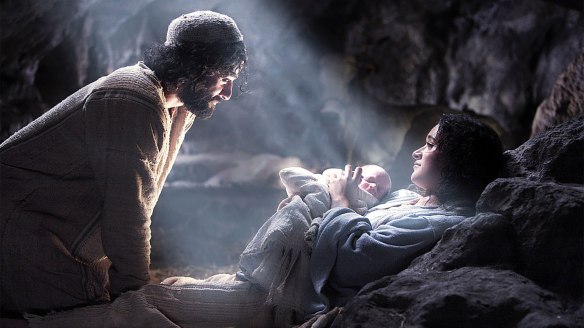


 Galilee, in the low-lying farm-land of the north. Elizabeth lives in the mountainous hill country of Judea, in the south. It took a week or so for Mary to make the journey, where she stayed for three months. This means that when these two holy children encountered each other—the unborn infant John, in his mother Elizabeth’s womb, and the unborn Lord Jesus, the fruit of his mother Mary’s womb—John was about 24 weeks old, and Jesus was barely more than 10-14 days old—neither of whom are considered persons with the dignity of human life by our own country’s laws. But we’re not going in that direction today… that’s a homily for later.

