
Go to the readings for the 16th Sunday of Ordinary Time, Year A.
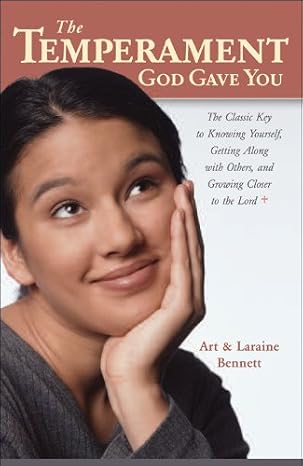
There’s a book that I often recommend to people when they express difficulty in getting along with someone, especially within their family, and I also recommend during marriage preparation of couples. It’s called “The Temperament God Gave You,” by Art and Laraine Bennett. I like it for a number of reasons. It’s based on the classic humors or temperaments (sanguine, choleric, melancholic, phlegmatic, on which all modern personality tools are based, Meyers-Briggs, DISC, etc.), it helps you discern what your primary and secondary temperaments are, and it matters which one is primary and which is secondary. It describes the strengths of each of the combinations, it describes the prayer and spiritual strengths and needs of each combination, it describes how to get along and communicate effectively with each of the other combinations (spouses, children, co-workers, etc.), and it describes the dangers or weaknesses of each of the combinations. The dangers of each temperament are the strengths of the temperament disordered or distorted from a strength into a vice, a character flaw, a habitual sin, or a weakness to a particular temptation.
What God made good, the enemy tries to pollute and ruin. In our gospel reading, Jesus describes the kingdom of God on earth using three analogies. The first image, which he then explains at the end of the reading, is that “The kingdom of heaven may be likened to a man who sowed good seed in his field. While everyone was asleep his enemy came and sowed weeds all through the wheat, and then went off. When the crop grew and bore fruit, the weeds appeared as well. The slaves of the householder came to him and said, ‘Master, did you not sow good seed in your field? Where have the weeds come from?’ He answered, ‘An enemy has done this.’” An enemy has tried to pollute and distort what God made good. In fact, distorted the inherent strength of what God made. The enemy is very accurate in how he targets his attacks.

Sister Miriam James, of the Society of Our Lady of the Trinity, SOLT, a very popular Catholic speaker, said in her book, “Restore,” and in many of her talks, “Your wounds are not arbitrary.” Your wounds are not arbitrary. They’re not arbitrary for at least two reasons. First, because oftentimes our wounds are connected to our sins. They’re the effect of distorted thoughts that you have had, errors about yourself, or about something else, that led you into a habit of sin that it has been a real struggle to escape from. Second, and the cause of the first, is that the enemy has aimed at—he’s designed his attack—to create the maximum amount of damage. He knows how to supernaturally fire a torpedo right into a narrow unshielded thermal exhaust port that leads straight to the main power source, and the strength of our fully operational temperament becomes a distorted weakness; it gets wrecked. God creates us with a unique, special vocation for our life, our personal role in the plan of salvation. God knowingly and lovingly creates us and guides us with the perfect recipe of natural gifts and strengths that will be important for our mission. And this is exactly what the Enemy most crucially targets to attack and neutralize.
Or to put it in more contemporary terms of the Church. Our society’s sexual revolution led to a plague of sinful ways of thinking about and misusing the gift of our human sexuality, given to us that we would be able to share ourselves with incredible intimacy and self-giving love with the husband or wife we are sacramentally united to as the two become one. Sex has become about dangerously distorted beliefs about marriage, about love, about sex, about humanity, about babies, about the gift of life itself. The Church has powerful healing available to correct these distortions, to heal those wounded by them, and to protect the innocent from being wounded by them. The moral teachings of the Church, especially as presented in the framework of the Theology of the Body: a beautiful presentation of God’s sacred gifts of marriage, love, sexuality, and the call to unite and create new life. But what happened just as that teaching was beginning to spread? The sexual abuse scandal in the Church, and the utter loss of any credibility of the Church to teach the world about the holiness and beauty of sexual morality.
Jesus says, “His slaves said to him, ‘Do you want us to go and pull them up?’ He replied, ‘No, if you pull up the weeds you might uproot the wheat along with them. Let them grow together until harvest.’” Biblical scholars agree that this week is called darnel. It’s a weed that is almost indistinguishable from wheat while it is growing, right up until the wheat bears its grain. And by then, the weed’s roots have tangled themselves around the roots of the other plants around it. The farmer, the landowner, doesn’t want to risk losing any of the precious wheat, even despite the damage and the wasted resources taken up by the weeds.
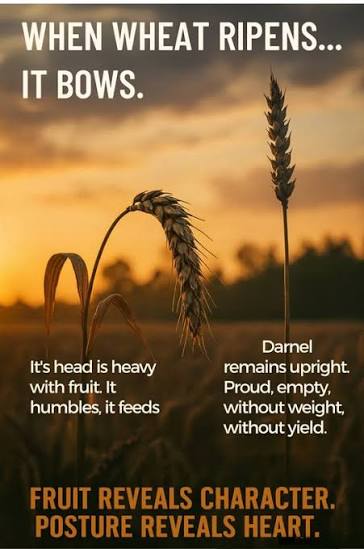
So we need to remember, obviously, the gospels were written a few decades into the history of the church. St. Matthew’s gospel is considered to have been written about the year 85, so about 50 years after the Ascension, and enough time for some people to become Christians that perhaps were not good personal examples of Christianity. And Matthew here is giving Jesus’ teaching that he was aware this was going to happen in the Church, in the Kingdom of God on earth, and taught about it, so as to prepare people for weeds in the Church. And Jesus’ teaching is that there has always been and will always be weeds in the Church. In this world it will never be perfect, it will always have problems, and problem children, and division and scandal and sinners. That’s not to say that God wants this, but God is going to patiently accept it, for the sake of the wheat, for the saints. And then, at an hour and day we do not know, “The Son of Man will send his angels, and they will collect out of his kingdom all who cause others to sin and all evildoers. They will throw them into the fiery furnace, where there will be wailing and grinding of teeth. Then the righteous will shine like the sun in the kingdom of their Father.”
But also, this is an analogy, and analogies compare two different things and say that they are similar in this particular way. But an analogy by nature breaks down, it is limited, because it is a comparision of two things are also different in many ways. And the limitation of this analogy of comparing wheat and weeds to saints and sinners is that weeds cannot become wheat, but sinners can become saints. We can actually take loving care of those around us so that they are inspired to change, to repent, to grow in devotion and love and virtue and holiness, and by the grace of God, be more like wheat than like weeds. We’re all a bit wheat and a bit weed. The Russian author Aleksandr Solzhenitsyn famously said, “The line separating good and evil passes not through states, nor between classes, nor between political parties either — but right through every human heart.” We can’t take all the evil people and send them away, because the line between good and evil isn’t out there. We all also have evil in ourselves, as good and holy as we hopefully want to and try to be. And so it’s a blessing that bad people are always going to be allowed by God to be in the Church, because each of us struggles, each of us is in some ways at some times more weed than wheat. We won’t be perfected either, until Jesus returns.
weeds cannot become wheat, but sinners can become saints.
The second image Jesus uses is the familiar image of the kingdom of God as a mustard seed, a very tiny seed, that grows into a very large bush. So a few quick things about this image. First, mustard plants are not beautiful. They’re kind of gnarly to look at. It probably surprised Jesus’ audience who were used to Old Testament images like the size and power of the cedar trees, or the mighty oak trees. But the kingdom of God is like a mustard plant? This ties into the previous image, that in this world, in history, the kingdom is going to be surprisingly disappointing in its appearance. It’s not going to look how you think it should look. It’s going to have…issues. The second thing about this image is that mustard plants are an invasive species. The kingdom will spread surprisingly fast, and it will be very hard to stop.

And that takes us to Jesus’ third image in our gospel reading, a little bit of leaven changes the whole picture. The kingdom may be humble and small, but it will have a remarkably great impact on everything else. Pope Saint John XXIII was once giving a tour to reporters, and one asked how many people worked in the Vatican? He answered, “About half of them.”
Matthew Kelly, the author of “Rediscovering Catholicism,” once did a study to see if the 80/20 rule of business (that 80% of the work is usually done by 20% of the people) was true in the Church. He found that it was not. What he found was that in many of the parishes he studied, 93% of the work was accomplished by 7% of the parish. If your car, or your heart, maxed out at 7% its capacity, you would see that as a frightening problem. I know that many of the faithful are giving a lot of their resources to activities outside the church. Our strengths and mission are in different areas of humans society: to youth activities, to important fields and roles of work, to caring for sick or elderly family members, to volunteering and giving to many different wonderful things going on in our local community, and that is good. Just as long as you keep service, worship, and love of God first in your life, and you are humbly, prayerfully seeking to follow his plan for you, and his teaching through the Church of what is moral, what is good, what is required of you as his holy people, and what must be rejected in obedience to your primary identity, at all times, as a faithful holy servant and child of God.
The rest of our readings beautifully teach us that while God judges us, as only he has the power to do so, as he alone searches and knows our hearts, that while his power and perfection are the rule of what is true and just, yet in his sovereignty he is lenient. While he shows his power to those who are disobedient, to those who know him, he rebukes foolishness. While he is the master of all, he judges with clemency. And as our first reading ends, “And you taught your people, by these deeds, that those who are just must be kind; and you gave your children good ground for hope that you would permit repentance for their sins.” He allows and he wants weeds to become wheat. He does not want them to remain weeds, to be thrown into the fiery furnace. He made them each for a special mission, not only to be pure in happiness in his glory forever, but for a particular personal role in salvation history in this world. And for that they must seek his mercy, and the healing of the wounds inflicted by the enemy that weakens or even neutralizes the strengths given for that mission. He wants us to pray for them, to be patient with them, because they are us. We each need each other’s love, patience, and prayers, to become what we were created to be in the mystery of the kingdom.


