
Go to the readings for 13th Sunday of Ordinary Time (Year A)
Note: This was written for celebrating the Mass at the Celtic Fling.
Howard Kelly loved nature, hiking great distances, and studying animals in the wild. On a hike through Northern Pennsylvania one spring, young Kelly stopped by a small farmhouse for a drink of cool spring water. A little girl answered the door, and instead of water, she brought him a glass of cold fresh milk. He thanked her profusely and went on his way. Years later, in 1893, Dr. Howard Kelly was one of the four founding doctors of Johns Hopkins, the first medical research university in the U.S. Some years later, that same little girl from Northern Pennsylvania who had given him that glass of milk years ago, was grown up, and was sent to him for a particular operation. When it came time for her to be discharged, her bill was presented to her, and across it was written, “Paid in full, for one glass of milk.”
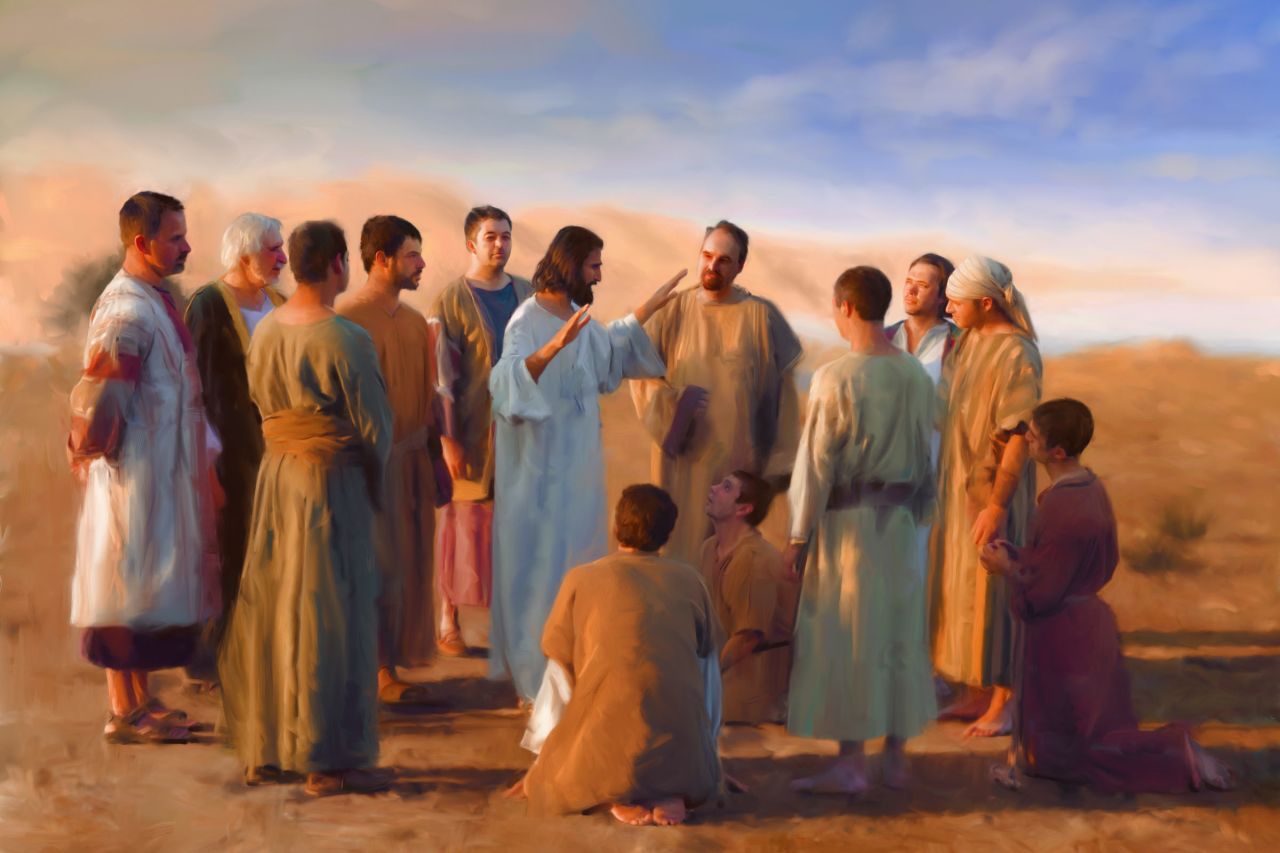
Our gospel reading follows upon last week’s reading. Jesus is teaching the twelve disciples, his students, before sending them out on a mission. But Jesus is not just sending them out with the nice message that God loves you, and be nice to each other, like a lot of people think should be the limit of what Christianity means.
Jesus said to his apostles: “Whoever loves father or mother more than me is not worthy of me, and whoever loves son or daughter more than me is not worthy of me.” Now this sounds extreme to us, but it was even more so in the context of Israel’s society. First, there was the ten commandments, including the fourth commandment, “Honor your father and your mother.” Second, Israelite society was family-based. Your identity, your role and respect in society, your financial stability, everything, was based on your family (which is why God repeatedly instructs the Israelites to take special care of widows, orphans, and foreigners, who do not have this support). And so for this rabbi (Jesus) to demand such allegiance to him as to say, “Whoever loves father or mother more than me is not worthy of me” was preposterous. Why, no one could claim a higher place in someone’s life even above one’s own family, except for…God himself! Ah.
Some anti-Christians like to point out that Jesus never said the words, “I am God.” However, Jesus did claim to be God—revealed himself to be God—clearly, and in many ways. And this is one of those times. Your highest priority is God. The first commandment comes before the fourth commandment, if they come into conflict. Of course, they would only come into conflict because of sin. God’s laws do not contradict each other. But people do. In any other instance, yes, you need to honor your parents, do the dishes, take out the garbage, and stop fighting with your sister. Just like you need to follow the legitimate and just laws of government and society. Until there’s a conflict with a higher authority. Then you need to politely, but firmly, do the right thing anyway, and gracefully accept the consequences (blessed are they who suffer for the sake of righteousness…). People also like to say, “You’re an American first”. No, I’m not. I’m a Catholic first! And… because I’m a Catholic first, I can be an even better American, to paraphrase St. Thomas More, and Justice Antonin Scalia. We are our nation’s good servants because we are God’s first.
But we also know that being right doesn’t mean we don’t suffer. Jesus continues his teaching, “and whoever does not take up his cross and follow after me is not worthy of me.” Taking up our cross can mean, first, resisting the internal forces of sinful desires, appetites, habits, attachments, and humbly submitting ourselves to the authority of God, particularly as given to us through the Teaching of the Church. And taking up our cross can mean, second, resisting the external forces of the fallen world which bring on political, legal, financial, and social pressure and coercion to conform us to the values of the fallen world and punish us for not conforming.
The enemy presents himself as a false light, a false imitation of love and goodness, and many are taken in by this false light. Our enemies are demonic spirits who mislead, distort, harm, and destroy; Our enemy is not our brothers and sisters in the human family (even if they think we are their enemy), to whom we are sent out as apostles to proclaim the gospel of faith, hope, love, forgiveness, and new life in Christ.
Jesus says to those he sends out, “Whoever receives you receives me, and whoever receives me receives the one who sent me.” The kindness shown to an ambassador of the king is equivalently shown to the king. C. S. Lewis in his book, “Mere Christianity,” says, “Enemy-occupied territory—that is what this world is. Christianity is the story of how the rightful king has landed, you might say landed in disguise, and is calling us all to take part in a great campaign of sabotage. When you go to church you are really listening in to the secret wireless from our friends: that is why the enemy is so anxious to prevent us from going.”
The warning Jesus gives in our gospel—that those who are unwilling to claim and worship and serve Christ as their king are unworthy of him—is that they are unworthy to be his ambassadors, unworthy of being sent out, because they are not examples of what a life completely dedicated to Christ looks like: a life of joyful love of (and obedience to) God, which pours out into pure love of others, healed of sin, rejoicing in God, and responding to the Spirit for a life of holiness in the virtuous service of God and each other.
And those who assist us and support us and show us kindness and hospitality because we are ambassadors of Christ will not lose an ambassador’s reward. It’s not just that they showed kindness and hospitality, but that they did so with a heart toward God. This is the connection to the first reading. The prominent woman of Shunem wasn’t just showing kindness to a stranger, but showing gracious generosity to the prophet of God, Elisha, because he was a prophet. And in response, Elisha blessed her with a son. Years later, when the son died in an accident, Elisha resurrected and healed him, because, since the family showed the prophet repeated hospitality, they grew in friendship and holiness, and they knew how to reach out to him in their time of need. We share in the reward of a holy person because our love for them should help us to become holy, too.
Jesus says in the gospel, that “whoever gives only a cup of cold water to one of these little ones to drink because the little one is a disciple—amen, I say to you, he will surely not lose his reward.” Cold water doesn’t meaning refrigerated. Of course, they didn’t have refrigerators; they couldn’t make water cold; they could only offer the courtesy of heating it over a fire. So “cold” here means more like “room tempearature.” And not a flagon or a goblet, but just a simple glass of simple water, the most minimum of gestures of kindness, to an apostle because they are an apostle, supporting the mission of the apostle, in genuine love of the apostle as being sent by the Lord, will share in the benefits, the joy, the grace, the reward that the Lord will give his apostles.
I remember the first time I came to the Celtic Fling to celebrate the Mass, and while I was walking around the park, one of the vendors called me over, set out a mug of Guiness, and said, “Father, this is for you, my treat.” I had never met them before, never ministered to them. But because I was a priest, it was their joy to offer kindness and generosity. And of course, it a was free Guiness, so… I was perfectly happy to accept the gift.
And so, let us be ambassadors, apostles, of Christ the King, proclaiming the good news both in word and example, standing firm in faith and virtue against sin and vice both internal and external, while offering support, encouragement, and love to our brothers and sisters, and gracefully receiving kindness when offered, not for our sake but for the sake of him whom we represent and make present, not to judge, but to bring faith, hope, and love, whether that kindness offered is a glass of fresh milk, a cold cup of water, or a mug of refreshing Irish stout. To him be praise and honor and glory and power, forever and ever! Amen!