
Unknown's avatar

About Fr. Steve Kelley

...is a happy Catholic Priest, ordained 2013 for the Diocese of Harrisburg. He is currently assigned as the pastor of Holy Trinity Parish in Columbia, PA. He started this blog to provide personal opinions, speculative theology, and commentary on various theological and social issues. "I ask that if you find anything edifying, anything consoling, anything well presented, that you give all praise, all glory and all honor to the Blessed Son of God Jesus Christ. If on the other hand, you find anything that is ill composed, uninteresting or not to well explained, you impute and attribute it to my weakness, blindness, and lack of skill." - St. Anthony of Padua

On Thoughts and Prayers

Image result for florida school shooting 2018

I’m writing this (ok, starting this) on February 15, the day after Ash Wednesday, as marked by the poignant picture of this woman, waiting in the parents’ and students’ area outside Marjory Stoneman Douglas High School in Parkland, Florida, still with her ashen cross emblazoned on her forehead. Social Media is, not unexpectedly, aflame with frustration over expressions of “thoughts and prayers for the victims” while, cynically and probably not incorrectly, another mass shooting fails to inspire any legislative response. This post isn’t about what political or legislative response we should hope for. It’s about the thoughts and prayers. And why people are frustrated with the expression.

We believe in the God who is Love, the God of Compassion, and of infinite Might and Power. But also a God who did not prevent His Son from being executed for political and religious motives, by those who should have rushed to worship Him rather than kill Him. He loved His Son perfectly, divinely, and with all the fullness of his own infinite nature. Sure, His Son was going to be resurrected after three days. But God isn’t three days ahead, He’s fully present to the reality of the present moment. And we cannot fathom or understand His experience at the agony and suffering and death of His Son incarnate.

We humans, whose love is hampered by our sinfulness and limitedness, still love others, most especially our children, with incredibly profound depths of love, self-sacrificing love. Which tells you something about God’s love, the perfect source of our imperfect love. As members of the Body of Christ, we share one another’s grief and pain, their joy and hope. When one member suffers, the other members of the Body share in that suffering. Even beyond the Body of Christ, our shared human identity connects us together in a natural bond. Our imagination tries to simulate what it must feel like to experience what they are experiencing. It allows us to empathize. And we can imagine what it might be like for those people whose children were killed or injured yesterday in Florida. Those who have children can empathize better than those who do not. Those who have lost children can perhaps empathize even better, but not perfectly.

Most of us “ordinary people,” meaning those without any significant and immediate capacity to directly respond to the events and people personally affected by this tragedy, we have this sense of sorrow for them, our empathy for them, our compassion for (suffering+with) them, and seemingly nothing productive to do with it. So we post on social media, “Our thoughts and prayers are with the victims of this tragedy.” And it is right and good to do so. We do believe in the power of prayer, and of the unity of all of us as beloved creatures (or Sons and Daughters) of the Most High God, made in His image (of Love) and likeness (of Holiness).

Fr. Mike Schmitz over at Ascension Press has an awesome video on the Power of Prayer and why we are called to pray, even though God’s already going to do what is best. We are called by our faith (and nature) to participate in the will of God the Father, and thus learn better the heart of the Father, and conform our hearts to His. God is with the brokenhearted, with the suffering and those who mourn, and so in prayer, we are, too. Our thoughts and prayers are with the victims. Jesus did not come to end suffering, but to be with us through every suffering of ours, to let us know we are never abandoned or alone, especially when we most feel like we are. To post to social media our identifying with the pain and suffering of the victims is (at least remotely) to have the chance that we are among the many who are surrounding them as a cloud of support and encouragement in their dealing with their suffering. For the most of us, the “ordinary people” without any significant and immediate capacity to directly respond to the events and people personally affected by this tragedy, that is noble and compassionate.

Prayer is a gesture of solidarity by those who can do little more than such a gesture. It’s an expression of mercy. But mercy is more than compassion. It’s also a desire to end the suffering of the other, if that is within the person’s power. Ah, there’s the rub. “Thoughts and prayers” are good and holy, if that’s all the person can offer to the victim of a man-made tragedy, like a school shooting. But they are perhaps not quite so good and holy if they are an empty offering by those in a position to address the situation, both for the victim of this tragedy, and to prevent future similar tragedies with future victims. Political and social leaders of faith are certainly entitled to extend gestures of thoughts and prayers. But they are not entitled to hide behind that gesture when they do have the power, and therefore the duty, to do more.

Image result for thoughts and prayers

“Thoughts and prayers” have been offered to the victims of tragedies for many, many years. And again, rightly so. But as it became clear that these were code words by politicians for “but although we’re responsible for fixing this problem, we’re going to use these words to avoid fixing this problem,” then the phrase “thoughts and prayers” took on a very negative connotation. As cynicism, distrust, and frustration with politicians has grown, and especially as the political divide in our culture has widened, “thoughts and prayers” has come to embody the willful ineffectiveness of government to pass legislation our country needs (besides immigration reform, healthcare reform….). Of course, rushing to pass policy riding on the wave of national outrage is not likely to be the right path, either, even though it satisfies the sentiment that at least something was done, even if it was the wrong thing.

Image result for thoughts and prayers

Thoughts and prayers are not a substitute for doing one’s duty in pursuing the right and true solution to the gun-violence problem we have, particularly as it manifests in school shootings. Yes, politicians of faith should offer their thoughts and prayers, but the point is that (if they mean it, and want to avoid an accusation of religious hypocrisy) they cannot stop there. Again, this post isn’t about what politicians should do. It’s about why politicians offering their “thoughts and prayers” elicits such bitter response.

However, for you and me, we offer our thoughts and prayers. We’re not politicians, we’re not local Floridians. Sure, we might send a card or online message. But while we send our thoughts and prayers to the victims of yesterday’s school shooting, and the victims of all the past mass shootings, it would perhaps be more noble to actually offer prayers rather than just a vague promise to do so.

“May God heal the broken-hearted and comfort the sorrowing as we once again face as a nation another act of senseless violence and horrifying evil.” – Archbishop Thomas Wenski of Miami

Eternal rest grant unto them, O Lord. And let the perpetual light shine upon them.

And perhaps it would be more noble to actually think of what we might do. Certainly many parents hugged their children tighter last night. Hopefully they also told them to play with the lonely kid at school, and to be kind to the classmate that everyone picks on. Hopefully teachers and classmates and even other parents know what kids are having difficulties at home, and venture to offer support and love, and reminding them of their dignity and gifts. And hopefully school staff are also vigilant of students displaying signs of emotional and psychological illness, signs of destructive, violent, and angry impulses, and aggressively seeking for them the help and attention that they need. Perhaps they can be rescued in all the ways in which past shooters have been failed in getting them the care and concern that their dignity deserved, before the unthinkable happened.

Image result for ask for it in the most unloving of ways

Perhaps also this will be the catalyst to begin concrete initiatives to do what can be done, not just to get the mentally ill the help they need, but to prevent them from having the opportunity to repeat what happened yesterday in Florida. What can we do before the next potential school shooting? We don’t need more children victims, or mourning and grieving parents. My thoughts and prayers are with them. May the Lord Jesus, who wept at the death of his friend Lazarus, and the Mother of Jesus, who stood at the foot of the cross of her son, bring consolation to the parents, families, and friends of those who died, and ease the suffering as they prepare to lay their children to rest. May God guide us in truth, wisdom, and grace to prevent future tragedies like this one.

On Communion and Happiness

engagement-1718244_1920Last week I was going to share an article on ecumenism and the resentment some (many?) people have toward the Catholic Church’s traditional practice of “closed communion” (meaning the Church restricts licit reception of communion to only Catholics, and only those Catholics that are not conscious of any mortal sin on their soul). The comment I was typing to share the article was approaching the length of the article itself, and I deleted the whole thing and moved on, without sharing either comment or article (which is how I spend a lot of time on Facebook, to be honest).


It was the Plan, apparently, because this morning I was about to type a new post about happiness, and in my mind it immediately connected with that prior post I didn’t post.

What’s the connection? It’s about what we seek, and that much of what we seek is not what we should seek, but should be the fruit of what we should seek.

First, I’ll go back to that prior post about the Catholic Church’s teaching on closed communion. To begin with, we have to remember the early beginnings of the Church. There were the Apostles and close, faithful followers of Christ, who stayed with Him despite His difficult messages and despite the persecution and fear. They “were of one mind and one heart,” truly in communion with one another–and most importantly–with God through the grace of the sacrament of communion and the witness of how they lived their lives. There was truly an integrity and communion between their lives, their faith, their community, and their Lord. When there was a rupture in this communion, it was obviously a point of distress. It created a scandal (“stumbling block”), both within the community, and in the witness of the community to outsiders, to have such a rupture. St. Paul is very direct in addressing such a scandal:

It is actually reported that there is immorality among you, and of a kind that is not found even among pagans; for a man is living with his father’s wife. And you are arrogant! Ought you not rather to mourn? Let him who has done this be removed from among you.

And then came others who wanted to be part of this little community of “the Way.” Well, to do that, they needed a sponsor in good standing in the community to vouch for them, and to help them learn about how to live, what to believe, what communion is between the believer and the community and the believer and God (hence, sacramental sponsors have to be more than just “Catholic,” they have to live the faith with integrity). This became even more important when persecutions meant that infiltrators might betray the members of the group to the public authorities. And then splinter groups started forming who had theological opinions different than the sense of the faithful of the apostolically-formed communities (who, though they were geographically separate, were united in a single faith, as attested to, for example, by the writings of St. Irenaeus of Lyons). Of course, one of the key beliefs of the Church was the reality of Christ’s presence in the Eucharist. Although the formulation of just *how* Christ was present in the Eucharist wasn’t pursued as a question at the time, the belief that he *is* present was essential. Even St. Paul, writing to the Corinthians, made it clear:

For I received from the Lord what I also delivered to you, that the Lord Jesus on the night when he was betrayed took bread, and when he had given thanks, he broke it, and said, “This is my body which is for you. Do this in remembrance of me.” In the same way also the cup, after supper, saying, “This cup is the new covenant in my blood. Do this, as often as you drink it, in remembrance of me.” For as often as you eat this bread and drink the cup, you proclaim the Lord’s death until he comes. Whoever, therefore, eats the bread or drinks the cup of the Lord in an unworthy manner will be guilty of profaning the body and blood of the Lord. Let a man examine himself, and so eat of the bread and drink of the cup. For any one who eats and drinks without discerning the body eats and drinks judgment upon himself.

The Church through her holy Tradition maintains this early disposition about receiving communion: that only those in full communion of FAITH and WITNESS–of believing all that the Church teaches as true (especially about the Eucharist), and having nothing scandalous on their conscience that would separate them from the community–are admitted to the celebration of communion.


That’s the background for my point. As I often lament, “God has blessed me with many gifts, but being succinct is not one of them.”

I would propose (I think without much disagreement) that there is much more “unworthy” (or in technical terms, “illicit”) reception of the Eucharist in the Catholic Church than any previous time; “unworthy reception” meaning that communion is sought and received by those who are not in full communion with the Church, either by a break in faith, or a break in witness (mortal sin). And my point of all this is that this is why: the general pulling apart of the internal and external of everything.

The most commonly encountered example of this is our relativist modern society:
it doesn’t matter what you believe, as long as you’re a basically good person. (see: Moralistic Therapeutic Deism). Of course, what a “basically good person” is, we don’t completely agree on, but for the most part, it’s that you leave everyone else to believe and live however they wish, and keep what you believe to yourself. If what you believe infringes on anyone else believing and living however they wish, then there is a problem with what you believe. You can go to what church (or synagogue, or mosque, or temple, or whatever) you want, and have in your heart whatever you want, and whatever you believe ends with you. Outside you, it’s not your church or beliefs that matter, it’s social and government policy that matters. That’s how we all get along (unless your beliefs try to get out into society). On this topic I HIGHLY recommend Matthew Leonard’s podcast with Andrew West on “Church and State.” (You can ignore his over-hyped title, just listen to the interview).

So you would reasonably think that at least within the Church–within the Church building itself, within the liturgy itself–that this would be a “safe space” where the Catholic Church has the authority to say to her own children (and guests): this is the truth of what we believe, and this is what we should do with it. That at least here in church, among our own people, we would honor the Church’s own teaching, that if you are not in full communion with the Church (community) in what the Church believes and teaches, and/or if you are not in full communion with the Church (community) because of mortal sin, do not approach to receive and celebrate the sacrament of communion (because you are not *in* communion).

Instead of people taking the integrity of inward reality and outward sign (that is at the heart of what a sacrament is) and bringing an increase of integrity to their life, they bring the dis-integrity of the separation of inward and outward, from life in our society, and apply it to receiving communion. What do I mean? I mean that we bring into our liturgical celebration the worldly mentality that our interior life is irrelevant to our exterior life. As long as we are a “basically good person,” we’re good enough (to be allowed to do what we want, including receiving communion); and that whatever interferes with that (especially if it makes us feel bad) is bad.

But here’s where it ties into the beginning, on the potential post on happiness. Why do people *want* to receive communion? Because it feels awkward and vulnerable (and judged) to *not* receive communion. What will people think of me? (“me” should be a rare thought during the liturgy anyway.) It just makes everything more difficult with people having to pass by me in these narrow pews, and my reason for not receiving communion is not that bad anyway. I’ll just go. (Noooo!)

My Spanish teacher told me it was quite a culture shock when he went to church in the US, compared to Mexico. In Mexico, most people do not receive communion, because they know they shouldn’t. Unfortunately, there is no burning desire for communion that drives them to repent of their sins and come into communion with the Church. In the US most people receive communion, worthy or not. This teacher said when his mother first went to church in the US, she was amazed at how holy everyone must be to all be receiving communion. He had to give her the bad news. Maybe it’s because in Mexico, there’s a strong cultural aspect of Catholic guilt, and in the US, there’s an even stronger cultural aspect of self-esteem (if you want it, go get it).

So we want the outward appearance, the fruit, of communion (approaching and receiving the sacrament of communion), without the inward reality of in fact being in communion. The outward appearance of the Church is as a hierarchical social organization of people who come together to hear bible readings and share in the distribution of bread and wine. But the inward reality of the Church is the Body (and Bride) of Christ; an organic whole, of which all the baptized are sacramental body parts, each with a divinely-appointed and provided-for role in the life of the Body. And the appearance of bread and wine are in (sacramental) reality the nourishing and healing of the spiritual life we received at baptism–He whose life we have received and live nourishes us repeatedly with his Body and Blood to become ever more (because we live in material and passing time, we need continually renewed and returned to the source) in communion with Him and with the other members of His mystical body, as an organic communion of a whole, of which He is the Head. (In the Catholic faith, it’s SO MUCH MORE than just a symbol! But if you’ve detached yourself from the communion of the Body, by a break of faith or a break of witness, it’s a fatal break, as you’ve detached yourself from HIM who is the source of life!)

We go after the shiny wrapper and throw away the valuable contents. We want the wrong thing. Our want is too superficial, and God calls us to the deep reality of which we only want the outward sign. We shouldn’t want just the sacrament of communion (although it is itself no small thing: it is the source and summit of the Christian life); we should want *communion itself*, profound unity in self-giving (kenotic) love with our community (the Church in this world, and in purgatory, and in heaven, all members of one Body!) and with our Lord, and even within ourselves: intra-personal and interpersonal divine peace, which we can only truly have through the divine gift of the sacramental grace and living according to (and outward from) that grace.

And therein lies the rub.

We want to receive communion, and we want it on our terms, defiant that it has its own nature which does not submit to our terms. We want to receive communion and ignore the invitation to the deeper reality that the outward fruit of communion truly means and relies on.

We want happiness, and we want it on our terms, defiant that it (and the human person) has its own nature which does not submit to our terms. Happiness is actually the fruit of holiness, which is a participation in the divine life. When we experience friendship, love, joy, pleasure, peace, comfort, in any measure, we seek these as happiness; and they are: they are “passing participations” in what God is. But happiness is not the goal: holiness is the goal, an *abiding* and profound (and ultimately, eternal) participation in the divine, the “happiness of the saints.” These things make us happy because they are what we are made for. But when we seek happiness itself, we miss, or worse: we seek happiness in anti-divine ways that ultimately bring us (and often others with us, since we are all connected) profound unhappiness. At worst, our grasping at some improper way of pursuing happiness costs us (and perhaps others) the eternal happiness for which we were made. But if we seek holiness, we get happiness thrown in, because happiness is the fruit of holiness.


Ultimately, we as human beings are called to participate in God’s divine life. He didn’t make us because he needed worshipers for his frail ego. He didn’t make us to spend eternity in this passing world. He didn’t make us to lose ourselves by merging into Him. He made us to be in enduring, intimate (“nuptial”) relationship with Him, as He is in Himself: to be drawn in, through His Son, into the very exchange of divine love that is the Holy Spirit: the Spirit of Truth, the Spirit of Unity, the Spirit of Divine Love. The Holy Spirit is a Person of the Trinitarian God, and we are called into the fullness of that Spirit. That fullness is the fullness of happiness, the fullness of love, the fullness of communion, the fullness of friendship, joy, pleasure, peace, comfort (and all the rest) which truly satisfies the longing of the human heart, because it was for this that we were made: perfect communion, perfect happiness–the image and likeness of God.

Let us not prefer the wrappers to the reality. Let us not prefer the illusion (or lie, or redefinition) of communion for the authentic reality of divine communion. Let us not prefer the appearance of goodness for the authentic reality of divine goodness. Let us not prefer the consequence of happiness for the cause, which is the authentic reality of divine holiness. We want the wrong thing, and we were made for more. “Be holy, for the Lord your God is holy.” And you will be happy.


Like a Good Neighbor

BRICKEY_xi_GoodSamaritan

Catholic speaker Jeff Cavins tells the story of a friend of his, a Dominican priest, who was on a trip to Calcutta to teach a short seminar. He returned to his room after teaching, and his window was open to the everyday street noise of the big, bustling city of Calcutta. Then suddenly, the Dominican priest smelled this terrible stench coming from outside. He looked out on the street, and laying below his window was a poor man who had a huge gaping wound in his side, and maggots had infested the infected wound. He was groaning in pain. The priest pushed the window closed, and sat down on his bed. He thought about the fact that he didn’t want to go out and do anything about it because, being honest with himself, he didn’t want his habit to smell. As he sat on his bed, he then heard two women outside his window, an elderly one and a younger one. He could hear the younger woman say, “Mother, I will do it myself. You are tired. Go inside.” And the older one, Mother Theresa, he heard say, “No, I must take care of this man.” The Dominican priest went to the window, and saw Mother Theresa bend down and pick this man up, with his wounds, and roll him into her habit. And that point, the Dominican priest broke. He went down his knees at his bed and cried. He asked God, “What is wrong with me? How come I’m not willing to touch those who are sick, those who are diseased, and yet you stooped down to touch me? And at that moment his life changed. Because he saw one person, Mother Theresa, acting as the Good Samaritan, the neighbor. Mother Theresa won the Nobel Prize for doing what Moses instructed us to do. It is not far away in the sky, or across the sea; it is very near to you, already in your hearts. You only have to carry it out.

It means going outside of your comfort zone. It means taking your religion into your life, into your heart, and into your actions. Not comfortably, but sacrificially. It’s your brother who is homeless and hungry, smelly, dirty, drug-addicted, alcoholic, hungry, sinful, and selfish. It is your sister. Your father. Your mother. Your son. Your daughter. No matter their race, their culture, their sexual orientation, their beliefs. Go to them, tend to them, love them. “For whatever you did for these, the least of My brothers and sisters, you did for Me.” As Jesus first loved you, go and do likewise.


But let’s look at something else about the Parable of the Good Samaritan. It wasn’t the Israelites who treated their fellow Israelite with compassion, those who knew the Law, (both of charity toward the wounded, or burial for the dead) and for whatever reason, failed in their obligation of the Law. It was only the Samaritan who did what was righteous. The Samaritans were those descended from the Northern tribes who were left behind when the Assyrians dispersed them, and brought in pagans to take over the land. They considered themselves the faithful remnant, both after the Assyrian dispersion, and the Babylonian Exile. They had set up their own temple on Mt. Gerizim, and their sacred writings were the Torah, but not with the later writings. The Israelites considered them genetic and spiritual mongrels, part Israelite and part pagan, and so they were both impure and heretical. They didn’t live the right way, they didn’t worship the right way, and they worshiped in a false temple. And yet the Samaritan is the hero in the parable Jesus is telling to the scholar of the law. The Samaritan might not know the law, but he lives it, at least in this act of kindness.

This does not mean to say that right worship is unimportant. Worshiping God is the most important thing we do, and the second is like it: taking that worship of God out into serving God in love by our serving our neighbor in love. And God has given us, through the scriptures, through Tradition, through the magisterium, the way he desires to be worshiped: through weekly active participation in the Mass, and through the other sacraments of the Church.

But it is to say that, as the Second Vatican Council did, that we are to cooperate with others outside the Church who are responding to the call to relieve suffering, to promote justice and virtue, to serve the poor, and build up others in love. We can’t throw liturgy or the true faith under the bus for the sake of playing well with others, but we can seek to fulfill common goals and projects together that serve God and our neighbors.

On Friday, a parishioner and I accepted the invitation from St. Paul’s Episcopal Church to join them in a breakfast to welcome their new bishop. Do they believe things that we don’t believe? Yes, of course. And we can have conversations that help us to really clarify what we believe, and help us to understand each other better, and work together better.

Image1

(Click on image for link to article)  Bishop Gainer, with the Rev. James S. Dunlop of the Lower Susquehanna Synod (ELCA) and the Rev. Robert L Driesen of the Upper Susquehanna Synod (ELCA), are together as they sign a pastoral letter calling on Roman Catholic and Lutheran Clergy and laity to explore the joint statement, Declaration on the Way: Church, Ministry, and Eucharist “in their preaching, teaching, and parish planning.” (Photo credit – Chris Heisey, The Catholic Witness)

Last month, Bishop Gainer met with and signed joint statements with the local bishops of the Evangelical Lutheran communities to encourage a deeper mutual understanding and cooperation.

Can we work together? Yes, we can.

Can we worship together? In a limited way, yes. Catholics have the requirement to participate in Mass weekly, and the divine liturgy of the Catholic Mass is a very different thing in its essence than other Christian Sunday services (even though there are many common elements). So going to another church’s Sunday Service does not suffice as attending the Mass. Catholics can attend another church’s service, but they must also go to Mass, perhaps on Saturday evening.

And since in the Catholic faith, sharing in the celebration of communion (the real presence of Jesus, sacramentally and really present, body, blood, soul, and divinity) is reserved to those who are in full communion with the Catholic faith, and living that life faithfully, communion cannot be shared between our faith and others. Catholics should not take communion in non-Catholic churches, and non-Catholics (and Catholics in mortal sin, and those in a living arrangement inconsistent with Catholic teaching) cannot take communion in a Catholic Church. Again, those with whom we do not share full communion, we can still cooperate with them, we can still serve with them, we must certainly love them, and we can certainly show hospitality to them, but we must also acknowledge the tragic divisions within Christianity, and cannot sweep them under the rug in a false gesture of peace and tolerance. Because it is only in acknowledging our differences that we can truly make progress in reconciling them. But those differences do not need to dominate our relationship with them to the point that we cannot appreciate, love, and serve with them in some common ministries, activities and celebrations.


Finally, as one of my friends said on Friday, “The world needs Jesus. We need peace – Jesus is peace. We need love – Jesus is love. We need unity – Jesus is unity. We need strength – Jesus is strength. We need forgiveness – Jesus is forgiveness. We need justice – Jesus is justice. We need Jesus.”  (Thank you, Annie Celotto)

The fullness of all that God is—power, perfection, forgiveness, healing, hope—united himself with all that humanity is—need, sinfulness, woundedness, distrust, fear—and the two meet in Jesus. In him, all of our need meets all of his gift. All of our woundedness meets all of his healing. All of our division meets all of his forgiveness. Jesus is where, or in whom, it all comes together. “For in him all the fullness was pleased to dwell, and through him to reconcile all things for him, making peace by the blood of his cross.”

He came to us, he ministered to us, he laid down his life for us, though we were sick and infected in our wounds. Because he loves us each intimately, as members of his own body. We have an example. It is not far away in the sky, or across the sea; it is very near to you, already in your hearts. You only have to carry it out.

art_TheGoodSamaritan-w


Be Radically Christian


Cross-on-Flag

What are we as Christians to do in the face of the problems of our society? That’s a burning question most of us have, or should have. How does God want us to respond to the rising frequency of difficulties for us to live as faithful Christians?

We already have the answer, we’ve known it in the past, and we’ve applied it in the past, and it’s always time to apply it again.


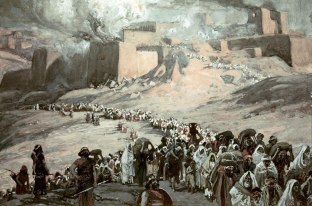
babylonian exileWhen the Israelites were conquered by the Babylonians and deported in the Exile, they spent a lot of time reflecting on why God allowed that to happen—how God, who promised always to be faithful, and always be with his people, could allow his people to be led away captive to a foreign land, far from God’s presence in his Holy Temple, in his Holy city of Jerusalem, which was left abandoned and burned.
The conclusion they came to was that they, not God, had been unfaithful. They may have been God’s chosen people, but they were not living by the precepts that set them apart, they who had enjoyed the unique favor of being given, by God himself, the law of how to live. They had become corrupt, they had gotten too involved in international affairs, and had neglected the precepts of purity and worship that God required of them. So while they were in Exile, they added to their sacred writings to make clear that God’s blessings were contingent on their faithful response, and that righteousness and purity needed to be kept at the center of their cultural identity. It so happened that as they did this, the Babylonians were conquered by the Persians, and the Israelites were permitted to return to their land—an event that the Israelites had no doubt was by the hand of God, particularly in response to their having learned their lesson.

Our first reading, from near the end of the book of Isaiah, looks lovingly toward the restoration of Jerusalem, the mother of the people of God, the daughter of Zion. The reading recounts the blessings that God will shower upon Jerusalem, and the people, and inspires them to prepare themselves for the journey home, and once again to feel the comfort of their mother’s embrace.

The Church is the new Jerusalem, the place where God came to be with his people. The titles applied to Jerusalem–“Mother of the people of God”, “Daughter of Zion”–are also titles for Mary, the Blessed Mother of Jesus, and so by adoption, mother of all who are brothers and sisters of Jesus, his body, the Church. On feast days honoring the Blessed Mother, we often have readings that praise the holy city Jerusalem.

They probably also should have noticed that central in God’s instructions were not just requirements for purity, but also for protection for the widows, the orphans, and the poor, who are close to God’s heart. Perhaps then they wouldn’t have had the terrible friction between the two at the time of Jesus: the pharisaic legalism focused on purity, but neglecting their duty of charity and generosity toward the vulnerable and suffering.


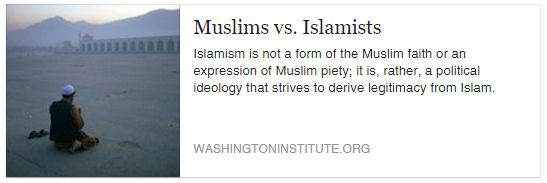
The Islamic world figured it out, too. Discontent with the mediocrity of cultural Islam, fundamentalists looked back at their history to see what was different about the golden ages when Islam was a powerful force in the world. And they, too, saw that it was radical fidelity to the principles of Islam. A fundamentalist and literal application of the ancient texts of Islam takes as given the notions of war and fighting as a political and cultural clash between those who are faithfully living Islam by this strict, fundamentalist interpretation, and everyone else. That is the difference between Islam and Muslims, and Islamism and Islamists, who corrupt the teachings of Islam to spout anti-Western condemnation and strap bombs to themselves in the name of Islam and God.

For more information, read this.Muslim vs Islamist

It’s tempting to buy into some of the sweeping-generalizations that Muslims, in general, are a threat, but we must also keep in mind that it is a misrepresentative group of Muslims who espouse this aggressive interpretation. The majority of Muslims do not. And just as there are Christians who are wrong people who do wrong things, we must treat Muslims as we want to be treated: to be judged on our own merit, our kindness, our charity, and our faithfulness, and not those who misrepresent our faith with violence and hatred.

That isn’t to say that even moderate Islam is not without some genuine concerns in terms of its relationship with Christianity and Western culture; and also how “anti-Western” non-Islamist Muslims might be. But we can respond to this with fear, or with dialogue and interaction. Those who are here legally have as much right to be here and celebrate their faith, and enjoy their legal protections and rights (and obligations) as any of us. We would be charitable to give the benefit of the doubt to particular Muslims and their communities, and show them gracious hospitality. In the words of Lincoln, “Do I not destroy my enemies when I make them my friends?”


And so how do we respond to the challenges of the world? By being radically Christian. I don’t mean Christian radicals or Christian fundamentalists–those who take some aspect of Christian teaching, and then violently and hatefully spreading that bit of the message apart from the whole (such as the KKK, Westboro Baptist Church, or those who violently attack mosques, synagogues, abortion clinics, or do any violence in the name of any Christian belief). Not radical Christian, but radically Christian. Blessed Mother Theresa, St. Gianna Beretta Molla, Dorothy Day, Pope Saint John Paul II, were radically Christian. How so? By living by the message and life of Christ: to live by the cross, as a living sacrifice; taking up our cross daily, denying ourselves, and following him; by a simple life of prayer and service in love of God and all his children.

Our second reading is the end of St. Paul’s letter to the Galatians. St. Paul proclaims his abandonment of himself and all things for the way of the cross. He says, “May I never boast except in the cross of our Lord Jesus Christ, through which the world has been crucified to me, and I to the world.” Is that difficult? It’s darn near impossible, but for the grace of God. He gives us this grace through our relationship with him—the most important relationship in your whole life. We strengthen that relationship by our worthy reception of the sacraments, by time spent in learning the Word of God, and by practicing the virtues and the works of mercy.

Jesus said to them, “The harvest is abundant but the laborers are few; so ask the master of the harvest to send out laborers for his harvest.” We often use these words of Jesus to promote vocations to the priesthood. It is right and just, for we do need to encourage that, especially in a culture which so pervasively promotes the opposite (namely, self-centeredness and sexual indulgence). But in itself, the reading is not a call for more priests, it is a call for radically engaged Christians. Those who love Christ—such that their love overflows into sharing the treasure they have found with all they meet, with generosity and love. And that doesn’t just mean evangelizing to non-Christians or even non-Catholics. We are also engaged in what the Church calls “The New Evangelization,” which is to replant the seed of the love of Christ and his Church in areas and people who already received the Gospel, but where it has not (or has stopped) bearing fruit.


So what are we as Christians to do in the face of the problems of our society?

  1. We are to live the gospel—which is to live and love the cross, which is to embrace the persecution we encounter, and return a blessing; to pray for our enemies. It is to live the teachings of the Church, and oppose secular errors such as abortion, artificial contraception, artificial conception, non-marital sex, pornography, euthanasia, and same-sex marriage.
  2. We are to share the gospel, to spread far and wide—starting with those closest to us—the closeness and mercy of God as he has drawn near to us, and the divine truth of human nature, that supports why so much of what is being promoted by society is contrary to healthy human fulfillment.
  3. We are to love the gospel. We are to put God first in our lives, and all other priorities in terms of our worship of him, and our love of him. Which includes our active participation in the Mass and the sacraments, arriving early and staying until the end of Mass, every Sunday and Holy Day of Obligation, being dressed modestly and nicely, and refraining from receiving the Eucharist in a state of mortal sin. It means taking unpopular stances, saying unpopular things, in love, because they are right. It means prudently choosing what battles to fight and how; to avoid formal cooperation in sinful behavior; and providing faithful Catholic formation for our children.

Immaculate ConceptionIf we want to make America great, then we do so by being great American citizens, and we do that by being faithful Catholic citizens: hard-working patriotic servants, by being God’s good servants first. We remain faithful to the law of God, and then to the extent possible, to the law of the land. We stand up for the poor and vulnerable, and for truth and virtue. We pray for our families, our neighbors and our leaders.

Through the intercession and protection of the Immaculate Conception, the patron saint of our country, may we be, and always remain, one nation, under God, indivisible, with liberty, and justice, for all.

cc_july4th5_fb

Being Christian and Staying the Course

la-1143812-me-1112-weather-6-rcg

Our readings for this weekend have the clear and common theme of being firmly committed to God, and prioritizing the other aspects of our life in proper respect to this first priority.

Our readings for this weekend:

In our first reading, we see Elijah following God’s instructions to anoint Elisha as his successor as the chosen and anointed prophet of God. We can glean some important things about Elisha’s life from this reading: He was handling a team of twelve yoke of oxen. So this was no small guy. He was big and strong. And we see that he fed “his people”, those depending on him, and so he was a man who was a provider to others in and near his home. But in his action, we see what’s most important: he slaughters the twelve yoke of oxen, and uses the yoke to fuel the fire of a great meal for his people. He essentially burned the bridge behind him to his previous life as he went to follow Elijah.

Throughout the Old Testament books of First and Second Kings, we see the story of these two prophets, Elijah, and Elisha, the embodiment of God’s promise through Moses that God will continue to be with and guide his people. And it is through these two great prophets that we see a kind of parallel to St. John the Baptist and Jesus, whose narratives are interwoven in the beginning of the Gospel according to St. Luke. Elijah was a prophet of warning, of vengeance, of calling down thunder and lightning. Elisha was a prophet of mercy, of healing, of resurrection and restoration, and forgiveness. Although the contrast is not exact, for we heard a few weeks ago of Elijah restoring the son of the widow of Zarephath, and we know that Jesus at times played the part of giving stern warnings and displaying divine anger.


Indeed, in today’s Gospel, which can be divided into two parts, in the first part, we have Jesus showing a gentle response to being rejected by the Samaritans, while his disciples James and John earn their nickname, “the Sons of Thunder” for wanting to punish the Samaritans for their faithlessness.

Then in the second part of the Gospel, which shows three potential disciples, Jesus is stern with them, demonstrating that once a person makes a commitment to be Christian, nothing must get in the way, nothing must take a higher priority, and nothing must be chosen which is inconsistent with that primary priority. It’s not going to be easy, Jesus tells us. We’re not going to have some of the comforts that others enjoy. But what are those comforts worth, compared with eternity in the highest ranks of heaven? St. Francis de Sales teaches us that it is not enough to simply avoid sin, but we must let go even of our affection for sin. We can’t want what is sinful, even if it were permitted. We must purify our desires, our hearts, if we want to see God.


One of the stories I read recently is about a guard in charge of a lighthouse along a dangerous coast who was given enough oil for one month and told to keep the light burning every night. One day a woman asked for some oil so that her children could stay warm. Then a farmer came because his son needed oil for a lamp so he could study. Another needed some for an engine. The guard saw each as a worthy request and gave some oil to satisfy all. By the end of the month, the tank in the lighthouse was dry. That night the beacon was dark and a ship crashed on the rocks. More than one hundred lives were lost. The lighthouse guard explained what he had done and why. But the prosecutor replied, “You were given only one and very important task: to keep the light burning. Every other thing was secondary. Deviation from your responsibility has caused loss of many lives and much property. You have no excuse.”

Temptation is not necessarily a choice between good and evil. Perhaps more confusing and tempting is the conflict when one must choose between something good and a greater good. The lighthouse keeper in our story found himself in such a conflict situation. And that is what happened to the would-be disciples in today’s Gospel story. In such cases the good becomes the enemy of the best. One must say NO to a good thing in order to say YES to the one thing necessary.


Discipline is choosing between what you want now and what you want most.

Pope Benedict is often quoted as saying, “The world promises you comfort. But you were not made for comfort. You were made for greatness.” That’s the choice between saying “no” to the good of comfort, to be able to say “yes” to the greater good of greatness. Another great quote, by Augusta Kantra, isDiscipline is choosing between what you want now and what you want most.” It’s the same principle: saying “no” to what you want now (like a big juicy steak and baked potato) so that you can say “yes” to what you want most (lowering your blood pressure and cholesterol so you can lose weight and live healthier).

If it’s true about your physical life, in this case, it’s more true for your spiritual life. We are called to make sacrifices (fasting, praying, almsgiving). We are called to do things (help the poor and vulnerable, go to Mass weekly and Confession regularly, follow the moral law). We are called to avoid things (practice chastity, refrain from gossip, don’t be judgmental). Sure, some of these are for everybody, but some of them are especially directed at Christians. Our lives should not be lived the same way as others, because we are pursuing different goals. And if the ends are different, so should the path be different. We are not seeking popularity, wealth, power, or pleasure. We are seeking holiness, humility, mercy, faith, hope, and charity. We’re seeking heaven, and the steep, narrow road to get there. And to make that journey, we have to let go of a lot of unnecessary baggage.

We have to ditch what we want now, for what we want most. We have to keep our hand to the plow, and not look back.

It’s Alive! (almost…)

its-alive

With the recent move from St. Joseph Church in Lancaster, and maintaining their webpage and Facebook posts, to Holy Trinity Church in Columbia, with dedicated volunteers generously sharing their own talents and gifts for the glory of God and the online presence of the parish, I’ve decided that perhaps it’s time to resurrect the old blog that was attempted many moons ago, and never quite got off the ground. Plus, WordPress has improved dramatically since then.

It’s going to stay simple for a while, only presenting what I had been posting as my weekend homilies, with some minor alterations, and some other commentary of events as they might prompt a blog post. Obviously, I’ve got a steep learning curve ahead in my “day job” and I play with the internet as a diversion. But I have some thoughts percolating about how this site might develop. We’ll see.

But I thank  you in advance for your support and encouragement, your friendship, and of course, your dialogue and ideas. Stay tuned, and God bless you.

Fr.SK

Homily for the Christmas Vigil Mass

Tonight we celebrate the second most wonderful time of the year. The Christian Church has re-enacted the events of the first Easter—the suffering, death, resurrection, and ascension of Our Lord Jesus Christ—since the second Easter—and celebrates them again with every celebration of the Mass. Everything about Christianity revolves around that paschal—or Easter—mystery. The Church didn’t begin celebrating the Birth of the Lord, the first Christmas, until 350 years later. And even now, Christmas, properly celebrated, still points us toward Easter. Why?

Because Easter is why we are the Church. Easter is what gives us the grace to live differently—to be persons more hopeful, more joyful, more love-filled, more generous, more humble, more patient, more forgiving, more spiritual, and more prayerful— than our non-believing friends and relatives. Easter is what gives us the grace of baptism and penance—the sacraments that free us from sin. Easter is what gives us the grace of the Eucharist—the Spiritual food of the Body and Blood of Christ for our Spiritual life. Easter is what gives us the grace of the sacrament of marriage, which allows husbands and wives to give of themselves totally to each other in a supernaturally open and fruitful way, the entire length and depth of their lives. Easter is what gives us the grace at death to hope for our entry into eternal fulfillment, eternal joy, eternal exploration of the mystery of our God and His Creation. Easter is what gives us, who live faithfully as Christians, a participation in God’s own life and love in all that we do. Christmas, properly celebrated, still points us toward Easter…because Easter is why Jesus was born.

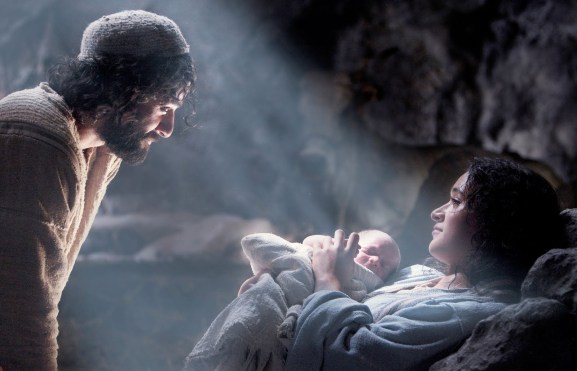
Tonight we celebrate the second most wonderful time of the year. If Easter is the warm brightness of the life-giving Sun, then Christmas is the brightly-shining moon in the cold and silent night, whose light is a reflection and anticipation of the sun’s light. Mary, with her pregnancy at full-term, who miraculously conceived in her womb by the Word of the Angel and the Overshadowing of the Holy Spirit, and Joseph the righteous man who received the message by an angel through a dream that Mary spoke the truth, and to take her as his wife and her unborn son as his own, were alone, miles from home, with no place to stay but a small cave used for animals. A young couple, two against the world, and now three, is scary enough for any young family. But they believed in each other, and in the God whose will they were struggling to understand, as we often do.

This beautiful baby boy is the Son of Mary and Son of God—the Messiah who will rule forever on the throne of King David his ancestor. This beautiful baby boy whose birth prophets and angels foretold, who would reconcile the sinful world of man with the heavenly city of God.

Long lay the world in sin and error pining
Till he appear’d and the soul felt its worth.
A thrill of hope the weary world rejoices
Fall on your knees! Oh hear the angel voices!
Oh night divine—
Oh night when Christ was born
For yonder breaks a new and glorious morn!the-nativity-story-08

We celebrate the mysteries of our ancient faith each week and year because we need to continually remind ourselves of the truth of who we are—of what truth lies at the center of our souls. And we need to celebrate them each week and year because each of us is different now than we were before. We are at a different place in our world and in our lives, in our own personal growth and concerns, thoughts, fears, desires and hopes; and each year we are presented again with these mysteries to give us again the opportunity to integrate these mysteries into our new selves. We have new wisdom to penetrate more deeply into the mysteries, and to invite the mysteries to penetrate more deeply into us.

My brothers and sisters, this Christmas—is an opportunity for a new beginning—I encourage you to take this opportunity to enter more deeply into the relationship with God you were meant to have. Christianity is not primarily a set of rules or even a set of truths. Christianity is primarily our response to an invitation to a relationship of love with God our Creator. Christian Theology is the tradition of study of what God has revealed to us of Himself, so that we can more perfectly know the One whom our soul loves. Christian Morality is the tradition of study of how to distinguish the True Love of God, from imperfect versions of love that limit us, or even damage us, especially when human reason is unable to see these threats to our physical and spiritual flourishing. The Church is the tradition of coming together as the body of those who have responded to this invitation, and through grace become participants in the truly divine and worthy worship of God our Creator, sharing and living in the mystery of our redemption through the sacraments and the Holy Spirit.

My brothers and sisters, this relationship with God gives us power—the grace to live differently—to be persons more hopeful, more joyful, more love-filled, more generous, more humble, more patient, more forgiving, more spiritual, and more prayerful—a relationship we can enter into because of the most wonderful time of the year—Easter, a hope which begins again for us tonight, the second most wonderful time of the year: for tonight is Christmas. Merry Christmas. God bless you.

Happy Fathers’ Day

trinity symbol 1This is was my homily for this weekend, which by a quirk of the liturgical calendar and secular calendar is both Trinity Sunday and Fathers’ Day. One of my parishioners asked that I post this online, so here you go…


Lord…Father…Abba: You are the alpha and the omega. You have eternally been, you are I AM, and you will always be. You merely spoke the words, “Let there be light,” and by your divine word, all of creation came to be. You are the all-powerful, all-knowing, all-loving, yet you are intimately close, among us, and within us. You always loved us with the divine love of the perfect Father. You direct our steps, you beckon us toward you—you who are our fulfillment and our peace.

Having prepared the world for your ultimate revelation of yourself, you sent your divine Son into our nature. He is your eternal Son, to whom you are the Eternal Father. Your love for one another is perfect and complete. You are not the Son, and the Son is not you, though you share the same substance, the same will, the same love. He is your Word—the perfect expression of all that you are, spoken for all eternity, through whom creation knows You, through whom the angels and saints praise You. Your love for one another is so divinely powerful that your love itself is a divine Person in Himself—also sharing in your divine substance, your will, your love. You are the Trinity—One God, one substance, one perfection, in three divine persons: Father, Son, and Holy Spirit. Your son came to us to speak your love to us in our words, to be and to show your love for us, as best as your perfect love can fit into our little hearts and minds. In response, we killed him in our pride, in our arrogance, in our sin. Yet, you love us enough to allow this, knowing what our response would be. You raised him, as was always your plan—to suffer and to die, and to rise again from the dead. Through our sin, you killed our sin. You freed us from the death of our nature, and granted us your divine life in exchange. You set us captives free, to raise us from death again and again. Your forgiveness is without limit.

When your divine son returned to you, divinity clothed in our mortality, our nature was united into your divine substance. He gives us His immortal body and blood for our divine food—that we might come to share in the divinity of Christ, who humbled himself to share in our humanity. You sent among us and into us the fire of your love, your Holy Spirit, making us your tabernacles—your dwelling place—on earth. You speak to us in the depths of our hearts, always urging us to seek the good, and shun evil. The Spirit of divine love which superabundantly poured out of you to form all of Creation, to give it life, to make it beautiful, now dwells in each of us, stirring us to love one another as you have always loved us. The divisions of sin and evil are overcome by the Spirit of unity and love.

Holy Father, we pray to you—through the intercession of St. Joseph, the patron saint of Fathers, and protector of the Holy Family, your divine son Incarnate, and the Blessed Virgin Mary—to guard and protect the fathers among us: our fathers, our spiritual fathers, step-fathers, godfathers, grandfathers, foster fathers. Help them to love you more deeply and purely, to love themselves as vessels of your authority, wisdom, and love, to lead us, their families, with courage, with gentleness, and with firmness. Help them to forgive themselves for the mistakes they make and have made. Help us to lift them up, to support them, and to be obedient to them. Help us to forgive them when they make mistakes, and to have the humility to ask them to forgive us when we offend the love and respect due to them as icons of the love and respect due to you. Be with us and console those of us whose fathers are no longer with us, and those whose fathers are estranged from them because of sin, addiction, and separation.

Lord…Father…Abba…Happy Fathers’ Day.


Christian Wisdom from a Yoga Post

10447729_807022145983036_5072687410935194110_n

I happened across this image on Facebook, shared by a friend from a Yoga (Hindu–yes, yoga is a religious exercise, not just stretching, and a somewhat surprising religious exercise at that, if you read here) source of similar images. I’ve written before that, (as attested to by long-standing Catholic Church writing, especially Fides et Ratio) true knowledge is not only to be found in the Catholic Church, but (by way of natural revelation and our creation in the divine image) in all cultures, philosophies, and religions of the world. But often the full truth is missed, and only a partial truth is seen, because natural revelation is a precursor and preparation for the full revelation available only through the Incarnation of God in Christ. Lacking this fullness of divine truth, natural wisdom can only get us so far, and often problems between contemporary wisdom and Christian wisdom are borne of the limited light of natural reason, in contrast to the harmonic symphony of interwoven truths revealed for us by divine truth. Even in our society’s “enlightened” discourse, since “religion” is denied in favor of “nature,” you can see the same “mistaking the part for the whole” in popular secular perceptions and statements of truth.

So I looked at the above image, aware of its Yoga/Hindu origin, and asked myself what fuller truth this might be representing partially. And I realized (with such astonishment that I felt compelled to write a post on the experience) that it was not only a very good statement of the truth, but is a profound statement of the Christian life.

In Christian anthropology (“the study of what it is to be human in light of Christian revelation”) we know by faith that even before we were made, God has a dream for us, and that God’s dream for us is that we ultimately end up in heaven with Him for an eternity of happiness, peace, and fulfillment. He knows all our days before the first one comes into existence (Ps 139:16). We are created in His image and likeness, and so we are created as good. However, it quickly goes wrong because of human sinfulness. We rebel against our parents, we fall to sins of pride and the other capital vices, we distort our character by patterns of sinful choices, and in short we become something much different (and much less) than what God created us to be.

However, because of God’s never-failing love for us, he continues to call to us in the depths of our hearts. Gaudium et Spes, 16:

In the depths of his conscience, man detects a law which he does not impose upon himself, but which holds him to obedience. Always summoning him to love good and avoid evil, the voice of conscience when necessary speaks to his heart: do this, shun that. For man has in his heart a law written by God; to obey it is the very dignity of man; according to it he will be judged. Conscience is the most secret core and sanctuary of a man. There he is alone with God, Whose voice echoes in his depths. In a wonderful manner conscience reveals that law which is fulfilled by love of God and neighbor. In fidelity to conscience, Christians are joined with the rest of men in the search for truth, and for the genuine solution to the numerous problems which arise in the life of individuals from social relationships. Hence the more right conscience holds sway, the more persons and groups turn aside from blind choice and strive to be guided by the objective norms of morality. Conscience frequently errs from invincible ignorance without losing its dignity. The same cannot be said for a man who cares but little for truth and goodness, or for a conscience which by degrees grows practically sightless as a result of habitual sin.

Our loving Father–our Good Shepherd–seeks us no matter how far we wander away from Him, as there is nowhere we might go that He cannot reach us. No matter what sins we might have committed, nothing we can do is beyond his forgiveness. The only thing He cannot forgive is the sin that prevents us for asking for his forgiveness–the pride that foolishly believes that we can commit a sin that is greater than his ability and eagerness to forgive us (Our Lord tells St. Faustina that our sins are like a drop falling into an ocean of mercy).

Yet we are prideful, and ambitious, and narcissistic, and lustful, and all the other vices and weaknesses of sinful humanity. With each sinful choice we make, we change our moral character. We become the choices we make. If we repeatedly make lustful choices, we develop a lustful habit, and a lustful character. We darken the acuity of our conscience, and surround ourselves with distracting noise. We dull the light that ought to shine in us and out from us. We weaken our Christian character, and more tragically, we injure our relationship with God, our source of life, light, and joy. We lose our freedom (from the captivity of sin) by throwing ourselves into sin (by thinking that freely choosing sin is actually the meaning of freedom).

And so, as our yoga friend so beautifully reminds us, our journey is un-becoming everything that isn’t really you so you can be who you were meant to be in the first place.

You are unique in all of time and space. God will have made you only once. In the history and expanse of the universe, you are the only one with your combination of gifts, experiences, thoughts, desires, dreams, loved ones, and opportunities. You are the only one ever to have the opportunity to have the relationship with God that he desired to have with you when he joyfully imagined you then brought you into being, with the hope that you and He would have all eternity to spend falling more deeply in love with each other. No one can take your place. No one is insignificant, unimportant, expendable, or unwanted.

We spend a great deal of time mucking ourselves up. We seek wealth, independence, status, accomplishment, and most of all, pleasure. But if we pursue these more than we pursue our identity of who God made us to be, we’ve made ourselves our god, and things and pleasure our gods. We want to make the rules. But we don’t make the rules. We can make some rules, but not ones that conflict with His rules. He gave us His rules to help us to be the person He made us to be…in His love for us…for His dream for us.

We can turn from ourselves and our things to Him, and we can ask Him for forgiveness. We can ask Him to restore us in our relationship with Him, to direct us to Himself in all that we seek and in all that we do. We can ask God to help us purge ourselves of our silly distractions and the darkness we have invited into our characters, our personalities, and our lives, and teach us to replace them with His light, His love, His glory.

This is His dream for you. This is the meaning of your life: un-becoming everything that isn’t really you so you can be who you were meant to be in the first place.


My Friend (A Better Response)

papride

I had a conversation with a friend who wanted to get married to the person she had had a long-term relationship with. I told her, “I’m very happy that you’re happy. I’m very happy for you that you’ve found someone who knows you well, who makes you feel secure and loved, and that it looks like you can make it in the long-run. But you know deep down that this isn’t going to work. You’re not really right for each other. Yes, the flame is burning high now, the passion is burning, the joy is constant, but these things die down, and I and your family and so many of your friends are telling you this one is not the one. It feels special, two lovers against the world and against all the odds, But when the deed is done, you don’t go riding off into the sunset, you don’t go live in the castle for happily ever after. You have to make a life.There has to be something more than the right now. I’m sorry that this is so painful, but I say it because I love you, and I really want you to be happy not just now and a little while from now, but forever. And if you do this now, it’s going to hurt you in the long run, and because I love you, I want to spare you that.”

You can draw what conclusions you want as to whether my friend was talking about a boyfriend or girlfriend–it was a bad match, and a hard lesson (learned too late). I do love my friend, and I do love you, too, and just like I told her: you know I love you and want you to know all the joy you were meant to experience. If this experience blows up in your face, and you get hurt, wounded, scarred, scared, lost, and lonely, here I am. I’ll pick you up, dust you off, give you a big hug, we’ll share a hot meal and a tall beer, and we’ll see how to manage from there.

And if all the bad stuff that can happen doesn’t happen, I still want the best for you, and so no matter what, you’re always safely in my prayers. God bless you, hold you, protect you, guide you, and draw you to Himself in his infinite love for you.