Unknown's avatar

About Fr. Steve Kelley

...is a happy Catholic Priest, ordained 2013 for the Diocese of Harrisburg. He is currently assigned as the pastor of Holy Trinity Parish in Columbia, PA. He started this blog to provide personal opinions, speculative theology, and commentary on various theological and social issues. "I ask that if you find anything edifying, anything consoling, anything well presented, that you give all praise, all glory and all honor to the Blessed Son of God Jesus Christ. If on the other hand, you find anything that is ill composed, uninteresting or not to well explained, you impute and attribute it to my weakness, blindness, and lack of skill." - St. Anthony of Padua

Homily: Christmas at Night

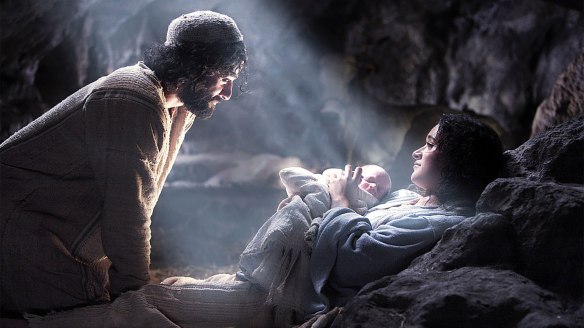
the-nativity-story-2006-1920x1080

Christmas is about the birth of Our Lord, Jesus Christ the Son of God. Christmas is about anticipation and fulfillment, tension……… and release. The baby in the manger in Bethlehem is the answer to God’s promises going all the way back to Genesis, the beginning of humanity, and our primordial rejection of our trust in God’s goodness. Jesus is the Son of the Woman who would crush the head of the Serpent who is the Father of Lies, who continues to tempt us, trick us, and enslave us, with his lies.

Jesus is the fulfillment of Adam; he is the New Adam, who will protect the honor of his Bride from the wickedness and snares of the devil. Jesus is the new Noah, who gathers and leads his family through the storm to safety and new life. Jesus is the new Melchizedek, the priest-king who offers the sacrifice of bread and wine to the glory of God Most High. Jesus is the New Moses, who frees his people from the suffering of slavery into covenant and communion with the true God, who leads us through the dangers of the wilderness on a New Exodus, gives us a New Law to guide us in truth, feeds us with New manna (bread from heaven), and delivers us to a New Promised Land. Jesus is the new Solomon, king and Son of David, who will build up the kingdom of God, and will rule in wisdom, and whose eternal kingdom will be the reign of justice, mercy, and love. Jesus is the Good Shepherd, who will protect and lead the people of God, providing them peace in good pasture, with living water, and who will bind their wounds, heal the weak and sick, and gather the wandering and the lost. There are many, many images throughout the Old Testament that point to their fulfillment in the Messiah: the Passover Lamb, the prophet Elisha, the Son of Man, the child of the virgin, and on and on. What God had promised, God fulfilled in Jesus, the Messiah.

All of this expectation, all of this promise, all of this fulfillment of the images and hopes and dreams and cries for rescue and redemption—all the power of God’s infinite divine love, all of this—is signified and embodied in the meaning of this one tiny little baby, born of poor, humble parents, in a simple little village, on a still, silent night.

Isaiah sings of the glory of this child of promise, in a time of great darkness and anguish. In Isaiah’s time, Israel was being oppressed by powerful enemies, and the king was lukewarm and political, refusing to trust in God, but trusting rather in a powerful but dangerous ally. And Isaiah sees the birth of the royal child as the dawning of a new age of hope for the people of God, a light in the darkness, a joy in a time of turmoil, a brave new glorious dawn to end the night of fear and trembling. “The people who walked in darkness have seen a great light; upon those who dwelt in the land of gloom a light has shone! You have brought them abundant joy and great rejoicing… For the yoke that burdened them, the pole on their shoulder, and the rod of their taskmaster you have smashed… For a child is born to us, a son is given us; upon his shoulder dominion rests. They name him Wonder-Counselor, God-Hero, Father-Forever, Prince of Peace. His dominion is vast and forever peaceful, from David’s throne, and over his kingdom, which he confirms and sustains by judgment and justice, both now and forever.”


Some of us gathered here on this night haven’t been here maybe since Easter, maybe since last Christmas, maybe years, maybe this is your first time. So welcome, or welcome back. You are very welcome and appreciated here, and we hope that you come back often, and that you might find our beautiful church to be inviting, perhaps enough be called your spiritual home, your place of finding God in the confusion and anxiety of the world.

Some of us, no doubt, are deeply troubled by the clergy-abuse scandal that’s been all over the news, and perhaps the decision to come to Church tonight was a difficult one. We have talked about it, and have been making our way through our anger and frustration, at the betrayal of so many supposedly holy men, and the suffering of so many innocent children and their families. I share in that anger, frustration, disgust, and disappointment. It’s a difficult time. But as we said this summer, the way forward is in truth and humility. We pray for the healing of victims, we pray for justice and mercy for all involved.

But most of all, we pray that we here might be better examples of what it means to be Catholic. We pray that as God shown his mercy in the darkness on Christmas night, so he might shine with his mercy through the darkness of these times, to restore his Church to her first love: coming together to minister to God with praise and adoration, to receive his grace and divine blessings through the liturgies, sacraments, and prayers, and to minister to others with generosity, compassion, and love. That’s what it means to be the Church, and we cannot let others try to redefine our story and our identity in terms of those who have failed to be who and what they promised to be. We pray and remain faithful and virtuous, which is what God’s holy people have done from the beginning, and will do until the end of time. The Church has had many scandals and periods of corruption in its…colorful…past, and she has survived, and even thrived, when they are met with courage, humility, and love, and she will so again. In the words of the Devotion to Divine Mercy, “Jesus, I trust in you.”


In our second reading, Saint Paul writes, “The grace of God has appeared… training us to reject godless ways and worldly desires and to live temperately, justly, and devoutly in this age, as we await the blessed hope, the… savior Jesus Christ, who gave himself for us to deliver us from all lawlessness and to cleanse for himself a people as his own, eager to do what is good.”

This is the reality of Christmas in our lives: That God in his grace and mercy have come to us, to lead us out of the darkness of lawlessness, godless ways, and worldly desires, into the light of living temperately, justly, and devoutly, and being cleansed to be a people of his own, eager to do what is good.

Do you need to go to church to be good? For the most part, yes. Because sin darkens the intellect and weakens the will. We need to be taught and formed in mind and heart in what is good. Some things that seem good are not good. Many things promoted by our society as good are far from good. And some things we don’t want to do are very good. And also, the grace we receive from the Church—the Holy Word and Holy Eucharist of the Mass, the forgiveness of Sins in Confession, the grace of the sacraments of our vocation—these give us supernatural strength to do good, especially when it’s very difficult, and especially when we’ve created bad habits that dispose us more easily to doing what is not good.


Christmas is about the birth of Our Lord, Jesus Christ the Son of God. Christmas is about expectation and fulfillment, tension, and release. Let us live the miracle of Christmas by making the most of the mercy made available to us: his light in our darkness, his mercy in our sin, his life in our hearts, his divinity in our humanity, his glory in our world, his fulfillment of our hope. Merry Christmas, and may God abundantly bless you.

Related image

Horizontal Rule Cross

Homily: She Went with Haste

Visitation

In Catholic Digest some years ago, storyteller Maula Powers related an old German folktale about a creature called the Advent Devil, who tries to keep people so busy in rushing about that they lose sight of the real meaning of Advent and Christmas. The Advent Devil doesn’t want people to have time to really prepare to experience the rebirth of Christ within themselves. The temptations of the Advent Devil are diabolically clever. The Advent Devil’s business is to keep us so busy with the flow of the secular holiday hustle and bustle and holiday obligations that we forego daily prayer, reading the Scriptures, and Church services. Some of us have been fighting the Advent Devil this year. Just a couple more days! I hope you are in a position to use the little bit of time that’s left to focus on the real meaning of it all.

In our Gospel reading, Mary gives us the counter-example, the antidote, to the Advent devil. As soon as Mary had received the Good News that she would conceive and bear the Messiah, the Son of God, and that her relative Elizabeth, even in her old age, was in her sixth-month of her own pregnancy, it says, Mary “went with haste.” Not in haste in the sense of frantically or recklessly rushing, but in the sense of being focused on what she most needed to do: to visit Elizabeth, to minister her in her time of need, and to see that the sign that the angel had given her was true. She went with haste.

In the canticle of the Purgatorio, the second part of Dante’s Divine Comedy, those souls in purgatory who suffered the vice of sloth, or lukewarmness, distraction by earthly concerns, these souls spent their time in purgatory running the path around their level of the mountain repeating the refrain, “She went with haste.” It was to heal them of their distractions and to focus them, as Mary was focused on the one thing necessary. For Mary, it was the angelic message that God’s promise and the time of the messianic expectation was fulfilled, and that she had been prepared and chosen to be the mother of the Son of God and Son of Man, the Son of David, the light in the darkness, the long awaited Messiah.


Dr. Tony Esolen, in his commentary on Purgatory in the Divine Comedy, in speaking about sloth, quotes St. Thomas Aquinas in calling it “the sin against the Sabbath,” the sin against the joyful, feastful rest; the Sabbath not as a day of inactivity, but of the restful, peaceful, joyful activity of worship. He mentions the 20th century Catholic philosopher Joseph Pieper, who said that sloth is the characteristic sin of our world today, this hamster-treadmill society of constant work, but scant religious zeal. Dr. Esolen then quotes from Dante, describing the band of souls racing past them:

“Straightaway past us on the ring they swept,
for that great throng of spirits ever raced,
and the front runners shouted as they wept,
‘Mary ran to the hill country in haste!”


Nazareth, the home of Mary, is in Related imageGalilee, in the low-lying farm-land of the north. Elizabeth lives in the mountainous hill country of Judea, in the south. It took a week or so for Mary to make the journey, where she stayed for three months. This means that when these two holy children encountered each other—the unborn infant John, in his mother Elizabeth’s womb, and the unborn Lord Jesus, the fruit of his mother Mary’s womb—John was about 24 weeks old, and Jesus was barely more than 10-14 days old—neither of whom are considered persons with the dignity of human life by our own country’s laws. But we’re not going in that direction today… that’s a homily for later.

An interesting dynamic of this encounter of the Visitation is that while the specialness of Mary always relies entirely on Jesus her son, Mary here serves as the intercessor, or mediatrix, of her son’s blessings. It is not when Mary approaches Elizabeth that John leaps—it’s not his response to the Lord’s presence or proximity—but the moment Mary’s voice reached Elizabeth’s ears. Mary is the one who mediates the Lord’s presence to them. It’s a beautiful image of the role that Mary plays and the dignity of Mary. It’s Mary’s greeting that leads Elizabeth here to respond.

Although we often say those words of Elizabeth in the prayer of the Hail Mary, Luke is clear that Elizabeth doesn’t just say, “Blessed are you among women and blessed is the fruit of your womb.” She shouts it! “Inspired by the Holy Spirit she exclaimed with a loud cry.” So Elizabeth and her unborn son are overcome with joy when she hears the words of Mary.

Elizabeth says, “Why is it granted to me that the mother of my Lord should come to me?” Again, note the emphasis on Mary. It doesn’t take away from Jesus, but, sometimes people might say Elizabeth is humbled by the fact that Christ comes into her presence. And that’s true, but it isn’t just Christ. It’s the mother of Christ as well. Now that expression, “mother of my Lord,” is important.

For one, the Greek word there is kyrios, which is the standard Greek term for a king or gentleman. But the majority of its use in the Greek Old Testament is as a translation of the Hebrew name of God, as it was revealed to Moses. By the First century, kyrios in the Greek scriptures, almost exclusively meant God, who of course is the true king, of Israel, and of the world, the king of kings. So Elizabeth cries out, “Why is it granted to me that the mother of my kyrios should come to me?”—the mother of my king, my God! In human flesh! In your womb! Here! It’s hard to imagine her excitement—and humility!

And secondly, Mary was the younger relative, so she was lower in esteem than Elizabeth. It normally would have been Mary deferring and honoring Elizabeth. But not only does Luke have this unexpected reversal, where Elizabeth exclaims the honor of Mary, but the older unborn infant, John, honors his younger unborn relative, Jesus. So again, we as Catholics can take some heat from non-Catholics about the honor we give to Mary, but it’s completely based in Scripture. After all, it says “Elizabeth, filled with the Holy Spirit, cried out in a loud voice.” So shouting the praise of Mary as the Mother of the divine king, the mother of our Lord: that’s from the Holy Spirit.

At the end of our gospel reading, we have Elizabeth blessing Mary a second time, saying, “Blessed are you who believed that what was spoken to you by the Lord would be fulfilled.” Mary is the one who lives a constant “Yes” to the will of God, with all her mind, all her heart, all her soul, and all her strength. She gives us the example of the life of the beatitudes, which are based on the life of her son. She is the first Christian: the first in time, in that she was the first to receive and accept the the Good News of the Messiah; and the first in priority, in that she lived out her Christian vocation perfectly, without sin, without any imperfection in following God’s plan in Christ.

She not only complied, but did so with joy, and with urgency. With alacrity and foresight. In these last few days of the Advent season, let’s make sure that we are not falling victim to the Advent devil, getting distracted and stressed, and missing the real meaning of this time of preparing to receive our king and our God. Let us make some time to also be collected and quiet, with prayer, peace, and gratitude. Mary gives us our example. She was focused. She obeyed the Holy Spirit. “And she went with haste.”


Horizontal Rule Cross

Homily: Prepare the Way

sidewinder

The Old Testament book of Proverbs has a beautiful image of Lady Wisdom setting herself up, and preparing a feast for those who would accept her invitation to partake of her blessings. “Wisdom has built her house, she has set up her seven columns; she has prepared her meat, mixed her wine, yes, she has spread her table. She has sent out her maid-servants; she calls from the heights out over the city: “Let whoever is naïve turn in here; to any who lack sense I say, ‘Come, eat of my food, and drink of the wine I have mixed! Forsake foolishness that you may live; advance in the way of understanding.’”

Back in March, we joined Mary at the Feast of the Annunciation, when she received the Angelic greeting, “Hail, Full of Grace!“, and she conceived her child when the Holy Spirit overshadowed her. In the infancy narratives of St. Luke, we will notice the repeated refrain, “And Mary pondered these things in her heart.” Mary, by the light of her immaculate heart, grew in the wisdom of the mysteries of her divine son. In the Litany of Loreto, one of Mary’s titles (going back to St. Augustine) is, “Seat of Wisdom.” And now, in this second Sunday of Advent, we join her again in her last month of pregnancy. Mary, Lady Wisdom, is almost done preparing her feast, the choicest meal and wine—which, of course, is the body and blood of her Son, the Word and Wisdom of God, whose flesh is real food, and whose blood is real drink. Lady Wisdom is preparing her feast, the sweet bread and choice wine of heavenly joy, and she is nearly ready!

Our Mass readings today are about preparing. Clearing the clutter and obstacles, the rough patches, out of the way, and preparing to welcome the Son of God and Son of Mary into our hearts again at the completion of our Advent season.


Our First Reading, from the short book of the Prophet Baruch, tells of a more ancient image of the Mother of the children of God: not Mary, but rather the city of Jerusalem (indeed, in many Marian feast days, the Old Testament reading or psalm praises Jerusalem, because of this connection between Mary and Jerusalem as two images for the “Mother of the children of God”). Baruch says, “Jerusalem, take off your robe of mourning and misery; put on the splendor of glory from God forever! …Up, Jerusalem! Stand upon the heights; look to the east and see your children gathered from the east and the west at the word of the Holy One! … Led away on foot by their enemies they left you: but God will bring them back to you… For God has commanded that every lofty mountain be made low, and that the… gorges be filled to level ground, that Israel may advance secure in the glory of God.

Our readings today share not only the theme of anticipation and preparation, but of exodus. The people of God were led away in exile, in shame, as a consequence of their sin. But while they were in exile, they repented, rededicated themselves, and in our first reading, are being brought back to Jerusalem, who waits for them with deep longing. Not just those who were sorrowfully marched to Babylon, in the East, but also those who earlier were dispersed to every nation by the Assyrians. This isn’t just the return of Judah, but the restoration of all Twelve Tribes, the whole people of God. And because the Northern Lost Tribes had dispersed to every nation, all nations will be part of the promise of restoration, of calling Jerusalem (and later, Mary) their mother.


Our Gospel Reading, from this upcoming year’s exploration of the Gospel of Luke, begins by setting the context for what he has to say. Luke isn’t retelling a myth, it’s not storytime. He’s presenting a historical fact. “In the fifteenth year of the reign of Tiberius Caesar, when Pontius Pilate was governor of Judea, and Herod was tetrarch of Galilee, and his brother Philip tetrarch of the region of Ituraea and Trachonitis, and Lysanias was tetrarch of Abilene, during the high priesthood of Annas and Caiaphas, the word of God came to John the son of Zechariah in the desert.” Mythical stories don’t normally start out so dry and detailed. They start with “Once upon a time…”. The 3rd-century writer Origen points out that in Jewish histories, they establish the place and time by naming the Jewish rulers in power at the time (“In the days of Uzziah, king of Judah, and in the days of Jeroboam, son of Joash, king of Israel…”). But Luke isn’t giving us just a Jewish history, but a global history, and so Luke begins giving both the Roman and the Jewish rulers. St. Gregory the Great points out that Luke identifies both kings and priests, because this is the beginning of the history of Jesus, who is the true and eternal king and high priest.

John the son of Zechariah, St. John the Baptist, “went throughout the whole region of the Jordan, proclaiming a baptism of repentance for the forgiveness of sins.” Why the Jordan? Because the Jordan River is the threshold of the Promised Land. Ancient Israel had been on their exodus from captivity and slavery in Egypt, and crossed the Jordan River to enter into the Promised Land. Part of the expectation of the Messiah was that he would inaugurate a new exodus. And as we saw in the first reading, this expectation was deepened (and partially fulfilled) in Israel’s exodus back from their captivity in Babylon. But as we also saw in the first reading, this expectation was not just the return of the exiles in Babylon, but the return of the exiles dispersed through all the nations: a restoration of the unity of Israel, a new Kingdom of God (a fulfillment of the kingdom of David, and the Son of David—the highpoint in Israel’s history) and which now would include all nations.

And so John the Baptist is out at the Jordan calling for what? For people to repent. Because it was the sinfulness and corruption of Israel—their betrayal of their covenant with God—that caused the Exile, and caused the dispersion of the Lost Tribes. And it is the repentance of Israel—the return to fidelity to God—that brought about the return from Exile, and will bring about the restoration of Israel and the new Kingdom.

So John is out at the Jordan, calling the people of God to prepare themselves, because the time has arrived for the Messiah and the New Exodus and the Kingdom of God. How does one prepare themselves for the coming of the Messiah and his new Exodus? By clearing the path, paving the royal road, pulling down the mountains, filling up the valleys, making the winding road straight, and the rough road smooth. But not a physical road. Because this isn’t going to be a physical exodus, because it isn’t a physical destination. It’s a supernatural destination, the new kingdom of God. It’s a new state of being, the fulfillment of the promise of Emmanuel, “God with us,” in our new hearts, in our healed souls. God within us, within all humanity, in all nations. So the preparation we, too, are called to enter into, to get ready for the coming of the Messiah, is to turn away from sin and turn to a life of grace: repentance for the forgiveness of sins. That’s the condition that makes Israel ready to meet her Messiah, because it’s sin that exiles us from God. It’s sin that, in a sense, drives us away from the promised land that God made to be our home.

Something that struck me as I was reading this about John, is that the people John is calling out to are already people in the covenant. They’ve already had their baptism, so to speak, into the Promised Land. What John is requiring of them is to come to the Jordan again to be forgiven of their sins after their entrance into the covenant. That sounds like we are being invited, not to the sacrament of baptism; but the sacrament of reconciliation! We have already entered into the Church, the covenant, by our baptism. But we are being called to renew our baptism—which we have betrayed by our sinfulness, our neglect, and our worldliness—by the repentance and forgiveness of the Sacrament of Reconciliation, which some of the saints have called “a kind of second baptism.”

There are many ways in which each of us can interpret in our lives and our spiritual condition the images of valleys to be filled in, hills to be brought down, crooked ways to be straightened, and rough ways to be smoothed. For example, in the commentary on this Gospel reading by Dr. John Bergsma, he says: 

“Every valley shall be filled” refers to hope, encouragement, and new life being granted to the poor, the oppressed, the lowly—people who feel they have been forgotten by God or are not worthy of God’s attention.

“Every hill made low,” refers to the humbling of the proud, the repentance that the strong and arrogant must undergo in order to receive God’s salvation.

The “winding roads” and “rough places” refer to the twists and turns of the human heart, contorted by sin (Jer 17:9).  The human heart needs to be “simplified” or “straightened” by honest and truthful confession of sin.


This is how we prepare the way for the coming of the Lord: by repentance and conversion. We prepare for the upcoming celebration of the first coming, the humble birth, of the Lord in in Bethlehem. We prepare for his second coming in glory and judgment. And in between, we prepare for his sacramental coming at every Mass, as wisdom’s feast, the bread and wine that Lady Wisdom has made and invites us to; Lady Wisdom, who is the Church, who is Mary, who has spread her table, and invites us to the feast she has made. Let us now prepare to receive him.

Horizontal Rule Cross

Homily: Immaculate Conception

Image result for immaculate conception feast

 “Chaire, kecharitōmenē, ho kyrios meta sou!”

“Ave, Gratia Plena, Dominus tecum.” 

“Hail, Full of Grace, the Lord is with you.”

The feast of the Conception of Our Lady was celebrated during the 7th century in Palestine. The feast spread as the Feast of the Immaculate Conception to Italy by the 9th century, in England by the 11th century, and in France by the 12th century.

One notable 16th century theologian said, “It is a sweet and pious belief that the infusion of Mary’s soul was effected without original sin; so that in the very infusion of her soul she was also purified from original sin and adorned with God’s gifts, receiving a pure soul infused by God; thus from the first moment she began to live she was free from all sin.” That was actually a quote from Martin Luther (his sermon, “On the Day of the Conception of the Mother of God,” 1527). The Christian faith in the Immaculate Conception was well established long before Martin Luther, and long, long before it was declared as an essential article of the true Christian faith—a dogma of the faith—by Pope Pius IX in 1854.

Catholic writer Stephen Beale says the Church had always believed in the sinlessness of Mary. St. Justin Martyr and St. Irenaeus, from the 2nd century, identified Mary as a second Eve, as the one whose humble obedience reversed Eve’s disobedience. In the third century, Origen, one of the earliest Church Fathers, called Mary “immaculate of the immaculate.” St. Augustine, in the 4th century, skirted around the question of sin in Mary, out of reverence for Christ. The dogma was implied, but not defined. Why did they stop short of declaring Mary conceived without sin? Because they couldn’t figure out how Mary was saved by Christ if she didn’t have sin, and therefore wouldn’t have need of a savior… and that didn’t seem correct.

Resolving this difficulty took a big step forward in the 11th century by a Benedictine monk named Eadmar. Eadmar provided an arsenal of arguments in support of the belief in the Immaculate Conception. For one, he said, St. John the Baptist was purified from sin in the womb, and Mary is far greater than any other saint, including St. John the Baptist. In another argument he says, God preserved the angels from sin from their first moment of creation, and Mary is the queen of angels. And building on the earlier work of St. Irenaeus he says, Mary is the “new Eve,” in a unique position to restore humanity from the Fall by her perfect obedience in place of Eve’s disobedience, and so that parallel requires Mary to begin with the same original innocence that Eve enjoyed before the Fall. The Church always had a sense of, but struggled to articulate, Mary’s particular privilege of divine favor—that the angelic greeting “Hail, full of grace” held a special mystery that was not yet fully understood.

It was the brilliant 13th century Franciscan, Blessed John Duns Scotus, who discovered the key of how to affirm the sinlessness of Mary without excluding her from the need for the Savior. He argued that Mary was “preserved” from original sin, rather than freed from it. It is one thing to have someone be soiled by sin and to cleanse and redeem them, but it is a greater thing to preserve them from the stain of sin from the beginning. In other words, if I found you stuck in a big mud puddle, you would be thankful if I got you out of it. But you would be even more thankful if I preserved you from falling into the big mud puddle in the first place. It is the normal human condition to be conceived, born, and live in sin until we are rescued by the grace of Christ in baptism. It is a special privilege to be the one whom Jesus inoculates from the stain of sin from the first instance of her existence. Mary is still saved from sin only by the grace of Christ. She is immaculate only because of her savior. But in her unique privilege, she was not washed, but rather kept clean, from the stain of sin.

So I’ll end with these two questions. First question: Mary was conceived long before Jesus, her son, was crucified. How could Mary be the Immaculate Conception as a result of the Paschal mystery of Jesus? The answer is that Jesus is God, and his Paschal Mystery transcends time, and its grace available to all of time. From our perspective within time, the Immaculate Conception was, you might say, purchased on credit, and was paid for along with all the sins of humanity by the Paschal Mystery.

The second question is, so what? Good question; glad you asked. It was in wrestling with this question about Mary’s privilege of being the kecharitōmēne, the person who is the Immaculate Conception (and also with the question about why the Church has always baptized infants), that it was understood that it isn’t that people are born with sin, but we are born lacking saving grace. Sin isn’t a thing, it’s an absence of a thing that ought to be there. When we commit a sinful choice, it’s not that we get a thing that is sin stuck to us, but that we lose the thing that is grace that we need to have. And so this affects the whole understanding of sin and grace. We talk about the Immaculate Conception as Mary conceived without sin, which is true, but as the angel said, it’s really Mary conceived with the fullness of grace.

Another point is that, in the modern philosophies of the 18th and 19th centuries, which are still influential today, the concept of original sin, the default lack of saving grace in the human soul, is completely rejected. The belief is that, it is the disorders of society that corrupts the human person, and not the other way around. And from that came the idea of the noble savage, the human person uncorrupted by the sinful effects of society. This idea is very active, for example, in how Thanksgiving has been treated lately: Imperial Christian Europe, with all its sins, corrupted the pure noble humanity of the Native American (as though the Native Americans hadn’t been involved in centuries of brutal wars among themselves long before the first European explorers). But individually speaking, this error would also lead one to think that everyone is immaculately conceived; that we just need to legislate away the sins of society, like bigotry, racism, and greed, and then all humanity is returned to its original noble sinlessness. Yes, we truly do need to avoid social and personal sins, but we as humanity still need the grace of Christ and his Paschal Mystery to be saved and have a hope for heaven. We cannot get there on our own efforts, without grace. Score another one for Martin Luther.

Related imageIn 1858, a few years after Pope Pius’ proclamation of this dogma, the Blessed Mother appeared to a young girl, Bernadette Soubirous, in Lourdes, France. Bernadette asked this “beautiful Lady,” who appeared before her, who she was, and the Lady responded, “I am the Immaculate Conception.” Bernadette didn’t understand these words, and she went to the priest to repeat what the Lady said. The priest was convinced Bernadette couldn’t have understood what it meant, and would not have been able to have made it up. Mary herself thus confirmed the dogma of her Immaculate Conception, the truth that Pope Pius IX defined when he promulgated the 1854 decree Ineffabilis Deus:
We declare, pronounce, and define that the doctrine which holds that the most Blessed Virgin Mary, from the first moment of her conception, by a singular grace and privilege granted by Almighty God, in view of the merits of Jesus Christ, the Savior of the human race, was preserved free from all stain of original sin, is a doctrine revealed by God and therefore to be believed firmly and constantly by all the faithful.”

Horizontal Rule Cross

Homily: Be Ready for the End

dstruct

The liturgical year takes us on a journey from the birth of Jesus in Nazareth to the eternal reign of Christ as King over all of renewed Creation. So the beginning of the liturgical year is the first week of Advent, as we begin preparing ourselves to receive the infant prince of peace. And the end of the liturgical year, which is next week, is the Feast of Christ the King. So our readings today, like the last few weeks, focus on the end.


We remember that the inspired word of God operates and communicates on multiple levels. And sometimes it is challenging to figure out the multiple levels. Jesus here is actually answering two questions at the same time: What will happen at the end time of the Temple? and What will happen at the end time of the world? For Jewish listeners, it makes perfect sense that these two questions (and answers) would be interwoven. The Jews would’ve seen the destruction of the Temple in Jerusalem as an event having cosmic significance. The Holy City of Jerusalem, and the Temple in particular, were not just images of the true, heavenly Jerusalem and Temple, but also participated in the reality of Eden, the primordial garden of Creation. Prophecies of the New Jerusalem and the new Eden occur together in the writings of the Prophets. The Temple was decorated exteriorly with images of the cosmos, with stars and other heavenly bodies; and it was decorated interiorly with images of nature, trees and fruit. Thus, the Temple was a representation of the universe (a microcosm), and the universe was a great sanctuary (a macrotemple). So Jesus is at the same time talking about the destruction of these two realities.

And it’s important, because there are two things in this reading that people point to in their denial of the divinity of Jesus.

Jesus describes the destruction as preceded by a time of great tribulation, the sun and moon being darkened, the stars falling, and the earth being shaken. Jesus says, “Amen, I say to you, this generation will not pass away until all these things have taken place.” And people today will point to that and say, “Well, here we are, the world is still here, time is still going, Jesus was clearly wrong, therefore Jesus isn’t divine.” If we look through the Old Testament, the language of tribulation and even cosmic upheaval are used in describing political turmoil, of the destruction of a great city or empire: Egypt, Babylon, Jerusalem. What did happen during the lifetime of those Jesus spoke to directly? Forty years after Jesus’ Ascension, the Romans destroyed Jerusalem and the Temple, and millions of Jews were slaughtered. So Jesus was not wrong in his prophecy: in this, he wasn’t talking about the destruction of the world, but of the Temple and the holy city, which came to pass just as he had said.

So what about the greater destruction, that of the world? Jesus says, “And then they will see ‘the Son of Man coming in the clouds’ with great power and glory, and then he will send out the angels… But of that day or hour, no one knows, neither the angels in heaven, nor the Son, but only the Father.” And here, also, people today will point to and say, “How can Jesus be claiming to be God, if the Father knows when the world will end, but he, Jesus, the Son, doesn’t know? Aren’t the Father and the Son one in mind, will, and being?”

I had to do a lot of reading and thinking to formulate my response to this challenge. Some scholars said that Jesus did know, but it was not for us to know, so he just said he didn’t know. To me, that sounds like they’re saying he lied, and that didn’t work for me, because Jesus never sinned. So building on what I found: Jesus is the perfect unity of his divine and his human nature. As the eternal Son of God, he was in perfect unity with the Father. But in his human nature, the scriptures say he advanced in wisdom, and in favor with God and men. As a child, he learned to speak, he learned to read and write, he learned the Scriptures and Tradition of his people. As man, living in time, he learned things. His intellect, his wisdom, his will, were perfect, but in his humanity, the quality of his knowledge was perfectly true, but the quantity of his knowledge was not perfectly exhaustive. He could not know in his humanity, in his human brain, all that he knew in his divinity. There is an infinite amount he knows as God. But he could not know all that as man. What God willed himself to know as man had to be focused on what he came to do, and to reveal to us, for our salvation. The plan for the end of the world was not for him in his earthly mission as man to reveal, so it was not provided to him to know, as man. I’m of course speaking on the edges of the mystery of Jesus’ interior nature, which is not fully revealed to us. So hopefully that solves the puzzle of this verse, without error or compromising our faith in Jesus’ divinity. Jesus did not know, he did not lie, and yet he is the human and divine Son of God. Both/And.

For a fuller treatment of this idea, I highly recommend this article by Catholic author and speaker, Jimmy Akin.

Per Brant Pitre: Jesus gives an image of the fig tree. Once the branches become tender and they start to put forth new growth, like green leaves in the late spring, you can tell that summer is near. So also when you see these things taking place—tribulation, wars, rumors of wars, all this suffering and distress—know that he is near, at the very gates… Now it’s unfortunate that the lectionary reading ends at this point because Jesus gives a second parable right after this: the parable is of a master who goes away, leaves his servants in charge of his house, and then is going to come back to the house at an unexpected hour when the servants don’t know and the servants aren’t ready for it. So the fig tree image emphasizes that you should know and you should be ready, whereas the master and servant parable emphasizes that you don’t know and you won’t be ready if you don’t keep awake or watch… So in short, Jesus here is talking about two events: the destruction of Jerusalem and the end of the world. One of them will happen within a generation, and you should be able to tell when it’s coming. The other one is going to happen at a time and a day when no one knows, and so we need to always be ready.

In this parallel story of the destruction of the Temple and of the world, we are also given the theme that new life—renewal—requires enduring suffering. The turmoil of the crucifixion was necessary before the glory of the resurrection. The destruction of the Temple gave way to the true Temple, the body of Christ, the Church. The turmoil of the end of time will pass into the Eschaton, the New Jerusalem, the new heavens and new earth, the manifestation of the Kingdom of God, where the Son of David–son of God and son of Mary–will reign, and his kingdom will have no end.


Before we go to the first reading, I just want to make a quick comment about our second reading, from the Letter to the Hebrews. Our reading tells us, “Every priest stands daily at his ministry, offering… those same sacrifices that can never take away sins. But [Christ] offered one sacrifice for sins, and took his seat forever at the right hand of God… For by one offering he has made perfect forever those who are being consecrated. Where there is forgiveness of these, there is no longer offering for sin.” Remember that the author of this letter is trying to encourage Jewish Christians, who might feel pulled back to their Jewish traditions, that Christianity fulfills what Judaism promises. The priests of the Old Covenant offered oblations (that is, bread sacrifices) and sacrificial lambs, as the prefigurement of the sacrifice of the true Lamb of God, the true bread of the new covenant. This sacrifice was offered by Christ in the giving of himself for our forgiveness. We don’t re-sacrifice Christ in the celebration of the Mass! We re-enter into that single, sufficient event of the Paschal Mystery of Christ, which he himself told us to do, throughout time, in memory of him. The priests of the New Covenant are priests in the High Priesthood of Jesus Christ—priests in the order of Melchizedek—offering bread and wine to the Most High God, which become his body and blood, the bread of life and the chalice of salvation, given for the forgiveness of sin.


So, where did the image of the turmoil and tribulation that would accompany the cosmic destruction in our gospel reading come from? From the writings of the prophets. Our first reading today is taken from Daniel: “At that time there shall arise Michael, the great prince, guardian of your people; it shall be a time unsurpassed in distress” Here we have the first scriptural mention of St. Michael the Archangel, the great prince and guardian of the people of God. The Church, as the new Israel, the New Covenant people of God, has a long history of devotion to St. Michael.

In 1886, after receiving communion during Mass, Pope Leo XIII was given to mystically overhear a conversation between Satan, who said he would destroy the Church if given enough power and time, and the voice of God, who permits Satan to choose a single century in which to work his worst against the Church; he chose the 20th century, and God privately revealed the then-future events of the 20th century to Pope Leo. Image result for st michael prayerPope Leo then composed and added the Saint Michael Prayer to the celebration of the Mass, to ask his intercession for the protection of the Church and her people, built on this Old Testament image of Michael as the prince and protector of the People of God.

The practice of offering this prayer with the Mass ended in 1964, arguably right before the decades in the 20th century that the Church would need it most. But with recent events and situations in the Church as they are (much of which is the fruit of what happened in the decades after the St. Michael prayer was dropped!), many individual parishes, even in our diocese, have been reintroducing the prayer. After a number of requests from the faithful of the parish, and after talking with the diocesan director of liturgy, who offers this prayer in the Cathedral parish, I have decided that we in our parish will be offering this prayer, also. Beginning next week, we will have prayer cards in the pews, and extras available to take home.


It’s sometimes tempting to get worked up about the end of the world: what will happen and when, is this it now? But we can also say, “Where has the year gone?  How can it be so close to the end already?” The readings encourage us to count time carefully, to be aware of its passage, to meditate on our mortality and the passing of all things, and to think soberly of the end and the final judgment. Jesus, and the Church following his example, gives us the best guidance: always be ready, always be at work doing the Father’s will. We might not be the generation who will see the end of the world, but we will definitely see the end of our life, and come possibly without any warning before the great judge, before whom we will be called to give an account of our stewardship of his truth, love, and blessings during our time here in this world. Let us always be ready, because the end may always be near.

Horizontal Rule Cross

Homily: Poor Widows Rich in Faith

WidowsMite

“If I might just put in my two cents” is a way of saying that I have the smallest suggestion to make, just the smallest thought for your consideration, in my most humble opinion. Two cents, or two pennies, are the smallest denomination of coin in our culture. In England at the time of the writing of the King James Bible, the smallest denomination of coin was the mite. So our Gospel story today is often called The Widow’s Mite, for her two coins of the humblest amount. That’s the second half of today’s gospel.

In the first half, Jesus is giving a warning to his disciples against the example of the scribes. The scribes were the theologians, the bible scholars, those who could read and write the sacred language of Hebrew. And in a religiously-dominated culture like first century Judah, the scholars were pretty popular and influential men. And they enjoyed (to a fault) the popularity and influence, the honor and respect, paid to their office in society. They took advantage of their esteem, wearing long lavish robes with long tassels, showing off that they made their wealth by their knowledge, not by manual labor.

They were the opposite of what Jesus was teaching disciples about authority and power. True exercise of influence flows from love and humility, it is focused on the good of others. The scribes were focused on the good of themselves. To augment their income, they would take commission from lengthy prayers, in a show of piety.

And with that, Mark transitions into the second half of our gospel reading. Jesus just pointed out to his disciples that the scribes “devour the houses of widows and, as a pretext recite lengthy prayers. They will receive a very severe condemnation.” Then he sat and watched as people entered the Temple and gave their offering. Jesus pointed out to his disciples that while the rich gave large amounts, out of their excess wealth, this poor widow gave the smallest amount, but it was great because it was the greater personal sacrifice, a greater act of faith that God would provide her with what she would need.


It’s become a popular progressive interpretation of this reading that Jesus isn’t praising the poor widow, but criticizing the Temple system under which she felt obligated to spend her last coins, leaving her destitute, to satisfy her commitment to God. And that’s a convenient interpretation, if that fits your agenda. But that interpretation only works if you ignore everything else Jesus said about money, detachment, sacrificial generosity, and trust in God for your daily bread.

Jesus didn’t condemn the Temple system, he condemned the abuses against the Temple system. He condemned appropriating the court of the Gentiles as a market place. He condemned scribes who were more interested in leeching off the respect of the people (including widows) than in serving the sacred Word they studied. He condemned Sadducees who manipulated the law to protect their wealth. He condemned Pharisees who cared more about ritual purity than being tender and merciful to the suffering and the outcast. The Temple was where the faithful came to give glory and thanks to God. It was the earthly image of the heavenly temple. It was the precursor of the New Temple which would be His body, and our bodies which are temples of the Holy Spirit, and his mystical body, the Church. And if people had a corrupted image of the Temple, they would corrupt all the images flowing from it.

Corruption, pride, selfishness, impurity, greed: sounds familiar. Temptations to sin which are problems now, were problems two thousand years ago, too. These are not condemnations of the Church, but condemnations of abuses against the Church. 

And so that progressive interpretation of this gospel reading doesn’t work. What does work? The interpretation that has been applied to it throughout Sacred Tradition: Jesus is pointing out the sacrificial generosity and trust of the poor widow as their example, against the bad example of the scribes. Someone who makes $20,000 and gives 5% to the church is making a more generous sacrifice than someone who makes $40,000 and gives 5%,  even though it’s more, because the less you make, the higher percentage is eaten up by necessary expenses, just to get by. We have widows on social security putting in their 10 or $20 every week, and families with pretty well-paying jobs putting in the same 10 or $20.

Did the Temple need this widow’s pennies? No. The Temple was decorated with gold. It was the economic center of Jerusalem. The giving wasn’t about the receiver. The giving was about the giver. This is this widow’s last two coins. What did she choose to do with the last of her money? She chose to make an offering to God. As opposed to the outward show of piety of the scribes, the widow quietly, humbly, and with great faith, expressed in her actions that she indeed loves the Lord our God with all her heart, with all her soul, with all her mind, and with all her strength. Not because she gave generously, not because she was buying a favor from God, but because our outward action, her choice, was in harmony with (at peace with) her inner disposition of simple, perfect trust in the Lord.

Per Dr. John Bergsma: In many ways, this widow was willing to do what the rich young man (Oct. 14th, 28th Sun. in OT) was not: that is, to give up her worldly possessions to possess God.  This is the act of faith we, too, are being called to make.

I particularly like this, from St. Bede:

Again, in an allegorical way… the poor widow is the simplicity of the Church: poor indeed, because she has cast away the spirit of pride and of the desires of worldly things; and a widow, because Jesus her husband has suffered death for her. She casts two mites into the treasury, because she brings the love of God and of her neighbor, or the gifts of faith and prayer; which are looked upon as mites in their own insignificance, but measured by the merit of a devout intention are superior to all the proud works of the Jews. The Jew sends of his abundance into the treasury, because he presumes on his own righteousness; but the Church sends her whole living into God’s treasury, because she understands that even her very living is not of her own desert, but of Divine grace.


To help us to see this, the Church chose our first reading to be a more ancient and almost parallel example: the Widow of Zarephath. There was a terrible drought. WidowOfZeraphathThe prophet Elijah was on the run from the lukewarm king Ahab and his wicked queen Jezebel, and God directs Elijah to the pagan city of Zarephath. At the entrance of the city, he sees this widow. I always get a little kick out of this dialogue, because this widow and her son are down to nothing, one last little morsel before they die of starvation. And Elijah tells her, yeah, ok, but first make me a cake.

It is a test of her faith: Is she going to be afraid that God can’t provide, or will she trust that even if she gives her last meal to the prophet that God through his prophet will care for her family. The reason I picked that image for the header of this reflection is because it captures the same hesitation and soul-searching—am I sure  this what God’s calling me to do?—before making her generous, sacrificial choice. 

Notice the first line of Elijah: “Bring me a little water to drink.” That might make you think of Jesus in the Gospel of John where he says to the Samaritan woman (another non-Israelite woman being invited to faith) to give me a drink. So you have this invitation to provide hospitality/kindness for this holy man of God. And in return, the woman receives a superabundant outpouring of nourishment (for the widow of Zarephath, an unemptying supply of food; for the Samaritan woman, the fountain of living water). 

Then Elijah gives her a promise, from the God of Israel, that their jar of flour won’t go empty, nor the jug of oil run dry, until the day when the LORD sends rain upon the earth. And this woman does what Elijah says. And sure enough, the Lord’s promise through Elijah is fulfilled.

But what an incredible act of faith of this poor widow of Zarephath! And God rewarded her act of faith superabundantly, providing her with her daily bread miraculously from a jar and a jug that never went empty until the rains replenished the land, and the city could finally grow more crops. She and her son had almost nothing, and gave all they had at the service of their faith in God.

Remember this story of the widow of Zarephath. We’ll hear about her again the first Sunday in February, when we’re in next year’s Lectionary cycle, going through the Gospel of Luke. Just after Jesus reads the mission of the Messiah from the scroll of Isaiah, he says, “Amen, I say to you, no prophet is accepted in his own native place. Indeed, I tell you, there were many widows in Israel in the days of Elijah when the sky was closed for three and a half years and a severe famine spread over the entire land. It was to none of these that Elijah was sent, but only to a widow in Zarephath in the land of Sidon.” Jesus is proclaiming (and the people understand that he is proclaiming, when they drive him out of town) that the mission of the Messiah is not just to Israel, but to the foreign nations of the gentiles as well. 

Per Dr. Brant Pitre: Also too, I might point out, on the spiritual level, what might bread and oil point to? Those are both sacramental images. We receive the sacrament of the Eucharist, which is made from flour that never runs out, which has been offered since the Last Supper and which will be offered until the end of time. What about the oil? Think about the sacred oils that are used in the rights of baptism, confirmation, holy orders, anointing of the sick. All of those oils flow from the offering of Jesus on Calvary and we’re never going to run out of them. So you see here a prophetic prefiguration of the unending abundance of the sacramental life of the church.

That’s also the widow in the Gospel reading: giving not out of their surplus at the end of the month, but giving up front and trusting God to make it work. Of course, you can’t trust God at the beginning of the month and then not follow his will with the remainder, or it might not work out. We don’t put the Lord God to the test. We’re called to trust God in our hearts. We give out of our need in generosity, trusting that God will provide for our needs. It isn’t a deal, where we put out up front and God had better pay out a good return so we can get things that aren’t part of his plan. That’s a good way to set up our faith in God to fail.


Also, last thing. This instruction to sacrificial giving in faith is not in conflict with holy stewardship. We are called to be good, prudent stewards of our resources. Everything belongs to God. Everything comes from Him, the best we can do is cooperate with what He gives us. God says to humbly and trustingly—prayerfully—give Him His part first. Then He will give you guidance, if you listen to Him, for what you need with the rest.

I’m not a financial advisor, I’m a spiritual advisor. If you’re in a situation that isn’t working out, go get a financial advisor. But be steadfast in spiritual giving being a non-negotiable. Not because we can buy our way into heaven. But quite the opposite: because we need to grow in our faith and trust and obedience (and gratitude) toward God and our dependence on Him, to get into heaven. Jesus speaks about our disposition toward money a great deal, because that certainly gets our attention. We will put our treasure where our heart is, and our heart will follow where we put our treasure. God desperately wants us with Him. If we put our treasure there, our hearts are sure to follow.

Horizontal Rule Cross

Homily: First Things First

First-Things-First-Header-2


I sort of feel the need to apologize for not posting my All Saints’ Homily. Not to the point of *actually posting* my All Saints’ Homily, obviously. But you’ll just have get by. It was a busy week. 

Also, while I don’t usually comment specifically on the image I search the internet to find for the header to my posts, this one was the trifecta: First, it fit the theme of the post. Second, it references the book I mention, was was very important to the path of my life (The Seven Habits). And Third, it’s from the Art of Manliness blog, which is awesome in its crusade to promote authentic, healthy, virtuous masculinity. 


What is the most important thing? If you had to sum up what human life is about—what should be at the core of the well-lived life—what is that? Better question: Is that how you live your life? Do you make your choices every day in pursuit of the most important thing? Or is something else grabbing the focus? Do you just live from urgency to urgency? Are you carving out the time and priority to say ‘no’ to lesser things, even when they’re good things, so you can focus your life on developing the best, the most important thing; about being a human person; about being you?

Maybe your life is just going from urgency to urgency—putting out fires, but not really making much progress. Henry David Thoreau is often quoted as saying, “Most men lead lives of quiet desperation, and die with their song still inside them.” How does that happen? Because they don’t put first things first.

The most important book in my own personal life has been “Seven Habits of Highly Image result for seven habits of highly effective peopleEffective People,” by the late Stephen Covey. It’s not that it’s more important than the bible; but if I hadn’t read the Seven Habits when it was the right book at the right time for me, I wouldn’t have had the conversion experience, the renewal of faith, and the re-organization of my life, to make the bible and my Catholic faith important to me. Stephen Covey wasn’t Catholic, he was a Mormon, but what was important was how he integrated the importance of God and faith into the fabric of the well-ordered and well-lived life. “Putting first things first” is in the top three of the seven habits of highly effective people. I mentioned this week during the mass of obligation [nudge, nudge] for All Saints’ Day that November is like the unofficial season of the last things (Death, Judgement, Heaven, and Hell). There’s no better way to prepare for the last things than to contemplate the two most important questions: (1) What is the most important thing; and (2) Am I being proactive about putting and keeping that most important thing at the core of my life and my choices?


In our Gospel reading, one of the scribes asks Jesus, “Which is the first of all the commandments?” Of course, we know by faith that Jesus is God, and so what God says is the most important thing, is probably something we should pay attention to. So what does Jesus, the divine and only begotten Son of God, say is the most important thing? “Jesus replied, ‘the first is this: Hear, O Israel! The Lord our God is Lord alone! You shall love the Lord your God with all your heart, with all your soul, with all your mind, and with all your strength.”

This is a brilliant answer (of course), but we have to unpack it to see why. The Jews had 613 precepts of the Law of Moses, which expanded on the Ten Commandments. It was common in Jesus’ time to measure up a rabbi by how he prioritized and summarized the law succinctly. So the scribe asks Jesus how he reads the law: what is the essence of the law? Most of us, perhaps if we were asked what the most important commandment of the Law was, might have said the First Commandment: “I am the Lord thy God, thou shalt not have any strange gods before Me.” And that would be a pretty solid answer. If you break any commandment, you also break the first one, because you put something else ahead of perfect obedience and reverence to God in your life.

But Jesus doesn’t draw from the moral tradition of Jewish Law: he draws from the liturgical tradition. Every Jew prayed morning and evening prayer, and these prayers included the Shema, which is Deuteronomy 6:4-9, which starts with the words “Shema, Israel,” (“Hear, O Israel!”), Related imagewhich happens to also be our first reading for today. Every Jew knew this passage by heart, like the way all Christians know Matthew 6:9-13 by heart. That’s the Our Father, which is part of the Church’s morning and evening prayer.

The Shema identifies three ways to love God: with all your heart, with all your soul, and with all your strength/might. And Jesus adds another one: and with all your mind.

Love the Lord your God with all of your heart. God must be the first love of our heart, second to none. Anything else we love, is because it is an expression of God’s love, and in obedience to God’s love. The heart is the seat of the human will and of the human emotions. So we set our will to choose to remain steadfast in our love of God above all things. Love has an emotional component, yes. But love is primarily a function of the will. Love—and faithfulness—is a choice. Love the Lord your God with all your heart.

Love the Lord your God with all of your soul. Soul here is a translation (through the Greek: psyche) of the Hebrew word nephesh, which means life.

From Wikipedia (because I was curious): Nephesh (נֶ֫פֶשׁ‬ nép̄eš) is a Biblical Hebrew word which refers to the aspects of sentience, and human beings and other animals are both described as having nephesh. Plants, as an example of live organisms, are not referred in the Bible as having nephesh. The term נפש‬ is literally “soul”, although it is commonly rendered as “life” in English translations. A view is that rather than having a nephesh, a sentient creation of God is a nephesh. In Genesis 2:7 the text is that Adam was not given a nephesh but “became a living nephesh.” Nephesh then is better understood as person.

The soul is the unifying and animating principle of your body. Your soul is the spiritual component that defines your body and holds it together as a living body, and gives you life. Not just that, but sentient life, human life. You are to use all of the faculties of your human nature in service of (and in pursuit of) your first love, your love of God. Love the Lord your God with all of your soul.

Love the Lord your God with all of your strength. The Greek word there means all your might, your effort. So this is something that requires a great deal of effort, energy, endurance, discipline. It requires participation. It’s not passive, like a spectator, sitting in the nose-bleed seats (in the back pews). You actually have to struggle and strive to enter through the narrow gate; you have to commit and engage. You have to dedicate to God, in your love of Him, all your energy, intention, and power. Love the Lord your God with all of your strength.

All three of those elements are in Deuteronomy, but Jesus adds a fourth:

Love the Lord your God with all of your mind. The Greek word here means our understanding, our thoughts. Jesus adds this element of loving God with the intellect, with reason, with truth, of loving God with the mind. Something new is being required, to meditate, to contemplate, to understand, and to teach the gospel. Be able to articulate and explain and share your faith in the gospel, your love of God. Love the Lord your God with all your mind.

This, Jesus says, clearly, is the most important thing. And Jesus is perfect, the Word of God. So we (literally) can take it as gospel truth, that the most important thing that we need to have at the forefront of every moment and every choice, is “THE LORD our God is Lord alone! You shall love THE LORD your God with all your heart, with all your soul, with all your mind, and with all your strength.”


Jesus then couples that first command, from Deuteronomy, with a second, from Leviticus. “The second is this: ‘You shall love your neighbor as yourself.’ There is no other commandment greater than these.” What does that mean, this second commandment? First we have to consider what it means to love yourself.

You acknowledge that you want what is good, even if you don’t exactly deserve it. You want to be shown mercy and leniency. You want things to work out in your favor. Most of all, you want God’s mercy, and to spend eternity in God’s presence, not excluded from it. Not because you’re perfect, you make mistakes, but you’re more than your mistakes, and you want others, and God, to look past those mistakes, and to love you for who you are. You want a minimum of suffering, and a maximum of happiness. Ok then. Love your neighbor as you love yourself. All that good stuff—you need to want that for your neighbor! Jesus was asked, “Who is my neighbor?” and he responded with the story of the Good Samaritan: Everyone is your neighbor, especially those in need, those who are most vulnerable. And even more difficult, he says to love your enemies and your persecutors (and especially the ones who really get on your nerves…)


In Christianity, there’s something even greater going on here—because everyone who is baptized is a temple of God (and even those who are not baptized are still loved by God, and made in His image). So Jesus, the image and presence of God, is in us, and in our neighbor. In Christ, these two most important commandments are folded over into one, because the holy worship of God inspires us to serve others, and holy service of others inspires us to worship God! The first commandment—to love God—we do so by serving our neighbor. And the second commandment—to love our neighbor—in doing so, we serve God. St. John teaches us in his first letter (1 John 4:20), “If anyone says that he loves God while he hates his brother, he’s a liar! For if he hates his brother, whom he can see, how can he love God, whom he cannot see?

If your worship of God in church doesn’t send you to serve others… you have to ask… is it then really the worship that God is asking of you? It may be beautiful and reverent. It may fit the rubrics of Sacred Tradition. But if it’s not making you a holier, more patient, more generous, more virtuous person, be skeptical.

Love the Lord your God with all your heart, with all your soul, with all your mind, and with all your strength. Love your neighbor as yourself. Put first things first. This should be first, at the heart, of every choice, every day. This is the most important thing.

Horizontal Rule Cross

Homily: I Want to See

he-threw-aside-his-coat-8-15-16

It might be obvious what a blind man would ask for, when Jesus asks, “What do you want me to do for you?” And so we aren’t surprised when the blind man answers, “I want to see.” Certainly Jesus knew what he was going to ask for, before he asked. God always knows what we want, and what we need, before we ask.

But he doesn’t always give it to us right away. St. Augustine says that God will often delay answering our prayers because he wants to give us more than we ask for, but our hearts need to grow with longing to be large enough to receive the abundance of what God wants to give us. Jesus didn’t just walk past Bartimaeus and wave his hand to heal his blindness. He waited until Bartimaeus had cried out for him, had formulated in his mind and heart what he wanted most, and had called out again, against the pressure of the crowd. Then, Jesus knew Bartimaeus was ready to receive his gift.

Jesus did not just heal Bartimaeus’ eyes to just be like our eyes. Jesus healed Bartimaeus so he could truly see. And he saw his healing, and everything he saw by it, as a gracious gift of God. And he saw Jesus.

It reminds me of how they used the phrase, “I see you” in the movie Avatar. It was said with a sense of reverence of the true nature of the person. Bartimaeus, with his eyes truly healed, saw the truth of his healer, the Messiah, the Son of David. What he saw first only with the desperate faith of his heart, he was now able to see with the healed eyes of his body. St. Augustine said, “Faith is to believe what you do not see; the reward of this faith is to see what you believe.”


As a blind man, Bartimaeus called out, “Jesus, son of David.” Son of David was a royal title, a very brazen thing to call out in Roman-occupied Israel. But it also was an acknowledgement of Jesus as the Messiah, the eternal king, who would come as a son of David. David had been the great King of Jerusalem. It is believed by many biblical scholars that Jerusalem had earlier been called Salem (a variation of the word “peace”, shalom). And long before David was King in Jerusalem, Melchizedek (whose name means “king of” + “righteousness”) was the priest-king of Salem, who was encountered by Abram way back in the Book of Genesis; Melchizedek, the priest-king of Salem, who offered bread and wine as the sacrifice to the Most High God:

Melchizedek, king of Salem, brought out bread and wine. He was a priest of God Most High. He blessed Abram with these words: “Blessed be Abram by God Most High, the creator of heaven and earth; And blessed be God Most High, who delivered your foes into your hand.” Then [he] gave him a tenth of everything.

That comes up in our second reading from the Letter to the Hebrews, and in the Book of Psalms, and in Eucharistic Prayer I:

Be pleased to look upon these offerings with a serene and kindly countenance,
and to accept them, as once you were pleased to accept
the gifts of your servant Abel the just,
the sacrifice of Abraham, our father in faith,
and the offering of your high priest Melchizedek,
a holy sacrifice, a spotless victim.

After his first appearance in Genesis 14, Melchizedek makes one more appearance in the Old Testament: Psalm 110:

The LORD says to my lord:
“Sit at my right hand,
while I make your enemies your footstool.”
The scepter of your might:
the LORD extends your strong scepter from Zion.
Have dominion over your enemies!
Yours is princely power from the day of your birth.
In holy splendor before the daystar,
like dew I begot you.
The LORD has sworn and will not waver:
“You are a priest forever in the manner of Melchizedek.”

The Letter to the Hebrews was written for the sake of Jewish Christians feeling the pressure to revert back to Judaism. The author is affirming for them that what they have in Christianity fulfills and surpasses what Judaism offers. In today’s second reading, the author presents three ideas: (1) high priests (of the Levitical priesthood) offer gifts for the atonement of sins, and since they too are sinners, they have to atone for their own sins as well as those of the people; (2) those who are priests do not claim that role for themselves, but are called by God to that vocation; and (3) Christ was also called by God to be high priest, and his sharing in our humanity (but without sin) makes him even more capable as high priest, because in his humanity he can sympathize with our human weakness, and in his divine perfection his offering is purely for the people, not in anyway for himself who needs no atonement; and the high priesthood of Christ is not a succession like that of the Levites, but unique, as God said to him, “You are my son; this day I have begotten you” (from Psalm 2) and “You are a priest forever according to the order of Melchizedek” (from Psalm 110). Long before Christianity, these quotes from the psalms were considered to apply to the long-awaited Messiah.

Catholic priests are not priests in succession after Jesus, but in the person of Jesus (in persona Christi). Jesus is the eternal high priest who once and for all offered/offers the perfect sacrifice of himself, the lamb without blemish, the bread and wine to the Most High God (a holy sacrifice, a spotless victim). Catholic priests are priests in the priesthood of Christ. Priests offer the Mass, but it is Christ who offers (and is) the sacrifice, who effects (makes effective) the sacrament. That is why priests offer the sacrifice of the Mass (the lamb of God who is made present by the transubstantiated offering of the bread and wine) in persona Christi – in the person of Christ, who is the one eternal high priest in the order of Melchizedek, the righteous priest-king of peace.


“Son of David,” while a noble title, is impersonal, it does not communicate a relationship. When Jesus was passing by, Bartimaeus called out, “Jesus, son of David.” But when Jesus calls him to himself and speaks with him, Bartimaeus called Jesus, “Rabbouni,” the same title used by Mary Magdalene in the garden on Easter morning. It means, “My teacher.” It’s possessive; it’s intimate, trusting, and humble. It is a personal relationship. (In the translation of the Lectionary, it’s unfortunately rendered simply as “Master.”) Jesus heals Bartimaeus, and tells him, “Go your way; your faith has saved you.” But Bartimaeus didn’t go his way, it says “Immediately he received his sight and followed him on the way.” “The Way” was an early reference to the Church, the followers of Christ.

Christ is “the way, the truth, and the life.” There is a neat little phrase from St. Catherine of Siena, that since Jesus is God, and heaven is to be with God, and Jesus is the way to heaven, that “All the way to heaven is heaven.”

Related image(shameless plug) “The Way” is also a good movie about the Camino de Santiago, the “Way of St. James,” the 500-mile pilgrimage from southern France through northern Spain, ending at the cathedral of Santiago de Compostela. The movie was directed by Emilio Estevez, starring himself and his father, Martin Sheen. 

But there is another “way” mentioned in our first reading–well, not another way, but another mention of “the way.” Jeremiah had prophesied to the Israelites in Exile that there would be a grand procession (the level way through the desert leading them to the restoration of the Promised Land) in return to Jerusalem when they were freed. It would not just be the restoration of Judah, the Southern Kingdom, but also include Israel, the long-lost Northern Kingdom (whose leading tribe was Ephraim). And it would not just be the strong and the proud, but even the least and most vulnerable of Israel would share in the jubilant restoration: “Behold, I will bring them back from the land of the north; I will gather them from the ends of the world, with the blind and the lame in their midst, the mothers and those with child; they shall return as an immense throng. They departed in tears, but I will console them and guide them; I will lead them to brooks of water, on a level road, so that none shall stumble.” Of course it makes sense why this would be the first reading for today: the blind and the lame in their midst, on the way to restoration, led by the King, the Messiah, who was long prophesied as the fulfillment of Psalm 110’s “priest in the line of Melchizedek.” Jesus’ Messianic mission, as we’ve said before, was to bring all the nations of the world (where the lost northern tribes had dispersed to) into the new covenant, reconciling all (the many) with the grace of the Father, leading them into the Promised Land.


Bartimaeus was not simply healed to go his own way, but healed to be able to see Jesus as the Way. Why? Because he had called out to Jesus persistently, with everything he had. And when Jesus called him to come, Bartimaeus threw aside his cloak, anything that would be an encumbrance to him, and came to Jesus. The perfect response of faith. “Go your way; your faith has saved you.”

Remember a few weeks ago when Jesus healed the deaf and mute man, and Jesus said in a loud groan, “Ephphatha,” which means, ‘Be opened,’ “and immediately the man’s ears were opened, his speech impediment was removed, and he spoke plainly.” A Lutheran pastor friend made the point that the verb in “Be opened” is singular, not plural. It doesn’t refer to the man’s ears, it means the man himself. Jesus heals not by fixing our parts, but by healing us in the depth of our woundedness, our being closed off to the living grace of God. Jesus didn’t heal Bartimaeus’ eyes. He healed Bartimaeus’ fallen humanity, his separation from God, because his faith had made him able to receive Jesus’ gift of gracious healing. Even as a blind man, he had seen who Jesus truly was. Then as a healed man, he could follow Jesus on his way, beholding with joy his teacher, his God who had healed him. He had taken the risk of putting all his eggs in the basket that Jesus was truly the Son of David, the Messiah, who could heal him of his blindness. And when his faith proved well-founded, he used his healing to follow Jesus.

Bartimaeus was totally committed to Jesus. Jesus is totally committed to us. With regards to us, Jesus is a maximalist: He couldn’t have given more than the everything he gave. With regard to Jesus, we are often minimalists: what’s the least we have to do. What’s the minimum participation in the Mass? How far away can I sit? How early can I leave? What’s the minimum to just make it into the purgatory? Do I have to go to church? It’s boring. And cold. They’re asking for volunteers, or offering opportunities for more involvement. That’s more than the minimum. What, a holy day of obligation not on a Sunday? You’re lucky I’m here on Sunday (some Sundays anyway).

When you plan your vacations, do you find out what Catholic Churches are nearby and when their masses are? Do you invite your weekend visitors to church with you on Sunday? When you’re signing up for your children’s sports league, are you letting the coach know at the beginning of the season that you’ll miss events on Sunday mornings, even if that means sacrificing playing time? Have you told your manager that you’d prefer to start later on Sundays so you can take your family to church? Do you fit your Catholic identity somewhere, sometimes, into your life, or do you build your life around your Catholic identity? Are you putting first things first?


Image result for fr. michael schmitz baptismTo borrow from Fr. Michael Schmitz (famed youth pastor and speaker for Ascension Presents), if Jesus is not your Rabbouni, your teacher, your Lord, then every time he asks you to do something, you’re going to resist it, resent it. And you’re going to look at Jesus like you look at the IRS. You say, “Ok, I’ll do what you want, I’ll pay. But don’t ask for anything more. And if I can find some loopholes, then good for me.” A lot of times we look at Jesus like the tax man. We don’t want him to get too into the details of our life, or he’ll ask us to give more. We give him just enough to stay at a comfortable distance. But Jesus doesn’t want to be at a distance. No one says to the IRS, “Here’s access to everything, take what you want.” Are we really making ourselves fully available to God to heal us, as Bartimaeus did, so that we can truly see? Are we persistent and patient in our prayers to be healed, allowing God to grow our hearts in trusting anticipation? Are we surrendering to his will to heal us?

Are we guilty of being Christian minimalists, resisting and resenting when our faith in Jesus makes demands, making sure Jesus stays at a “safe distance” so we can live our life (remember the convenient-but-not-too-personal road-side assistance god of Moralistic Therapeutic Deism!)? Or are we Christian maximalists, who give everything so that we might truly receive our life from God—to be healed, be reconciled, have life, and have it abundantly? To see God’s work in our lives, to see ourselves and others as the miracles that we are, to see God’s glorious plan for our flourishing (and that of our children). “Jesus, Son of David! Rabbouni! I want to see!”

Horizontal Rule Cross

Reflection: The Cup and Baptism

cross and baptism

I have a guest priest from Cross Catholic International coming to celebrate the Sacrament of Reconciliation and all the Masses this weekend, so I have a reprieve from preparing a Sunday homily this week. So I thought, rather than skipping my blog for this weekend (which was very tempting!), I decided to read through my usual commentaries and sources, and put something together. As it happens, there were some interesting thoughts I wanted to comment on. So rather than offer a homily for the Sunday Mass, I would like to share my thoughts about our Gospel Reading. 


James and John, the sons of Zebedee, came to Jesus and said to him,
“Teacher, we want you to do for us whatever we ask of you.” 
He replied, “What do you wish me to do for you?” 
They answered him, “Grant that in your glory
we may sit one at your right and the other at your left.” 
Jesus said to them,
“You do not know what you are asking. 

Can you drink the cup that I drink
or be baptized with the baptism with which I am baptized?” 
They said to him, “We can.” 
Jesus said to them,
“The cup that I drink, you will drink,

and with the baptism with which I am baptized, you will be baptized;
but to sit at my right or at my left is not mine to give
but is for those for whom it has been prepared.”
When the ten heard this, they became indignant at James and John.
Jesus summoned them and said to them,
“You know that those who are recognized as rulers over the Gentiles
lord it over them,
and their great ones make their authority over them felt.
But it shall not be so among you.
Rather, whoever wishes to be great among you will be your servant;
whoever wishes to be first among you will be the slave of all.
For the Son of Man did not come to be served
but to serve and to give his life as a ransom for many.”

This reading for Sunday follows immediately upon Jesus giving his third prediction of his Passion, Death, and Resurrection, which fell in the gap between last Sunday’s reading and today’s reading. In today’s reading, Jesus asks James and John, Can you drink the cup that I drink or be baptized with the baptism with which I am baptized?” Jesus brings together two images very important in Christian Tradition.


Can you drink the cup that I drink…

When does a cup come up? Well, it came up the night before the crucifixion at the Last Supper, when Jesus took a cup, gave thanks, and gave it to his disciples, and said to them, “This is my blood of the covenant, which will be shed for many. Amen, I say to you, I shall not drink again the fruit of the vine until the day when I drink it new in the kingdom of God.” Dr. Scott Hahn has an excellent reflection on the concept of “The Fourth Cup.”

Image result for fourth cup

“There are four cups that represent the structure of the Passover. The first cup is the blessing of the festival day, it’s the kiddush cup. The second cup of wine occurs really at the beginning of the Passover liturgy itself, and that involves the singing of psalm 113. And then there’s the third cup, the cup of blessing which involves the actual meal, the unleavened bread and so on. And then, before the fourth cup, you sing the great hil-el psalms: 114, 115, 116, 117 and 118. And having sung those psalms you proceed to the fourth cup which for all practical purposes climaxed and consummated the Passover. Now what’s the problem? The problem is that gospel account says that after the third cup, Jesus says, “I shall not drink again of the fruit of the vine until I am entering into the kingdom of God.” And it says, “Then they sang the psalms.” 

So what happens with the fourth cup? First, look at Gethsemane:

He fell to the ground and three times said to the Father, “Abba, Father… All things are possible to Thee. Remove this cup from me. Yet not what I will, but what Thou wilt.” Remove this cup. What is this cup? 

And then:

Jesus, on the cross, knowing that all was now finished said, in order to fulfill the scriptures, “I thirst.” Now, he’s been on the cross for hours. Is this the first moment of thirst? No, he’d been wracked with pain and dying of thirst for hours. But he says, in order to fulfill the scripture, “I thirst.” “They put a sponge full of the sour wine on hyssop and held it to his mouth. When Jesus had received the sour wine he said the words that are spoken of in the fourth cup consummation, “It is finished.” In Latin, “Consummatum est.” What is the “it” referring to? The “it” is the Passover sacrifice. 

The Passover Sacrifice is now the Eucharistic Sacrifice. The Last Supper and the Crucifixion are joined by the Fourth Cup into the single event of Christ’s self-sacrifice for the forgiveness of sins. I said in an earlier post that Christ always predicted his crucifixion joined to his resurrection, as a single event. And so we have a triptych: Last Supper, Crucifixion, Resurrection. And every Mass is all three, the entryway for Christians of all generations to participate in this singular triptych event of the Bridegroom’s consummation once for all with His Bride. And it is at the celebration of the Mass that the Bride consummates throughout time with her Bridegroom, uniting herself to Him.

In the case of Jesus, the Fourth Cup, the “Cup of Consummation” is the consummation of the nuptial covenant of the Bridegroom with his Bride. There is an image of the cup of God’s wrath that Isaiah’s Suffering Servant must drink. By “drinking this cup,” Christ pays the price for the redemption of his Bride, winning her from Satan’s claim on her for her sins, so that she is free. She now belongs to Christ. For Christians, the question, “Can you drink the cup that I drink” is the “bitter cup” of suffering, of sacrifice, of persecution and rejection, the cup of the consequence of sin (ours and others’).


…or be baptized with the baptism with which I am baptized?”

In the blessing of the baptismal font, the priest or deacon recounts the many ways in which water was a sign of baptism throughout Salvation History. At the end of the blessing, he puts his hand into the water, and says, “We ask you, Father, with your Son to send the Holy Spirit upon the waters of this font. May all who are buried with Christ in the death of baptism rise also with him to newness of life. We ask this through Christ our Lord. Amen.” That’s a striking image: “buried with Christ in the death of baptism.” What is the “death of baptism”?

Adam and Eve had the vocation to be the parents of all the living, and to pass on to all humanity their relationship of peace and one-ness with themselves, with each other, with God, and with all Creation. But because of their sin, their vocation was corrupted, and instead they handed on to all humanity their broken relationship within themselves, and with each other, with God, and with all Creation.

Jesus came to give us life, and life abundant, by giving us participation in his life, and his relationship with the Father: to restore to us what we lost, and more. We always have to remember that uniting ourselves to the life of Jesus is not just the resurrection, but the cross as well. So Christian baptism is the death of that disordered spiritual life we inherited from Adam and Eve, the death of sinful habits, disorders, desires, attachments, and scripts of reacting to circumstances sinfully, to be replaced by new ways of living, seeking first the Kingdom of God, and responding to circumstances with grace. It is the death of the broken communion within ourselves, and in our relationships. So the “death of baptism” is the death of all that is from Satan, through Adam and Eve, that is not from God.


So when Jesus asked James and John, “Can you drink the cup that I drink or be baptized with the baptism with which I am baptized?” he was asking them if they were prepared to even pay the price to enter the Kingdom–to accept the bitter cup of suffering and the death of baptism–much less be seated at places of honor. Were they prepared to endure their passion and death, spiritually for certain, and physically perhaps, that is part of the Christian vocation, and required for being part of the Kingdom?

“They said to him, ‘We can.’ Jesus said to them, ‘The cup that I drink, you will drink, and with the baptism with which I am baptized, you will be baptized; but to sit at my right or at my left is not mine to give but is for those for whom it has been prepared.'”

Jesus just before this told of his own Passion. Here, probably not understood by James and John, he foretold of theirs! Of course, it is held by Tradition that John was not martyred as were the other disciples, but he was exiled, a “living death” as his share of persecution, a “white martyrdom.”

So who sits at Jesus’ right and left in the Kingdom? We’ll have to wait until we get there to see. But here are two thoughts to consider. First, in the ancient Kingdom of God under King Solomon, the Queen Mother sat enthroned to the right of her son, to carry out her privileged role of interceding with her royal son on behalf of his humble people who implored her help to receive his grace. So perhaps we know who sits to Jesus’ right. But here’s another thought. When Jesus entered into his glory–his “hour of glory”–who were at his right and at his left? Two criminals, who were paying the debt for their crimes. I’m not presuming to say that these two are at the right and left of Jesus at his heavenly throne. But while St. Dismas—the name Tradition gives to the “repentant thief,—is traditionally portrayed as being on Jesus’ right (because good was on the right, and bad on the left), the Scriptures don’t say which side was which. Perhaps St. Dismas is on the left, and the Blessed Mother is on the right. Or perhaps you will be on the left! St. Chrysostom drops the whole question: “No one sits on His right hand or on His left, for that throne is inaccessible to a creature.” Again, we’ll just have to wait and see!


Before I leave the subject of the (Eucharistic) cup and Baptism and move on with the rest of the Gospel reading, I want to note that there is a tradition of another association between them.

Before the Jewish wedding ceremony, there was the tradition of the ritual bridal (or nuptial) bath, in which the bride would cleanse herself in preparation for the wedding feast (which ended with the wedding consummation!).

Image result for jesus the bridegroom pitre

In Brant Pitre’s Jesus the Bridegroom: The Greatest Love Story Ever Told, he describes each new member of the Church being incorporated into the person of the Bride as she enters into the nuptial bath of baptism, which cleanses her of her sins, to prepare her for her consummation with her Bridegroom in the wedding feast of the Eucharist. So in baptism, we receive the washing of forgiveness of sins, and become members of the Church, the Bride of Christ, and we are prepared to participate in the Eucharist, the communion of the Bride and the Bridegroom.

And of course, the Church fathers were quick to draw the connection between the blood and water that flowed from the pierced heart of the crucified Christ and the sacraments of the Eucharist and Baptism. The Book of Revelation introduces the saints as they who “have washed their robes and made them white in the blood of the Lamb.” The Baptismal water is both a nuptial bath and the forgiveness of sins. The Blood of Christ both cleanses us of our sins and is the cup of salvation of the wedding feast of the Lamb and the Bride.

“The cup that I drink, you will drink, and with the baptism with which I am baptized, you will be baptized.” Christ drinks the cup of suffering that becomes the cup of our salvation. Christ is baptized into death, which becomes our baptism into new life. We do drink the cup that he drinks, and we are baptized with his baptism, because through Christ, his suffering and death become our communion with him and the life of grace!


“You know that those who are recognized as rulers over the Gentiles lord it over them, and their great ones make their authority over them felt. But it shall not be so among you. Rather, whoever wishes to be great among you will be your servant; whoever wishes to be first among you will be the slave of all. For the Son of Man did not come to be served but to serve…”

No doubt most people have had to suffer under someone in authority who was all about themselves and their exercise of power and will. History, including the present, has more than a few tyrants and despots and dictators and corrupt leaders. But Christian leaders are called to be leaders who act in accord with Christ, who have both Christian conduct in their person and in their exercise of authority. And the greatest of these, of course, is love. There is an old maxim that a rich man should think of himself as a father of a large family, in terms of his generous, responsible stewardship of his wealth. Likewise, a Christian leader should think of himself as the father of a large, complex family, where the goal is the common good, the flourishing of every individual, and of the whole community, both at the same time. There may be times when the good of the many is stacked against the good of the one, but the one still has certain inviolable rights that must be regarded and protected.

After the minister (deacon or priest) baptizes a child, and as he prepares to anoint the child with chrism on the crown of his or her head, the minister says, “The God of power and Father of our Lord Jesus Christ has freed you from sin, given you a new birth by water and the Holy Spirit, and welcomed you into his holy people. He now anoints you with the chrism of salvation. As Christ was anointed Priest, Prophet, and King, so may you live always as a member of his body, sharing everlasting life.

When we are baptized into his life, and into his relationship with the Father, we are also baptized into his job. I mentioned a few weeks ago about Christ in the role of Priest, Prophet, and King. What does he show us about living out these roles?

  • As priest, He offers prayer and sacrifice, He glorifies the Lord and intercedes for the needs of the people, He blesses the world by His example of virtue and wisdom, and He calls the world to repentance and conversion.
  • As prophet, He speaks the divine truth, in season and out of season, He invites others into life in the Truth, into life in relationship with the Father; He suffers, He endures ridicule and shame, He turns the other cheek to those who insult Him.
  • As king, He shows us that divine power becomes poor that we might become rich; as One who is great He becomes the least and the servant of all; He lifts up the lowly, He feeds the hungry, He welcomes the stranger, He clothes the naked, He cares for the sick, He gives to the poor; as the greatest He becomes the smallest, and concerned about the smallest, the weakest, and most vulnerable.

Today’s gospel has to do with that last part. We are sons and daughters of the most high God, we are princes and princesses of all of Creation, our father’s realm. And we are expected to carry out our royal duties with diligence and grace. Christ gave us the example of what it means to exercise divine power… from his throne of the cross. This is where he showed his great love for creation, and humanity in particular. He didn’t need to have a heavy hand, because divine power is merciful. He didn’t need weapons and violence, because divine power is gentle. He didn’t need to defend his rights or shout his commands, because divine power is humble. He prayed for the forgiveness of his persecutors, and laid down his life for his friends, because divine power is love.


“…and to give his life as a ransom for many.”

The Greek word at the end of that sentence is pollōn. It’s the same word as in the phrase, “you are more valuable than many sparrows,” and “I wrote to you with many tears.” It is literally and truly the word for “many,” and not the word for “all.”  In Latin, it is translated the same: “pro multis.” It is the same word in the Institution narrative: “This is my blood of the covenant, which will be shed for many.” And now, as of the 2011 updated English translation of the Roman Missal, it is the same translation in the consecration of the Precious Blood on the altar in the Mass, “…poured out for you and for many for the forgiveness of sin.

You might remember that there was much wailing and gnashing of teeth at the correction of the translation from the earlier version, “poured out for you and for all.” That might sound wonderfully inclusive, but it’s not what Jesus said in the Gospel. But there are two good and valid ways to handle this.

First, the scriptural and linguistic way. It is unfortunate that the attention was on the contrast between “many” and “all,” because that really was the wrong question. The contrast is between the one and the many. The commentary in the New American Bible (the translation that is the basis for the Lectionary), has a note that says, “Many does not mean that some are excluded, but is a Semitism designating the collectivity who benefit from the service of the one, and is equivalent to ‘all.’” The Catechism says in paragraph 605,

“He affirms that he came “to give his life as a ransom for many”; this last term is not restrictive, but contrasts the whole of humanity with the unique person of the redeemer who hands himself over to save us. The Church, following the apostles, teaches that Christ died for all men without exception: “There is not, never has been, and never will be a single human being for whom Christ did not suffer.”

Second, the consequential and free-will way. While it is true that Christ died for all, not all will choose to benefit by this gift. Some will refuse the gift, and choose hell. Some will not be saved. Not because Christ’s sacrifice was restrictive and not meant for them, but because they restricted themselves out of being saved by Christ’s sacrifice by their own choice. God wants that all be saved. But not all want themselves to be saved. And so we have in the preface of the fourth Eucharistic Prayer, “yet you, who alone are good, the source of life, have made all that is, so that you might fill your creatures with blessings and bring joy to many of them by the glory of your light.” That sounds much more like a restrictive use of the word “many”—as opposed to “all.”


So before I sign off, I wanted to make a little announcement, particularly because I evidently have a little audience. Last weekend I wanted to reference at dinner something I wrote, and accessed my site for the first time using a cell phone, which wasn’t logged into WordPress, and I was appalled by how it looks to a viewer, to you. Shocked, I tell you.

So I went ahead and paid for the subscription service that knocks out all the ads, and opens up some new options. I explored every one of the free themes they offer, and I didn’t really like any of them enough to change the layout. I would prefer a side bar of widgets, but I’m not willing to give up what I have to get it (or pay more to be able to modify the current theme).

Also, you might notice that the website changed. I have my own domain!! How cool is that!? You might not have noticed, but you are now at http://www.snarkyvicar.com! And if that weren’t the bees knees, I got a new email address: steve@snarkyvicar.com (which works like a gmail suite pseudo-business account, with half the bells and whistles). So I’m pretty excited, and I want to thank YOU for the likes, the loves, the shares, the comments, and the support and encouragement. And of course, the friendship!

thankyou

Homily: Love of Wisdom

why-study-philosophy-peter-hacker-iaitv

The word “Philosophy” comes from two Greek words. “Philios” or “Philia” means “loving, fond of, tending to.” “Sophia” means “wisdom.” Philosophia, or Philosophy, literally means, the “love of wisdom.” The wisdom literature in the bible, we could say, also speaks of the “wisdom of love.” The Wisdom books in the bible personify Philosophia as “Lady Wisdom,” who man should pursue and court as a lover, as the way to living the virtuous life. Our first reading says, “I… deemed riches nothing in comparison with her, nor did I liken any priceless gem to her; because all gold, in view of her, is a little sand… Yet all good things together came to me in her company, and countless riches at her hands.”

The Book of Wisdom, or Book of the Wisdom of Solomon, was originally written in Greek in the Jewish diaspora, the Jews living in the context of the greater Greek culture. Because it did not belong to the Hebrew Pharasaic canon, it was excluded from the Jerusalem canon of the holy scriptures, and thus also from Martin Luther’s version of the Old Testament. But the Book of Wisdom, and the other Old Testament books of Greek origin, were well-known to the Christians outside of Israel, and were well-quoted by the Church Fathers.

In the Incarnation of the Son of God—the perfect self-expression of God—the divine Word of the Father—many aspects of biblical wisdom (of biblical philosophy) are met in the person of Jesus. Our second reading easily substitutes the Wisdom of God with the Word of God: “Indeed the Word of God is living and effective, sharper than any two-edged sword, penetrating even between soul and spirit, joints and marrow, and able to discern reflections and thoughts of the heart.” God’s wisdom penetrates deep below the appearances, the flesh, the temporal order, and penetrates into the spirit, the true person, the heart and soul. “Everything is naked and exposed to the eyes of him to whom we must render an account.” And Jesus in the Gospel says the same thing as Lady Wisdom in the Old Testament: beware of the temporal trap of appearances and wealth; seek instead the way of wisdom and holiness.


Jesus and his disciples were walking and “a man ran up, knelt down before him, and asked him, ‘Good teacher, what must I do to inherit eternal life?’ Jesus answered him, ‘Why do you call me good? No one is good but God alone.’” Skeptics often point to this verse, Mark 10:18, to say Jesus himself here denies he is God. But it’s bad biblical interpretation to take one verse out of context and use it as a proof-text. If you look at the verse in context, Jesus is speaking to a man who is bowed, face-down at his feet—an act of worship—who just called him good—an attribute of the one true God of Israel. What does Jesus then do? He gives the man the law of God—actually, the second tablet of the law, having to do with love of others. And then what does Jesus do? He adds a particular commandment for this man, and by analogy, for us. “Jesus, looking at him, loved him and said to him, ‘You are lacking in one thing. Go, sell what you have, and give to the poor and you will have treasure in heaven; then come, follow me.’” Jesus is not denying that he is good, he is saying that he is good. So if Jesus is good, and only God alone is good… then… Jesus is acknowledging that he is God, that he is divine. He’s trying to help this man unpack the faith he already demonstrates by his act of worship.

Image result for rich young man

Jesus, looking at him, loved him.” Jesus emblepsas him… beheld him, considered him, gazed at him with special concern… and ēgapēsen him… loved him with agape, self-giving, selfless love. “At that statement his face fell, and he went away sad, for he had many possessions.” God does not hate sinners; God can only love. God loves those who walk away from him, who persecute him, who reject him. He is always calling everyone into a deeper participation in his own divine life, whether a person is a politician on the world stage, or a Sister of Mercy ministering to the needy in the streets, or a convicted murderer on death row, or a suburban parent trying to take care of his or her family. All are called to conversion, to repentance, to divine love, and all have the choice between surrendering themselves more to God’s love in their life, or to go away sad, unwilling to surrender the many things they are concerned about for the sake of the one thing necessary.


Three times in this year’s readings, Jesus says something bold, which people question, and then he affirms his teaching with stronger words. In John 6, Jesus was teaching about eating and drinking his flesh and blood. The Pharisees murmured against him. And Jesus then said to them, “Amen, amen, I say to you, unless you eat the flesh of the Son of Man and drink his blood, you do not have life within you.” Last week, Jesus was teaching that marriage is until death. “In the house the disciples again questioned Jesus about this. He said to them, ‘Whoever divorces his wife and marries another commits adultery against her; and if she divorces her husband and marries another, she commits adultery.’” In today’s reading, “Jesus… said to his disciples, ‘How hard it is for those who have wealth to enter the kingdom of God!’ The disciples were amazed at his words. So Jesus again said to them in reply, ‘Children, how hard it is to enter the kingdom of God! It is easier for a camel to pass through the eye of a needle than for one who is rich to enter the kingdom of God.’”

Before I go into Jesus’ strong words today, I want to go back and revisit Jesus’ strong words from last week.

I spoke last week about the Theology of the Body—that each person is body and soul united, and that man and woman together in the nuptial consummation, the complementarity of their bodily personhood, is a share in (and revelation of) the self-giving love of the inner life of God. I was told that while the Theology of the Body was appreciated, that I should have said something to comfort the divorced.

Image result for chesterton i don't need a churchWe do want to be comforted… we also want approval for all the choices we make that we see as good, that God call them good, too. Because that’s God’s job—to approve of what we approve of, and condemn what we condemn. Well, not really, no. Our job is to approve of what God approves of, and to condemn what God condemns. Jesus says that divorce-and-remarriage is adultery, and I am not going to correct Jesus.

But I concede the point that I knew that there were many in the congregation who were divorced, and I missed the opportunity to help them interpret their experience in light of Jesus’ words of Truth. The truth is that I presumed that everyone already knew that divorce is contrary to the Catholic Faith, that marriage is until death, and that annulments are possible for those who can prove that their marriage was sacramentally invalid. And so rather than harp on that point for another year, my choice was, instead of making the divorced feel bad, I wanted to point forward to the beauty of God’s truth of marriage, to build up those who are already married, and inspire those who look forward to marriage. So here is the bit about annulments that I elected to forsake last week to allow time to present the splendor of the Theology of the Body.


Marriage is a public event in the Christian community, not a clandestine arrangement made in secret. Catholics must be married in view of the community of the Church, which validates that the couple is potentially able to enter into marriage, prepares them to live out their marriage promises, and publicly blesses their marriage promises with sacramental grace. So when two people promise before God and the Christian community that they are uniting until death do they part, come what may, it is not God’s plan that they divorce. Like all Christian life, marriage is the call to be selfless, humble, forgiving, and holy. It’s the cross. It demands unconditional commitment. We are not promised a happy life; we are promised the paradoxical joy of the cross, which, if persevered through, will lead us to salvation. That’s why you promise to be faithful: because there’s a lot of times and situations tempting married couples to give up.

Now, the exception. First, no one has an obligation to be a punching bag, physically or emotionally. The Church tells spouses who are being abused to separate to safety. Separation is fine—as long as separation is oriented toward healing and reconciliation, if possible. The second exception rests on Jesus’ words, “What God has joined together,” and the exception in Matthew’s gospel, which is, “unless the marriage is unlawful/sinful.” God joins together those who worthily exchange their promises of life-long fidelity (remember… the effective reception of a sacrament requires the “necessary disposition” to receive it). But… if, at the time of that exchange of promises, one or both of the persons are too emotionally or spiritually immature; if they lack the intention or ability to make and keep their promises; or due to other obstacles to the sacrament of marriage, then one or the other can take their exchange of promises to the Church to say that God did not join this union together. And if the Church agrees, the couple is given a declaration of nullity (an annulment). But this is not divorce. Divorce says that a contract of marriage existed for a time, and then ended. An annulment says that the covenant of marriage had never been formed, and the persons were not (and are not) sacramentally married. God does not will divorce—he says “Let your yes be yes.” But God’s plan accommodates human sinfulness and weakness, and He can and does bring good out of it. I know of many good marriages that abound with free, total, faithful, and fruitful love, which followed after earlier failed marriages that had been annulled.


So that’s the second ending of last week’s homily. Just a few sentences to finish up this week’s homily. A few weeks ago, the second reading from Saint James said, “Come now, you rich, weep and wail over your impending miseries…you have stored up treasure for the last days.” That’s the key to the biblical teaching on wealth… not that it is intrinsically evil or in opposition to the Christian life, but the sin of trusting that one’s wealth will matter on judgment day. Jesus, and his Church, have relied on the generosity of the faithful who have wealth. It is not a sin to be wealthy. camelgateBut one must also answer on judgment day for their Christian use of their wealth.

St. Augustine in the 5th century tells of a tradition that there was a small door next to the main city gate of Jerusalem called the “Eye of the Needle.” A camel was too large to enter, especially carrying a load, unless the camel was first unburdened, and then passed through the gate kneeling. A rich person cannot enter into the kingdom of heaven unless he strips himself of the burden of his wealth, and humbles himself on his knees. The rich person investing his wealth in the needs of the Christian community, humbling himself to enter the gate, understands the spiritual dangers that comfort and reliance on wealth fosters. St. Paul wrote to Timothy, “Those who want to be rich are falling into temptation and a trap…The love of money is the root of all evil. Some men in their passion for it have strayed from the faith, and have come to grief amid great pain.” It is King Solomon, clothed in royal splendor, who wrote, “I pleaded, and the spirit of wisdom came to me. I preferred her to scepter and throne, and deemed riches nothing in comparison with her.” It is not the love of money, nor even the love of wisdom, but the wisdom of love, that leads us to salvation.

Horizontal Rule Cross