Homily: Poor Widows Rich in Faith

WidowsMite

“If I might just put in my two cents” is a way of saying that I have the smallest suggestion to make, just the smallest thought for your consideration, in my most humble opinion. Two cents, or two pennies, are the smallest denomination of coin in our culture. In England at the time of the writing of the King James Bible, the smallest denomination of coin was the mite. So our Gospel story today is often called The Widow’s Mite, for her two coins of the humblest amount. That’s the second half of today’s gospel.

In the first half, Jesus is giving a warning to his disciples against the example of the scribes. The scribes were the theologians, the bible scholars, those who could read and write the sacred language of Hebrew. And in a religiously-dominated culture like first century Judah, the scholars were pretty popular and influential men. And they enjoyed (to a fault) the popularity and influence, the honor and respect, paid to their office in society. They took advantage of their esteem, wearing long lavish robes with long tassels, showing off that they made their wealth by their knowledge, not by manual labor.

They were the opposite of what Jesus was teaching disciples about authority and power. True exercise of influence flows from love and humility, it is focused on the good of others. The scribes were focused on the good of themselves. To augment their income, they would take commission from lengthy prayers, in a show of piety.

And with that, Mark transitions into the second half of our gospel reading. Jesus just pointed out to his disciples that the scribes “devour the houses of widows and, as a pretext recite lengthy prayers. They will receive a very severe condemnation.” Then he sat and watched as people entered the Temple and gave their offering. Jesus pointed out to his disciples that while the rich gave large amounts, out of their excess wealth, this poor widow gave the smallest amount, but it was great because it was the greater personal sacrifice, a greater act of faith that God would provide her with what she would need.


It’s become a popular progressive interpretation of this reading that Jesus isn’t praising the poor widow, but criticizing the Temple system under which she felt obligated to spend her last coins, leaving her destitute, to satisfy her commitment to God. And that’s a convenient interpretation, if that fits your agenda. But that interpretation only works if you ignore everything else Jesus said about money, detachment, sacrificial generosity, and trust in God for your daily bread.

Jesus didn’t condemn the Temple system, he condemned the abuses against the Temple system. He condemned appropriating the court of the Gentiles as a market place. He condemned scribes who were more interested in leeching off the respect of the people (including widows) than in serving the sacred Word they studied. He condemned Sadducees who manipulated the law to protect their wealth. He condemned Pharisees who cared more about ritual purity than being tender and merciful to the suffering and the outcast. The Temple was where the faithful came to give glory and thanks to God. It was the earthly image of the heavenly temple. It was the precursor of the New Temple which would be His body, and our bodies which are temples of the Holy Spirit, and his mystical body, the Church. And if people had a corrupted image of the Temple, they would corrupt all the images flowing from it.

Corruption, pride, selfishness, impurity, greed: sounds familiar. Temptations to sin which are problems now, were problems two thousand years ago, too. These are not condemnations of the Church, but condemnations of abuses against the Church. 

And so that progressive interpretation of this gospel reading doesn’t work. What does work? The interpretation that has been applied to it throughout Sacred Tradition: Jesus is pointing out the sacrificial generosity and trust of the poor widow as their example, against the bad example of the scribes. Someone who makes $20,000 and gives 5% to the church is making a more generous sacrifice than someone who makes $40,000 and gives 5%,  even though it’s more, because the less you make, the higher percentage is eaten up by necessary expenses, just to get by. We have widows on social security putting in their 10 or $20 every week, and families with pretty well-paying jobs putting in the same 10 or $20.

Did the Temple need this widow’s pennies? No. The Temple was decorated with gold. It was the economic center of Jerusalem. The giving wasn’t about the receiver. The giving was about the giver. This is this widow’s last two coins. What did she choose to do with the last of her money? She chose to make an offering to God. As opposed to the outward show of piety of the scribes, the widow quietly, humbly, and with great faith, expressed in her actions that she indeed loves the Lord our God with all her heart, with all her soul, with all her mind, and with all her strength. Not because she gave generously, not because she was buying a favor from God, but because our outward action, her choice, was in harmony with (at peace with) her inner disposition of simple, perfect trust in the Lord.

Per Dr. John Bergsma: In many ways, this widow was willing to do what the rich young man (Oct. 14th, 28th Sun. in OT) was not: that is, to give up her worldly possessions to possess God.  This is the act of faith we, too, are being called to make.

I particularly like this, from St. Bede:

Again, in an allegorical way… the poor widow is the simplicity of the Church: poor indeed, because she has cast away the spirit of pride and of the desires of worldly things; and a widow, because Jesus her husband has suffered death for her. She casts two mites into the treasury, because she brings the love of God and of her neighbor, or the gifts of faith and prayer; which are looked upon as mites in their own insignificance, but measured by the merit of a devout intention are superior to all the proud works of the Jews. The Jew sends of his abundance into the treasury, because he presumes on his own righteousness; but the Church sends her whole living into God’s treasury, because she understands that even her very living is not of her own desert, but of Divine grace.


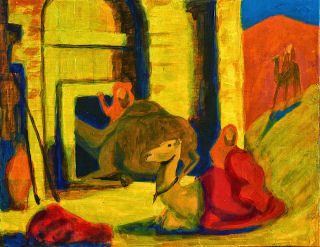
To help us to see this, the Church chose our first reading to be a more ancient and almost parallel example: the Widow of Zarephath. There was a terrible drought. WidowOfZeraphathThe prophet Elijah was on the run from the lukewarm king Ahab and his wicked queen Jezebel, and God directs Elijah to the pagan city of Zarephath. At the entrance of the city, he sees this widow. I always get a little kick out of this dialogue, because this widow and her son are down to nothing, one last little morsel before they die of starvation. And Elijah tells her, yeah, ok, but first make me a cake.

It is a test of her faith: Is she going to be afraid that God can’t provide, or will she trust that even if she gives her last meal to the prophet that God through his prophet will care for her family. The reason I picked that image for the header of this reflection is because it captures the same hesitation and soul-searching—am I sure  this what God’s calling me to do?—before making her generous, sacrificial choice. 

Notice the first line of Elijah: “Bring me a little water to drink.” That might make you think of Jesus in the Gospel of John where he says to the Samaritan woman (another non-Israelite woman being invited to faith) to give me a drink. So you have this invitation to provide hospitality/kindness for this holy man of God. And in return, the woman receives a superabundant outpouring of nourishment (for the widow of Zarephath, an unemptying supply of food; for the Samaritan woman, the fountain of living water). 

Then Elijah gives her a promise, from the God of Israel, that their jar of flour won’t go empty, nor the jug of oil run dry, until the day when the LORD sends rain upon the earth. And this woman does what Elijah says. And sure enough, the Lord’s promise through Elijah is fulfilled.

But what an incredible act of faith of this poor widow of Zarephath! And God rewarded her act of faith superabundantly, providing her with her daily bread miraculously from a jar and a jug that never went empty until the rains replenished the land, and the city could finally grow more crops. She and her son had almost nothing, and gave all they had at the service of their faith in God.

Remember this story of the widow of Zarephath. We’ll hear about her again the first Sunday in February, when we’re in next year’s Lectionary cycle, going through the Gospel of Luke. Just after Jesus reads the mission of the Messiah from the scroll of Isaiah, he says, “Amen, I say to you, no prophet is accepted in his own native place. Indeed, I tell you, there were many widows in Israel in the days of Elijah when the sky was closed for three and a half years and a severe famine spread over the entire land. It was to none of these that Elijah was sent, but only to a widow in Zarephath in the land of Sidon.” Jesus is proclaiming (and the people understand that he is proclaiming, when they drive him out of town) that the mission of the Messiah is not just to Israel, but to the foreign nations of the gentiles as well. 

Per Dr. Brant Pitre: Also too, I might point out, on the spiritual level, what might bread and oil point to? Those are both sacramental images. We receive the sacrament of the Eucharist, which is made from flour that never runs out, which has been offered since the Last Supper and which will be offered until the end of time. What about the oil? Think about the sacred oils that are used in the rights of baptism, confirmation, holy orders, anointing of the sick. All of those oils flow from the offering of Jesus on Calvary and we’re never going to run out of them. So you see here a prophetic prefiguration of the unending abundance of the sacramental life of the church.

That’s also the widow in the Gospel reading: giving not out of their surplus at the end of the month, but giving up front and trusting God to make it work. Of course, you can’t trust God at the beginning of the month and then not follow his will with the remainder, or it might not work out. We don’t put the Lord God to the test. We’re called to trust God in our hearts. We give out of our need in generosity, trusting that God will provide for our needs. It isn’t a deal, where we put out up front and God had better pay out a good return so we can get things that aren’t part of his plan. That’s a good way to set up our faith in God to fail.


Also, last thing. This instruction to sacrificial giving in faith is not in conflict with holy stewardship. We are called to be good, prudent stewards of our resources. Everything belongs to God. Everything comes from Him, the best we can do is cooperate with what He gives us. God says to humbly and trustingly—prayerfully—give Him His part first. Then He will give you guidance, if you listen to Him, for what you need with the rest.

I’m not a financial advisor, I’m a spiritual advisor. If you’re in a situation that isn’t working out, go get a financial advisor. But be steadfast in spiritual giving being a non-negotiable. Not because we can buy our way into heaven. But quite the opposite: because we need to grow in our faith and trust and obedience (and gratitude) toward God and our dependence on Him, to get into heaven. Jesus speaks about our disposition toward money a great deal, because that certainly gets our attention. We will put our treasure where our heart is, and our heart will follow where we put our treasure. God desperately wants us with Him. If we put our treasure there, our hearts are sure to follow.

Horizontal Rule Cross

Homily: First Things First

First-Things-First-Header-2


I sort of feel the need to apologize for not posting my All Saints’ Homily. Not to the point of *actually posting* my All Saints’ Homily, obviously. But you’ll just have get by. It was a busy week. 

Also, while I don’t usually comment specifically on the image I search the internet to find for the header to my posts, this one was the trifecta: First, it fit the theme of the post. Second, it references the book I mention, was was very important to the path of my life (The Seven Habits). And Third, it’s from the Art of Manliness blog, which is awesome in its crusade to promote authentic, healthy, virtuous masculinity. 


What is the most important thing? If you had to sum up what human life is about—what should be at the core of the well-lived life—what is that? Better question: Is that how you live your life? Do you make your choices every day in pursuit of the most important thing? Or is something else grabbing the focus? Do you just live from urgency to urgency? Are you carving out the time and priority to say ‘no’ to lesser things, even when they’re good things, so you can focus your life on developing the best, the most important thing; about being a human person; about being you?

Maybe your life is just going from urgency to urgency—putting out fires, but not really making much progress. Henry David Thoreau is often quoted as saying, “Most men lead lives of quiet desperation, and die with their song still inside them.” How does that happen? Because they don’t put first things first.

The most important book in my own personal life has been “Seven Habits of Highly Image result for seven habits of highly effective peopleEffective People,” by the late Stephen Covey. It’s not that it’s more important than the bible; but if I hadn’t read the Seven Habits when it was the right book at the right time for me, I wouldn’t have had the conversion experience, the renewal of faith, and the re-organization of my life, to make the bible and my Catholic faith important to me. Stephen Covey wasn’t Catholic, he was a Mormon, but what was important was how he integrated the importance of God and faith into the fabric of the well-ordered and well-lived life. “Putting first things first” is in the top three of the seven habits of highly effective people. I mentioned this week during the mass of obligation [nudge, nudge] for All Saints’ Day that November is like the unofficial season of the last things (Death, Judgement, Heaven, and Hell). There’s no better way to prepare for the last things than to contemplate the two most important questions: (1) What is the most important thing; and (2) Am I being proactive about putting and keeping that most important thing at the core of my life and my choices?


In our Gospel reading, one of the scribes asks Jesus, “Which is the first of all the commandments?” Of course, we know by faith that Jesus is God, and so what God says is the most important thing, is probably something we should pay attention to. So what does Jesus, the divine and only begotten Son of God, say is the most important thing? “Jesus replied, ‘the first is this: Hear, O Israel! The Lord our God is Lord alone! You shall love the Lord your God with all your heart, with all your soul, with all your mind, and with all your strength.”

This is a brilliant answer (of course), but we have to unpack it to see why. The Jews had 613 precepts of the Law of Moses, which expanded on the Ten Commandments. It was common in Jesus’ time to measure up a rabbi by how he prioritized and summarized the law succinctly. So the scribe asks Jesus how he reads the law: what is the essence of the law? Most of us, perhaps if we were asked what the most important commandment of the Law was, might have said the First Commandment: “I am the Lord thy God, thou shalt not have any strange gods before Me.” And that would be a pretty solid answer. If you break any commandment, you also break the first one, because you put something else ahead of perfect obedience and reverence to God in your life.

But Jesus doesn’t draw from the moral tradition of Jewish Law: he draws from the liturgical tradition. Every Jew prayed morning and evening prayer, and these prayers included the Shema, which is Deuteronomy 6:4-9, which starts with the words “Shema, Israel,” (“Hear, O Israel!”), Related imagewhich happens to also be our first reading for today. Every Jew knew this passage by heart, like the way all Christians know Matthew 6:9-13 by heart. That’s the Our Father, which is part of the Church’s morning and evening prayer.

The Shema identifies three ways to love God: with all your heart, with all your soul, and with all your strength/might. And Jesus adds another one: and with all your mind.

Love the Lord your God with all of your heart. God must be the first love of our heart, second to none. Anything else we love, is because it is an expression of God’s love, and in obedience to God’s love. The heart is the seat of the human will and of the human emotions. So we set our will to choose to remain steadfast in our love of God above all things. Love has an emotional component, yes. But love is primarily a function of the will. Love—and faithfulness—is a choice. Love the Lord your God with all your heart.

Love the Lord your God with all of your soul. Soul here is a translation (through the Greek: psyche) of the Hebrew word nephesh, which means life.

From Wikipedia (because I was curious): Nephesh (נֶ֫פֶשׁ‬ nép̄eš) is a Biblical Hebrew word which refers to the aspects of sentience, and human beings and other animals are both described as having nephesh. Plants, as an example of live organisms, are not referred in the Bible as having nephesh. The term נפש‬ is literally “soul”, although it is commonly rendered as “life” in English translations. A view is that rather than having a nephesh, a sentient creation of God is a nephesh. In Genesis 2:7 the text is that Adam was not given a nephesh but “became a living nephesh.” Nephesh then is better understood as person.

The soul is the unifying and animating principle of your body. Your soul is the spiritual component that defines your body and holds it together as a living body, and gives you life. Not just that, but sentient life, human life. You are to use all of the faculties of your human nature in service of (and in pursuit of) your first love, your love of God. Love the Lord your God with all of your soul.

Love the Lord your God with all of your strength. The Greek word there means all your might, your effort. So this is something that requires a great deal of effort, energy, endurance, discipline. It requires participation. It’s not passive, like a spectator, sitting in the nose-bleed seats (in the back pews). You actually have to struggle and strive to enter through the narrow gate; you have to commit and engage. You have to dedicate to God, in your love of Him, all your energy, intention, and power. Love the Lord your God with all of your strength.

All three of those elements are in Deuteronomy, but Jesus adds a fourth:

Love the Lord your God with all of your mind. The Greek word here means our understanding, our thoughts. Jesus adds this element of loving God with the intellect, with reason, with truth, of loving God with the mind. Something new is being required, to meditate, to contemplate, to understand, and to teach the gospel. Be able to articulate and explain and share your faith in the gospel, your love of God. Love the Lord your God with all your mind.

This, Jesus says, clearly, is the most important thing. And Jesus is perfect, the Word of God. So we (literally) can take it as gospel truth, that the most important thing that we need to have at the forefront of every moment and every choice, is “THE LORD our God is Lord alone! You shall love THE LORD your God with all your heart, with all your soul, with all your mind, and with all your strength.”


Jesus then couples that first command, from Deuteronomy, with a second, from Leviticus. “The second is this: ‘You shall love your neighbor as yourself.’ There is no other commandment greater than these.” What does that mean, this second commandment? First we have to consider what it means to love yourself.

You acknowledge that you want what is good, even if you don’t exactly deserve it. You want to be shown mercy and leniency. You want things to work out in your favor. Most of all, you want God’s mercy, and to spend eternity in God’s presence, not excluded from it. Not because you’re perfect, you make mistakes, but you’re more than your mistakes, and you want others, and God, to look past those mistakes, and to love you for who you are. You want a minimum of suffering, and a maximum of happiness. Ok then. Love your neighbor as you love yourself. All that good stuff—you need to want that for your neighbor! Jesus was asked, “Who is my neighbor?” and he responded with the story of the Good Samaritan: Everyone is your neighbor, especially those in need, those who are most vulnerable. And even more difficult, he says to love your enemies and your persecutors (and especially the ones who really get on your nerves…)


In Christianity, there’s something even greater going on here—because everyone who is baptized is a temple of God (and even those who are not baptized are still loved by God, and made in His image). So Jesus, the image and presence of God, is in us, and in our neighbor. In Christ, these two most important commandments are folded over into one, because the holy worship of God inspires us to serve others, and holy service of others inspires us to worship God! The first commandment—to love God—we do so by serving our neighbor. And the second commandment—to love our neighbor—in doing so, we serve God. St. John teaches us in his first letter (1 John 4:20), “If anyone says that he loves God while he hates his brother, he’s a liar! For if he hates his brother, whom he can see, how can he love God, whom he cannot see?

If your worship of God in church doesn’t send you to serve others… you have to ask… is it then really the worship that God is asking of you? It may be beautiful and reverent. It may fit the rubrics of Sacred Tradition. But if it’s not making you a holier, more patient, more generous, more virtuous person, be skeptical.

Love the Lord your God with all your heart, with all your soul, with all your mind, and with all your strength. Love your neighbor as yourself. Put first things first. This should be first, at the heart, of every choice, every day. This is the most important thing.

Horizontal Rule Cross

Homily: I Want to See

he-threw-aside-his-coat-8-15-16

It might be obvious what a blind man would ask for, when Jesus asks, “What do you want me to do for you?” And so we aren’t surprised when the blind man answers, “I want to see.” Certainly Jesus knew what he was going to ask for, before he asked. God always knows what we want, and what we need, before we ask.

But he doesn’t always give it to us right away. St. Augustine says that God will often delay answering our prayers because he wants to give us more than we ask for, but our hearts need to grow with longing to be large enough to receive the abundance of what God wants to give us. Jesus didn’t just walk past Bartimaeus and wave his hand to heal his blindness. He waited until Bartimaeus had cried out for him, had formulated in his mind and heart what he wanted most, and had called out again, against the pressure of the crowd. Then, Jesus knew Bartimaeus was ready to receive his gift.

Jesus did not just heal Bartimaeus’ eyes to just be like our eyes. Jesus healed Bartimaeus so he could truly see. And he saw his healing, and everything he saw by it, as a gracious gift of God. And he saw Jesus.

It reminds me of how they used the phrase, “I see you” in the movie Avatar. It was said with a sense of reverence of the true nature of the person. Bartimaeus, with his eyes truly healed, saw the truth of his healer, the Messiah, the Son of David. What he saw first only with the desperate faith of his heart, he was now able to see with the healed eyes of his body. St. Augustine said, “Faith is to believe what you do not see; the reward of this faith is to see what you believe.”


As a blind man, Bartimaeus called out, “Jesus, son of David.” Son of David was a royal title, a very brazen thing to call out in Roman-occupied Israel. But it also was an acknowledgement of Jesus as the Messiah, the eternal king, who would come as a son of David. David had been the great King of Jerusalem. It is believed by many biblical scholars that Jerusalem had earlier been called Salem (a variation of the word “peace”, shalom). And long before David was King in Jerusalem, Melchizedek (whose name means “king of” + “righteousness”) was the priest-king of Salem, who was encountered by Abram way back in the Book of Genesis; Melchizedek, the priest-king of Salem, who offered bread and wine as the sacrifice to the Most High God:

Melchizedek, king of Salem, brought out bread and wine. He was a priest of God Most High. He blessed Abram with these words: “Blessed be Abram by God Most High, the creator of heaven and earth; And blessed be God Most High, who delivered your foes into your hand.” Then [he] gave him a tenth of everything.

That comes up in our second reading from the Letter to the Hebrews, and in the Book of Psalms, and in Eucharistic Prayer I:

Be pleased to look upon these offerings with a serene and kindly countenance,
and to accept them, as once you were pleased to accept
the gifts of your servant Abel the just,
the sacrifice of Abraham, our father in faith,
and the offering of your high priest Melchizedek,
a holy sacrifice, a spotless victim.

After his first appearance in Genesis 14, Melchizedek makes one more appearance in the Old Testament: Psalm 110:

The LORD says to my lord:
“Sit at my right hand,
while I make your enemies your footstool.”
The scepter of your might:
the LORD extends your strong scepter from Zion.
Have dominion over your enemies!
Yours is princely power from the day of your birth.
In holy splendor before the daystar,
like dew I begot you.
The LORD has sworn and will not waver:
“You are a priest forever in the manner of Melchizedek.”

The Letter to the Hebrews was written for the sake of Jewish Christians feeling the pressure to revert back to Judaism. The author is affirming for them that what they have in Christianity fulfills and surpasses what Judaism offers. In today’s second reading, the author presents three ideas: (1) high priests (of the Levitical priesthood) offer gifts for the atonement of sins, and since they too are sinners, they have to atone for their own sins as well as those of the people; (2) those who are priests do not claim that role for themselves, but are called by God to that vocation; and (3) Christ was also called by God to be high priest, and his sharing in our humanity (but without sin) makes him even more capable as high priest, because in his humanity he can sympathize with our human weakness, and in his divine perfection his offering is purely for the people, not in anyway for himself who needs no atonement; and the high priesthood of Christ is not a succession like that of the Levites, but unique, as God said to him, “You are my son; this day I have begotten you” (from Psalm 2) and “You are a priest forever according to the order of Melchizedek” (from Psalm 110). Long before Christianity, these quotes from the psalms were considered to apply to the long-awaited Messiah.

Catholic priests are not priests in succession after Jesus, but in the person of Jesus (in persona Christi). Jesus is the eternal high priest who once and for all offered/offers the perfect sacrifice of himself, the lamb without blemish, the bread and wine to the Most High God (a holy sacrifice, a spotless victim). Catholic priests are priests in the priesthood of Christ. Priests offer the Mass, but it is Christ who offers (and is) the sacrifice, who effects (makes effective) the sacrament. That is why priests offer the sacrifice of the Mass (the lamb of God who is made present by the transubstantiated offering of the bread and wine) in persona Christi – in the person of Christ, who is the one eternal high priest in the order of Melchizedek, the righteous priest-king of peace.


“Son of David,” while a noble title, is impersonal, it does not communicate a relationship. When Jesus was passing by, Bartimaeus called out, “Jesus, son of David.” But when Jesus calls him to himself and speaks with him, Bartimaeus called Jesus, “Rabbouni,” the same title used by Mary Magdalene in the garden on Easter morning. It means, “My teacher.” It’s possessive; it’s intimate, trusting, and humble. It is a personal relationship. (In the translation of the Lectionary, it’s unfortunately rendered simply as “Master.”) Jesus heals Bartimaeus, and tells him, “Go your way; your faith has saved you.” But Bartimaeus didn’t go his way, it says “Immediately he received his sight and followed him on the way.” “The Way” was an early reference to the Church, the followers of Christ.

Christ is “the way, the truth, and the life.” There is a neat little phrase from St. Catherine of Siena, that since Jesus is God, and heaven is to be with God, and Jesus is the way to heaven, that “All the way to heaven is heaven.”

Related image(shameless plug) “The Way” is also a good movie about the Camino de Santiago, the “Way of St. James,” the 500-mile pilgrimage from southern France through northern Spain, ending at the cathedral of Santiago de Compostela. The movie was directed by Emilio Estevez, starring himself and his father, Martin Sheen. 

But there is another “way” mentioned in our first reading–well, not another way, but another mention of “the way.” Jeremiah had prophesied to the Israelites in Exile that there would be a grand procession (the level way through the desert leading them to the restoration of the Promised Land) in return to Jerusalem when they were freed. It would not just be the restoration of Judah, the Southern Kingdom, but also include Israel, the long-lost Northern Kingdom (whose leading tribe was Ephraim). And it would not just be the strong and the proud, but even the least and most vulnerable of Israel would share in the jubilant restoration: “Behold, I will bring them back from the land of the north; I will gather them from the ends of the world, with the blind and the lame in their midst, the mothers and those with child; they shall return as an immense throng. They departed in tears, but I will console them and guide them; I will lead them to brooks of water, on a level road, so that none shall stumble.” Of course it makes sense why this would be the first reading for today: the blind and the lame in their midst, on the way to restoration, led by the King, the Messiah, who was long prophesied as the fulfillment of Psalm 110’s “priest in the line of Melchizedek.” Jesus’ Messianic mission, as we’ve said before, was to bring all the nations of the world (where the lost northern tribes had dispersed to) into the new covenant, reconciling all (the many) with the grace of the Father, leading them into the Promised Land.


Bartimaeus was not simply healed to go his own way, but healed to be able to see Jesus as the Way. Why? Because he had called out to Jesus persistently, with everything he had. And when Jesus called him to come, Bartimaeus threw aside his cloak, anything that would be an encumbrance to him, and came to Jesus. The perfect response of faith. “Go your way; your faith has saved you.”

Remember a few weeks ago when Jesus healed the deaf and mute man, and Jesus said in a loud groan, “Ephphatha,” which means, ‘Be opened,’ “and immediately the man’s ears were opened, his speech impediment was removed, and he spoke plainly.” A Lutheran pastor friend made the point that the verb in “Be opened” is singular, not plural. It doesn’t refer to the man’s ears, it means the man himself. Jesus heals not by fixing our parts, but by healing us in the depth of our woundedness, our being closed off to the living grace of God. Jesus didn’t heal Bartimaeus’ eyes. He healed Bartimaeus’ fallen humanity, his separation from God, because his faith had made him able to receive Jesus’ gift of gracious healing. Even as a blind man, he had seen who Jesus truly was. Then as a healed man, he could follow Jesus on his way, beholding with joy his teacher, his God who had healed him. He had taken the risk of putting all his eggs in the basket that Jesus was truly the Son of David, the Messiah, who could heal him of his blindness. And when his faith proved well-founded, he used his healing to follow Jesus.

Bartimaeus was totally committed to Jesus. Jesus is totally committed to us. With regards to us, Jesus is a maximalist: He couldn’t have given more than the everything he gave. With regard to Jesus, we are often minimalists: what’s the least we have to do. What’s the minimum participation in the Mass? How far away can I sit? How early can I leave? What’s the minimum to just make it into the purgatory? Do I have to go to church? It’s boring. And cold. They’re asking for volunteers, or offering opportunities for more involvement. That’s more than the minimum. What, a holy day of obligation not on a Sunday? You’re lucky I’m here on Sunday (some Sundays anyway).

When you plan your vacations, do you find out what Catholic Churches are nearby and when their masses are? Do you invite your weekend visitors to church with you on Sunday? When you’re signing up for your children’s sports league, are you letting the coach know at the beginning of the season that you’ll miss events on Sunday mornings, even if that means sacrificing playing time? Have you told your manager that you’d prefer to start later on Sundays so you can take your family to church? Do you fit your Catholic identity somewhere, sometimes, into your life, or do you build your life around your Catholic identity? Are you putting first things first?


Image result for fr. michael schmitz baptismTo borrow from Fr. Michael Schmitz (famed youth pastor and speaker for Ascension Presents), if Jesus is not your Rabbouni, your teacher, your Lord, then every time he asks you to do something, you’re going to resist it, resent it. And you’re going to look at Jesus like you look at the IRS. You say, “Ok, I’ll do what you want, I’ll pay. But don’t ask for anything more. And if I can find some loopholes, then good for me.” A lot of times we look at Jesus like the tax man. We don’t want him to get too into the details of our life, or he’ll ask us to give more. We give him just enough to stay at a comfortable distance. But Jesus doesn’t want to be at a distance. No one says to the IRS, “Here’s access to everything, take what you want.” Are we really making ourselves fully available to God to heal us, as Bartimaeus did, so that we can truly see? Are we persistent and patient in our prayers to be healed, allowing God to grow our hearts in trusting anticipation? Are we surrendering to his will to heal us?

Are we guilty of being Christian minimalists, resisting and resenting when our faith in Jesus makes demands, making sure Jesus stays at a “safe distance” so we can live our life (remember the convenient-but-not-too-personal road-side assistance god of Moralistic Therapeutic Deism!)? Or are we Christian maximalists, who give everything so that we might truly receive our life from God—to be healed, be reconciled, have life, and have it abundantly? To see God’s work in our lives, to see ourselves and others as the miracles that we are, to see God’s glorious plan for our flourishing (and that of our children). “Jesus, Son of David! Rabbouni! I want to see!”

Horizontal Rule Cross

Reflection: The Cup and Baptism

cross and baptism

I have a guest priest from Cross Catholic International coming to celebrate the Sacrament of Reconciliation and all the Masses this weekend, so I have a reprieve from preparing a Sunday homily this week. So I thought, rather than skipping my blog for this weekend (which was very tempting!), I decided to read through my usual commentaries and sources, and put something together. As it happens, there were some interesting thoughts I wanted to comment on. So rather than offer a homily for the Sunday Mass, I would like to share my thoughts about our Gospel Reading. 


James and John, the sons of Zebedee, came to Jesus and said to him,
“Teacher, we want you to do for us whatever we ask of you.” 
He replied, “What do you wish me to do for you?” 
They answered him, “Grant that in your glory
we may sit one at your right and the other at your left.” 
Jesus said to them,
“You do not know what you are asking. 

Can you drink the cup that I drink
or be baptized with the baptism with which I am baptized?” 
They said to him, “We can.” 
Jesus said to them,
“The cup that I drink, you will drink,

and with the baptism with which I am baptized, you will be baptized;
but to sit at my right or at my left is not mine to give
but is for those for whom it has been prepared.”
When the ten heard this, they became indignant at James and John.
Jesus summoned them and said to them,
“You know that those who are recognized as rulers over the Gentiles
lord it over them,
and their great ones make their authority over them felt.
But it shall not be so among you.
Rather, whoever wishes to be great among you will be your servant;
whoever wishes to be first among you will be the slave of all.
For the Son of Man did not come to be served
but to serve and to give his life as a ransom for many.”

This reading for Sunday follows immediately upon Jesus giving his third prediction of his Passion, Death, and Resurrection, which fell in the gap between last Sunday’s reading and today’s reading. In today’s reading, Jesus asks James and John, Can you drink the cup that I drink or be baptized with the baptism with which I am baptized?” Jesus brings together two images very important in Christian Tradition.


Can you drink the cup that I drink…

When does a cup come up? Well, it came up the night before the crucifixion at the Last Supper, when Jesus took a cup, gave thanks, and gave it to his disciples, and said to them, “This is my blood of the covenant, which will be shed for many. Amen, I say to you, I shall not drink again the fruit of the vine until the day when I drink it new in the kingdom of God.” Dr. Scott Hahn has an excellent reflection on the concept of “The Fourth Cup.”

Image result for fourth cup

“There are four cups that represent the structure of the Passover. The first cup is the blessing of the festival day, it’s the kiddush cup. The second cup of wine occurs really at the beginning of the Passover liturgy itself, and that involves the singing of psalm 113. And then there’s the third cup, the cup of blessing which involves the actual meal, the unleavened bread and so on. And then, before the fourth cup, you sing the great hil-el psalms: 114, 115, 116, 117 and 118. And having sung those psalms you proceed to the fourth cup which for all practical purposes climaxed and consummated the Passover. Now what’s the problem? The problem is that gospel account says that after the third cup, Jesus says, “I shall not drink again of the fruit of the vine until I am entering into the kingdom of God.” And it says, “Then they sang the psalms.” 

So what happens with the fourth cup? First, look at Gethsemane:

He fell to the ground and three times said to the Father, “Abba, Father… All things are possible to Thee. Remove this cup from me. Yet not what I will, but what Thou wilt.” Remove this cup. What is this cup? 

And then:

Jesus, on the cross, knowing that all was now finished said, in order to fulfill the scriptures, “I thirst.” Now, he’s been on the cross for hours. Is this the first moment of thirst? No, he’d been wracked with pain and dying of thirst for hours. But he says, in order to fulfill the scripture, “I thirst.” “They put a sponge full of the sour wine on hyssop and held it to his mouth. When Jesus had received the sour wine he said the words that are spoken of in the fourth cup consummation, “It is finished.” In Latin, “Consummatum est.” What is the “it” referring to? The “it” is the Passover sacrifice. 

The Passover Sacrifice is now the Eucharistic Sacrifice. The Last Supper and the Crucifixion are joined by the Fourth Cup into the single event of Christ’s self-sacrifice for the forgiveness of sins. I said in an earlier post that Christ always predicted his crucifixion joined to his resurrection, as a single event. And so we have a triptych: Last Supper, Crucifixion, Resurrection. And every Mass is all three, the entryway for Christians of all generations to participate in this singular triptych event of the Bridegroom’s consummation once for all with His Bride. And it is at the celebration of the Mass that the Bride consummates throughout time with her Bridegroom, uniting herself to Him.

In the case of Jesus, the Fourth Cup, the “Cup of Consummation” is the consummation of the nuptial covenant of the Bridegroom with his Bride. There is an image of the cup of God’s wrath that Isaiah’s Suffering Servant must drink. By “drinking this cup,” Christ pays the price for the redemption of his Bride, winning her from Satan’s claim on her for her sins, so that she is free. She now belongs to Christ. For Christians, the question, “Can you drink the cup that I drink” is the “bitter cup” of suffering, of sacrifice, of persecution and rejection, the cup of the consequence of sin (ours and others’).


…or be baptized with the baptism with which I am baptized?”

In the blessing of the baptismal font, the priest or deacon recounts the many ways in which water was a sign of baptism throughout Salvation History. At the end of the blessing, he puts his hand into the water, and says, “We ask you, Father, with your Son to send the Holy Spirit upon the waters of this font. May all who are buried with Christ in the death of baptism rise also with him to newness of life. We ask this through Christ our Lord. Amen.” That’s a striking image: “buried with Christ in the death of baptism.” What is the “death of baptism”?

Adam and Eve had the vocation to be the parents of all the living, and to pass on to all humanity their relationship of peace and one-ness with themselves, with each other, with God, and with all Creation. But because of their sin, their vocation was corrupted, and instead they handed on to all humanity their broken relationship within themselves, and with each other, with God, and with all Creation.

Jesus came to give us life, and life abundant, by giving us participation in his life, and his relationship with the Father: to restore to us what we lost, and more. We always have to remember that uniting ourselves to the life of Jesus is not just the resurrection, but the cross as well. So Christian baptism is the death of that disordered spiritual life we inherited from Adam and Eve, the death of sinful habits, disorders, desires, attachments, and scripts of reacting to circumstances sinfully, to be replaced by new ways of living, seeking first the Kingdom of God, and responding to circumstances with grace. It is the death of the broken communion within ourselves, and in our relationships. So the “death of baptism” is the death of all that is from Satan, through Adam and Eve, that is not from God.


So when Jesus asked James and John, “Can you drink the cup that I drink or be baptized with the baptism with which I am baptized?” he was asking them if they were prepared to even pay the price to enter the Kingdom–to accept the bitter cup of suffering and the death of baptism–much less be seated at places of honor. Were they prepared to endure their passion and death, spiritually for certain, and physically perhaps, that is part of the Christian vocation, and required for being part of the Kingdom?

“They said to him, ‘We can.’ Jesus said to them, ‘The cup that I drink, you will drink, and with the baptism with which I am baptized, you will be baptized; but to sit at my right or at my left is not mine to give but is for those for whom it has been prepared.'”

Jesus just before this told of his own Passion. Here, probably not understood by James and John, he foretold of theirs! Of course, it is held by Tradition that John was not martyred as were the other disciples, but he was exiled, a “living death” as his share of persecution, a “white martyrdom.”

So who sits at Jesus’ right and left in the Kingdom? We’ll have to wait until we get there to see. But here are two thoughts to consider. First, in the ancient Kingdom of God under King Solomon, the Queen Mother sat enthroned to the right of her son, to carry out her privileged role of interceding with her royal son on behalf of his humble people who implored her help to receive his grace. So perhaps we know who sits to Jesus’ right. But here’s another thought. When Jesus entered into his glory–his “hour of glory”–who were at his right and at his left? Two criminals, who were paying the debt for their crimes. I’m not presuming to say that these two are at the right and left of Jesus at his heavenly throne. But while St. Dismas—the name Tradition gives to the “repentant thief,—is traditionally portrayed as being on Jesus’ right (because good was on the right, and bad on the left), the Scriptures don’t say which side was which. Perhaps St. Dismas is on the left, and the Blessed Mother is on the right. Or perhaps you will be on the left! St. Chrysostom drops the whole question: “No one sits on His right hand or on His left, for that throne is inaccessible to a creature.” Again, we’ll just have to wait and see!


Before I leave the subject of the (Eucharistic) cup and Baptism and move on with the rest of the Gospel reading, I want to note that there is a tradition of another association between them.

Before the Jewish wedding ceremony, there was the tradition of the ritual bridal (or nuptial) bath, in which the bride would cleanse herself in preparation for the wedding feast (which ended with the wedding consummation!).

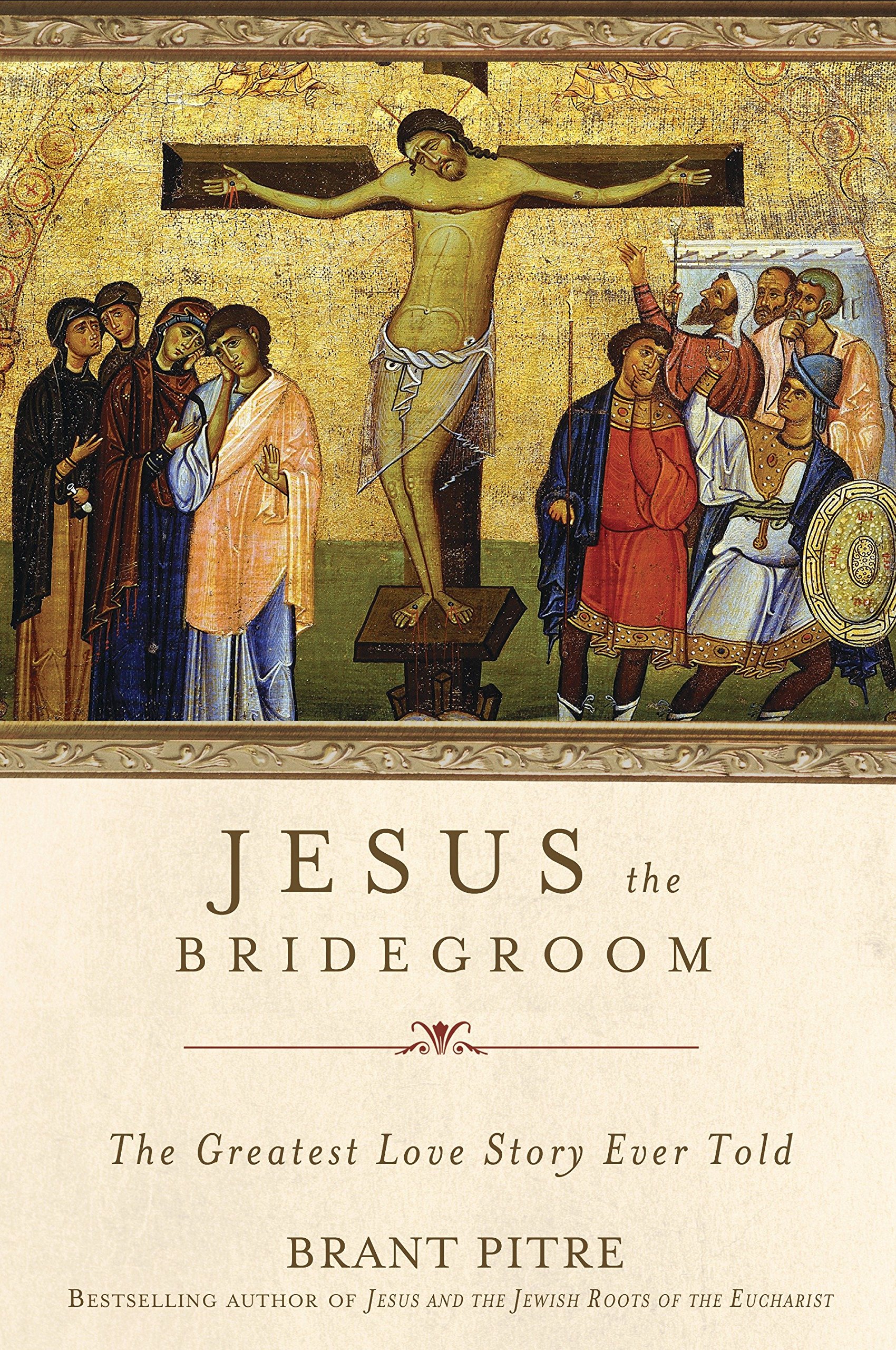
Image result for jesus the bridegroom pitre

In Brant Pitre’s Jesus the Bridegroom: The Greatest Love Story Ever Told, he describes each new member of the Church being incorporated into the person of the Bride as she enters into the nuptial bath of baptism, which cleanses her of her sins, to prepare her for her consummation with her Bridegroom in the wedding feast of the Eucharist. So in baptism, we receive the washing of forgiveness of sins, and become members of the Church, the Bride of Christ, and we are prepared to participate in the Eucharist, the communion of the Bride and the Bridegroom.

And of course, the Church fathers were quick to draw the connection between the blood and water that flowed from the pierced heart of the crucified Christ and the sacraments of the Eucharist and Baptism. The Book of Revelation introduces the saints as they who “have washed their robes and made them white in the blood of the Lamb.” The Baptismal water is both a nuptial bath and the forgiveness of sins. The Blood of Christ both cleanses us of our sins and is the cup of salvation of the wedding feast of the Lamb and the Bride.

“The cup that I drink, you will drink, and with the baptism with which I am baptized, you will be baptized.” Christ drinks the cup of suffering that becomes the cup of our salvation. Christ is baptized into death, which becomes our baptism into new life. We do drink the cup that he drinks, and we are baptized with his baptism, because through Christ, his suffering and death become our communion with him and the life of grace!


“You know that those who are recognized as rulers over the Gentiles lord it over them, and their great ones make their authority over them felt. But it shall not be so among you. Rather, whoever wishes to be great among you will be your servant; whoever wishes to be first among you will be the slave of all. For the Son of Man did not come to be served but to serve…”

No doubt most people have had to suffer under someone in authority who was all about themselves and their exercise of power and will. History, including the present, has more than a few tyrants and despots and dictators and corrupt leaders. But Christian leaders are called to be leaders who act in accord with Christ, who have both Christian conduct in their person and in their exercise of authority. And the greatest of these, of course, is love. There is an old maxim that a rich man should think of himself as a father of a large family, in terms of his generous, responsible stewardship of his wealth. Likewise, a Christian leader should think of himself as the father of a large, complex family, where the goal is the common good, the flourishing of every individual, and of the whole community, both at the same time. There may be times when the good of the many is stacked against the good of the one, but the one still has certain inviolable rights that must be regarded and protected.

After the minister (deacon or priest) baptizes a child, and as he prepares to anoint the child with chrism on the crown of his or her head, the minister says, “The God of power and Father of our Lord Jesus Christ has freed you from sin, given you a new birth by water and the Holy Spirit, and welcomed you into his holy people. He now anoints you with the chrism of salvation. As Christ was anointed Priest, Prophet, and King, so may you live always as a member of his body, sharing everlasting life.

When we are baptized into his life, and into his relationship with the Father, we are also baptized into his job. I mentioned a few weeks ago about Christ in the role of Priest, Prophet, and King. What does he show us about living out these roles?

  • As priest, He offers prayer and sacrifice, He glorifies the Lord and intercedes for the needs of the people, He blesses the world by His example of virtue and wisdom, and He calls the world to repentance and conversion.
  • As prophet, He speaks the divine truth, in season and out of season, He invites others into life in the Truth, into life in relationship with the Father; He suffers, He endures ridicule and shame, He turns the other cheek to those who insult Him.
  • As king, He shows us that divine power becomes poor that we might become rich; as One who is great He becomes the least and the servant of all; He lifts up the lowly, He feeds the hungry, He welcomes the stranger, He clothes the naked, He cares for the sick, He gives to the poor; as the greatest He becomes the smallest, and concerned about the smallest, the weakest, and most vulnerable.

Today’s gospel has to do with that last part. We are sons and daughters of the most high God, we are princes and princesses of all of Creation, our father’s realm. And we are expected to carry out our royal duties with diligence and grace. Christ gave us the example of what it means to exercise divine power… from his throne of the cross. This is where he showed his great love for creation, and humanity in particular. He didn’t need to have a heavy hand, because divine power is merciful. He didn’t need weapons and violence, because divine power is gentle. He didn’t need to defend his rights or shout his commands, because divine power is humble. He prayed for the forgiveness of his persecutors, and laid down his life for his friends, because divine power is love.


“…and to give his life as a ransom for many.”

The Greek word at the end of that sentence is pollōn. It’s the same word as in the phrase, “you are more valuable than many sparrows,” and “I wrote to you with many tears.” It is literally and truly the word for “many,” and not the word for “all.”  In Latin, it is translated the same: “pro multis.” It is the same word in the Institution narrative: “This is my blood of the covenant, which will be shed for many.” And now, as of the 2011 updated English translation of the Roman Missal, it is the same translation in the consecration of the Precious Blood on the altar in the Mass, “…poured out for you and for many for the forgiveness of sin.

You might remember that there was much wailing and gnashing of teeth at the correction of the translation from the earlier version, “poured out for you and for all.” That might sound wonderfully inclusive, but it’s not what Jesus said in the Gospel. But there are two good and valid ways to handle this.

First, the scriptural and linguistic way. It is unfortunate that the attention was on the contrast between “many” and “all,” because that really was the wrong question. The contrast is between the one and the many. The commentary in the New American Bible (the translation that is the basis for the Lectionary), has a note that says, “Many does not mean that some are excluded, but is a Semitism designating the collectivity who benefit from the service of the one, and is equivalent to ‘all.’” The Catechism says in paragraph 605,

“He affirms that he came “to give his life as a ransom for many”; this last term is not restrictive, but contrasts the whole of humanity with the unique person of the redeemer who hands himself over to save us. The Church, following the apostles, teaches that Christ died for all men without exception: “There is not, never has been, and never will be a single human being for whom Christ did not suffer.”

Second, the consequential and free-will way. While it is true that Christ died for all, not all will choose to benefit by this gift. Some will refuse the gift, and choose hell. Some will not be saved. Not because Christ’s sacrifice was restrictive and not meant for them, but because they restricted themselves out of being saved by Christ’s sacrifice by their own choice. God wants that all be saved. But not all want themselves to be saved. And so we have in the preface of the fourth Eucharistic Prayer, “yet you, who alone are good, the source of life, have made all that is, so that you might fill your creatures with blessings and bring joy to many of them by the glory of your light.” That sounds much more like a restrictive use of the word “many”—as opposed to “all.”


So before I sign off, I wanted to make a little announcement, particularly because I evidently have a little audience. Last weekend I wanted to reference at dinner something I wrote, and accessed my site for the first time using a cell phone, which wasn’t logged into WordPress, and I was appalled by how it looks to a viewer, to you. Shocked, I tell you.

So I went ahead and paid for the subscription service that knocks out all the ads, and opens up some new options. I explored every one of the free themes they offer, and I didn’t really like any of them enough to change the layout. I would prefer a side bar of widgets, but I’m not willing to give up what I have to get it (or pay more to be able to modify the current theme).

Also, you might notice that the website changed. I have my own domain!! How cool is that!? You might not have noticed, but you are now at http://www.snarkyvicar.com! And if that weren’t the bees knees, I got a new email address: steve@snarkyvicar.com (which works like a gmail suite pseudo-business account, with half the bells and whistles). So I’m pretty excited, and I want to thank YOU for the likes, the loves, the shares, the comments, and the support and encouragement. And of course, the friendship!

thankyou

Homily: Love of Wisdom

why-study-philosophy-peter-hacker-iaitv

The word “Philosophy” comes from two Greek words. “Philios” or “Philia” means “loving, fond of, tending to.” “Sophia” means “wisdom.” Philosophia, or Philosophy, literally means, the “love of wisdom.” The wisdom literature in the bible, we could say, also speaks of the “wisdom of love.” The Wisdom books in the bible personify Philosophia as “Lady Wisdom,” who man should pursue and court as a lover, as the way to living the virtuous life. Our first reading says, “I… deemed riches nothing in comparison with her, nor did I liken any priceless gem to her; because all gold, in view of her, is a little sand… Yet all good things together came to me in her company, and countless riches at her hands.”

The Book of Wisdom, or Book of the Wisdom of Solomon, was originally written in Greek in the Jewish diaspora, the Jews living in the context of the greater Greek culture. Because it did not belong to the Hebrew Pharasaic canon, it was excluded from the Jerusalem canon of the holy scriptures, and thus also from Martin Luther’s version of the Old Testament. But the Book of Wisdom, and the other Old Testament books of Greek origin, were well-known to the Christians outside of Israel, and were well-quoted by the Church Fathers.

In the Incarnation of the Son of God—the perfect self-expression of God—the divine Word of the Father—many aspects of biblical wisdom (of biblical philosophy) are met in the person of Jesus. Our second reading easily substitutes the Wisdom of God with the Word of God: “Indeed the Word of God is living and effective, sharper than any two-edged sword, penetrating even between soul and spirit, joints and marrow, and able to discern reflections and thoughts of the heart.” God’s wisdom penetrates deep below the appearances, the flesh, the temporal order, and penetrates into the spirit, the true person, the heart and soul. “Everything is naked and exposed to the eyes of him to whom we must render an account.” And Jesus in the Gospel says the same thing as Lady Wisdom in the Old Testament: beware of the temporal trap of appearances and wealth; seek instead the way of wisdom and holiness.


Jesus and his disciples were walking and “a man ran up, knelt down before him, and asked him, ‘Good teacher, what must I do to inherit eternal life?’ Jesus answered him, ‘Why do you call me good? No one is good but God alone.’” Skeptics often point to this verse, Mark 10:18, to say Jesus himself here denies he is God. But it’s bad biblical interpretation to take one verse out of context and use it as a proof-text. If you look at the verse in context, Jesus is speaking to a man who is bowed, face-down at his feet—an act of worship—who just called him good—an attribute of the one true God of Israel. What does Jesus then do? He gives the man the law of God—actually, the second tablet of the law, having to do with love of others. And then what does Jesus do? He adds a particular commandment for this man, and by analogy, for us. “Jesus, looking at him, loved him and said to him, ‘You are lacking in one thing. Go, sell what you have, and give to the poor and you will have treasure in heaven; then come, follow me.’” Jesus is not denying that he is good, he is saying that he is good. So if Jesus is good, and only God alone is good… then… Jesus is acknowledging that he is God, that he is divine. He’s trying to help this man unpack the faith he already demonstrates by his act of worship.

Image result for rich young man

Jesus, looking at him, loved him.” Jesus emblepsas him… beheld him, considered him, gazed at him with special concern… and ēgapēsen him… loved him with agape, self-giving, selfless love. “At that statement his face fell, and he went away sad, for he had many possessions.” God does not hate sinners; God can only love. God loves those who walk away from him, who persecute him, who reject him. He is always calling everyone into a deeper participation in his own divine life, whether a person is a politician on the world stage, or a Sister of Mercy ministering to the needy in the streets, or a convicted murderer on death row, or a suburban parent trying to take care of his or her family. All are called to conversion, to repentance, to divine love, and all have the choice between surrendering themselves more to God’s love in their life, or to go away sad, unwilling to surrender the many things they are concerned about for the sake of the one thing necessary.


Three times in this year’s readings, Jesus says something bold, which people question, and then he affirms his teaching with stronger words. In John 6, Jesus was teaching about eating and drinking his flesh and blood. The Pharisees murmured against him. And Jesus then said to them, “Amen, amen, I say to you, unless you eat the flesh of the Son of Man and drink his blood, you do not have life within you.” Last week, Jesus was teaching that marriage is until death. “In the house the disciples again questioned Jesus about this. He said to them, ‘Whoever divorces his wife and marries another commits adultery against her; and if she divorces her husband and marries another, she commits adultery.’” In today’s reading, “Jesus… said to his disciples, ‘How hard it is for those who have wealth to enter the kingdom of God!’ The disciples were amazed at his words. So Jesus again said to them in reply, ‘Children, how hard it is to enter the kingdom of God! It is easier for a camel to pass through the eye of a needle than for one who is rich to enter the kingdom of God.’”

Before I go into Jesus’ strong words today, I want to go back and revisit Jesus’ strong words from last week.

I spoke last week about the Theology of the Body—that each person is body and soul united, and that man and woman together in the nuptial consummation, the complementarity of their bodily personhood, is a share in (and revelation of) the self-giving love of the inner life of God. I was told that while the Theology of the Body was appreciated, that I should have said something to comfort the divorced.

Image result for chesterton i don't need a churchWe do want to be comforted… we also want approval for all the choices we make that we see as good, that God call them good, too. Because that’s God’s job—to approve of what we approve of, and condemn what we condemn. Well, not really, no. Our job is to approve of what God approves of, and to condemn what God condemns. Jesus says that divorce-and-remarriage is adultery, and I am not going to correct Jesus.

But I concede the point that I knew that there were many in the congregation who were divorced, and I missed the opportunity to help them interpret their experience in light of Jesus’ words of Truth. The truth is that I presumed that everyone already knew that divorce is contrary to the Catholic Faith, that marriage is until death, and that annulments are possible for those who can prove that their marriage was sacramentally invalid. And so rather than harp on that point for another year, my choice was, instead of making the divorced feel bad, I wanted to point forward to the beauty of God’s truth of marriage, to build up those who are already married, and inspire those who look forward to marriage. So here is the bit about annulments that I elected to forsake last week to allow time to present the splendor of the Theology of the Body.


Marriage is a public event in the Christian community, not a clandestine arrangement made in secret. Catholics must be married in view of the community of the Church, which validates that the couple is potentially able to enter into marriage, prepares them to live out their marriage promises, and publicly blesses their marriage promises with sacramental grace. So when two people promise before God and the Christian community that they are uniting until death do they part, come what may, it is not God’s plan that they divorce. Like all Christian life, marriage is the call to be selfless, humble, forgiving, and holy. It’s the cross. It demands unconditional commitment. We are not promised a happy life; we are promised the paradoxical joy of the cross, which, if persevered through, will lead us to salvation. That’s why you promise to be faithful: because there’s a lot of times and situations tempting married couples to give up.

Now, the exception. First, no one has an obligation to be a punching bag, physically or emotionally. The Church tells spouses who are being abused to separate to safety. Separation is fine—as long as separation is oriented toward healing and reconciliation, if possible. The second exception rests on Jesus’ words, “What God has joined together,” and the exception in Matthew’s gospel, which is, “unless the marriage is unlawful/sinful.” God joins together those who worthily exchange their promises of life-long fidelity (remember… the effective reception of a sacrament requires the “necessary disposition” to receive it). But… if, at the time of that exchange of promises, one or both of the persons are too emotionally or spiritually immature; if they lack the intention or ability to make and keep their promises; or due to other obstacles to the sacrament of marriage, then one or the other can take their exchange of promises to the Church to say that God did not join this union together. And if the Church agrees, the couple is given a declaration of nullity (an annulment). But this is not divorce. Divorce says that a contract of marriage existed for a time, and then ended. An annulment says that the covenant of marriage had never been formed, and the persons were not (and are not) sacramentally married. God does not will divorce—he says “Let your yes be yes.” But God’s plan accommodates human sinfulness and weakness, and He can and does bring good out of it. I know of many good marriages that abound with free, total, faithful, and fruitful love, which followed after earlier failed marriages that had been annulled.


So that’s the second ending of last week’s homily. Just a few sentences to finish up this week’s homily. A few weeks ago, the second reading from Saint James said, “Come now, you rich, weep and wail over your impending miseries…you have stored up treasure for the last days.” That’s the key to the biblical teaching on wealth… not that it is intrinsically evil or in opposition to the Christian life, but the sin of trusting that one’s wealth will matter on judgment day. Jesus, and his Church, have relied on the generosity of the faithful who have wealth. It is not a sin to be wealthy. camelgateBut one must also answer on judgment day for their Christian use of their wealth.

St. Augustine in the 5th century tells of a tradition that there was a small door next to the main city gate of Jerusalem called the “Eye of the Needle.” A camel was too large to enter, especially carrying a load, unless the camel was first unburdened, and then passed through the gate kneeling. A rich person cannot enter into the kingdom of heaven unless he strips himself of the burden of his wealth, and humbles himself on his knees. The rich person investing his wealth in the needs of the Christian community, humbling himself to enter the gate, understands the spiritual dangers that comfort and reliance on wealth fosters. St. Paul wrote to Timothy, “Those who want to be rich are falling into temptation and a trap…The love of money is the root of all evil. Some men in their passion for it have strayed from the faith, and have come to grief amid great pain.” It is King Solomon, clothed in royal splendor, who wrote, “I pleaded, and the spirit of wisdom came to me. I preferred her to scepter and throne, and deemed riches nothing in comparison with her.” It is not the love of money, nor even the love of wisdom, but the wisdom of love, that leads us to salvation.

Horizontal Rule Cross

Homily: The Two Become One

the-sacrament-of-marriage

With gratitude to Christopher West, and his talk, “Marriage and the Eucharist.”

The question is asked, “Is there anything more beautiful in life than a boy and a girl clasping clean hands and pure hearts in the path of marriage? Can there be any thing more beautiful than young love?” And the answer is given. “Yes, there is a more beautiful thing. It is the spectacle of an old man and an old woman finishing their journey together on that path. Their hands are gnarled, but still clasped; their faces are seamed but still radiant; their hearts are physically bowed and tired, but still strong with love and devotion for one another. Yes, there is a more beautiful thing than young love: Old love.”


The crowds flocked to Jesus to be given healing and saving truth. The Pharisees made sure that they were there, too, to challenge Jesus’s credibility in the eyes of the people. John the Baptist had been imprisoned for criticizing Herod for his invalid marriage to his wife, and the Pharisees set up Jesus with a trap: either conflict with the Law of Moses or conflict with John the Baptist. “The Pharisees approached Jesus and asked, ‘Is it lawful for a husband to divorce his wife?’ They were testing him.So Jesus, knowing the point he was going to make, played them into the position of the losing side: “He said to them in reply, ‘what did Moses command you?’ They replied, ‘Moses permitted a husband to write a bill of divorce and dismiss her.’”

“For when Moses brought the children of Israel out of Egypt, they were indeed Hebrews in race, but Egyptians in manners. And it was caused by the Gentile manners that the husband hated the wife; and if he was not permitted to put her away, he was ready either to kill her or ill-treat her. Moses therefore suffered the bill of divorcement, not because it was a good practice in itself, but was the prevention of a worse evil.” (Pseudo-Chrysostom)

“Moses, however, was against a man’s dismissing his wife, for he interposed this delay, that a person whose mind was bent on separation, might be deterred by the writing of the bill, and desist; particularly, since, as is related, among the Hebrews, no one was allowed to write Hebrew characters but the scribes. The law therefore wished to send him, whom it ordered to give a bill of divorcement, before he dismissed his wife, to them, who ought to be wise interpreters of the law, and just opponents of quarrel. For a bill could only be written for him by men, who by their good advice might overrule him, since his circumstances and necessity had put him into their hands, and so by treating between him and his wife they might persuade them to love and concord. But if a hatred so great had arisen that it could not be extinguished and corrected, then indeed a bill was to be written, that he might not lightly put away her who was the object of his hate, in such a way as to prevent his being recalled to the love, which he owed her by marriage, through the persuasion of the wise. For this reason it is added, For the hardness of your heart, he wrote this precept; for great was the hardness of heart which could not be melted or bent to the taking back and recalling the love of marriage, even by the interposition of a bill in a way which gave room for the just and wise to dissuade them.” (St. Augustine)

So Jesus then plays his hand, which was to trump Moses’ concession to the hardheartedness of the Israelites with God’s revealed plan from the beginning: “Jesus told them, ‘Because of the hardness of your hearts he wrote you this commandment. But from the beginning of creation, God made them male and female. For this reason a man shall leave his father and mother and be joined to his wife, and the two shall become one flesh.‘”

Jesus is quoting from Genesis Chapter 2, which was our first reading. God formed Adam from the earth, and blew the breath of life into him. Adam, in his original solitude as the first human, recognized his existence, and his human dignity, and his relationship with God, all as gratuitous gift. However, he also recognized that, sharing in the image of God, his desire for love—to fully give himself and receive the other in return—could not be had with God, because God is infinitely more than Adam. And he also recognized that he could not completely give himself to any of the animals and receive all of themselves to him, because they were less than him. So when he awoke from his sleep and beheld Eve, he finally recognized another person like himself, with whom he could enjoy a true union of love—one whose nature and dignity and even physical form matched and complemented his own, and to whom he could give all of himself as a gift, and she could reciprocate and give all of herself as gift in return. Adam and Eve enjoyed the primordial nuptial relationship of pure selfless love, seeing each other as gift, naked and unashamed, because their hearts and eyes were pure. “Blessed are the pure of heart, for they shall see God.” They saw each other not as someone to possess, but as God’s gift of someone to give themselves to and receive the other in pure love.


It would be easy here to go into expounding on the Church’s rejection of divorce, which is rooted in the words of scripture—in this gospel, and in Luke, and Paul—and then soften that with the Church’s teaching on annulments, which is based on the exception found in the parallel sections in Matthew. The Church’s rejection of divorce is well-known, even if not well-followed. Instead of talking about what the Church is against, I want to explore what the Church is for—what is often called the Theology of the Body, based on the 5-year series of 129 homilies by Pope Saint John Paul II. The Theology of the Body is sometimes called the Church’s answer to the sexual revolution—the Church’s affirmation of the human person’s call to (and need for) profound love and affirmation and self-gift in the depths of his or her being.

Note: there is debate as to whether John Paul II was teaching the Theology of the Body magisterially—whether he was giving a reflection on Church teaching in his expertise as a theologian, or imparting this teaching as the office of pope. You will often see it presented as the teaching of John Paul II, but will stop short of calling it the teaching of the Church. Because it was presented in the usual place where all the faithful gather to hear the pope—the Wednesday audiences and Sunday angelus at St. Peter’s Plaza—and the audience that the pope had intended to receive these homilies was gatherings of the faithful from all over the world—it is reasonable to hold that Pope John Paul II intended to impart the Theology of the Body as a magisterial teaching of the Church. 


Human beings have a physical and spiritual nature. God and angels are not by their nature corporeal (having a physical body). Animals and plants are not by their nature rational and transcendent. We are the link between the physical world and the spiritual world. Our human nature is, in the general sense, sacramental—visible, physical signs of invisible spiritual realities. The human body makes visible the invisible mystery of who we are as persons, but because we are made in the image of God, our bodies also make visible something of the invisible mystery of God. What is the invisible mystery of God? God… is… LOVE. We often think that God is love because he loves us. That’s part of it. But God is love in the very relationship of the Father, the Son and the Holy Spirit. God is the living eternal exchange of love. We image God as individuals, through our rational soul, our understanding, our free will. But the union of man and woman in the intimacy of the marital embrace itself is the image of the eternal exchange of the Holy Trinity. The sexual union itself, properly understood, is an icon of the inner life of God.

The most widely used image the bible uses to help us make sense of God’s love for us, the favorite analogy of the great mystics of the Church? Not father and son, or shepherd and sheep, but as husband and wife—the bridegroom and bride. It begins with the creation of man and woman and their nuptial call to become one flesh. Throughout the Old Testament, God speaks of his love for his people as the love of a husband for his bride. In the New Testament, the love of the eternal bridegroom is literally embodied when the Word became flesh. Christ comes as the eternal bridegroom to give up his body for his bride, so that we might become one flesh with him. St. Paul, in Ephesians Ch. 5, quotes from our first reading, “For this reason a man leaves his father and mother and clings to his wife, and the two of them become one flesh.” And then he adds, “This is a profound mystery, and it refers to Christ and the Church.” Christ left his heavenly Father, he left his earthly mother, to give his body for his bride, so that we, his bride, might become one flesh him. Where do we become one flesh with Christ? In the Eucharist. “Take this and eat of it, this is my body.” Pope John Paul II says that “Christ in instituting the Eucharist, in some way wished to demonstrate to us the meaning of masculinity and femininity.” A guy’s masculine body—which is not merely a biological, incidental thing—it concerns the innermost being of his person—doesn’t make sense by itself. A woman’s feminine body doesn’t make sense by itself. But seen in the light of each other, we see a call to Holy Communion. What is the Eucharist? It is the Holy Communion of the Bride with Christ the bridegroom. It is the sacrament of the bridegroom and the bride.

“The Liturgy of the Eucharist has three important parts: the Offertory, the Consecration, and the Communion. In the order of human love, these correspond to the Engagement, the Wedding, and the Consummation of the marriage.” (adapted from Ven. Fulton Sheen)

Every time we worthily receive the Eucharist, we are given an invitation to unite ourselves to Christ. The minister of communion says, “the body/blood of Christ”, and we make our free consent, “amen.” We are consummating the nuptial union of the Bride and the Bridegroom! The consummation of that union by Christ was on the cross, when he said, “Consummatum est,” “It is consummated/accomplished/finished,” and fulfilled his words, “This is my body given up for you.” We receive and accept Christ’s offer of consummation in receiving communion in the Mass—when we unite ourselves to His body; when we consummate our participation (as bodily members of the Bride) and unite ourselves to the temporal, earthly celebration of the eternal, heavenly Wedding Feast of the Lamb and the Bride! 

Sexual union itself is meant to express the very love of God. How does God love? God’s love has 4 markers: It’s on the Cross, and it’s in the Eucharist.

  1. It is FREE. Jesus says, “no one takes my life from me. I lay it down of my own accord.” We know for love to be love it has to be free. One who is bound by sexual addiction, one whose consent is forced by circumstances, these are not free. If love is to be love and image God, it must be freely given.
  2. It must be TOTAL, unconditional. Jesus gives us everything that he is. He says to his disciples, “all that the father has given to me I have given to you.” Love requires trust, transparency, honesty, and selfless generosity.
  3. It must be FAITHFUL. I am with you to the end of the age.” “I will never leave you. I will never forsake you.” “The Lord says to his people, I have espoused myself to you forever.” The true freedom to be trustingly vulnerable—naked without shame—requires confidence in the unbreakable promise of the unconditional love of the other. Then the flower of deepest personal love has the security to blossom.
  4. FRUITFUL. Christ said, “I came into the world that my bride might have life, and have it abundantly.” Not every conjugal act, nor even every marriage, will necessarily be blessed with procreation, but the nuptial embrace itself as a total exchange between spouses is oriented toward the procreation of new life.

The nuptial union is not the only way to live the call to free, total, faithful, fruitful love. Priests and consecrated religious live this out in a more sublime but less visible way. Human marriage points as an icon to the heavenly reality of marriage—the wedding feast of the Lamb and His Bride—which itself is an outward expression of the inner exchange of love in the Trinity. Priests and consecrated religious don’t witness to us that marriage isn’t necessary—they witness to us that by forsaking the good of marriage in this life, by their ordination or consecration, they are living in this life the ultimate spiritual union of the saints in heaven. The heavenly communion of saints, a communion bound by the nuptial love of the Lamb (Christ) and his Bride (the communion of saints) is more perfectly united than even the most heroic human married couple on earth. Priests and religious strive to live that perfect spiritual communion out in this life, by the commitment and grace of their ordination or consecration. 

And if you know priests or consecrated religious, you can see those marks of divine love! They freely chose to respond to their vocation, and their vocation allows them to be radically free to follow the spirit unencumbered by duties to an earthly family. They live a total commitment to divine love, a life of profound prayer and service and availability to God. They remain steadfast in their promises and vows, bearing the cross of sexual abstinence and not having a human spouse, but glorying in their rich spiritual union with God, which has its own graces. And they are spiritually fruitful, pouring themselves out in the corporal and spiritual works of mercy, inspiring holiness and generosity, and inspiring in others a desire for the joy of their life, to those also called to priesthood and religious life.

Note: There is much more that can be said about the theology of the body, and about the nature of marriage and sexuality. With every homily, I get tormented with the question, “Of course you can’t say everything, but how could you fail to talk about  _______.”  In this broad topic, there is much that could culpably be put in that blank. But this is a homily in the Mass, it’s already too long, and some things are less appropriate to the Mass and more appropriate to a classroom setting, where the faithful may grow more intensely of their knowledge in a particular area of God’s Truth. 

The wedding vows are the commitment to love your spouse as God loves. This spousal love, this participation in divine love by the spouses, is meant to be expressed most concretely when the two become one flesh in celebrating their spousal covenant. If someone engages in sexual activity not in the spousal covenant (not in the sacrament of marriage)—or with artificial barriers to the full nature of the spousal exchange—then the act is to use the language of the body to speak a lie. The unitive faculty of the human body is designed to say to another, “I renew my love and my vow to give myself as gift to you, freely, totally, faithfully, fruitfully.” This is what the Church’s teaching of sexual morality is all about: speaking the divine truth through the language of the body: participating in the mystery of God’s love. Not only in the individual person, but in the union of husband and wife. The meaning of the human body is theological—it speaks of God, it makes visible the invisible mystery of God.

Horizontal Rule Cross

Homily: If it causes sin…

127-hours-tlr255b1255dIn 2003, in the beautiful mountains of Utah, a twenty-seven-year-old mountain climber named Aron Ralston made a desperate decision. Aron was rock-climbing when his right arm became trapped under an 800-pound boulder. He knew that he was in deep trouble. Unable to move the rock, Aron used his pocketknife and chipped away at the rock for 10 hours, with no success. His family and friends were used to his going off for days, so they weren’t looking for him. After days with no food or water, Aron decided to amputate his arm. And that’s what he did, using only a pocket knife. After he was freed, he applied a tourniquet to his arm and rappelled nearly 70 feet to the floor of the canyon. Then he hiked five miles where he encountered some other hikers and was rescued. Aron Ralston made the excruciating decision to cut off his arm to save his life. It reminds us, perhaps, of Jesus’ words from our Gospel reading for today, “If your hand causes you to sin, cut it off. It is better for you to enter life maimed than with two hands to go into hell.” Aron Ralston made a choice to leave a valuable part of himself behind, in order that he might survive.

Our gospel reading today has four related parts. The story we just heard relates to the fourth part. But our first reading gives us the lens for understanding the first part.

In our first reading, Moses complained to God that he was worn out from carrying the responsibility of leading God’s people through the Exodus, and arbitrating their disputes, and keeping up their spirits. Then we have our reading. The two men who began to prophesy apart from Moses were a scandal to Aaron. Moses responded that it was good that these two men also prophesied, and that this is not an occasion to be alarmed, but to rejoice—not just that these two received the gifts of the Spirit, but to hope and ask for all God’s people to receive and manifest the gifts of the Spirit.

In the Gospel, it’s similar, but a bit different. Someone not associated with Christ or his chosen disciples is casting out demons by the name of Jesus. The disciples are concerned—scandalized. If this stranger is proclaiming Jesus’ name in casting out demons, what else might he be claiming in His name? How do they know this man isn’t undermining Jesus’ truth and authority by false teaching? What right does he think he has to use Jesus’ name?

But like Moses, Jesus calms their fear, and tells them not to see this man as a threat. It’s not just the name of Jesus that casts out demons, but the faith of the one proclaiming the name. And if this man is able to cast out demons by his faith in Jesus’ name, then this man is not an enemy. He is one who has faith in Jesus, but has not yet received the fullness of His truth. But that will be fixed. Because Jesus knows that His death and resurrection are coming, and after that, the pouring out of the Holy Spirit at Pentecost. Jesus says, “When I am lifted up, I will draw all men to myself” (Jn 12:32). The faith that allows this stranger to be casting out demons in Jesus’ name will draw the man by that same faith to the ministry of His Apostles, given their own charism to discern and direct the gifts of the Spirit in service to the Body of Christ, for the glory of God and the salvation of souls. In connecting this story with our first reading, the lectionary is emphasizing this as a foreshadowing of the outpouring of the gifts of the Holy Spirit… and… the importance of knowing that the Spirit will not act as we expect. It requires the discernment by the Church to distinguish between the work of the Holy Spirit, which propels the church and the world forward in God’s plan, and the work of some other spirit, which brings chaos and confusion. Jesus, as the New Moses, wants all the people of God to manifest the gifts of the Holy Spirit; not just Church leaders, but all the faithful who profess and believe in the Holy Name of Jesus.

Imagine the Church—all Christians—so on-fire with the Holy Spirit that even just a passing encounter with the Church—a small kindness like a drink of water—would be enough to plant the seed of conversion in someone. We are afraid to let that power of the Holy Spirit run loose in our lives. But as Pope Saint John Paul often repeated the most repeated phrase throughout the scriptures: “Do not be afraid!”

The third part of our Gospel reading is quite relevant to our modern situation. “Whoever causes one of these little ones who believe in me to sin, it would be better for him if a great millstone were put around his neck and he were thrown into the sea.” Little ones doesn’t just mean children, but spiritual children—innocent disciples, new Christians, the simple faithful who can be easily scandalized, panicked, and can be scattered like startled sheep. The Church provides what is necessary for salvation. And so those, who by the scandal they create, cause the faithful to wander from the Church and jeopardize their salvation, Jesus uses a very strong and memorable image for us to keep in mind. If having a giant millstone tied around your neck and being cast into the sea doesn’t sound like fun, that’s the better alternative to what awaits those who cause scandal to the little ones of the Church.

The fourth part of the gospel: “And if your eye causes you to sin, pluck it out. Better for you to enter into the kingdom of God with one eye than with two eyes to be thrown into Gehenna, where ‘their worm does not die, and the fire is not quenched.’” We don’t like to hear about hell. But no one in the Scriptures mentions hell more often than the Word of God himself, Jesus. So it’s important, of eternal consequence. So we should talk about it.

“Many centuries ago, the Canaanites used to perform their liturgies of human sacrifice, their infanticidal devotions, to the devil (in the personage of Moloch) in the valley of Gehenna, or Gehinnom, just outside Jerusalem. It was a vast abortuary. When the people of God entered the Promised Land, God commanded them to kill the supernatural cancer of the Canaanites. Even after that was done, the Jews dared not to live in that valley, and barely even set foot there. They used it to burn their garbage. So the devil’s promised land became God’s garbage dump. And the fires never went out, day or night. Jesus chose this place, Gehenna, as his image for hell. And he told many of the leaders of his Chosen People that they were headed there, and that they were leading many others there with them.” (Peter Kreeft)

I am the target text.

First, I think it would be helpful to talk about the dominant religion in Western society. It’s called, “Moralistic Therapeutic Deism.” This term comes from a 2005 report called “Soul Searching: The Religious and Spiritual Lives of American Teenagers.” No one would identify themselves as adherents to this, but it is functionally the belief system of a large swath of our culture. The five central beliefs are: (1) a god exists who created and ordered the world and watches over human life on earth; (2) God wants people to be good, nice, and fair to each other, as taught by most world religions; (3) the goal of life is to be happy and feel good about oneself; (4) God does not need to be particularly involved in one’s life except when needed to resolve a problem; and (5) Good people go to heaven when they die.

It’s called moralistic because it places high value on “being good.” But “good” is defined by the opinion of secular culture and by not the revealed truth of Christian Faith. So tolerating things the Church calls sin can be seen as “good,” if it makes people feel good about themselves; while calling those things “sinful” is seen as bigoted or intolerant, which is bad.

It’s called deism because God is little more than cosmic roadside-assistance—you can call Him when you’re stuck, but it would be awkward to get too familiar with him. (Technically, it’s “theism” and not “deism,” as deism is a rationalistic belief in a “watchmaker” god who set everything in motion and does not interfere.)

And it’s called therapeutic because the most important thing is to be a basically good, nice person, and you go to heaven. Everyone goes to heaven, all your uncles and mothers and friends; everyone who isn’t literally Hitler.

So (1) there’s no point in talking about hell, (2) all religions are basically the same, (3) 40 years of promoting self-esteem means everyone sees themselves as basically destined for heaven, and (4) the teenagers at the time of this 2005 report are now in their late twenties and thirties, with children of their own, who don’t see the urgency in baptizing their children, or going to confession, or just going to church; and if they go to church, see themselves as good enough people to take communion, regardless of church teaching, which, if it makes you feel bad, is bad. That’s the dominant religious perspective of Western society, even among many of those who go to Church on Sunday.

Combine that with the relativism, hedonism, and narcissism of modern culture, and you have what older people are complaining about when they compare today with the world they grew up in. It’s not that there wasn’t sin. But it was acknowledged as sin, treated as sin, and feared as the real possibility of losing one’s soul to eternal damnation.

It’s not that God created hell to punish people. People have the free will to reject humility and forgiveness, even to the very end—to refuse to acknowledge their sin as sin. We can create habits of willfully choosing other things over God. And we can lead others—little ones—to do the same.

Nobody talked about hell more than Jesus Christ. Because he knows what hell is, and he wants us to avoid the eternal spiritual and physical pains of hell—the chief of which is eternal separation from God, who is love, light, truth, goodness, and beauty.

Of course, lopping off your foot or your hand or your eye won’t help, if it’s your heart—your soul—that is diseased and disordered. It’s not your eye, but how you look at others, and what you look at. It’s not your hand, but what you do (or fail to do) with it. If Jesus, through the Scriptures, and the Sacred Tradition of the Church, says sin matters, then I for one choose to live like it matters.

Horizontal Rule Cross

Homily: Spiritual Greatness

jesus-suffers-the-little-children-to-come-unto-himIn last week’s gospel, Jesus gave his disciples the first real insight into his mission as a messiah—not to overthrow the Romans by his victorious army of angels, but to overthrow Satan by his victorious crucifixion and resurrection. Peter rebuked Jesus for predicting his crucifixion and resurrection, and Jesus in turn rebuked Peter for thinking not as God does, but as the Flesh does.

In today’s gospel reading, Jesus gives his second prediction of the cross. It says “He was teaching his disciples and telling them, ‘The Son of Man is to be handed over to men and they will kill him, and three days after his death the Son of Man will rise.’ But they did not understand the saying, and they were afraid to question him.” So after two out of the three predictions of His death and resurrection, and they still don’t understand. As St. Bede says, you can kind of feel for them, because Jesus often speaks in ways difficult to understand, and he speaks in parables and figures, so maybe this is a metaphor. But they’re afraid to ask.

I’ll point out here that when Jesus predicts his death, he always follows it with the prediction of his resurrection. Many people like to focus only on the resurrection—the empty cross—but in the mind of the Church, the two are inseparable. The cross by itself does not necessarily communicate the crucifixion, but the crucifixion absolutely leads to the resurrection. So we venerate the crucifix; first, as a sign that Jesus shares in our suffering, in our calling out when we feel abandoned in our darkness; and second, as the hope and promise that our suffering leads us, with Him, to the resurrection, and the grace of redemption, joy, and new life.

It seems in our Gospel reading that the disciples didn’t understand Jesus’ teaching about the death and resurrection, and so they just changed the subject and started talking about something else. And maybe in their minds, that was true. But Jesus uses it to further explain what kind of Messiah he is, and what he’s ultimately trying to teach them. Jesus said to them: “‘if anyone wishes to be first, he shall be the last of all and the servant of all.’ Taking a child, he placed it in their midst, and putting his arms around it, he said to them, ‘whoever receives one child such as this in my name, receives me; and whoever receives me, receives not me but the One who sent me.’”

[The Greek word being used there for “child” (paidion) literally means “little child.” However, there is reason to suggest that the person Jesus drew their attention to was a new disciple, a “little child” in the faith; one whose faith was still young and innocent and impressionable; one who was very aware of their humble dependence on the more experienced disciples to guide them, to invite and include them; one who could be easily confused and scandalized; one who recognized their need to be helped a great deal in continuing to develop their faith to bear fruit in the challenging situations of life.

Whether Mark was referring to a little child in the flesh or a little child in the Spirit,] the point Jesus is making is that greatness in spiritual terms is different than greatness in worldly terms. If you want to be great, seek out the needy, the vulnerable, the wounded, and the lowly, show them God’s abundant love for them, and you will be great.

Of course, there’s the old proverb, “You cannot give what you do not have” (“Nemo dat quod non habet.“) You cannot show them God’s abundant love, if you don’t know what that feels like; if you haven’t experienced it yourself. And that you can only experience by seeking his love first and above all things; to put your time of scripture and contemplative prayer at the top of your list, each day, and make sure you do it, each day. And, if possible, participate in the Mass, each day. And then, with your heart filled with gratitude for God’s love for you, fill every moment and every encounter with others in your life with bringing that love to others—especially those who most need help in the way of encouragement, hope, and meaning in their present difficulties.

Reading Sacred Scripture is not about covering a lot of territory–a mile long and a half-inch deep. It’s about plummeting the infinite depths of the mystery of the Inspired Word, which speaks to every soul in every generation, for those who have eyes to see, and ears to hear, and hearts to understand (Mt 13:15).


At this point in writing my homily, I still had about three pages left of white space. And I decided, instead of talking about the other readings as usual, we’re going to walk through an ancient approach to contemplative prayer with scripture, called lectio divina (divine reading), using the first half of the second reading, which is a good length of text for this kind of approach. Hundreds of years of Benedictines and Carmelites and many others have used and refined this approach to contemplative prayer with the Sacred Scriptures.

Lectio divina has four main steps.

1. LECTIO (TO READ)

The first step is lectio (reading), and so we read through the text, ask, “What does the text says in itself? What is its literal meaning as a text?” So we read our text: “Where jealousy and selfish ambition exist, there is disorder and every foul practice. But the wisdom from above is first of all pure, then peaceable, gentle, compliant, full of mercy and good fruits, without inconstancy or insincerity. And the fruit of righteousness is sown in peace for those who cultivate peace.” So you would take a few minutes, five or ten (or fifteen if you’ve got a lot of patience), and ask, what is being said on the literal level?

For example, we might look at a commentary to give us the context of the letter, and some textual notes that help us understand any particular phrases or references. James (who is probably not one of the disciples named James, but another James) is giving correction to the Christian community (perhaps a particular city community, or to all the communities generally, who might be) torn by sins of jealousy and prideful ambition, which lead to disorder, distress, and tension in the community. But James reminds them that divine wisdom grants firstly purity of heart, then secondarily peace, gentleness, and mercy; and yields good fruit in those who consistently promote peace. So seeking and following divine wisdom in humility, respect, and order, is what will heal the division and tension that the community is suffering. That’s an example of the first step.

2. MEDITATIO (TO MEDITATE)

The second step is meditatio (meditation), and we ask, “What does the biblical text say to me? What jumps out at me from my experience, my perspective, my personality, my life, right now?” and we read through the text again: “Where jealousy and selfish ambition exist, there is disorder and every foul practice. But the wisdom from above is first of all pure, then peaceable, gentle, compliant, full of mercy and good fruits, without inconstancy or insincerity. And the fruit of righteousness is sown in peace for those who cultivate peace.”

Looking over the text, I might say, among other things, that I want to be peaceable, gentle, full of mercy and good fruits, so for that I need to receive wisdom from above, which is first of all pure, and constant, and sincere. So I need to practice these virtues if I want to bear those fruit in my soul.

You might read this and see the word, “compliant,” and that might stir up some resistance in you. I’ll give you a great piece of wisdom: if you encounter something in the scriptures that really rubs you the wrong way, or really goes against what you think or feel, that is a great part of the text to zero in on. I’ve found that something in the divine word that is most not like me is often where I can score a lot of growth—in understanding the scriptures, in growing in virtue, or growing in humility, and for having a piece of scripture rattling around in my head for a good bit of time while I wrestle with it. So, for example, if seeing that word “compliant” stirred up something in you like, “nah, that’s not me,” then here’s your sign.

3. ORATIO (TO PRAY)

The third step of lectio divina is oratio (prayer), and we read through the text again, with the question, “What do I say to the Lord, in response to His Word?” “Where jealousy and selfish ambition exist, there is disorder and every foul practice. But the wisdom from above is first of all pure, then peaceable, gentle, compliant, full of mercy and good fruits, without inconstancy or insincerity. And the fruit of righteousness is sown in peace for those who cultivate peace.”

Maybe I say, Lord, you have revealed that it is the gift of your wisdom from above that grants these qualities—and so the gift is first from you, and so I ask you to grant me the gift of your wisdom, and then help me to respond to it fruitfully, and be a good steward of it. You know I get angry quickly, and I’m reminded that I need your help to be gentle, which is more of the kind of person I want to be.

4. CONTEMPLATIO (TO CONTEMPLATE)

And the fourth and last step in the traditional lectio divina is contemplatio (contemplation). Now we ask, “What conversion of mind, heart, and life is the Lord asking of me?” And we read the text again, building on all that we’ve picked up through the previous steps, and listening for our call to deeper conversion: “Where jealousy and selfish ambition exist, there is disorder and every foul practice. But the wisdom from above is first of all pure, then peaceable, gentle, compliant, full of mercy and good fruits, without inconstancy or insincerity. And the fruit of righteousness is sown in peace for those who cultivate peace.” We sit with the text, and chew on it, listening and discerning, zeroing in on God’s personal and particular guidance to us in this present moment in our lives.

And this is contemplative prayer—we’re not rambling with our words, but listening with discipline and desire in our hearts for God speaking to us through his Word, inviting us more deeply into relationship with Him, helping us to be more like Him, inviting us into a greater share in His life.

When we reach this step, we can simply sit, wordlessly basking in God’s love for us, and our communion with Him, growing in love for Him, and our experience of His love for us. It won’t necessarily happen every time, especially at the beginning. But that’s an unmerited gift—contemplative prayer—and the goal of the spiritual life.

I might be receiving the word, “gentle” in a special way. That God, who is the gentle, Good Shepherd, is calling me to chew on that word, “gentle,” as God reveals to me his desire for me to share in his virtue of being gentle, patient, and peaceful; slow to anger. What would that look like in my life? What change(s) do I need to make? How do I avoid failing to be gentle, reacting with my habitual, hair-trigger temper? What upcoming conversations might I go into preparing and reminding myself to work on being gentle? I ask God to help me to remember to ask for His intervention, especially when I most need it.

[I purposely used the phrase of “chewing on the Word,” to make reference to the “Bread of Life Discourse of the Gospel of John, chapter 6. One of the things that Catholics will often point out (but which I don’t believe is a strong argument), is that Jesus says, “whoever eats (phago) this bread will live forever; and the bread that I will give is my flesh for the life of the world.” (John 6:51). Here, Jesus uses the common Greek word for “eat.” It’s also the word used in the Greek for Ezekiel 3:1 and Revelation 10:9 for “eating the scroll” and then prophesying. But phago can be taken loosely, like we use the word, “eat” (e.g., “eat your heart out”). Then Jesus goes deeper: “Whoever eats (trogon) my flesh and drinks my blood has eternal life, and I will raise him on the last day.” (John 6:54). Jesus changes the word for eat from the common phago to the very explicit trogon—to gnaw, crunch or chew. The argument is made that this proves Jesus means to eat his flesh, and thus his real presence in the Eucharist.

I don’t think this argument is as effective as many Catholics think it is (and clearly most Protestants don’t either). Now don’t get me wrong—I absolutely believe in the real presence of Jesus in the Eucharist! But lectio divina is a great example of taking the time and “chewing, gnawing” on the Word of God, and diving deeply into God’s truth for our salvation and abundant life. Jesus is both the Word on the altar and the Word on paper. We eat Him with both our minds and our bodies, by the Truth of Heaven in our ears and the by the Bread of Heaven in our mouths (the Liturgy of the Word and the Liturgy of the Eucharist).] 

5. ACTIO (TO ACT)

Some approaches to lectio divina add a fifth step, actio, action, in which we ask, “How can I put this into practice in my life, in love of God and my neighbor?” And we would read through the text again, and pray about it the rest of the day, asking for God’s guidance in incarnating in our flesh the spiritual growth he has granted to us.

  1. Read – What does the text say in itself?
  2. Meditate – What does the text say to me?
  3. Pray – What do I say to the Lord in response to His Word?
  4. Contemplate – What conversion of mind, heart, and life is the Lord asking of me?
  5. Act – How can I put this into practice in my life, in love of God and my neighbor?

So this (lectio divina) is probably the most common way for beginning the practice of contemplative prayer, for growing in gratitude and joy for his blessings and his call to you as his beloved child. Grow in the discipline of doing this every day, and there is no measure to how it will change your life, because there is no measure to God’s love for you, and for the path of holiness.

You cannot show them God’s abundant love, if you don’t know what that feels like; if you haven’t experienced it yourself. And that you can only experience by seeking his love first and above all things; to put your time of scripture and contemplative prayer at the top of your list, each day, and make sure you do it, each day. Acquire this habit of contemplative prayer (particularly if it is united with the habit of daily communion), and you will be brimming over with God’s love to share joyfully with others. Do this, and you will be great.


Image result for lectio divina

Horizontal Rule Cross

Homily: Pick up Your Cross

PickUpCrossImage

We continue through this year’s [Year B of the Lectionary] journey through the Gospel of Mark, with occasional side-trips into the gospel of John. Today in the gospel of Mark we have some difficult themes—difficult for those first disciples, and difficult for us current disciples.


In the first part of the gospel reading we have the dialogue we all know pretty well: Jesus asks his disciples who the people say that he is. They said in reply, “John the Baptist, others Elijah, still others one of the prophets.” So there is this common impression that Jesus is more than just an ordinary person; that he is perhaps the incarnation of some great person of Israel’s history. And that’s not completely wrong. He is the incarnation of some great person of Israel’s history—he’s the incarnation of the God of Israel!

Image result for The Jesus Question (CD)

So Jesus asks the disciples to put it on the line. And he asked them, “But who do you say that I am?” The people know that Jesus is something special, but they’re not sure what. So he turns to those who he has hand-picked and trained and taught and spent time with, and he wants them to put their faith into words: “Who do you say that I am?” Matthew Kelly calls this, “The Jesus Question,” one of the most important questions we might grapple with, and we all have to answer it: Who do you say that Jesus is? Peter says in response: “You are the Christ.” We’re more familiar with the version in Matthew, in which Peter says, “You are the Messiah, the Son of the living God.” And in Matthew, Jesus affirms Peter’s faith, and says that Peter is the Rock, and on this rock he will build his church. But here in Mark, the call to faith (the call to answer “The Jesus Question,” and respond to it) is more brief and urgent.

In the second part of the gospel reading, Jesus makes his first prediction of the cross. In the Gospel of Matthew, also, Peter’s confession of faith in Jesus as the Messiah is immediately followed by Jesus explaining what that means. It doesn’t mean that he’s going to be the messiah-king who leads the angelic army to vanquish the Romans and liberate Israel. Jesus is here to defeat a much more powerful enemy than the Romans. Jesus is here to defeat Satan, the enemy of human nature and the ultimate plan for humanity, which is communion into the life of God. Satan’s evil plan in Eden had the effect of introducing suffering and death (mortality) into humanity. And in a plan of divine brilliance, God is going to pull off the perfect reversal: becoming human, enduring suffering and death, and defeating Satan using the effects of his own evil plan against him. Satan thinks that the cross and the death of Jesus is his ultimate victory, when it’s truly his perfect and ultimate defeat!

Peter thinks this is not a good plan, and so he pulls Jesus aside and rebukes him. I don’t know if I’d call that courage, but it’s something. And, “at this [Jesus] turned around and, looking at his disciples,” Jesus rebukes him back: “Get behind me, Satan. You are thinking not as God does, but as human beings do.” Peter is acting out of our human nature–to see suffering as something always to be avoided whenever possible. Remember, Satan is the great Tempter. The temptations Jesus endured from Satan in the wilderness were about accomplishing his mission while avoiding the cross, avoiding God’s plan for humanity’s salvation. And now Peter tempts Jesus away from the way of the cross. Peter echoes Satan’s temptation. But Jesus is not following his own plan. He’s following the Father’s plan, and Jesus is perfectly obedient to the Father. The cross is the way, the only way, for Jesus to accomplish the fullness of his mission, his purpose. He must—and will—endure the cross.

And that transitions us into the third part of the gospel reading. Jesus had been talking to the Twelve, and then, “He summoned the crowd with his disciples and said to them,Whoever wishes to come after me must deny himself, take up his cross, and follow me.” We ALL must endure—not just endure, but embrace—the cross. If we try to avoid the suffering of the cross, the suffering will come to us anyway, but without any salvific value: sterile, fruitless suffering. But… if we embrace the suffering with the cross, then we unite our suffering to the suffering of Christ on the cross, and then it becomes the instrument of uniting us to the source of life and grace. A faith tradition cannot survive long (certainly not thousands of years) without offering a meaningful way to grapple with suffering. If there’s no meaning to suffering, it makes perfect sense to avoid it at all costs–like Peter tried to get Jesus to do. But Jesus understands that his suffering is going to be universally meaningful–and that through it, he is going to make all human suffering meaningful. The door to the healing and joy of paradise has a cross-shaped key-hole. You have to accept the cross of death to receive the promise of resurrection. You have to go through Good Friday to get to Easter Sunday. And that, my friends, is the scandalous, challenging, humble, beautiful heart of the Christian faith. Deny yourself, pick up your cross, and follow Him.


Deny yourself….

How should we deny ourselves? Well, Peter found out God’s plan, took him aside and said, “No, that’s not a good plan, here’s how it’s going to happen instead.” Do we ever do that? Do we overrule God’s instructions, and law, and plan, and instead choose our own desire, our own law, and our own plan? That’s not denying ourselves, that’s denying Him, and setting ourselves up against Him. Denying ourselves is accepting God’s laws, communicated to us through Sacred Scripture and Sacred Tradition. It is saying “no” to the attachments, addictions, and actions that are sinful, or that we want in a sinful, disordered way. It is putting our plans for our busy day on hold, and taking time to pray. It is accepting the truth we don’t want to. It is doing the things we know are right but don’t want to. It is meeting our responsibilities, our debts, our obligations—as parents, as students, as employees, as spouses, as Catholics. It is the virtuous habits of humility, self-gift, generosity, and piety.

Deny yourself… Pick up your cross…

How do we pick up our cross? During Christ’s Passion, Peter denied even knowing Jesus. But in his ministry after Pentecost, then filled with the Holy Spirit, Peter accepted the importance of his role as a Christian leader, and was filled with the selfless love for God and for His people. Then he willingly accepted the cross. Picking up our cross is the many ways in which we accept not getting our way, and not doing what we want. To borrow a phrase from Fr. Thomas Richter, in his brilliant message on Trust in the Lord, picking up the cross is where ever, if we had a magic wand, we would wave it and change something about ourselves or our life. (NOTE: That doesn’t mean an abdication where we can rightfully act to improve the situation; it means an act of the will to accept where God’s will is different than ours.) We can take up our suffering, and invite Jesus into our lives through that union of the same suffering, and we–struggling with our weakness–are filled with the power of his divinity. Our suffering is our portal into union with God, if we pick up our cross and suffer with and for Him, as he did for us. Picking up our cross is also accepting our mission to be a confusing contradiction, a foolishness, to worldly wisdom, and to embrace the life of grace, and the suffering–persecution, mockery, rejection–that comes from living one’s faith in Jesus Christ.

Deny yourself… Pick up your cross… and Follow Him.

How do we follow Him? Look at our first reading, from St. James, who says: “If a brother or sister has nothing to wear and has no food for the day, and one of you says to them, ‘Go in peace, keep warm, and eat well,’ but you do not give them the necessities of the body, what good is it? So also faith, of itself–if it does not have works, [what good is it? It] is deadDemonstrate your faith to me, without works, and I will demonstrate my faith to you from my works.” The Scriptures repeatedly emphasize that however you are able to do so, in the context of your life, your faith must bear good fruit–in your choices, in your words, in your love toward God and toward others.


Image result for amazing loveThat’s the key: love at work in us. When people are in love, they go to ridiculous lengths to show it! When we give ourselves over to the inspirations of love, we will deny ourselves all kinds of things, and give generously of ourselves in all sorts of ways. We will endure and embrace all sorts of suffering for love. As crazy full of love as we can be as young people, we are called to be infinitely more so for God, and for everyone (that’s the love–the communion of saints–of heaven!) So, completely overfilled with love, we follow Christ. How? By following his example—as priest, prophet and king.

  • as priest, to embrace our royal/common priesthood to offer sacrifice and prayer for the praise and glory to God, and for the salvation of souls; being a living witness to the universal call to holiness;
  • as prophet, to speak the truth, in season and out of season (whether it’s a message that may be accepted, or a message that may be criticized); to live, share, defend, and suffer for the truth that sets us free;
  • as king, to lead through serving others; to be great by being small, to perform the corporal and spiritual works of mercy:

works of mercy


A faith without these fruits of good works will not save us.
These good works done without faith will not save us.
These good works as the fruit of our life of faith and love for God through Jesus Christ: that is the faith that bears fruit and that saves.

Deny yourself, pick up your cross, and follow Him.

Horizontal Rule Cross

Homily: Jesus and Tradition

Catholic Tradition

“Tradition is not the worship of ashes, but the preservation of fire.” Gustav Mahler

Tradition is essential for any family, community, or society to survive. Tradition literally means, “to hand on,” to hand on to the next generation the wisdom, culture, resources, and knowledge from the previous generation. This is of course extremely important for the survival of the group and its members: you have to know where to find food, where the dangers are, what works and what doesn’t, and then, what’s good, true, and beautiful that makes life meaningful and more enjoyable. It also means handing on traditions of great inspiring figures of the past, the stories that bind us together: of where we come from, and why we’re here, who we are, why things are the way they are, and where we believe we’re going. Tradition helps us to understand our role in the great drama of the story of the world, and what might be beyond it.

But each generation also has the task of discerning the value of particular traditions, if something should be added, changed or dropped. Dr. Jordan Peterson, a Canadian psychologist, and author of Twelve Rules for Life, has a 15-part lecture series on the psychological wisdom of the stories in the Book of Genesis. Such things as man’s courageous venturing from the known to the unknown, living by the rules of the world, the importance of sacrifice, being prepared for the looming potential disaster, why the great enemy in tradition is a dangerous serpent, and the practical effects of the Fall from Eden. Peterson, who doesn’t publicly identify himself as a Christian (although he says he was brought up as one), strongly warns against dismissing the biblical stories as  simplistic superstition, but rather (whatever else they might also be) they are fundamental wisdom handed on through highly developed stories, which have the power to teach the most important truths of humanity.

So tradition is important, but not the most important thing. Tradition is a means to an end, and the most important thing, the end, is the overall success of human flourishing, individually and communally. Not just the biblical stories of Genesis, but also the biblical law in the other early books, were understood as the instruction book for human life, given by the author of life. Moses says to the people in our first reading, “Israel, hear the statutes and decrees which I am teaching you to observe, that you may live… In your observance of the commandments of the LORD, your God, which I enjoin upon you, you shall not add to what I command you nor subtract from it. Observe them carefully, for thus will you give evidence of your wisdom and intelligence to the nations, who will hear of all these statutes and say, ‘This great nation is truly a wise and intelligent people.’”

Tradition is important, but not the most important thing. Tradition is a means to an end, and the most important thing, the end, is the overall success of human flourishing, individually and communally.

And so that sets the stage for our theme today: the role of Tradition in relation to the Law. As a little background to the Gospel Reading, the Pharisees were a popular subset (a sect) within Judaism whose intent was to promote the holiness of the people of Israel. They took the ritual holiness codes in the Law that applied to priests preparing to enter the Temple to offer worship, and then they applied those codes to everyone in everyday life. You can see the good in that—because you can see the hypocrisy of living one way on the Sabbath and then a life inconsistent with that the rest of the week, or the hypocrisy of those who appeared to be good holy men on the outside, but their interior life was disordered, abusive, and selfish. The intent of the Pharisees was to set up a protective barrier around the Law, so that even if you sinned against the traditions of the elders (the Pharisees), you won’t necessarily have broken the Law of God. The problem was that eventually the traditions of the elders became detached from (and more important than) the Law of God, and traditions developed which even contradicted the requirements of the Law, because the spiritual heart of the traditions of the elders was not the same as the spiritual heart of the Law of God. The result was the very pharisaic hypocrisy the traditions were supposed to prevent.

One difference between these two sets of laws concerned ritual washing of hands. The law only required ritual hand washing of the priests going into the temple. But the tradition of the elders required ritual hand washing of everyone in all sorts of circumstances. The Pharisees asked Jesus, ‘Why do your disciples not follow the tradition of the elders but instead eat with unclean hands?’ Jesus responded, ‘Well did Isaiah prophesy about you hypocrites, as it is written: ‘This people honors me with their lips, but their hearts are far from me; in vain do they worship me, teaching as doctrines human precepts.’ You disregard God’s commandment but cling to human tradition.’”

Now, the lectionary skips a section here. Jesus gives an example of what he’s talking about, and he refers to the tradition of “quorban.” Quorban meant a thing that was dedicated to God. The Pharisees were using this tradition to claim their possessions and property were reserved for God, and therefore could not be used as resources to support and take care of their mother and father in their old age. So the Pharisees had added this human law, quorban, to subtract from the law of God, the fourth commandment to honor father and mother.

Jesus ends that section by saying, “You nullify the word of God in favor of your tradition that you have handed on. And you do many such things.” And then our gospel reading picks up with the next verse, “He summoned the crowd again and said to them, “Hear me, all of you, and understand. Nothing that enters one from outside can defile that person; but the things that come out from within are what defile.” And then in the end of the reading, Jesus gives a rather impressive list of the things that defile.

[Not part of the Sunday Homily: Our English translation renders these:  evil thoughts, unchastity, theft, murder, adultery, greed, malice, deceit, licentiousness, envy, blasphemy, arrogance, folly. Courtesy of Dr. Brant Pitre (on whose reflection much of this homily is based) and Dr. John Bergsma, I would like to give a brief unpacking of these things that defile the heart, based on the Greek words as given in the Scriptures:

  • hoi dialogismoi hoi kakoi  “evil thoughts” or “evil deliberations.” It doesn’t mean an involuntary thought. It means evil plans or evil designs. This is something that is voluntary; hatching an evil plan.
  • porneiai, “sexual immoralities,” any intentional use of one’s sexual nature (in thought, word, or deed) apart from the nuptial act in the context of the nuptial, matrimonial covenant. Obviously there’s a lot more that can be said here, perhaps we’ll talk about that later.
  • klopai, “thefts,” from the same root from which we derive “kleptomaniac.” 
  • phonoi, “murders,” intentional killing of an innocent person. 
  • moicheiai, “adulteries,” specifically sex (or more generally, a tempting relationship) between two people not married to each other, when one or both of them is married to someone else. This is more grave than fornication, because it is fornication that also sins against the promise of faithfulness in the marriage promises.
  • pleonexiai, “greeds, avarices,” ‘a strong desire to acquire more and more material possessions or to possess more things than other people have, all irrespective of need’ This is not a condemnation of wealth, but the disordered lust for wealth that leads one into other sins
  • poneriai, “evils,” a general term, related to the term for the Devil, ‘o poneros, the “Evil One.”
  • dolos, “lying, deception, trickery, falsehood.”
  • aselgeia, “perversion, godlessness,” living without any prayer, worship, or thought of God, living in a (depraved) manner oblivious or rebellious to God’s goodness
  • ophthalmos poneros, “evil eye,” in this context, looking upon the goods (personal qualities or possessions) of another with evil intent (related to greed, also related to uncharitable thoughts toward those who have what one is envious of)
  • blasphemia, “blasphemy,” a verbal attack on a person’s reputation, name, or dignity, whether a human or divine person. (rash judgment, detraction, calumny, slander)
  • huperephania, “pride, arrogance, haughtiness,” self-aggrandizement, self-centeredness, narcissism
  • aphrosune, “foolishness,” thoughtlessness, imprudence, rashness, recklessness]

What makes a person clean and righteous is not a matter of exterior washing of hands, but a matter of interior cleansing of the heart.

We sometimes fall into the popular error that Jesus came and abolished all those impossible-to-keep requirements of righteousness, and streamlined it all into the simple, Love God and Love One Another, and it’s so much easier now. But over and over we see that Jesus didn’t make it easier—he gives us the difficult, narrow way. It’s a lot easier to wash your hands than to cleanse your heart. It’s a lot easier to show justice to your neighbor than love for your enemy. It’s a lot easier to shout for the crucifixion of others than to deny yourself and embrace your own cross.

Ok, so last thing. Sacred Tradition. This is often a sticking point between Protestants vs. Catholics, between “sola scriptura” vs. “Sacred Scripture and Sacred Tradition.” Clearly Jesus does not condemn human tradition per se, or even Jewish tradition. More than once Christians are exhorted to follow oral tradition, and to obey those who teach from the Chair of Moses. Jesus condemns human tradition that gets in the way of following the law of God. Catholic Tradition doesn’t presume to create an additional protective boundary around the law of God, the way that the tradition of the Pharisees did, more demanding than the law itself. Catholic Tradition is the practical living out of the New Covenant Law of God, which includes the Sacred Scriptures. The Tradition develops as the Church encounters new questions and challenges to faithfully living the Christian life, both as the communion of the Body of Christ, and as individual members of it. The Discipline of the Sacraments, the difficult moral questions, the rubrics of liturgy and worship, the spiritual writings of the saints, the dialogue with new cultures and ideas, and the development of philosophy, science, and technology.

Sacred Tradition is the culture that feeds the Catholic imagination, inspires thousands of years of art, music, sculpture, architecture, schools, hospitals, and saints; Catholic tradition and culture allows us to stand on the shoulders of spiritual giants, that our lives might be filled with the faith, hope, and love for what awaits those who love God and walk in his ways.

[Not part of the Sunday Homily: A particularly difficult question someone might be wrestling with is, if Sacred Tradition is administered by the clergy, and right now I’m having a hard time trusting the clergy, how do I trust Sacred Tradition?

A reasonable question. Sacred Tradition is not primarily the work of the clergy, it is also the work of the Church, the saints, the mystics, and the sense of the faithful. But it is primarily the work of the Holy Spirit. Jesus gave us the Advocate, and the promise that the Church would withstand even the gates of hell, until the end of the world. The clergy have always been sinful, even Peter, Judas, Andrew, John, and the rest of the Twelve, and every ordained man ever since. It was Peter who ruled that gentiles did not need to be circumcised, and that the prohibition on unclean foods was no longer applicable. Based on what? Based on the grace of his episcopal office, the grace of the Holy Spirit, working through sinful men. “‘Twas always thus, and always thus t’will be.” Even the most egregiously corrupt popes did not change Church teaching to accommodate their sinfulness. One (I forget who) is noted for saying, “I know the good I should do, I just can’t do it.”

While sinful clergy might be able to enact unworthy legislation in the fiefdom of their own jurisdiction, there’s a huge difference between that and the deposit of faith of the one, holy, catholic, and apostolic church. It’s not that we hold church documents (encyclicals and such) to be divinely inspired. But we hold that whatever Christ meant when he gave us His promise of divine protection and guidance for His Church, it means that we can have confidence and faith in the Church because we have confidence and faith her Lord and Protector. We might struggle with aspects of the teaching of the Church, but that’s different than popes and bishops putting forward their own sinfulness as the basis for changes in Church teaching. The teaching of the Church is trustworthy not because we trust in the clergy, but because we trust in Jesus Christ.

The Sacraments convey grace, no matter how sinful the minister, because Christ is the primary agent of grace in all the celebrations of the Church’s sacraments. As St. Augustine said in his commentary on the Gospel of John: “When Peter baptizes, it is Christ who baptizes… When Judas baptizes, it is Christ who baptizes.” The Church could hardly have survived if it depended on sinless members, or sinless clergy. The perennial challenge of the sinfulness of the clergy is in a way a testament to the life of the Church not relying on its clergy for its life. It gets its life from Christ, the true head and fount of the Church.

Lastly, as an aside. The Catholic Church differentiates between Sacred Tradition, and human traditions. That the clergy is male is repeatedly affirmed as part of Sacred Tradition. That the clergy is celibate is a tradition–it is not part of divine revelation. That Christ was born of the perpetually-virgin Mary, who was immaculately conceived, and at the end of her earthly life was assumed body and soul into heaven, is part of Sacred Tradition. That Jesus was born December 25 is a tradition. Not everything that Catholics do is Sacred Tradition: fish on fridays, Mardi Gras, house blessings, Catholic schools, and bingo, these are wonderful Catholic traditions, but they are ancillary, not essential. They do not belong to Sacred Tradition (well, bingo, maybe…). The “development of doctrine,” is the application of the principles found in Sacred Scripture, informed by the wisdom of Sacred Tradition, which has accompanied the Sacred Scriptures from the beginning. There is a harmony among the writings of the Early Christian Church that does not rely on the Scriptures, but rather on the common Christian culture (spanning many human cultures) handed down along with the Scriptures. This Tradition was, and continues to be, essential for the sensus fidelium, the sense of the faithful, in what is authentically Christian. It is, in a sense, the Spirit of the Church. And since the Church is the Body of Christ, and His Spirit is the Holy Spirit, the Holy Spirit. our trust in the Church is our trust in God: Father, Son, and Holy Spirit.]