Homily: Parable of the Lost Son

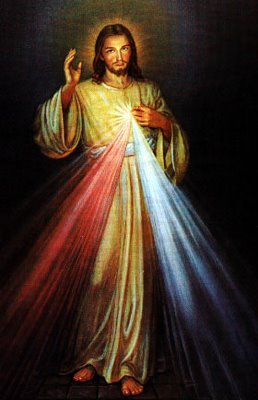
0001868_the-prodigal-son_870


The Fourth Sunday of Lent (Year C) “LAETARE SUNDAY”
Joshua 5:9a, 10-12
Psalm 34:2-3, 4-5, 6-7
2nd Corinthians 5:17-21
Luke 15:1-3, 11-32


This Fourth Sunday of Lent is traditionally called Laetare Sunday, from the entrance antiphon of the Mass: 

Latin:
Lætare Jerusalem: et conventum facite omnes qui diligitis eam: gaudete cum lætitia, qui in tristitia fuistis: ut exsultetis, et satiemini ab uberibus consolationis vestræ!”

English:
Rejoice, Jerusalem, and all who love her. Be joyful, all who were in mourning; exult and be satisfied at her consoling breast!

The color for the Mass is the seasonal Lenten purple, the liturgical color of penitence and preparation, or for today the option of rose, the liturgical color of joy and rejoicing. On the one hand, it’s the joyful midpoint of our Lenten penitence, giving us a brief reminder of the Easter joy we’re preparing ourselves for. On the other hand, it’s also a reminder that even our penitence itself is essentially joyful, as offering our suffering and sacrifice unites us more closely with Christ and the mysterious joy of the paradox of the cross.


In our gospel reading last week, Jesus gave us our rude awakening. Our kind and gentle Jesus shouted us out of our spiritual sleep with the abrupt and sudden message, “If you do not repent, you will all perish!” Wake up! You don’t know that you have the next day or the next year to change your ways and take your eternal life seriously. You don’t know that you are going to heaven with your current spiritual condition. Repent, change your ways. Love God with all your soul and all your life, and bear the fruit of your faith, and do it urgently and always.

In this week’s gospel, we have the good news—the joyful news—that our God who urgently calls us to repentance, is eagerly waiting for us to return to Him, as a father who painfully misses his runaway child, that He might again embrace us in His love, restore us to our dignity, and share His overflowing joy with us.


The readings together share a common theme of renewal and “new creation.” In our first reading, actually right before our first reading, God instructs Joshua to circumcise Israel a second time. All those who had been circumcised when they had left Egypt had died for their unfaithfulness, and Moses had failed to circumcise the next generation. Circumcision is the sign of a man’s participation in the covenant. So Joshua did as God had commanded. And thus the first line of our first reading, “The LORD said to Joshua, ‘Today I have removed the reproach of Egypt from you.’” So immediately upon entering into the Promised Land, the Lord renews Israel in their identity and covenant as God’s people.

And then the Israelites celebrated the Passover for the first time with the fruits of the Promised Land. The Exodus began with the Passover, and now ends with the Passover, the sacrifice that is to be a perpetual reminder of the Lord liberating them from their slavery in Egypt. And now that their journey had come to an end, the miraculous food for the journey, the manna, which God had provided for them, has come to an end as well. The food they had never seen before its appearance at the beginning of the Exodus, they never saw again after the Exodus. But the Manna was one of the items God told them to put into the Ark of the Covenant (along with the tablets of the Law, and Aaron’s staff). And they believed the manna would someday return, with the Messiah, the new Moses, for the new Exodus, to the New Promised Land.

As great and momentous as their Exodus was, which freed them from slavery, brought them into the great covenant with God, revealed to them the truth of human nature and moral law, and instituted them as a nation, for all that, it was still only a promise of a greater Exodus yet to come. Moses did not circumcise the second generation, nor did Moses lead them across the threshold into the Promised Land. Joshua accomplished what Moses did not. The Hebrew for Joshua’s name is Yeshua, which is also the Hebrew for Jesus. Likewise, Jesus accomplished what Moses did not. Moses freed the Israelites (those who participated in the Passover and the circumcision) from the physical slavery of the Egyptians. Jesus frees all people (who participate in baptism and the Eucharist) from the spiritual slavery of sin. Moses gave the people the law of living by justice, written on stone. Jesus gave the people the love of living by mercy, written on the heart. Moses gave the daily miraculous bread from heaven that fed the body for the Exodus to the Promised Land of Canaan. Jesus gives the daily living miraculous bread from heaven that feeds the spirit for our new Exodus to the new Promised Land of Heaven.


In our second reading, Saint Paul teaches the Corinthians, “Whoever is in Christ is a new creation: the old things have passed away… And all this is from God, who has reconciled us to himself through Christ…” I have said before that God isn’t up in heaven with his angels keeping track of each of our mistakes and sins. He’s looking for us to become a certain sort of person—the sort of person who throws themselves upon the mercy of God with contrition, sorrow for their sins, and the hope that through God’s mercy, Image result for woman catholic baptismal font joy waterthey will go and sin no more; to be able to amend their life and live virtuously and fruitfully. Each time we go to the Sacrament of Reconciliation, we re-enter into the mystery of our baptism, in which we are made anew from our old life. We become a new creation, not defined by our sin, but by God’s merciful love for us. And all this is possible through the life-giving sacrifice of Christ, who pours the grace of His Paschal Mystery into the world, and upon all who truly want to put their past behind them and step forward into their new life in Christ. Paul again pleads with us: “We implore you on behalf of Christ, be reconciled to God.


The beautiful parable in our Gospel Reading has been given different names, each giving its own emphasis on how the parable might be interpreted. The most common title is “The Parable of the Prodigal Son.” The word prodigal means “spending one’s resources carelessly or indulgently.” And so this title emphasizes how the younger son “squandered his inheritance on a life of dissipation.” Another common name for this story is “The Parable of the Merciful Father,” or even the “Prodigal Father,” emphasizing the great indulgence of forgiveness expressed by the Father on the son’s return. Pope Benedict called this “The Parable of the Two Sons,” emphasizing the contrast between the contrition of the younger son and the hard-heartedness of the older son. The best name might be the “Parable of the Lost Son.” Jesus gives the parable in the context of Pharisees and Scribes offended that Jesus and his disciples are eating with sinners. Jesus responds with a number of short parables (which our reading skipped, between the introduction and the parable) such as the shepherd who left the ninety-nine sheep and found the one lost sheep, and the widow who had lost and then found her two coins. And then Jesus gives this parable, in which the father twice says that his son was lost, and is now found.

For today, we’re just going to focus on two things in this beautiful parable. First, the younger son had set off for distant lands. It sounds awesome in Greek, it’s the chora makra (which sounds like an alien race in Doctor Who) which means, “the great wide-open emptiness.” Now he’s suffering, because he wasted his money, and he’s starving, eating less than he’s feeding the pigs. He’s someplace where they herd pigs, so we know he’s not among the Israelites, because pigs are unclean. For Jesus’ audience hearing this parable, this would have connected with the theme of exile: Israel’s sinfulness caused them to leave the Promised Land and suffer disgrace and captivity out in the chora makra. We often think of sin in the sense that we broke a commandment or rule, and so we deserved to be punished. But here we have other images for sin: sin as exile, sin as suffering, sin as being unclean, sin as having lost our sense of worth or dignity. Surely we have felt these effects of sin.

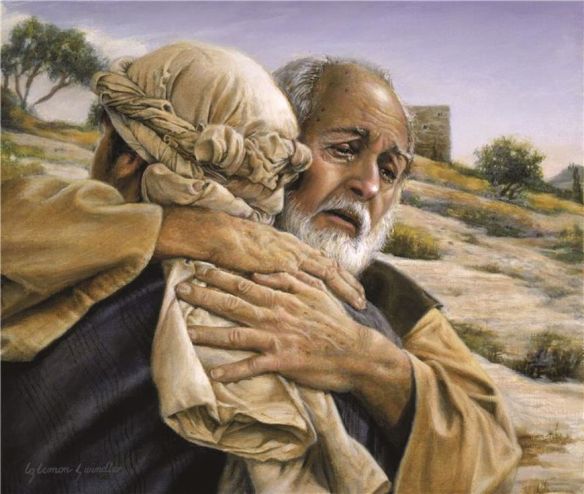
And the second thing we’re going to look at is the encounter of the son returning to his father. When his father saw him from a distance, it implies his father had been in the habit of looking into the distance with the hope of his sons’ return. When the father saw that the son was coming home, the father ran out to meet him. The son didn’t even get the chance to finish his prepared speech! So what did the father do? First, it says the father was “filled with compassion.” The Greek word means, “He was moved in his guts, his bowels” (which is sometimes adapted to “heart”). It’s the same Greek word used when it says Jesus saw that the people “were like sheep without a shepherd, and his heart was moved with pity for them.” It’s that feeling deep within, of just wanting to embrace a loved one in their suffering, and pull them close and comfort them. It says the father, “embraced him and kissed him.” Literally in the Greek it says he “cast himself on the neck of his son”. If you’ve ever seen the videos of veterans returning home and surprising their loved ones (I love those videos!), what’s the response of that encounter? It’s this. A tight, full embrace of love of someone who was gone, maybe forever, and has returned. That’s the love of this father being shown.

Then the son tries to give his speech of his humble offer. But his father cuts him off, and tells his servants, Quickly bring the finest robe and put it on him; put a ring on his finger and sandals on his feet.” What does that mean? It means that the son is not being welcomed back as a slave or servant, but being restored to his dignity as a son of the Father, as family. He receives the family cygnet ring, and will not go barefoot like a slave but with the dignity of having sandals for his feet. We can see how this father, in his prodigal (extravagant, bounteous) forgiveness of his son, undoes all our earlier images for the effects of sin.Take the fattened calf and slaughter it. Then let us celebrate with a feast, because this son of mine was dead, and has come to life again; he was lost, and has been found.’”


All our lives, in every moment, God, our loving Father, is eagerly waiting, hoping, and watching for your return to Him. God wants to embrace you and welcome you to Himself, to bring you out of your suffering, to clean and wash you from your sins, and to restore and help you to see your own dignity as a son or daughter of the Most High God. This is the new creation, the restoration, made available to us by Jesus, by his life-giving, reconciling sacrifice, which we celebrate every Easter. It’s a miracle so wonderful, that we need 40 days of purification and preparation to enter into the celebration of so great a mystery. But first we need to wake up, and recognize our sin, and repent. Reconcile yourself with God. “Taste and See the Goodness of the Lord.

Horizontal Rule Cross

Homily: The Rude Awakening

Related image


Third Sunday of Lent, Year C
Exodus 3:1-8a, 13-15

Psalm 103: 1-2, 3-4, 6-7, 8, 11
1st Corinthians 10:1-6, 10-12
Luke 13:1-9


Our gospel reading gives us three separate images of our main theme for today. Our theme is that of God’s desire for our reconciliation with Him, Who is the source of life and salvation. God says to us repeatedly through His prophets that He does not delight in the death and destruction of the sinner. He is God of life. He wants not death, but that the sinner would repent, call upon God’s mercy, live according to the truth, bear the good fruit of faith and virtue, and share in eternal life.

Image result for burning bush mosesIn our first reading, we hear God’s call of Moses from the encounter of the burning bush, which is in flames, but is not consumed by them. God proclaims to him, “I am the God of your fathers… the God of Abraham, the God of Isaac, the God of Jacob… I have witnessed the affliction of my people in Egypt and have heard their cry… so I know well what they are suffering. Therefore I have come down to rescue them… and lead them out… into a good and spacious land, a land flowing with milk and honey.” This doesn’t sound like a God who is all wrath and destruction and judgment. This is the revelation of a God of relationship, of nurturing, guiding, and protection. This is a God who hears the cry of His own people and enters into their suffering, and leads them through their suffering, and delivers them to goodness and abundance.

Our Psalm echoes that theme:The Lord is kind and merciful… He pardons all your iniquities, heals all your ills, He redeems your life from destruction, crowns you with kindness and compassion… He has made known his ways to Moses, and his deeds to the children of Israel.

When God revealed his name to Moses, in our first reading, it’s extremely difficult to translate the full impact of what’s contained in the short, simple Hebrew. “‘I am who am.’ Then he added, ‘This is what you shall tell the Israelites: I AM sent me to you.’” It reveals that God is being; As St. Augustine explored in his Confessions, time exists only to matter, and God is infinitely transcendent to matter. So God is beyond time. We think of God in our material, temporal terms, “as it was in the beginning, is now, and ever shall be.” Infinite, perfect existence. But that’s the perspective from within our time. From God’s perspective, He simply is. He is the perfection of existence: love, light, goodness, beauty, wisdom, compassion, justice, etc. Time is just a little span of drama. He can see the whole continuum of time. He can do what he wants in any point of time. His nature is to provide being to all things, and to be well-disposed toward the flourishing of their being, their nature. It’s not that God is vindictive or wrathful, but rather when human beings  make choices that hit against the well-being of their own nature and existence, then their existence, human nature itself, hits back. Not with the intent to destroy, but with the intent to bring one back into harmony with its nature, its flourishing. To quote the humorous sign I saw recently, “Everything happens for a reason, and sometimes that reason is that we’re stupid and make bad decisions.

Often, then, our suffering is rooted in some pattern of sinful choices that frustrate our goodness and happiness. But Jesus’ message in our gospel reading is that this is not true for all suffering. Image result for lynch mobIn fact, the two examples at the beginning of our gospel are the two sources or kinds of evil: moral evil, and natural evil. Moral evil is suffering that comes from sin committed by a person. In our Gospel reading, Pontius Pilate slaughtered some Galilean Jews and mixed their blood with the blood of the sacrifice they were offering in worship. Natural evil refers to suffering that comes from something that just happens without blame. Related imageIn our Gospel reading, eighteen people were killed in Jerusalem when a tower fell on them. We might add with that other natural disasters, such as flooding, or earthquakes; and disease, like cancer, or pneumonia. It’s perhaps a little easier to process the suffering or death of a loved one from moral evil: there’s someone to blame, someone to be angry at, someone to work toward forgiving. It’s often more difficult to process when the suffering or death of a loved one is from a natural evil.

Since suffering that comes from our own bad choices, and suffering from natural evil, both lack a “person out there” to blame, we can sometimes confuse the two. How often someone asks, “Why me? Why do I deserve this?” or worse, they say it about a tragedy that happens to a child. We can’t presume that our suffering is always deserved, because that’s just not always the case… which should bring some relief, but it often doesn’t. Because if it were something that we did to deserve it, we might be able to fix it. And that allows us to live in a universe that’s fair and makes sense to us (and implies we as humanity are in control of whether we suffer). But if it’s natural evil, again, that’s often harder to process, because we believe that if we do the right things, we won’t suffer. And when tragedy strikes anyway, there might be a feeling of betrayal: that’s not fair. The natural response in that case is then to blame the only other person that can be blamed: God. How many people have lost their faith because of tragedy? As if faith in God is protection against suffering (as though suffering were completely avoidable, or even that suffering is bad; certainly we don’t enjoy suffering, but in a modern society where pleasure is the ultimate blessing, suffering is the ultimate curse). God doesn’t always protect us from suffering. God didn’t keep the Israelites from becoming slaves in Egypt. And the Scriptures say nothing of their deserving to become slaves. But God does deliver them from slavery, and for the rest of their history, their cultural experience of slavery becomes a constant image for the captivity of sin, and the power of God to deliver them from slavery into the Promised Land. 


Back to the Gospel reading… Jesus says, “Do you think that, because this happened to them, they were greater sinners than all other Galileans?” “Do you think they were more guilty than everyone else who lived in Jerusalem?

By no means,” he says. “But… I tell you, if you do not repent, you will all perish as they did!” Jesus uses these examples to remind us that we must not make excuses for putting off repenting of our sinful habits and attachments, reconciling ourselves with God, and living always mindful that at any moment we might perish without warning. I’ve never gotten caught up in predictions about when the world ends, and what the end of the world and general judgment will be like. Because there’s only a possibility that we’ll be alive when that happens. But it’s absolutely guaranteed that we’ll see our own life end, and our own particular judgment. And that could happen at any time. 

That doesn’t mean adopting the self-absolving attitude, “I live with no regrets,” because there very well might be some big regrets you’ll have, if you unexpectedly find yourself before the God who called you to repentance, and whose invitation you postponed and ignored. And it also doesn’t, on the other hand, mean living in scrupulous fear of making a mistake and losing your salvation. (God does not have angels with notepads keeping track of our every little sin… we talked about that here). What it does mean is that our God is generous in mercy, always inviting us to partake of his repentance and salvation. But we only have this life to do that, and this life can end in an instant. We might not get the time we think we have. And if we unexpectedly have to answer for having delayed our repentance and living by God’s way, if we haven’t done all we could to purge sinful behaviors and vices and ordered our life to love God with all our heart, all our soul, all our mind, then we might find that the secular message that “everyone who’s basically a good person goes to heaven,” isn’t what God says.

At the end of our second reading, the Word of God says, through St. Paul, “whoever thinks he is standing secure should take care not to fall.” Elsewhere, St. Paul says to the Philippians, “Work out your salvation with fear and trembling.” At the end of our Gospel reading, Jesus gives us another parable: a fig tree that is failing to be fruitful. The landowner loves his orchard, all the trees that generously put forth their fruit, as it is a tree’s nature to do, when nurtured, and cared for, as God cares for us. But about the unfruitful tree, the landowner tells the gardener, “For three years now I have come in search of fruit on this fig tree but have found none. So cut it down. Why should it exhaust the soil?” The gardener responds, “Sir, leave it for this year also, and I shall cultivate the ground around it and fertilize it; it may bear fruit in the future. If not you can cut it down.” If we’re wasting the talents and resources God is giving us, and yet we won’t produce the fruit we’re supposed to… maybe we’ll be left for another year… and maybe that year is already up.


When I had my dad as a high school biology teacher, he always called the Chapter 3 test “The Rude Awakening.” The first two tests weren’t necessarily easy, but this test clearly raised the bar, and students struggled (not always successfully) with the new level of challenge. He was a great teacher. He was just, and he was merciful (which was good, because I’m not really good at biology!). After the first two weeks of Lent, with Jesus triumphing over Satan’s temptations, and the glorious beauty of the Transfiguration, this week’s Gospel, here in Week 3 of Lent, Jesus raises the bar, and gives us our Rude Awakening: We’re not resting in the verdant pastures of heaven yet. There’s work to be done. If you do not repent, you will perish.

Image result for mercy -overwatchThe truth of the gospel is not just about God’s beautiful invitation to his mercy and kindness—it is that—but also about God’s requirements of justice and truth—that we must accept the invitation to repent (from the actions we’ve done and the habits we have that conflict with the flourishing of our human nature), and bear fruit. The way to salvation is steep and narrow, and few are those who find it. You can’t just float upstream. Things float downstream. If we’re going to go up, it’s going to be by repenting of our sins, reconciling ourselves with God’s Divine Mercy, and bearing the fruit of our faith.

Homily: The Transfiguration

Image result for transfiguration luke


The Second Sunday of Lent (Year C)
Genesis 15:5-12, 17-18

Psalm 27:1, 7-8, 8-9, 13-14
Philippians 3:17—4:1
Luke 9:28b-36


Every Lent, the Church has certain episodes it pulls from the gospels to kind of serve as “anchors” for the Lenten journey. Even though we read from different books of the Gospels each year, every First Sunday of Lent we begin with Jesus’ temptations in the desert, and on the Second Sunday, we have the mystery of Jesus’ Transfiguration. Why? Because the Church is teaching us about the Christian understanding of reality, the supernatural reality that exists behind the veil of the physical world, beyond what we can observe with our senses. Jesus appeared to be like other preacher-miracle-workers. But in our Gospel today, Jesus reveals to Peter, James, and John that what you get is infinitely more than what you see. The language the scripture uses to describe the Transfiguration is full of awe and wonder, to those who have ears to hear.

In the Old Testament, Moses would talk with God in the Tent of Meeting. When he would come out, his face would shine with such splendor that the Israelites insisted that he veil his face. Jesus’s face shows this same divine radiance, not from who he was talking to, but from within himself, his own divine splendor. 

His clothes became dazzling white, an outward sign of heavenly purity and glory, as the saints and angels are shown to have, and as we symbolize in the white albs we wear as a sign of our baptismal purity, our participation in the heavenly glory of the resurrection, which is foreshadowed in the mystery of the Transfiguration.

Image result for covenant with abram animals

A cloud came and cast a shadow over them, and they became frightened when they entered the cloud.” The frightening cloud of divine glory envelops the disciples, and they hear the Father’s voice instruct them, “This is my chosen (beloved) Son; listen to him.” This is the same smoking and fiery cloud we encounter in the first reading, that showed God entering into a covenant with Abram. The same pillar of cloud by day and pillar of fire by night that protected and led Israel from Egypt to Mt. Sinai, and enveloped the summit of Mt. Sinai as Moses entered into the covenant of the Exodus. It’s the cloud that rested upon the Tent of Meeting, and that filled the Jerusalem Temple when it was dedicated and the Ark of the Covenant set in its place. It’s more than just a cloud. It’s the Holy Spirit of divine presence and power. 

Peter says to Jesus, “Master, it is good that we are here; let us make three tents, one for you, one for Moses, and one for Elijah.” Peter is often said to just be dumbfounded and speaking nonsense. But, according to Dr. Brant Pitre, there’s an interesting connection.  The Feast of Booths or Tabernacles was a joyful celebration of families staying in tents around Jerusalem, re-enacting the journeying conditions of the exodus. And in ancient Jewish tradition, the Feast of Tabernacles was also seen as a kind of anticipation of a new exodus to the glory of a new Promised Land. Peter’s response of connecting this event of the Transfiguration with the Feast of Booths then makes sense, even if he didn’t fully understand what was happening.


St. Luke’s Gospel tells us that Jesus took Peter, James, and John up the mountain to pray. Jesus is often presented as getting up early, and going up a mountain to pray. Mountains give a sense of being closer to heaven, a meeting place of heaven and earth. Image result for dante purgatorioYou can imagine the sense, in the quiet darkness leading up to dawn, the solitude high in the ascetic ruggedness of a mountaintop. In Christian mystical tradition, even as far back as Moses atop Mt. Sinai, the spiritual journey often uses the image of ascending a mountain toward purification and divine encounter. You might think of Dante’s Mount Purgatorio, and Paradiso. You might think of St. John of the Cross’ “Ascent of Mount Carmel,” or Thomas Merton’s “Seven Storey Mountain.” This is of course not unique to Judaism or Christianity. Many other religious traditions, both ancient and modern, share the idea. Not that God or heaven are up in the sky, or that we can, through our efforts, climb to heaven. But the image is so prevalent that there is something of the transcendent that speaks to our heart of the longing to ascend, toward our ultimate destination and purpose.

St. Luke is also the only one that tells us what Jesus, Moses, and Elijah are talking about: They “spoke of his exodus that he was going to accomplish in Jerusalem.” (Perhaps this is why Peter thought of tabernacles). We’ve talked many times of the promise that God made through Moses that God would eventually raise up a prophet like Moses himself. This prophecy was the seed of Israel’s expectation that the Messiah would be like a New Moses, who would lead the People of God on a new Exodus, to a new Promised Land. The text of the Transfiguration reinforces this connection. We heard the voice of the Father from the cloud proclaim, “This is my chosen (beloved) Son; listen to him.” In Deuteronomy 18:5, which was the prophecy of the new Moses; that one day a figure like Moses would come, Moses tells the Israelites, “You are to listen to him, you are to heed him.” So Jesus is being revealed here as the new Moses, and even more, as the son of God.

So what is this Exodus that Moses and Elijah were talking about with Jesus? Here on this mountain of the Transfiguration, they were talking about what would take place on another mountain: on Calvary, Golgotha, the mountain of the Paschal Mystery, the suffering, crucifixion, and death that Jesus would endure at Jerusalem. This would then make the way to the fulfillment of the law (represented by Moses) and the prophets (represented by Elijah). Perhaps this is why Moses and Elijah vanish, and Jesus remains. Jesus is, on one hand, the fulfillment of the law: He is the giver of the new and perfect law of divine love. And on the other hand, Jesus is the fulfillment of the prophets: He is the Word of God incarnate, the perfect revelation of God. And Jesus, who is God, will put his divine Spirit into the heart of each member of the New People of God, the New Israel, the Church. This, then, is the means of the New Exodus, not a journey from a place of slavery to a place of liberty, like from Egypt to Canaan, but the spiritual journey (up the mountain) from a condition of slavery to a condition of liberty: from the slavery of sin, to the perfect freedom of heavenly grace. The new Promised Land isn’t a new earthly land, it is the kingdom of God, the wisdom of God, the love of God, in the hearts and minds of the followers of Christ. It’s the heavenly reality, infused into our material reality, making everything more than it appears to be.

In our second reading, Paul writes to the Philippians about many who are trapped in their slavery. “Their God is their stomach; their glory is in their “shame.” Their minds are occupied with earthly things.” St. Paul is speaking of those who live in servitude to their sensual appetites, their lust for earthly delights, the “Triple Concupiscence” we talked about last week: pleasure, possession, and pride/power. They are “enemies of the cross.” They resist the invitation to embrace suffering and self-denial. “Their end is destruction.” They could be free, if they only embraced the cross and denied themselves, gaining control over their appetites. Related imageOnly God can heal our disordered souls. But it is up to us who are sick to acknowledge our sickness, to decide we no longer want to be sick, to go to the Divine Physician who can heal us, and then to do what He tells us, to be healthy. St. Paul tells us that if we want to stay healthy, Join with others in being imitators of me, brothers and sisters, and observe those who thus conduct themselves according to the model you have in us.” In other words, look at the example given to us by the saints. Copy their virtues, imitate their practices, learn their lessons. The saints are the “cloud of witnesses” who have run their race well, have won the crown of salvation, and cheer us on our way.

In Luke’s Gospel, after our reading of the Transfiguration, it says, Jesus “set his face to Jerusalem.” From here, Jesus leads his disciples on their journey to the events of holy week. Luke connects the two points—the Transfiguration and the Crucifixion—with a straight line. The Church gives us the Gospel reading of the Transfiguration for the same reason: That as we journey through Lent to the sorrowful passion of Jesus in Jerusalem, we remember the true reality: that Jesus is who we have seen in the Transfiguration, he is divine glory hidden in human flesh. And so it may seem like Jesus has lost control as all the terrible things happen to him. But the true reality is that Jesus is always in control. He chooses to allow what happens to happen. His plan is not thrown off. What happens during Jesus’ passion is accomplishing the plan that God has been laying out since the Garden of Eden. In the contradiction of the cross, Satan’s cleverness is checkmated by God’s wisdom.


Adam had been the high priest and king of creation. When he fell away from God, all creation shared in the Fall. And here’s the real point of the Church giving us this reading: If the New Adam, Jesus Christ the king and high priest of the new creation (the restoration of creation), is himself infinitely greater than his material appearance (in meaning, being, and dignity), then all creation also shares in being infinitely greater than its material appearances.

That which has the material presence of bread and wine on the altar, has the true reality of Christ’s nourishing and saving body and blood. The Church, which has the material presence of an archaic, sin-ridden, rules-imposing human institution, has the true reality of the mystical body of Christ, the perfect, sinless mystical Bride of Christ, led and protected by the Holy Spirit, to perfect union with her Bridegroom. That act which has the material appearance of a person having water poured on them, has the true reality of the spiritual death of a son of Adam and spiritual rebirth of a son of God by adoption through Christ, a new member of Christ’s mystical Body. 

And you, each of you, who have the material presence of a supposedly meaningless blob of tissue, that is here today and gone tomorrow, you have the eternal and true reality of the image of God. You have infinite dignity and meaning, which demands respect and protection. You have a divine intention for your life. The suffering and sacrifice you endure is not meaningless; it is the way, the injection site, for the grace Christ earned on the cross to enter into your life. And so even in our Lenten penances, our suffering, our longing, our sometimes feeling lost and unforgivable, our sometimes feeling helpless against our relentless desires for sin, even now, we can sing with joy, for all this is God’s plan for uniting His divine strength into our human weakness, and our receiving his infinite mercy. It is truly right and just, our duty and our salvation, always and everywhere to give thanks to the Lord, our Holy Father, our almighty and eternal God, through Christ our Lord. Because of him, everything is more beautiful than it seems.

Image result for communion of saints


Finally, whereas the Gospel and the Old Testament readings give us things for meditation, to ponder with our minds, the responsorial psalm helps us understand what God wants us to do with our will. What should it stir up in our affections toward God, as we ponder these mysteries, as we hear these words? 

Psalm 27 sings, “The Lord is my light and my salvation… Of you my heart speaks; you my glance seeks. Your presence, O LORD, I seek. Hide not your face from me...” So the story of the Transfiguration should move us to desire to see what Peter, and James and John saw: to see the face of the Lord, to let the Lord be our light. Ultimately, the glory of the resurrection isn’t just going to be our resurrected bodies, and an end to death and suffering. The true happiness of the resurrection is the Beatific Vision, it’s the “seeing God, face-to-face”. So do you long for that? Do you want that? Is that your goal in life, to see the Lord face-to-face? Do you seek his face? That’s what the Psalm is trying to stir up in our hearts for today, as we ponder the great mystery of the Transfiguration.

Horizontal Rule Cross

Homily: Temptations in the Desert

Related image


The First Sunday of Lent (Year C)

Deuteronomy 26:4-10
Psalm 91:1-2, 10-11, 12-13, 14-15
Romans 10:8-13
Luke 4:1-13


There is an old story about a carriage that was being pulled by a pair of spirited steeds. A heavy drowsiness came upon the driver and he fell asleep. The horses, not feeling the restraint of the reins, went off the right path, and soon they were bouncing over bush and brush, to the edge of a ravine. A man nearby saw the carriage, and called out in a loud voice: “Wake up! Save yourself!” The driver suddenly awakened. In a moment he realized his peril. Pale and trembling, he hastily grabbed the reins, and, exerting almost superhuman effort, he succeeded in turning the horses to one side, saving his life, his animals, and the carriage. The story is an allegory: the fiery steeds are the appetites and passions which threaten to run at full tilt, even toward danger, pulling the heart with them. The driver is the wisdom and intelligence with which God has endowed human beings that we might rule over our appetites and passions and have dominion over our self-destructive impulses.


The reading from the Gospel of Luke which we just heard was about Jesus overcoming the temptations in the desert.

We discussed these a bit on Ash Wednesday, because the three main penitential practices of Lent address these same three weaknesses, what are sometimes called the Triple Concupiscence (concupiscence is sinful inclination of excess of desire). Saint John in his first letter identifies them as:

  • Lust of the flesh (a disordered desire for pleasure, indulgence)
  • Lust of the eyes (a disordered desire for possession, greed, envy), 
  • Pride of life (pride, a disordered focus on self at the expense of the love of God).
The Seven Capital Vices in relation to the Triple Concupiscence

Triple Concupiscence and Vices

I also mentioned at Mass on Ash Wednesday, that these also correspond to the temptation of the forbidden fruit that Eve gave in to. In Genesis 3:6, it says, “The woman saw that the tree was good for food [lust of the flesh] and pleasing to the eyes [lust of the eyes], and the tree was desirable for gaining wisdom [disordered lust for pride, power]. So she took some of its fruit and ate it…It’s not that these things they wanted were bad; they were good! Food is good, possessions are good (God gave Adam and Eve the whole world), and even the desire to be like God is a good thing, to be wise is a good thing. But they wanted these good things in the wrong way. They figured that the best way to attain these good things was by breaking God’s commandment. It’s still wrong to try to get a good thing the wrong way. 

On Ash Wednesday, we heard Jesus give us the three penitential practices of the Christian life, particularly in Lent, to directly fight against this Triple Concupiscence. First, Jesus talked about “when you give alms,” giving of our possessions so that we learn detachment, and overcome the lust of the eyes. Then Jesus talked about “when you pray,” giving glory to God, acknowledging that we are inferior and dependent on God, and overcome pride. And then Jesus talked about “when you fast,” when you discipline your bodily appetites, overcoming the power and hungers of the lust of the flesh.

Men and women who enter religious orders take vows of poverty, chastity, and obedience, what are often called “the evangelical counsels.” These virtues are enshrined in the rule of many religious orders because they are tried-and-true Christian weapons for resisting the Triple Concupiscence, not just for vowed religious, but for everyone: poverty helps resist the lust of the eyes, chastity resists against the lust of the flesh, and obedience helps resist against pride of life. Pretty much all sin that we commit, or are tempted to commit, is some aspect of this Triple Concupiscence. 

So now we can look at the temptations and testing that Jesus endured in the wilderness, and guess what, we see the same Triple Concupiscence.

Before we get to that, let’s look at the forty days Jesus spent in the desert. We often hear that the number forty in the Scriptures simply means “a really long time.” According to Dr. Brant Pitre, biblical references to the number forty spiritually denote a period of preparation and purification. It’s not just that it rained a long time while Noah was in the ark, but it was a period of purifying the earth from sin, and a preparation for a new beginning. Moses spent forty years in the desert before his encounter with the Lord in the burning bush, and he spent forty days atop Mt. Sinai, in preparation for his leading God’s people Israel from their slavery in Egypt, and for his role as the quintessential prophetic figure, interceding between God and God’s stiff-necked (stubborn) people. Israel’s forty years in the desert marked their period of purification from the slavery and idolatry (and other sins) of pagan Egypt, and preparation for their place as the holy nation of God’s people.

Immediately after Jesus’ baptism in the Jordan (which we heard in January), and before beginning his earthly ministry (beginning with the synagogue in Nazareth), we skipped over our gospel for today, Jesus’ time of purification and preparation to face the challenges of his Messianic mission, to enter into combat with (and faithfully resist the testing by) Satan.

In Exodus 4:22, God tells Moses, “So you will say to Pharaoh, Thus says the LORD: Israel is my son, my firstborn.” Immediately before Luke tells of the temptations in the desert, he gives Jesus’ genealogy, not just to Abraham, as Matthew did, but all the way back to “Adam, son of God.” As Adam failed in the garden, Israel failed in the desert. Jesus, the true and perfect Son of God, the “New Adam,” now recapitulates these tests, and of course passes with perfect faithfulness, in himself removing (or rather, taking into himself) Adam’s and Israel’s failures. 

Jesus faced these temptations not because there was the chance he would fail—he was divine—but, like his baptism which brought us into his relationship with the Father, his temptations unite us into his victory over the snares and wickedness of the devil, Satan, the ancient Serpent, the enemy of humanity. 

Temptation 1 - BreadFirst, Satan tempts Jesus in the area of Lust of the Flesh: “If you are the Son of God, command this stone to become bread.” How was this a temptation for Jesus? He had been fasting in the desert for forty days, he’s not just fully divine, but also fully human, incarnate. He has to be very hungry. And yet, he rejects the temptation to give up the purifying suffering of his fast. He responds, “It is written, ‘One does not live on bread alone’” (Dt 8:3). Remember what Jesus said to his disciples when he was talking with the Samaritan woman at the well (John 4:34), “Jesus said to them, ‘My food is to do the will of the one who sent me, and to finish his work.’”

Temptation 3 - KingdomsSecond, Satan tempts Jesus with the Lust of the Eyes“The devil said to him, ‘I shall give to you all this power and their glory; for it has been handed over to me, and I may give it to whomever I wish. All this will be yours, if you worship me.’” (All the world was entrusted by God to Adam and Eve. When they sinned, they, and everything handed over to them, fell into the debt to Satan. Jesus calls Satan “the prince of this world.”) How is this a test, a temptation for Jesus? It’s not the glory and splendor of those kingdoms; it’s all the human souls in those kingdoms. Jesus’ messianic mission is to win back those kingdoms, all the souls of the world, from Satan’s grasp. And Satan is saying “Look, I’ll give them all to you, just give me your worship, and they’re all yours.” And what does Jesus say? Worship the Lord, your God, alone(Dt 6:13).

Temptation 2 - TempleThird, Satan temps Jesus with Pride: “Then he led him to Jerusalem, made him stand on the parapet of the temple, and said to him, “If you are the Son of God, throw yourself down from here…” Satan says, “Look, if you’re the son of God then prove it to everyone. Show everyone your power. Jump off the parapet (the highest point) of the Temple, where everyone can see. And then they’ll know that you are in fact the Son of God, when the angels catch you.” Satan quotes Psalm 91, about the angels coming to our aid. Yes, Jesus wants everyone to come to faith and believe in him as the Son of God. Wouldn’t it make it easier for Jesus to convert the world to Him—to accept and follow Him—if he performed a huge public spectacle to prove and wipe out any doubt that he is indeed the Messiah, the Son of God? But the problem is… this isn’t God’s way (which allows for each person’s free choice to put their faith in Christ). This forceful overpowering of people’s free will would be Jesus conforming to the way the world works, instead of Jesus converting the world to the way heaven works—where Jesus’ freely accepted suffering and death on the cross is the victorious act of sacrificial love to redeem humanity from sin and raise humanity to the glorious life of grace. Satan is tempting Jesus away from the cross. Remember when Peter rebuked Jesus for predicting his crucifixion? Jesus rebuked Peter back, saying, “Get behind me, Satan! You are an obstacle to me. You are thinking not as God does, but as human beings do” (Matthew 16:23). Also notice the connection between Satan saying to Jesus here, “If you are the Son of God, throw yourself down from here” and Jesus’ persecutors at his crucifixion saying, “If you are the Son of God, come down from the cross!


Psalm 91, the psalm Satan quotes in the third temptation, is our psalm for today. And in Jewish tradition, it’s a deliverance prayer, a psalm of exorcism. People would pray Psalm 91 over someone possessed by demonic or satanic influence. One theory as to why Satan quotes this psalm is because he knew it, he’d heard it many times, he knew its power. And in his effort to use it to tempt Jesus, he twists the meaning from one of trusting in the Lord’s protection to pridefully presuming on God’s protection. Because that’s Satan’s way: to manipulate, to trick, to try to win by devious cleverness and half-truths. So Jesus responds to Satan’s temptation, “It also says, ‘You shall not put the Lord, your God, to the test’” (Dt. 6:16).

And if the words of our psalm sounded a bit familiar, it’s the basis of the song, “On Eagles’ Wings.” Also, the Liturgy of the Hours offers this as the psalm for every Sunday night (and every Solemnity), so that we might begin our week delivered from the power of the enemy. 

Image result for christus victor in artInterestingly, when Satan pulls his chosen scripture quotes from Psalm 91, the very next verse, which of course he doesn’t quote, is “You will tread on the lion and the adder, the young lion and the serpent you will trample under foot.” Peter in his letter says Satan is “prowling like a roaring lion, looking for souls to devour.” And of course the connection between Satan and the snake in the garden, the serpent, and the great dragon in the Book of Revelation, makes it easy to see not only why this would be a psalm of exorcism, but also why Satan would stop short of quoting this verse… which speaks of his own defeat!


The first readings of the liturgical season of Lent aren’t chosen to be connected to the Gospel readings, like in Ordinary Time. As Lent progresses, the first readings take us on a tour of the pivotal moments in salvation history in the Old Testament, leading us up to its consummation in Christ, which we celebrate at Easter, the end of the Lenten Season.

Our First reading, from Deuteronomy, Moses outlines the liturgical instructions for the faithful for the celebration of Pentecost, which is an ancient harvest festival, to give thanks to the Lord. The faithful are to present to God the first fruits of their labor, which the priest receives in a basket, and sets in front of the altar of the Lord. Then they participate in a memorial narrative that outlines the history of the covenant.

Kind of like what we’re going to do in the rest of the Mass. The collection is taken up of the first fruits (not just what’s left over and easier to give) of our labor (which in the modern world isn’t fruit or wheat, but exchanged for money), which the priest receives (from the ushers) in a basket, and sets in front of the altar of the Lord. Then the faithful participate in the retelling of the Institution Narrative of the Last Supper, in which Jesus consecrates the bread and wine on the altar into the Covenant of His Body and Blood.


[The Sunday homily for parish Masses at this point used the first readingof giving our first fruits to the Lordas the reflection for speaking about the Diocesan Annual Campaign. Everything from here on was not part of the homily.]


The Second Reading we have for today is somewhat challenging in giving the broader meaning of its apparent (and often mistaken) simplicity.

Brothers and sisters: What does Scripture say? The word is near you, in your mouth and in your heart…Paul is quoting Moses’ words after he gave Israel the Law: “For this command which I am giving you today is not too wondrous or remote for you. It is not in the heavens, that you should say, ‘Who will go up to the heavens to get it for us and tell us of it, that we may do it?’ Nor is it across the sea, that you should say, ‘Who will cross the sea to get it for us and tell us of it, that we may do it?’ No, it is something very near to you, in your mouth and in your heart, to do it” (Dt 30:11-14).

—that is, the word of faith that we preach—Paul refers to the commandment of the law of Moses, which is fulfilled by the word of faith in Christ; the works of obedience to the law that does not save, fulfilled by the life of love poured out from Christ into our hearts, which does save. The Mosaic Law was an external law, a set of precepts from God that Israel was to follow to live in harmony with the laws of Creation and human flourishing, along with some particular laws for living together in community. So the heart of the (Mosaic) Law is in essence written into our very nature, “something very near to you, in your mouth and in your heart.” But the Law merely pointed out what sort of things were sinful, but gave no intrinsic help against fallen humanity’s inclination toward sin. The New Law, the New Covenant in Christ, surpasses the Mosaic Law in raising the perspective from simple legal obedience to embracing the love of God that inspired the Mosaic Law. In Christ the Law is fulfilled, for Christ perfectly satisfied the requirements of the Law, and even put to death the punishments owed by all who failed to uphold the Law. Then, even greater, Christ put His own Holy Spirit within us (received in the Sacrament of Baptism, and then more perfectly and fruitfully in the Sacrament of Confirmation), to give us an internal fountain of grace to live the Christian life of divine love (which surpasses the Law). But it requires our consent and our cooperation to participate in this life, which Christ by his perfect sacrifice makes available to us.

For, if you confess with your mouth that Jesus is Lord and believe in your heart that God raised him from the dead, you will be saved. For one believes with the heart and so is justified, and one confesses with the mouth and so is saved.The prima facie interpretation of these verses is asserted by many evangelical Christians to be the essence of the whole Christian scripture, faith, and life. And that would be good, if the Christian scripture did not also identify many other requirements for being saved, such as avoiding sin (1 Thes 5:22), eating and drinking the body and blood of Christ (Jn 6:53) worthily (1 Cor 11:27), remaining in full communion with the Church without causing scandal (1 Cor 5:2), being baptized with water and the Spirit (Jn 3:5), denying ourselves, picking up our cross daily, and following Jesus (Mt 16:24), to name a few.

So how do we reconcile this verse with the larger picture of what we must do to be saved? First and foremost, Jesus Christ our Lord, the Son of God, by his life, death, and resurrection, purchased salvation for all who would believe in him, love him, follow him, and unite themselves to him. He is the only one by whom anyone can have any hope in salvation. We cannot earn salvation apart or aside from him by any amount of human works. People often think the Catholic Church teaches a salvation by works, but that is a heresy consistently condemned by the Church. 

If you confess with your mouthshould be interpreted not just in confessing your Christian faith and identity, which could result in suffering and even death, but also your confession should be considered to be with more than your mouth. It should be consistent with the witness (confession) of your Christian life. Certainly we must not speak one way and then live in a way that conflicts with our words. We cannot speak in the Spirit and then live in the Flesh. If you “believe in your heart” that Jesus is resurrected and lives and is truly the Son of God, then the whole of your life, in your words and your actions, should manifest that heart-held belief. And if you do so, you will be saved. Not because you earned your salvation by your works, but because your heart was good, fertile soil, which received the Word, which then bore fruit that will last, the fruit of your Christian life of faith, hope, and love (not just faith!)—the greatest of these is love, which must be lived out in the intentional choices and relationships of our life. So one believes with the heart, and so is justified by a living and fruitful faith, and one confesses with the mouth, one’s words and actions bearing consistent witness to one’s faith in the living Christ and his saving truth, and so one is saved.  

For the Scripture says, ‘No one who believes in him will be put to shame.’ For there is no distinction between Jew and Greek; the same Lord is Lord of all, enriching all who call upon him.” Paul is addressing the Roman Christian community (whom he has not yet met at the time of his letter), which is enduring some tension between Jewish Christians and Gentile (Greek, or Greco-Roman) Christians, with the Jewish Christians being even more targeted for having been Jewish. So while he encourages all the Roman Christians to bravely live out and confess their Christian faith regardless of the apparent shame that might come to them, he is also encouraging reconciliation and unity in the Roman Christian community, particularly calling on the gentile Christians to be supportive and protective of their Jewish Christian brothers and sisters. 

For ‘everyone who calls on the name of the Lord will be saved.’” The Roman Christians are encouraged again to bravely face persecution for their faith, because it is their faith—their being Christian—not just in name but in their witness—that is their hope for being strengthened by Christ in their suffering, and saved by Christ in their martyrdom. 


The reason the Church gives us this gospel reading is because Lent is about uniting ourselves to the mystery of Jesus in the desert. We are living out that mystery in our own lives during the forty days of Lent. We all face temptation, and often feel helpless to resist them. Because Lent is about taking on temptation, sacrifice, and trying to unite ourselves with Jesus, we’re going to face an uptick in resistance from the Enemy. Lent is also a time of spiritual warfare. So we can remember the lessons of Jesus in the desert from our Gospel today, and his instructions given to us in the Gospel on Ash Wednesday, to help us overcome the three great areas of our weakness and temptation. Let us not sleepily allow our disordered passions to run unreigned toward danger, but let us awake and save ourselves, exercising wisdom and understanding over our passions.

Let us embrace the opportunity for purification and preparation, that we may more fruitfully and joyfully celebrate the Easter Mysteries!

Horizontal Rule Cross

Homily: Don’t be a Blind Guide!

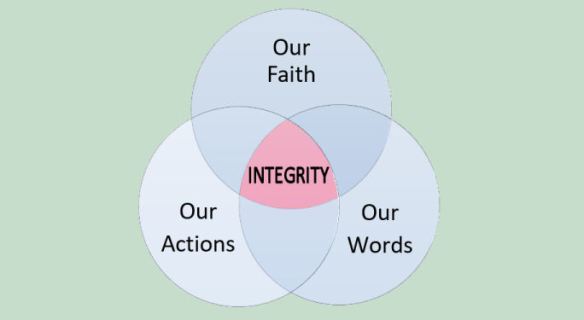
Integrity

This year is the latest calendar-date that Easter can be, and so this is the farthest into Ordinary time we can go before Ash Wednesday and the readings switch over to Lent. So these readings today for the Eighth Sunday of Ordinary Time in Year C, haven’t been used in 18 years.


This Sunday we finish Jesus’ Sermon on the Plain in the Gospel of Luke. 

In the first week, we reflected on the blessings and curses. The worldly values of the Kingdom of Man are upside down from the values of the Kingdom of God. When we acknowledge that the earthly life that gets us to heaven—the life that follows the example of Jesus—is the only truly good life, then we embrace and find joy in the suffering, rejection, and virtues which most unite us with Jesus. And we reject, or are at least very wary of, the treasures and pleasures of this life, as they dull our desire for heaven, or distract us from that which leads us toward heaven.

In the second week—last week—we reflected on living out this upside-down example Jesus gives us, compared to how we naturally see things in this world. We naturally love our friends and hate our enemies; Jesus teaches us we must love our enemies, and pray for those who mistreat us. We naturally lend to those who will pay us back; Jesus teaches us to give sacrificially, especially to those who can’t pay us back. We naturally promote ourselves as right and good, and others as wrong and bad (especially those who make us feel bad); Jesus teaches us not to judge, not to seek revenge, but to have mercy, and we will be shown mercy, for the measure we use for others, God will use for us.

In the third week and final week—our Gospel reading for today—Jesus teaches us how to spread the Gospel, in our words and our actions, by our example. “Can a blind person guide a blind person? Will not both fall into a pit?’ No disciple is superior to the teacher; but when fully trained, every disciple will be like his teacher.” The martial arts, like kung fu, have a long series of moves, which a student must learn by imitating his teacher. karate-kid-e1551491835784.jpgIt takes much practice to perfect each move, and a long time of discipleship to learn the entire series of moves. But a teacher can only teach as far as he himself knows, and he can only teach his disciples as well as he himself knows. A poor teacher is unlikely to make excellent disciples of the art, but he can make excellent disciples of himself, who, like himself, would then be poor disciples of the art. Be careful whose disciple you become, whose teaching and example you’re following. If they’re not leading you to virtue and holiness, they are a blind guide at best, and you will both fall into the pit, at worst. That’s also a point to ponder for those who have people they are teaching and giving example to, such as children. Don’t be a blind teacher, failing to lead to virtue and holiness, or you and they may both fall into the pit.

The blind guide is not only one who does not know the way, but one who does not know himself, his sins, faults, and blind spots. Ignorance of one’s sins is a source of false pride. It is this blindness and false pride that leads one to commit the sins Jesus talked about earlier: judging and condemning others with a harsh measure. One of the best weapons against this ignorance is frequent use of an Examination of Conscience and the Sacrament of Confession. The Examination of Conscience forces us to look more critically at our conduct in the light of the moral guide of Church teaching. The frequent use of the Sacrament of Confession sharpens our awareness of our actions, and helps us to be more attentive to the promptings of conscience and grace. 

You might ask, “How can a celibate priest give me guidance in marriage and raising children, or on other moral matters of which he has little or no experience?” On the human level, the priest has two sources of such guidance. First, priests are not locked in the church between Sundays. Priests have families, friends, and other relationships and experiences that they bring to their ministry. Second, priests have more than their own personal experience, but also the body of experience of Catholic Tradition. The counseling wisdom of the Church has been amassed over centuries of developing moral guidance in light of human experience, difficulties, weakness, and relationships. Third, a priest encounters hundreds or thousands of people in his priestly ministry, and if the priest is wise, each one has many things to teach him about different personal challenges, approaches, and successes. And then on the spiritual level, it is not just the priest who is providing guidance. The ultimate spiritual guide is our Lord, who himself is the way, the truth, and the life. He works through the priest to minister to his people. That’s why it’s so important to choose not just an old wise priest, but more importantly, a holy priest. The old wise priest may be aided by lot of human experience, but a holy priest is aided by being open to the divine wisdom being poured through him to bring wisdom and counsel to the people he serves.

Why do you notice the splinter in your brother’s eye, but do not perceive the wooden beam in your own?” Jesus is not saying that we should not correct one another, or that we must be sinless before we correct one another. This is the intentionally-impossible measure set by secular society (who, ironically, does not hesitate to criticize and judge), because people do not like to be told that what they want, what they find pleasurable, is sinful, and destructive of their human nature, goodness, and salvation. Jesus is not saying that we should let sinners just ignorantly embrace sin. We are called to speak God’s truth, because it sets us free… even when it is unpopular. But Jesus is saying that our own example should not be scandalous. (“Scandalous” comes from the Greek word “skandalon,” which was an obstacle, a stumbling block. Our example should not be an obstacle or stumbling block for those seeking Christ and an example of the Christian life.) And we should be very delicate in correcting sins where we are struggling ourselves. We don’t want to come across as a hypocrite. We want to come across as a humble, struggling sinner helping another struggling sinner, in an area where the wisdom we’ve gained might be of use to them. It’s humble, honest, and inspired by love. If someone is not receptive to your help, it might be because you’re not the person they want to receive correction from in that area, or they’re not ready to accept correction in that area. In that case, pray that God will bring them the wisdom they need. Continue to love them, and maybe there will be another opportunity to help them.

A good tree does not bear rotten fruit, nor does a rotten tree bear good fruit. For every tree is known by its own fruit.” “A good person out of the store of goodness in his heart produces good, but an evil person out of a store of evil produces evil; for from the fullness of the heart the mouth speaks.” The good tree is a good person, and the good fruit are holiness and virtue. The bad tree is a bad person, and the rotten fruit are poor choices and vice. It’s not that good people are perfectly good and bad people are perfectly bad. It’s that to be an effective messenger of Christ, you can’t have a scandalous moral life, in flagrant contradiction to what the Christian Church and the Christian scriptures teach. That’s the blind, by bad example, misleading the blind, who are looking to them for guidance. Ralph Waldo Emerson said, “Who you are speaks so loudly I can’t hear what you’re saying.” Certainly we need to be conscientious about our words, because they reveal the content of our hearts. But even more so we need to patiently and consistently build a moral life of integrity, truth, and virtue, because our actions are more convincing than our words.

The 7th century monk “The Venerable” Bede, teaches us:Do you want to know which are the bad trees and what are the bad fruits? The apostle [St. Paul] teaches us: “fornication, impurity, self-indulgence, idolatry, sorcery, malice, strife, jealousy, anger, quarrels, conflict, factions, envy, murder, drunkenness, arousing, and things of this sort” (Gal 5:19-21). He subsequently lists the fruits of a good tree. He says, “The fruit, however, of the Spirit, is charity, joy, peace, patience, goodness, kindness, faith, gentleness, self-control” (Gal 5:22-23).Often, like the one linked above, an Examination of Conscience is based on the Ten Commandments. But this list from St. Paul’s letter to the Galatians is another option. Certainly we can have characteristics from time to time from both lists, and we need to wage war against those characteristics of ours on the first list. But we should be very concerned when people associate us more with the first list. That would mean that, at least to those people (however accurate their opinion might be), our example is a scandal of what the Christian life is. 


In our first reading, from the Old Testament book of Sirach, we get a series of short images, like we heard from Jesus in the Gospel. These images are about testing a man’s character by what he says, especially in times of difficulty. “When a sieve is shaken, the husks appear; so do one’s faults when one speaks.” When the wheat crops are brought in, they’re sifted. The good wheat falls through the sieve, and what’s left is the bad stuff left over. When a man is stressed, his guard is down and what’s truly in his heart is revealed. Remember the courtroom scene from “A Few Good Men,” and Tom Cruise’s character succeeded in getting Jack Nicholson’s character to get enraged and speak his mind, and “You want the truth!? You can’t handle the truth!”

Image result for a few good men jack nicholson

The second example: “As the test of what the potter molds is in the furnace, so in tribulation is the test of the just.” If a work of pottery is poorly crafted, when it’s put into to the kiln, it explodes in the fire. The same with a person who lacks the character to keep it together under fire. He explodes… at others, blasting them with the shrapnel of his temper… which can cause scandal.

The third image is the connection to the Gospel: “The fruit of a tree shows the care it has had; so too does one’s speech disclose the bent of one’s mind.” If someone who grew sycamore trees, for example, carefully poked a hole in the fruit as it’s growing, it grows bigger and is much juicier. The fruit shows the care taken in developing it. Likewise, the fruit of one’s speech and actions reveal the care taken in developing one’s mind and heart.


The psalm for today shows the other side of the coin. “It is good to give thanks to the LORD … They that are planted in the house of the LORD … They shall bear fruit even in old age; vigorous and sturdy shall they be …The way to purify our heart is to practice piety, gratitude, and the other virtues, which are given by the Holy Spirit. Our words show what is in our hearts, but the reverse is also true: the heart and words don’t just go from inside out; it can also go from outside-in. We can develop our hearts by using our words to praise God and letting him mold our hearts (to be like His own Sacred Heart!).

We become like those we spend time with. If we spend a lot of time with blind guides and rotten trees, who don’t lead us to holiness and virtue, we suffer the rotten fruit of that influence. When we spend time with good guides and good trees, then we cultivate better fruit. We learn better how to respond when the heat rises, when our guard is compromised, when our heart is revealed. It will reveal integrity and virtue, and we will be a good example of following Christ, for those who look to us, and those who listen to our words.


St. Paul, in our second reading, is continuing to teach us about the resurrection of the faithful, after the example of Christ, and how we will share also in the resurrected body.  And when the faithful, the Mystical Body of Christ, are reassembled in heaven with it’s Head, who is Christ Himself, Satan, Sin, and Death will be finally defeated and vanquished.

In the midst of our reading, St. Paul says, “The sting of death is sin, and the power of sin is the law.” Image result for poisonous scorpionDeath is being portrayed as a poisonous stinging creature of the dangerous wilderness, like a scorpion. And Death kills us by successfully tempting us to sin. Sin is what causes our separation from God, who is the source of life. So like a scorpion stings its victims with its poison and kills them, Death stings its victims with the poison of sin, which kills them.

The Law (given through Israel’s Holy Scriptures) is what God has provided humanity about what is good and evil. The Law in a sense is written into Creation. What is good and evil is not because it is written in the Scriptures; but the Scriptures reveal to us what is true of (the Law of) all Creation. St. John Chrysostom wrote, “Without the law sin was weak. It existed, to be sure, but it did not have the power to condemn, because although evil occurred, it was not clearly pointed out. Thus it was no small change which the law brought about. First, it caused us to know sin better, and then it increased the punishment.” So it is the written Law of the Holy Scriptures, now known to humanity, that increases sin, because now what is evil is clearly known and yet freely chosen. So “the power of sin” to condemn humanity is the law given to us and to which we are held accountable.


And so this is why we as Christians, who have the fullness of revelation of Truth in Jesus Christ Our Lord, must, out of love for God and our neighbor, give good witness (and not scandal) by our example, our words, and our actions. Even though not all of humanity knows (or accepts the truth of) the law, the evil we do still harms us, and distorts us, away from the image we need to have, if we are to recognize our sins, humbly call on God’s mercy, and be granted everlasting salvation.

In the Church’s ordination rite, the Bishop exhorts the man being ordained, “Believe what you read, teach what you believe, and practice what you teach.” The same applies to us: With diligence and prayer read the scriptures, with love and patience share scriptures, and with discipline and integrity, live the scriptures.

So our discussion of the Sermon on the Plain ends as it began, with our call to serve as God’s prophetic people: to speak and live God’s Word of guidance, correction, and encouragement; to share His Word in season and out of season, in truth and love; to give example of the apparently upside-down wisdom of the Kingdom of God, embracing humility, simplicity, and suffering as Jesus, the Word of God, did; and to deny ourselves, pick up our cross, and follow Him. 

Next week, the first Sunday of Lent. God bless you!

Horizontal Rule Cross

Homily: Natural, or Supernatural?

Image result for love your enemy -alcohol

“Love,” by Ukrainian artist Alexander Milov

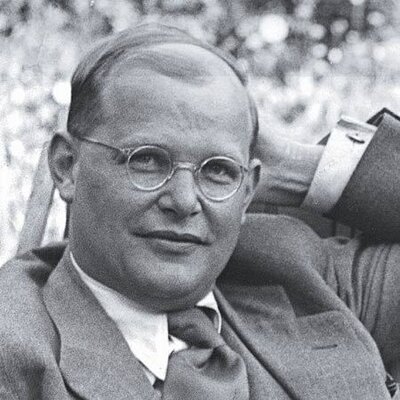
Dietrich Bonhoeffer was a German Lutheran pastor in Nazi Germany. He preached non-violent Christian discipleship and resistance, encouraging Christians in the virtue of loving one’s enemies. He was arrested after getting caught helping Jews escape Germany, and he was executed in a concentration camp. Image result for Dietrich BonhoefferBonhoeffer wrote in his book The Cost of Discipleship: “We are approaching an age of widespread persecution. Our adversaries seek to root out the Christian Church because they cannot live side by side with us. So what shall we do? We shall pray. It will be a prayer of earnest love for those who stand around and gaze at us with eyes aflame with hatred, and who have perhaps already raised their hands to kill us.” A few weeks ago, I made reference to Rev. Dr. Martin Luther King, Jr., who said, “Somehow we must be able to stand up against our most bitter opponents and say: ‘We shall match your capacity to inflict suffering by our capacity to endure suffering… Do to us what you will, and we will still love you.

We talked about the difficulty of being God’s prophetic people, of living and speaking God’s love, his light, into the darkness and sin of our world, and suffering for it, if necessary. In our readings this week, we get specific instructions, and core principles, of what this looks like in Christian life. The model, of course, is Christ, our Lord, who on the cross showed us that divine power is perfectly expressed in what our world sees as weakness, but in reality uses the tools of the enemy—sin, suffering, and death (which the enemy introduced into humanity as the consequence of the Fall)—and turn them into the tools of Christian virtue—mercy, joy, and love.


Our Gospel reading is the continuation of Jesus’ Sermon on the Plain in the Gospel of Luke. “Jesus said to his disciples: ‘To you who hear, I say, love your enemies, do good to those who hate you, bless those who curse you, pray for those who mistreat you.’” Perhaps there’s someone who cost you a job; maybe destroyed your marriage; someone who hurt or killed a friend or family member; someone who assaulted or violated you or a loved one; someone who never stops gossiping, or is a constant drain on your nerves? The one who always causes problems in your family, or at work, or in your neighborhood? Someone who broke your heart, someone who seems to look for ways to cause you problems. Maybe the person who drove slowly in front of you or didn’t use their blinkers. Maybe there’s a politician or someone in the church; anyone from the person who you ignore to the person who fills you with rage, all of them, Jesus tells us, we must love them, do good to them, bless them, and pray for them. That’s what it is to deny ourselves, pick up our cross daily, and to follow Him. It’s the example He gave from the cross, as He prayed to the Father for the forgiveness of those who hated and crucified Him.

The logic of Jesus’ instructions here is the same “Logic of the Kingdom” evident in the Beatitudes. It is not the self, not victory, not retaliation, not pleasure, not earthly power or riches, that makes one happy. It is agape love, self-giving, generous, appreciative, caring love that is the only thing that truly makes us happy. Because we are made in the image of God, and it is the divine love exchanged within the Holy Trinity that truly makes us happy. That is what we are made for. That is the love of the Kingdom of God. That is the love that Christ embraced in allowing himself to be brutally and tortuously crucified, because he knew that by it, humanity would be freed from slavery to sin, and have the invitation to the divine life of grace.  

The key to the Christian life, to imitating Christ, and the saints, is the difference between reacting naturally, and responding supernaturally. We all have our habitual way of dealing with people and events when they affect us negatively. And if we don’t think about it, we give our natural reaction. The problem is that our nature is fallen and inclined to sin, to selfishness and pride, to fear and impatience. So that’s the nature of our natural reaction—often self-oriented and sinful. But we are rational human beings, we can choose how we respond. And we are Christians infused with divine grace, so we can do better, and are called to do better, than the reflex of our fallen nature. We are called to be supernatural in a natural world; to draw our response from supernatural grace, rather than our natural inclination.

For if you love those who love you, what credit is that to you? Even sinners love those who love them. And if you do good to those who do good to you, what credit is that to you? Even sinners do the same. If you lend money to those from whom you expect repayment, what credit is that to you? Even sinners lend to sinners…” So Jesus here is saying that to confine ourselves to what makes sense even on the natural level, is not to make a supernatural, transcendent choice. If we’re going to receive what we give, then it’s merely an even exchange; it is not virtuously generous and self-sacrificing.

Jesus teaches us, “But rather, love your enemies and do good to them, and lend expecting nothing back; then your reward will be great and you will be children of the Most High, for he himself is kind to the ungrateful and the wicked.” Good thing for us, too, isn’t it? As St. Paul says in his letter to the Romans (5:8), “But God proves his love for us in that while we were still sinners Christ died for us.” God, in Christ, showed us what kind of forgiving, generous love He has for us, even while we rail against Him. That is the kind of forgiving, generous love we as Christians are called to have and to show to others. “Be merciful, as your heavenly father is merciful,” Jesus tells us.

How do we live faith? We make a sacrifice that won’t be justly repaid in this world, but relies on our faith that it might be repaid in the kingdom, in heaven. That’s where we are to put up our treasure. And we can’t just rely on our natural goodness, however developed that might or might not be. We rely on the grace from God, the divine love of Christ within us, by which we are made children of the Most High. And it’s going to take that grace, isn’t it, to love the one who did the worst imaginable sin against you or your family? To pray for the forgiveness and salvation of the worst person in your life.

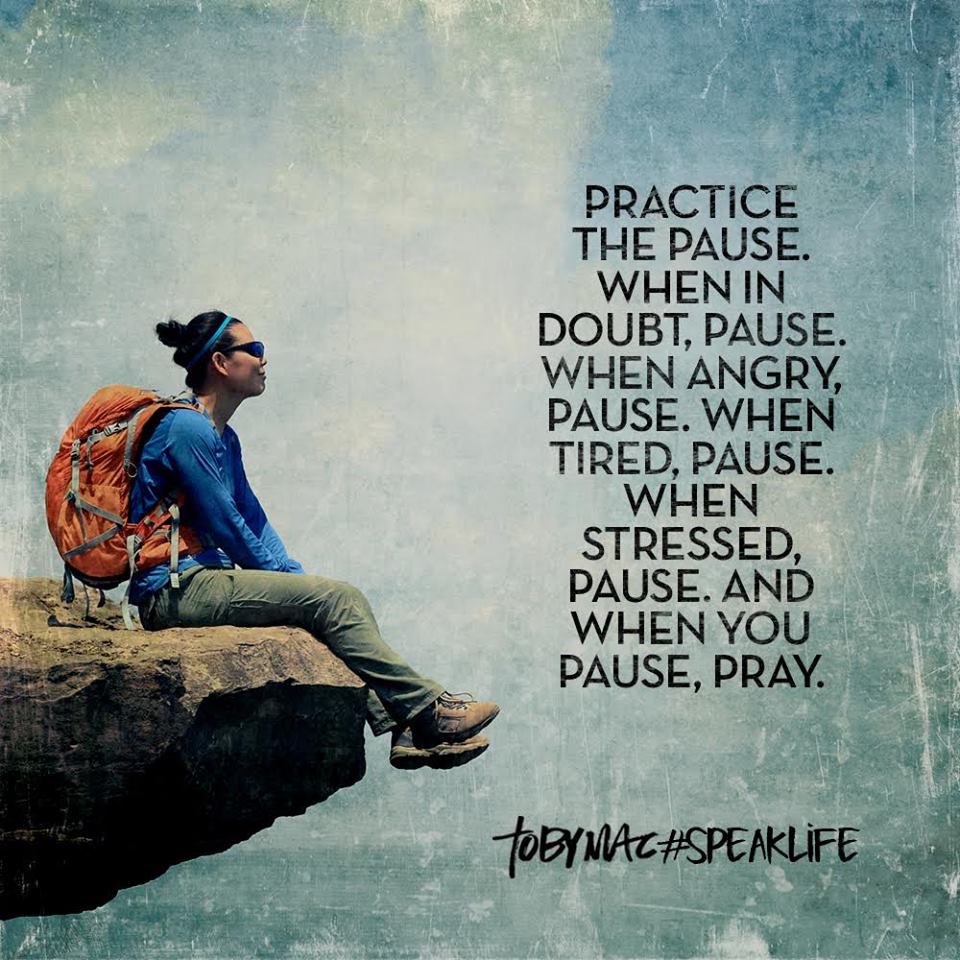
practice the pauseSaint Vincent de Paul was well known for practicing “the pause.”  This is also a modern piece of wisdom you can practice, especially when you’re already stressed out and someone’s about to make you lose your… serenity. But Saint Vincent de Paul was known for having a short moment before he would respond to someone. And he said, in that moment, that pause, he would pray, that his response would be holy, would be beneficial for the salvation of himself and for those he was speaking with. That little pause of prayer, of inviting God’s grace into that moment, is an example of learning to go beyond having a natural, reflexive reaction, to reaching up to having a supernatural, chosen response. Practice the pause.

Stop judging and you will not be judged.” That’s a popular one today, isn’t it? In recent times, it’s been the battle cry of relativists, those who oppose an objective belief in right and wrong moral acts, and Christians taking a moral stand on a social moral issue. Jesus’ words are true, of course. We don’t judge people. Or at least we shouldn’t. I have found it very useful to apply what’s called “Hanlon’s Razor,” which says, “Never attribute to malice that which is adequately explained by stupidity.” In other words, be charitable in your assumptions of someone else’s reasons for acting a certain way: “Don’t assume someone did something to be mean if they reasonably just might have done it out of a lack of awareness.”

So we don’t judge people as evil. But we can and should judge actions as sinful. For example, abortion is a sin. That doesn’t mean we call someone who just had an abortion a hell-bound murderer. It means we love and pray for them, because it’s quite possible they might be suffering, or soon suffer, horrible regret for what we know is sinful, and they did out of ignorance, or fear, or pressure. That kind of patience and compassion is how we would want God to minister to us, and so that is how we minister to others. We certainly don’t help people experience the love of God when we confirm stereotypes of Christians as condemning people and presuming to know their disposition in God’s view. And yet that is quite different than those who pray and offer support outside of an abortion clinic, and are accused by customers and staff for aggressively imposing their religion or harassing customers, if this isn’t really the case. 


In our first reading, David as a young man, gives us an example of our gospel lesson. King Saul (Israel’s first king, whose later death would lead to the accession of his successor, David) was an incompetent, jealous, and insecure king who hated the young David because David was more popular. Our reading says Saul went out with three thousand men against David. Three thousand men!? That’s a lot of hatred in Saul’s heart. When David and his friend found Saul and his army asleep, his friend offered to kill Saul on the spot. But David wouldn’t let him, and instead simply stole Saul’s spear and water jug from near his head, to later show Saul that David had been given the chance to react to Saul’s hatred by David’s own act of hatred—to kill Saul—but David instead chose mercy, and hopefully Saul himself would respond with mercy. Which he later did.

In the next verse after our readingthe last verse of the chapter, it says, “Then Saul said to David: ‘Blessed are you, my son David! You shall certainly succeed in whatever you undertake.’ David went his way, and Saul returned to his place.

If David had killed Saul, Saul would have died with that hatred in his heart. David gave him the opportunity to convert to forgiveness, and reconcile their relationship. And doing so, David might have saved Saul’s soul. That’s a real display of love for one’s enemies, and hope for their salvation.


Related imageOur fallen human nature tends to think predominantly in physical terms. We’ve seen images of Jesus all muscled out like he’s on steroids… Rambo Jesus. That’s a depiction of Jesus’ power, interpreted through an all-too-human lens. Jesus, physically, was fit. He was a carpenter, he labored with his physical body. And of course the real strength of Jesus was beyond powerful. But not because of his muscles. Rather, because of his virtue, his meekness, his humility, his willingness to serve and to suffer for others. “Super Buff Jesus” completely misses the point of Jesus’ true message of divine power, a power that even the tiny Mother Teresa could manifest. 

Likewise, our fallen human nature often looks to solve problems at the physical level, even when the problems are not essentially physical problems. Very often, our problems are spiritual problems. The most important problems of our world are never going to be solved by legislation, by resolutions, by summits, by international councils. The most important problems of our world are spiritual problems… Satan, evil, and sin. And so our most important tools for combatting these spiritual problems—our most important weapons against our real spiritual enemies—are not guns, walls, and resolutions, but prayers, Masses, and saints. As Boenhoffer said, “So what shall we do? We shall pray. It will be a prayer of earnest love for those who stand around and gaze at us with eyes aflame with hatred.” As Dr. MLK, Jr., said, “Do to us what you will, and we will still love you.” The weapons of prayer, humility, and trust in divine love are far more powerful than any military force. And it is only these that are effective against the true enemy of world peace. To quote Alfred Lord Tennyson, “More things are wrought by prayer than this world dreams of.

I recently uploaded the recording and transcript of an incredible lecture by Dr. Peter Kreeft on how we might successfully wage the culture war to save our world. I highly recommend it! We cannot fight and win this battle at the level of our fallen humanity, with the weapons of human warfare. We can only successfully fight and win this battle—this war—with the weapons of Christ: sanctity, virtue, prayer, and divine mercy.

Paul in our second reading speaks about the image we provide. We first have the image of Adam—natural humanity, which was then by Adam distorted and corrupted by sin, and our actions and fallen nature reflect that. But we are called to reflect the New Adam, the spiritual man, not by nature, but by choice and faith, to resemble Christ, by the grace within us, and our response to it—our life of grace. “Just as we have borne the image of the earthly one, we shall also bear the image of the heavenly one.” So let us make the effort to heal from our old sinful habits of the flesh and instead cultivate new spiritual habits of grace, that we might give witness to the beautiful life that all humanity is called to: life in union with Our Lord Jesus Christ: the divine life of mercy, joy, and love.


never wish them pain

Horizontal Rule Cross

Homily: Blessed are you

wisdom_and_folly_by_bstrgncragus

Lady Wisdom and Lady Folly

Over the last few weeks, we’ve been talking about the call to be God’s prophetic people.

What does a prophet do? A prophet is (a man, a woman, a group) called by God to speak and to live divine truth, in season and out of season (when it’s popular and when it’s not), to provide an interpretation of reality (past, present, and future) through God’s message of mercy and hope, or correction and repentance. A prophet is not one who predicts the future, but one whose message can have a predictive aspect, because he speaks truth, and truth is beyond time. He reminds the world of what is true: that if we act in harmony with God’s truth of reality, we will receive the blessings of our choices; and if we act in conflict with God’s truth of reality, we will be subject to the curses of our choices. To use a great quote from a recent article (The “Wayward Daughters,” written by Haley Stewart) talking about female main characters in different books (Julia from Brideshead Revisited and Kristin from Kristin Lavransdatter, two wonderful books, very popular in Catholic circles), who suffered as the consequences of their bad choices, the author says, “The years of misery they suffer are not punishment inflicted by a parent or by God—the consequences of sin itself are what tortures them. They are punished by their sin, not for their sin.”


Our first reading is from the words of the prophet Jeremiah. We heard his call to prophetic ministry two weekends ago. God had told him, “…Tell them all that I command you… for it is I this day who have made you… a pillar of iron, a wall of brass …They will fight against you but not prevail over you.” We also remember the context of Jeremiah’s ministry: Israel was being tempted to rely on their military strength and their political alliances, and they weren’t in the practice of calling on God.

Now we read today’s reading from Jeremiah, “Cursed is the one who trusts in human beings, who seeks his strength in flesh, whose heart turns away from the LORD.” So Jeremiah is reminding Israel of their call to be faithful to God, that God is their strength, their salvation, and the prediction that if they believe that other people, other nations, will be their salvation, they will end up in misery, and the curse of death or slavery.

He is like a barren bush in the desert that enjoys no change of season, but stands in a lava waste, a salt and empty earth.” That’s a pretty desolate, lifeless, hopeless image. That, no doubt, was Jeremiah’s point. The crucial issue is not Israel’s working together with neighboring nations; the problem was Israel trusted in them, and had turned their hearts away from God. Once you turn away your heart from God, the source of life, you become like a shrub in the dry wilderness: not bearing any good (spiritual) fruit. But then on the other hand, 08ee2945540799.5607a6e8c3516Blessed is the one who trusts in the LORD, whose hope is the LORD. He is like a tree, planted beside the waters, that stretches out its roots to the stream: it fears not the heat when it comes; its leaves stay green; in the year of drought it shows no distress, but still bears fruit.” What is Jeremiah’s prophecy? If Israel remains faithful to the covenant with God, they will endure the time of difficulty and receive the blessings of their faithfulness, bearing good fruit. That doesn’t mean they won’t suffer, but that they will not end in suffering, and even in their suffering, they have the certain hope in God’s eventual vindication… which is a very different kind of suffering than one experienced as hopeless and meaningless.

What does it mean to remain faithful to the covenant with God? It’s more than just to believe that God will save them. It’s to live each day according to the truth of the Scriptures, the law, the commandments and worship that defines what it means to be God’s people.


I know I don’t usually reference the psalm, but today it’s Psalm 1, which sets the tone for the whole book of the psalms. two waysAnd like much of the Old Testament, and even the New Testament, it establishes the “two ways,” the way of wisdom, and the way of folly; the way of blessings, and the way of curses; the way of life, and the way of death. The psalm says, “Blessed the man who follows not the counsel of the wicked, nor walks in the way of sinners, nor sits in the company of the insolent, but delights in the law of the LORD and meditates on his law day and night.” So if you hang out with good, wise people, you learn from them goodness and wisdom. If you hang out with foolish, wicked people, you become like them.
That doesn’t mean we don’t hang out with our friends (or even strangers) who are on the wrong path. We do want to be friends with them; we want to walk with them, accompany them, support them, and ideally, to help them avoid things that will hurt them and lead them to greater happiness. But we don’t want to encourage or approve of their sins: we want to be the good, wise, holy friend in their life, who doesn’t judge them, but who gives them good counsel. We want to be the prophetic witness in their lives. And then we also need to have other people in our life for our own well-being, who are more good and wise than us. We need to pray the scriptures frequently, and even more frequently the more we’re with people who present bad influences to us. We need the word of God in our heart and on our lips, and the wisdom of how and when to share it in love, sometimes in tough love.

Sometimes people say to me, “My spiritual life is so dry. It’s hard to pray. I don’t feel God’s presence. I feel spiritually fruitless.” A good response to that might be, “How much time each day do you invest in praying with the Scriptures?” If the answer is, “I don’t; I’m too busy,” then the problem is a malnourished faith. The Scriptures are the living waters that our soul should be drinking from, and refreshing itself. It is the flesh and blood of the Word of God that gives life. The Scriptures are Christ. As St. Jerome said, “Ignorance of the Scriptures is ignorance of Christ.” We can’t expect to have spiritual life if our spirit hasn’t been nourished in weeks or months or more. And I don’t mean just to read the Scriptures, or even read a lot of scripture, but to read it deeply. The Psalm says, “…and meditates on his law day and night.” It is to gnaw on it, chew on it, listen to it, wrestle with it, squeeze all you can out of it, reconcile yourself with it, and live it. As I said before, lectio divina is a wonderful way of really interacting deeply with the Scriptures.


Our Gospel from Luke is what is often called “The Sermon on the plain,” compared to Matthew’s Gospel which has “The Sermon on the mount.” Even within the sources I used for preparation, they disagreed whether this was two accounts of the same event, or if this was two different events. On the one hand, the scripture says that Jesus went up the mountain to pray, and then came down to, in Greek, “a flat place,” which could mean a relatively flat part of the terrain, but still an elevated place. On the other hand, Jesus, like many public speakers, may have given the same or similar message a number of times to different audiences, and so this in Luke might be a different occasion than in Matthew. Since the Holy Spirit doesn’t make it clear, it’s not an important question. What’s important is what the Gospels say, and even how they compare. For one, Matthew speaks in the third person, “Blessed are they who…” and Luke speaks in the second person, “Blessed are you who…” Matthew only has blessings, he doesn’t include curses. But the blessings, like here in Luke, are not what you would expect. And while Matthew has 8 blessings, Luke has 4 blessings and 4 curses. And lastly (of the ones we’re going to mention), Luke’s are stated more simply. Matthew says, “Blessed are the poor in spirit,” while Luke simply says, “Blessed are you who are poor.” In both cases, Jesus is being presented as a new law-giver, a new David, and new Moses.

Related image

A lot of people don’t like Luke’s version, because in its simplicity, it’s kind of harsh. Sure, blessed are the poor in spirit, we can all strive to be “poor in spirit.” But in Luke, it’s simply “Blessed are you who are poor,” and then he says, “But woe to you who are rich, for you have received your consolation.” Wow. Ok. “Blessed are you who are now hungry, for you will be satisfied.” That’s comforting. “Woe to you who are filled now, for you will be hungry.” How does that big breakfast sound now? “Woe to you who laugh now, for you will grieve and weep. Woe to you when all speak well of you, for their ancestors treated the false prophets in this way.” So we also need to understand what Jesus meant, and what situation Luke was addressing his Gospel to.

Jesus was speaking to Jews who knew the Old Testament, and in the covenant-making, law-giving ceremonies, the blessings and curses depended on whether you followed the terms of the covenant. If you did, you received the blessings of lots of children, lots of livestock, lots of wealth and happiness. If you didn’t, you got the curses, the opposite of all that. And that, the blessings and curses, were received here in this life.

In the new covenant, Jesus orients us toward the next life, toward heaven. And the way to heaven… is through the paradox of the cross. Jesus was the perfect, most blessed man, and on the cross he endured the most egregious suffering for sin, although, not for his own sin, but ours. And then he resurrected. His hour of glory, his time on the cross when he poured out his love for us, was the way to the resurrection and eternal glory. “No cross, no crown.” You have to go through the tension of Good Friday to get to the release of Easter Sunday. And we follow him. “Blessed are you who are poor in this world. The kingdom of God is yours” in heaven. “Blessed are you who are now hungry, for you will be satisfied” fully in heaven. “Blessed are you who are now weeping, for you will laugh” in heaven. But woe to you who do not follow Christ in this world, in his suffering and sacrifice. Woe to you who rely on your wealth, for they make you feel self-sufficient and not in need of God’s mercy. And so you have received the consolation of your riches, in this world. Woe to you who are filled and sated and gluttonous in this world, which deafens your ears to the cry of the poor. At judgment, they will have plenty, and you will be hungry. Woe to you who laugh now, woe to you when all speak well of you, because you are of this world and like this world. When the shallow images of this world pass away, and you did not weep for your sins, and you did not endure hardship for the sake of the gospel, you will grieve and weep.

In the Beatitudes, the law of the Christian Covenant, the blessings are curse-like (in the view of this present world), because it is through the curse and suffering of the cross that we receive the blessing and happiness of resurrection glory. Jesus on the cross is the intersection of this world and the next world, judgment, heaven and hell. If we suffer like him and for him, and for the vulnerable members of his mystical body, then we will enter the kingdom of God. But if we have lived according to the immorality of this world, the pleasure and sins of this world, did what was popular, and complacently avoided the suffering that would come from being a heroic and prophetic witness to the gospel, then we will be locked out of the kingdom of God.

It’s not that laughing is sinful: laughing is joyful, and we are called to joy. It’s not that being rich is sinful: we are called to be blessed with abundance from living virtuously, and with prudent stewardship. But our laughing must frequently give way to suffering with those who are suffering, and working with compassion to minister to them in their suffering, and ultimately to help them out of their suffering, if possible. Now, there indeed might be some limited fulfillment in this life: those who suffer now may be vindicated, even in this world (e.g., Nelson Mandela freed from prison, and Jews freed from their concentration camps). Those who are poor do often get out of their poverty. The Israelites in slavery were eventually freed, in the course of history. But even that is a limited fulfillment of the deliverance to the perfect freedom, the perfect abundance, in heaven. 

It’s not that being rich is a sin, Jesus in his ministry had rich people among his disciples. But having wealth presents some real challenges in the spiritual life. For one, having wealth provides the temptation to lean on one’s wealth to solve their problems, and not having to suffer and trust in God’s mercy (that was Israel’s problem in Jeremiah’s time). Also, having wealth tends to siphon our attention toward itself and away from more important priorities in our life (hence the evangelical counsel of poverty, or simplicity of life: the freedom from the trappings of material wealth, to focus on spiritual matters). And there is an increased temptation toward being uncompassionate toward the poor (“I deserve this, I worked hard, I sacrificed, I invested, I deserve this, that is fair” instead of “love your neighbor as yourself,” not in a compulsory socialist or communist way, but in a voluntarily generous way). It’s a self-centeredness rather than other-centeredness. Jesus was spiritually rich, yet he became poor to share his richness with us, and lift us up out of our spiritual poverty. (J. K. Rowling, the author of the Harry Potter series, is the only modern billionaire who lost her billionaire-status because of how much she has donated to others). So again, it’s not that it’s wrong to be rich; it’s dangerous to be rich. There’s a lot more that can go wrong with our spiritual life. If you want the best chance for salvation, the only thing that really matters, then it’s better (blessed) to be poor than to be rich. It’s better to be weeping than to be happy. It’s better to be hungry than to be satisfied. It’s better to have an all-encompassing desire for the fullness of heaven than to be satisfied in this life, and think less about heaven. 

One of the major characteristics of Luke’s gospel is the reversal of expectations, very much like this “Sermon on the Plain,” and also very much like the Canticle of Mary, the Magnificat: “…He has thrown down the rulers from their thrones but lifted up the lowly. The hungry he has filled with good things; the rich he has sent away empty…” Luke’s target audience were affluent gentile Christians, who frequently had difficulty escaping the trappings of their affluence to identify with the poor, to minister generously and humbly to the poor and suffering. And so for the sake of their salvation, Luke highlights this aspect of Jesus’ ministry. 

An interesting linguistic point is that Jesus’ main word in these blessings, in the Greek, is not really “blessed,” eulogēmenos, but rather makarios: “happy.” And this parallels Psalm 1. The usual word for blessing in Hebrew is barak. But in the psalm, it is ashar, “happy.” Following God’s law (the Beatitudes, the moral teaching of the New Testament, and of the Church) is the path to happiness. It isn’t necessarily the path to pleasure, and indeed might bring about quite a lot of suffering (like crucifixion), but we are made for happiness (ultimately, the happiness of heaven), and suffering is often the way to happiness. That requires discipline, which involves one of my recently-acquired favorite quotes, “Discipline is choosing what you want most over what you want now.” If what we want most is eternal happiness, then we have to choose now those things that advance us toward that, and choose against those things which are inconsistent with it, such as many of the ways we pursue a shadow of happiness through immoral pleasures. Sin never really brings happiness, because the little bit of happiness from sin always carries with it a greater unhappiness. And sin, of course is addictive. So we get hooked on that little bit of apparent happiness, and end up getting buried under the burden of the greater unhappiness that comes with it. 


The second reading doesn’t usually relate to the other readings, but today, in a way it does. St. Paul says to the Corinthians, “How can some among you say there is no resurrection of the dead? If the dead are not raised, neither has Christ been raised, and if Christ has not been raised, your faith is vain; you are still in your sins.” The crucifixion and the resurrection are the key to the beatitudes. They are the key to unlock the paradox of human suffering. We unite ourselves to Christ who suffered and died and rose again. But if he didn’t rise again,  we’re locked in the paradox of endless meaningless suffering and sin. Our upward possibilities are blocked off without hope.

But Paul (who was given his personal encounter with the post-ascension risen Christ) knows first-hand that Christ most certainly is alive, he did rise from the dead, because Paul met him. Paul clearly affirms for us: “But now Christ has been raised from the dead.” We are free, we are saved, we can outlive our suffering, sometimes in this life, but definitively in heaven, where you who are poor are blessed with the kingdom of heaven; where you who are now hungry will be satisfied; where you who are weeping will laugh; where you are hated and denounced (for your prophetic witness) on account of the Son of Man can rejoice and leap for joy, for your reward will be great in heaven.


I asked God for strength, that I might achieve.
I was made weak, that I might learn humbly to obey.

I asked for health, that I might do great things.
I was given infirmity, that I might do better things

I asked for riches, that I might be happy.
I was given poverty, that I might be wise.

I asked for power, that I might have the praise of men.
I was given weakness, that I might feel the need of God.

I asked for all things that I might enjoy life.
I was given life, that I might enjoy all things.

I got nothing I asked for – but everything I had hoped for.
Almost despite myself, my unspoken words were answered.
I am, among men, most richly blessed.

(attributed to an unknown Confederate soldier)

Horizontal Rule Cross

Homily: Divine Encounter

Peter and Jesus Depart from me Lord

Last week, in the first reading, we heard the call from God to the prophet Jeremiah. The last two weeks in the gospel we heard Jesus speak about his call to be the Messiah. This week, we hear of two other calls. In our first reading, the call from God to the prophet Isaiah; and in the Gospel, the call to Simon, who Jesus will later give the new name, Peter. So in this weekend’s readings in particular, and here in the beginning of the season of Ordinary Time in general, we’re getting a sense of vocation (being called) and mission (being sent). It applies not just to men called to priesthood or those called to religious orders. It applies to all humanity. Every person conceived in the womb has their own unique call from God to their own unique life, with their own unique personality and gifts. Not one human soul is extra and unimportant. Not one. Every soul, every day, is here for a reason, even if we struggle to see, or understand it, or believe it.

In our gospel and in our first reading, we have two accounts of God calling someone to ministry. What’s important in the parallel between Isaiah and Peter is not that they experience the same steps—but that they experienced the same steps that we often experience when we have a divine encounter.

Just FYI, for those who are available, a few weeks ago we began offering a holy hour of Eucharistic Adoration at noon every Friday, a wonderful opportunity for divine encounter. No prayers, no readings, no homilies. Just you gazing with love at the Lord, and the Lord gazing with love at you. It’s certainly helped me in the last few weeks. So if you’re available at noon on Friday’s, the day of the Lord gave himself to us for our salvation, I encourage you to plan to come here for the divine encounter in Eucharistic Adoration.

So the encounter. The first step is always God making the first move. He’s always reaching out to us, and sometimes we pick up on it (even we think we’re making the choice to do something good, like our choice to go to God, it’s really us finally responding to his grace). So God gave Isaiah this mystic encounter in which he saw the divine throne room, and the worship of God by the heavenly host. Image result for isaiah vision of heavenI saw the Lord seated on a high and lofty throne, with the train of his garment filling the temple. Seraphim were stationed above. They cried one to the other, ‘Holy, holy, holy is the LORD of hosts! All the earth is filled with his glory!’ At the sound of that cry, the frame of the door shook and the house was filled with smoke.” The image is of a king high above any earthly king, wearing not just an impressively regal garment, but so impressive it filled the temple. The Seraphim (or Seraphs) are the highest rank of angels, those closest to God. “Seraph” means “burning one” and in Hebrew, the “-im” ending is plural. So the Seraphim are the angels most intensely burning with God’s love, being the closest to his glory. They are so filled with awe at God’s majesty and burning love that they ceaselessly sing out, “Holy, holy, holy is the LORD of hosts!” (The Hebrew language lacks comparison and superlative modifiers, so the word is repeated to achieve this effect. “Holy, holy, holy” equals “holy, holier, holiest!”) We join our singing to theirs at every Mass, hopefully out of awe, and not just out of routine. The choir of angels sang with such vigor that the temple shook. And the house, the temple, was filled with smoke, which can be said to be the incense used in the Temple, and in the Mass, which is used to signify something consecrated as holy, such as the offerings on the altar, the Paschal candle, or a body before burial. Incense, as described in the Book of Revelation, also signifies the rising prayer of the saints. So Isaiah sees all this glory.

Simon Peter’s encounter was not a mystic vision of heaven, but this strange carpenter getting into Simon’s fishing boat, and telling him how to catch fish, which was not how you catch fish. You catch fish at night, near the shore, not during the day, out in the deep.

On a human level, this is a test for Simon. Simon and Andrew run a fishing business. Zebedee and his sons James and John are co-workers in this business. They’re professionals, who know what they’re doing. Jesus, on the other hand, is a tekton, a carpenter, a builder. And as a general rule, fishermen do not like carpenters telling them how to fish. These fishermen have done everything they knew to do, they fished all night, it’s now morning, they’re tired, they’re frustrated from having caught nothing, and then this carpenter comes along and says, “Well, hey, did you try the deep water? Go out into the deep water and try and put your nets down and see what happens.” It’s a real test. Yet Simon tells Jesus, “Master, we have worked hard all night and have caught nothing, but at your command I will lower the nets.”

Related imageBut Jesus had this big crowd following him. Simon, and his brother Andrew, and their co-workers James and his brother John, heard what Jesus was preaching. So when Jesus told Simon to go out to the deep and cast their net, he obeyed. And after not having caught anything all night, they filled two boats to almost sinking. Simon recognized that Jesus had performed this miracle, and that only God could have summoned such a quantity of fish to where there should not have been any. So Simon recognizes that Jesus is not just a strange carpenter, but the God of Israel.

On a deeper level, the ancient Church Fathers saw a spiritual significance in the fact that Christ teaches from the boat of Simon Peter. It’s Peter’s Boat—the “bark of Peter” (“bark” is an old word for a boat). Related imageThey saw in this the mystery of the ministry of Jesus through the successor of Peter in the life of the Church. The “Bark of Peter” is an ancient nickname of the Church. The successor of Peter (the Vicar of Christ) would teach the world from the Bark of Peter, and he would navigate the Church through the sometimes stormy waters of the ages. (Read St. John Bosco’s prophetic vision of the Bark of Peter anchored safely between the two columns, protecting it against the attacks of its enemies!) That’s part of the tradition for calling the main area of a Catholic church where the pews are the “nave.” According to Wikipedia, “The term nave is from navis, the Latin word for ship, an early Christian symbol of the Church as a whole, with a possible connection to the “ship of St. Peter” or the Ark of Noah. The term may also have been suggested by the keel shape of the vaulting of a church. In many Scandinavian and Baltic countries a model ship is commonly found hanging in the nave of a church…

Ok, second step. In the presence of the glory of God, the creator of the universe, the savior of Israel, the God of all majesty, wisdom, and holy glory, Isaiah and Simon become self-conscious of their unworthiness, their sinfulness, their imperfection. That’s the second step: humility, contrition, repentance. Isaiah says, “Woe is me, I am doomed! For I am a man of unclean lips, living among a people of unclean lips; yet my eyes have seen the King, the LORD of hosts!” The lips speak what is in the heart, and so he weeps for the uncleanness of his heart, and the unclean hearts of the people of Israel. He is filled with fear because no sinner can behold God face to face. Simon Peter says, “Depart from me, Lord, for I am a sinful man.” We don’t know what sinfulness Simon is guilty of, but in its place, we can put whatever sinfulness we might be guilty of, whatever we’re ashamed of, if we were to come into an encounter with God who can read and reveal the thoughts of our hearts. This repentance should be our second step. Often we think of the Church, and we are faced with the sorry state of our moral life. Often our way of dealing with this tension is then to stay away from Church (like Adam and Eve recognizing their shame, and hiding from God in the garden of Eden). But our response should be humble contrition and confession. It’s our choice how to respond to the tension, to the disconnect between God’s holiness and our sinfulness: we can choose to turn toward God in repentance, or away from God preferring our comfortable sins. Isaiah and Peter are afraid, not because they love their sins more than God, but because they become super-aware of their sin in God’s presence.

The third step is God’s mercy. Isaiah says, “Then one of the seraphim flew to me, holding an ember that he had taken with tongs from the altar. He touched my mouth with it, and said, ‘See, now that this has touched your lips, your wickedness is removed, your sin purged.’”Isaiah and seraph Now it should be clear that we’re not talking about an actual piece of charcoal. We are speaking in figures of spiritual/mystical realities. So the fire of God’s love, and of the Seraphim, is spiritual fire. And this coal is a figure of cleansing, purifying fire of the altar of prayer; and he takes it and places it on Isaiah’s lips and says “your sins are forgiven.” In a way, this burning ember is like a prefigurement of the Eucharist, which when it is taken from the holy altar and touches our lips, it removes our wickedness and purges our sin (that applies to venial sin—not mortal sin, by which we cut ourselves off from God’s grace; for that we are obligated to go to the particular sacrament given to us by God to reconcile ourselves with Him after committing mortal/deadly sin). But for the venial sins we commit every day, our frequent failures to follow the promptings of our conscience and God’s will, the grace and healing of the Mass give us this mercy. Receiving the Eucharist is a share in the burning love of the Sacred Heart of our Lord. As for Simon, Jesus simply said to Simon, “Do not be afraid.” He doesn’t say, no, it’s ok, your sins aren’t a big deal, you’re basically a good person. Jesus accepts Simons’ confession, and moves him through it.

God is not repelled by our sinfulness. His response is not disgust, but compassion. A parent who sees that his child is wounded is not disgusted and wrathful toward his child, but reaches out in tenderness and love, to give, within his power, comfort and healing. When we sin, we become tangled in that sin. God wants us to be free. But the way to free us from sin is not just to dismiss our sin, but to train us not to choose sin. And being trained, getting disciplined, is not fun, as the author of the Letter to the Hebrews confirms (Heb 12:11). This disciplining can feel like God being wrathful against us, when it is really our pulling away from God’s love trying to heal us. God’s wrath is really God’s love, as experienced through sin. God only loves. But when we’re on the discipline-end of that love, God doesn’t mind using tough love, if that’s what he knows will ultimately help us… even if He knows we’ll be angry at Him for a while. 

And lastly the fourth step: commission, vocation.Jesus said to Simon, ‘Do not be afraid; from now on you will be catching men.’ When they brought their boats to the shore, they left everything and followed him.” When we read other gospel accounts of this event, like Matthew’s, where Jesus just says “Follow me,” and we wonder why they just get up and go, here Luke gives a much fuller version of the encounter. It makes more sense after reading Luke’s gospel why these first disciples left everything and followed him. Jesus gave them reason to believe in him. Then he called them. And over time, he will teach them, form them, and ultimately, send them, to continue his ministry and lead the church.

As Brant Pitre points out, an interesting aspect of the Lord choosing fishermen to be the core of his disciples, is that professional fishermen would need to have cultivated certain virtues in their character that would be essential in their future ministry. First, the need to be observant. They need to pay attention to their surroundings, to conditions, to weather, to patterns. Second, the need to be patient. Fishing involves long times of nothing happening, at least by appearances. Fishermen can’t just pull up their equipment and move every time they get impatient. Third, the need to be persistent. Sometimes, you’re going to fish all night and not catch anything. Sometimes, there might be a rough season. But a fisherman needs to keep at it, keep learning, keep applying what he knows, and not give up. And finally, the need to rely on God. There’s a lot about being a fisherman that’s just out of the fisherman’s control. Weather, storms, safety, the fish biting, the nets not breaking, the market being good, there’s just a lot that the fisherman needs, that only trust in God will provide. 

In the Gospel of Matthew (remember, we’re in Luke), Jesus will compare this image of Peter’s great catch of fish to the Kingdom of Heaven: “Again, the kingdom of heaven is like a net which was thrown into the sea and gathered fish of every kind; when it was full, men drew it ashore and sat down and sorted the good into vessels but threw away the bad. So it will be at the close of the age. The angels will come out and separate the evil from the righteous, and throw them into the furnace of fire; there men will weep and gnash their teeth” (Matt. 13:47-50). In this image, Jesus affirms that many fish of different kinds, good and bad, are caught in the “net” of Peter’s boat, the Church. And, as Jesus reaffirms in another image, that of the wheat and the tares, the good and the bad will remain together in the church until the end of the age. 

Fr. Cantalamessa, the preacher of the papal household, makes the point that people might find this image a little insulting. No one likes to be fished for. Ordinarily, the fisherman is after his own good, not that of the fish. But in the Gospel, we find the opposite: the fisherman who serves the fish. Being “fished for” is not a disgrace, but for salvation. Imagine, he says, that you have survived a shipwreck, and you are floating in the sea, hoping to be rescued. Along comes a rescue helicopter, and fishes you out of the sea, saving you from death. You’re not insulted, you’re filled with inexpressible gratitude! 

And he also makes the point that this is not to put those who are in the role of fishermen in a superior position to those who are in the role of fish. Because every fisherman, every priest, religious, and faithful, are themselves also fish, who the Lord fished for many times before bringing them in. 

Isaiah said, “Then I heard the voice of the Lord saying, ‘Whom shall I send?  Who will go for us?’ ‘Here I am,’ I said; ‘send me!’” Isaiah, too, was not told that his sins were no big deal, but rather he was humble, confessed his sinfulness, and God’s response was to forgive his sins. And in both cases, of Simon Peter, and Isaiah, and in our case, the forgiveness of our sins is not just for our salvation, but for our mission, our being trained in the way of holiness, that we might respond to the invitation to be sent out. The dismissal of the Mass in English is, “The Mass is ended, go in peace.” But in Latin, the dismissal is, “Ite! Missa est!” “Ite” is the command to “Go!” And “Missa est” is the statement, “it is sent,” meaning the liturgy, the congregation, is sent out, to carry the grace of God’s love into the world.

(1) God comes to us in his glory. (2) We see our sinfulness and we humbly repent. (3) We receive God’s forgiveness. And (4) we are sent to minister to others. I read recently that spreading the gospel is just one beggar sharing with another beggar where to find bread. We can see in Isaiah’s response that having been healed and freed from sin, he shows an eagerness to share the good news, to invite others into God’s mercy. Let us take ownership of our mission to share the good news in our ministry to others—in our words, our actions, our life—for the glory of God, and the salvation of souls.

Horizontal Rule Cross

Homily: Prophets of God’s Word

Related image

The Reverend Doctor Martin Luther King, Jr. wrote a letter now famously called, “Letter from a Birmingham Jail” (which I highly recommend). In the letter he responds to different criticisms he received from various local Christian ministers about the resistance demonstrations he orchestrated.

To the criticism that he is from Atlanta, Georgia, and has no business as an outsider protesting in Birmingham, Alabama, he confirms that first, as president of the Southern Christian Leadership Conference, which has ties all over the South, including Birmingham, he was invited to come by the black community there. And second, he says we can no longer think in terms of isolated communities, since all of society is interconnected, and that “injustice anywhere is a threat to justice everywhere.” Therefore even as a so-called outsider, he has a vested interest and right to stand against injustice, even in Birmingham.

To the second criticism, that he should be promoting negotiation instead of sit-ins and marches, he responds that yes, he absolutely agrees. But those invited to dialogue have failed to negotiate in good faith, either refusing to come to the table, or consistently failing to carry through on their agreements, and those suffering injustice have concluded that negotiation has sufficiently failed.

And third, he responds to criticism that his activity is extremist. And to that, he responds that he is standing between two opposing responses within the suffering black community: on the one hand, the “do nothings” of those so used to things as they are that they’ve lost their hope for change, or those who have enjoyed a bit of prosperity and have not advocated on behalf of those they left behind, and on the other hand, those who have given up on the current social and political system and are angry and ready for violence. He says, “I have tried to stand between these two forces, saying that we need emulate neither the ‘do nothingism’ of the complacent nor the hatred and despair of the black nationalist. For there is the more excellent way of love and nonviolent protest… So I have not said to my people: ‘Get rid of your discontent.’ Rather, I have tried to say that this normal and healthy discontent can be channeled into the creative outlet of nonviolent direct action.” King was a Christian leader, a prophetic voice in a time of tension, hope, and suffering. Like many prophets, he was not always well-received, especially by those comfortable with the injustice of the status quo. Like many prophets, he was killed for trying to change it.


In our gospel reading, we get the second half of the story of Jesus going to the synagogue in Nazareth. Last week we heard him read from the scroll of Isaiah of the anointing and ministry of the Messiah. Then Jesus follows this by telling them, “Today this Scripture passage is fulfilled in your hearing.” Today we see their response.

At first, it was a positive response. “All spoke highly of him and were amazed at the gracious words that came from his mouth.” Then it kind of begins to fall apart. “They also asked, ‘Isn’t this the son of Joseph?’” In other words, some of the crowd’s response was, “He’s claiming to be the Messiah?? Hmm. I doubt it, he’s just the kid of that carpenter Joseph. That’s all he is.”

Jesus picks up on their disbelief. “He said to them, ‘surely you will quote me this proverb, “Physician, cure yourself,” and say, “Do here in your native place the things that we heard were done in Capernaum.” Amen, I say to you, no prophet is accepted in his own native place.’” In other words, Jesus presses on their lack of faith. They will tell him, “You healed strangers in Capernaum, so now heal your own flesh and blood here in your home town. And then we’ll believe you’re more than just a carpenter’s son.”

Jesus instead replies with two well-known Old Testament references. We recently had the story of the Widow of Zarephath (1 Kings 17:8-16), a poor pagan woman gathering sticks at the city gates to prepare her last meal, when the prophet Elijah gave her the miracle of the flour and oil that didn’t run out for a year, until the famine was over. And we’ll hear later this year the story of Naaman (2 Kings 5:1-14), a pagan general in the army of one of Israel’s neighbors, who was cured of leprosy by the prophet Elisha.

Jesus is saying to his audience in Nazareth that in those times, Israel was wicked and faithless, and so God didn’t work His miracles for his people Israel, but instead sent his prophets to work miracles for the pagan nations. And now, he says to his audience, the promised Messiah is here among you, and you also are wicked and faithless, and so the working of miracles is withheld from you, and extended to strangers who actually have the faith you lack. And so yeah, the people got rather angry with Jesus at that point.

Image result for jesus synagogue nazarethWhen we see Jesus get angry like this, and offends people, we need to remember that Jesus is the living love of God. He loved the stubborn people of Nazareth with divine love, but they frustrated him because they were not open to receive the love that God wants to give them. Jesus destabilized the routine of the status quo. He was introducing a new thing that was different and better than the world as they’ve known it. But they preferred the way it’s always been done, and they resisted Jesus’ desire to open them up to God’s healing grace and forgiveness. They were too stuck to turn away from the sin and corruption of the status quo.

Several scripture commentators remark that here at the beginning of his earthly ministry, Jesus says to the people, “Surely you will quote me this proverb, ‘Physician, cure yourself.'” And at the end of his earthly ministry, as Jesus is dying on the cross, the people say to Jesus, (If you are the) Son of God, save yourself!

At the end of today’s gospel reading, it says, “They rose up, drove him out of the town, and led him to the brow of the hill on which their town had been built, to hurl him down headlong. But Jesus passed through the midst of them and went away.” Saint Ambrose (the teacher of St. Augustine), provides his explanation: “Understand that [Jesus] was not forced to suffer the passion of his body. He was not taken by the Jews but given by himself. Indeed, he is taken when he wants to be. He glides away when he wants to. He is hung when he wants to be. He is not held when he does not wish it. Here he goes up to the summit of the hill to be thrown down. But, behold, the minds of the furious men were suddenly changed or confused. He descended through their midst, for the hour of his passion had not yet come. He passes through the midst of them.


The kind of rejection that Jesus receives for his prophetic mission as the Messiah, first here in Nazareth, and then all throughout his ministry, is foreshadowed first by the Old Testament prophet Jeremiah. And our first reading is the calling of Jeremiah. “The word of the LORD came to me, saying: Before I formed you in the womb I knew you, before you were born I dedicated you.

A bit off topic, but that’s a very important scripture verse for pro-life advocacy. God creates a person in the womb, with His plan for that person, that person’s unique set of gifts, and with His intimate love for that person. And if we are to be God’s people, we must protect the life of that person, as our brother or sister, a child of God like ourselves, with infinite dignity, and a right to live out their days until God calls them from this life to Himself.

But gird your loins; stand up and tell them all that I command you… for I have made you… a pillar of iron, a wall of brass… against Judah’s kings and princes, against its priests and people. They will fight against you but not prevail over you, for I am with you to deliver you, says the LORD.” Jeremiah’s ministry as prophet was one of hardships, of opposition, and suffering. He was called to chastise a people who were not going to listen to him, but punish him for trying to correct their corruption and sin. He was called to bring them back to faith in God and the blessings of the covenant, but they would reject him. But he remained faithful, and God brought him consolations.

Image result for prophet jeremiah

Fr. Tony Kadavil describes this call to Jeremiah by showing how God makes four assertions: “I formed you” (as a potter forms clay), “I knew you” (referring to the intimate relationship between God and Jeremiah), “I dedicated you” (consecrating Jeremiah to do God’s work), and “I appointed you” (to a mission as His prophet to Israel). At the start of Jeremiah’s ministry, God warns the young prophet not to be intimidated by those to whom he prophesies. “They will fight against you,” God warns, “but will not prevail over you, for I am with you to deliver you.” During his lifetime, Jeremiah was considered a total failure, but in later times he has been recognized as one of Israel’s greatest prophets.

Dr. John Bergsma draws a good number of connections between the life of the prophet Jeremiah, and the life of Jesus, much which also fits the description of Isaiah’s mysterious Suffering Servant (e.g, Isa 52:13-53:12):

  1. chosen from the womb (Jer 1:5; Lk 1:31);
  2. destined for rejection and conflict with their people (Jer 1:18-19; Lk 2:34-35),
  3. called to celibacy (Jer 16:1-4; Mt 19:10-12),
  4. likened to a sacrificial lamb (Jer 11:19; Jn 1:29,36),
  5. betrayed by those closest to him (Jer 12:6; Jn 13:18,38 etc.)
  6. preached against the Temple and predicted its destruction (Jer 26:2-6; Mk 11:15-19, 13:1-2)
  7. opposed and persecuted by the chief priests for doing so (Jer 20:1-3; 26:7-9; Mk 11:18)
  8. condemned to death for doing so (Jer 26:8-9; Mk 14:57-58)
  9. tried by a vacillating, partly sympathetic, yet weak-willed civil magistrate (Jer 37:16-38:28; Jn 18:28–19:16)
  10. cast into a pit and raised up from it again (Jer 37:6-13; Jn 19:40–20:18).

This call to be “a pillar of iron, a wall of brass” does not mean that we can become hardened and callous in our mission. That’s what makes it even more difficult: Even though we will be attacked with (and ourselves accused of) injustice, our vocation is to continue to love, to appeal, to earnestly desire the conversion and salvation of those who oppose us.

Again, from Dr. Bergsma:

The reality of sin in human society means that the quest to be like God, to do the good, to attain holiness, will inevitably lead to conflict with others who are not on that quest.  Our Lord taught us so in his most famous sermon:

Blessed are those who are persecuted for righteousness’ sake, for theirs is the kingdom of heaven.  Blessed are you when men revile you and persecute you and utter all kinds of evil against you falsely on my account.  Rejoice and be glad, for your reward is great in heaven, for so men persecuted the prophets who were before you. (Matt 5:10-12)

That is usually the life of a prophet. Like the opposition experienced by Jesus. And like the opposition that Jesus promised would be experienced by his prophetic people who deny themselves, pick up their crosses, and follow him—People who weep when the world applauds. People who give generously when the world hordes. People who lay down their lives for truth, when the world kills for power and pleasure.


Why would we do that? What is it that marks the people of God as different than the world?

“Faith, hope, and love, and the greatest of these is love.”

In the second readings of the last few weeks, St. Paul has been teaching about the essence of Christian community, how it is a body, which needs all its members to work together in love, to care for one another, and generously share their gifts. In this beautiful chapter today, Paul teaches the community how each member (and how the community) is to know they’re using their gifts in the right way. We can have wonderful talents, we can have wealth, intellect, faith, generosity. But if our gifts (our charismata, as Paul says in the Greek) are not put at the service of love poured out for God and one another, it’s all for nothing.

The Corinthian community was being torn apart by their boasting of their gifts (tongues, prophecy, knowledge, faith, etc.), and here Paul puts them all rightly at the service of the one gift that gives them meaning, and without which they are wasted. But worse still, if they become a source of pride and rivalry, what a sinful betrayal of God’s gifts!

“If I speak in human and angelic tongues, but do not have love, I am a resounding gong or a clashing cymbal. And if I have the gift of prophecy, and comprehend all mysteries and all knowledge; if I have all faith so as to move mountains, but do not have love, I am nothing. If I give away everything I own, and if I hand my body over so that I may boast, but do not have love, I gain nothing.”

Paul then describes love. Like the Beatitudes that Our Lord gives us in the Sermon on the Mount, Paul’s description of love is really an image of Christ, a portrait in words.

Love is patient, love is kind. It is not jealous, it is not pompous, it is not inflated, it is not rude, it does not seek its own interests, it is not quick-tempered, it does not brood over injury, it does not rejoice over wrongdoing but rejoices with the truth. It bears all things, believes all things, hopes all things, endures all things. Love never fails.

Image result for faith hope loveOf course, this is a very popular and trendy reading for weddings, because it uses the word “love” over and over, and is a beautiful poem. But (hopefully) more importantly, it inspires couples to apply these attributes to their own love for one another; building up their dependence on grace to purify their wavering, imperfect, human love into enduring, perfect, divine love.

From a homily on this reading by Father Raniero Cantalamessa, O.F.M. Cap., the Preacher to the Papal Household:

Paul’s message is quite relevant today. The entertainment and advertising worlds seem bent on inculcating in young people that love is reducible to “eros” and that “eros” is reducible to sex. Life is presented as a continual idol in a world where everything is beautiful, young, and healthy… But this is a colossal lie that generates unrealistic expectations, which, once they are not met, provoke frustration…

In the love between a husband and wife “eros” prevails at the beginning, attraction, reciprocal desire, the conquering of the other, and so a certain egoism. If this love does not make an effort to enrich itself along the way with a new dimension, one of gratuity, of reciprocal tenderness, of a capacity to forget oneself for the other, and to project itself into children, we all know how it will end.

Because Paul’s description is an image of Christ, it should also be an image of every Christian who follows him. Because in the end, it is only generous divine love accepted into our hearts and poured out into our lives that matters.

“If there are prophecies, they will be brought to nothing; if tongues, they will cease; if knowledge, it will be brought to nothing. For we know partially and we prophesy  partially, but when the perfect comes, the partial will pass away. When I was a child, I used to talk as a child, think as a child, reason as a child; when I became a man, I put aside childish things. At present we see indistinctly, as in a mirror, but then face to face.
At present I know partially; then I shall know fully, as I am fully known.”

In the end, there will be no prophesies: all will be revealed. There will be no tongues: we will understand one another without difficulty. When we enter into God’s presence, we will see the triviality of worldly concerns. As God knows us in perfect light and truth, our partial light and truth will be perfected in Him, and we will behold Him (and one another, and ourselves, as we really are) in His perfect light and truth.

Christ loved his enemies and persecutors, and so must we. Christ loved sinners and the poor, and so must we. Because of his love, Christ suffered rejection, ridicule, injustice, and even death, and so must we.


Rev. Dr. King, in his last Christmas sermon (1967) before his assassination, puts this all in terms of his ministry against the racial tension, injustice, and violence of his time. It is an incredible call to how Christians must respond, to truly be a witness to the image of Christ, the living love of God, in our lives.

I’ve seen too much hate to want to hate, myself, and every time I see it, I say to myself, hate is too great a burden to bear. Somehow we must be able to stand up against our most bitter opponents and say: ‘We shall match your capacity to inflict suffering by our capacity to endure suffering. We will meet your physical force with soul force. Do to us what you will, and we will still love you. We cannot in all good conscience obey your unjust laws and abide by the unjust system, because non-cooperation with evil is as much a moral obligation as is cooperation with good, so throw us in jail and we will still love you. Bomb our homes and threaten our children, and, as difficult as it is, we will still love you. Send your hooded perpetrators of violence into our communities at the midnight hour and drag us out on some wayside road and leave us half-dead as you beat us, and we will still love you. Send your propaganda agents around the country and make it appear that we are not fit, culturally and otherwise, for integration, but we’ll still love you. But be assured that we’ll wear you down by our capacity to suffer, and one day we will win our freedom. We will not only win freedom for ourselves; we will appeal to your heart and conscience so that we will win you in the process, and our victory will be a double victory.'”

Horizontal Rule Cross

Homily: The Word of God

26678-jesusofnazsynagogue

“The word of God is living and effective, sharper than any two-edged sword.

“Your words, Lord, are Spirit and life.”

“In the beginning was the Word, and the Word was with God, and the Word was God.”

Our readings today are about the Liturgy of the Word. God’s holy word, his own divine being, spoken in a holy setting, a holy moment, a holy encounter.

In Jewish tradition, there is a traditional saying, “When two sit together and words of Torah pass between them, the Divine Presence rests between them” (Mishnah Avot 3:3). The Torah is the Word of God, the Holy Scriptures of the Law (“Instruction”) given from God to Moses. When God’s word is read, His divine presence is there among them. Hopefully, all the Christians reading that are immediately reminded of Jesus’ words in Matthew 18:20, “For where two or three are gathered in my name, there am I among them.” So Jesus, as usual, is not pulling his teaching out of thin air. But even better, he’s “making all things new,” showing, like he did on the Road to Emmaus, how everything God’s people received from God was actually preparing them for Jesus himself, the incarnation of the Living Word of God, who is himself Emmanuel, God among them.


Our first reading goes back to the Israelites having just recently returned to the ruins of Jerusalem after the Babylonian Exile. The Babylonians had been defeated by the Persians and Medes, and allowed the captive people to return to their homelands, but as subjects of the empire. The Israelite people remembered the great temple of Solomon, or heard stories of its grandeur, before it had been destroyed. But the temple they were able to build in its place, with Ezra as the priest, and with few supplies, was far from the splendor of its predecessor. Nehemiah, the governor sent from the Persians to maintain civil order, had led them in rebuilding the Jerusalem city walls. With the Temple and the city walls somewhat restored, Ezra and Nehemiah wanted to rally the morale of the people from their despondency and despair, and so they held this revival of their Jewish identity, a reading of the Law of Moses. Image result for nehemiah ezra readsThey built out this elaborate wooden platform, and had all the men, women, and older children assembled as they recommitted themselves to their once-proud Jewish heritage.

But the revival did not immediately have the effect they had hoped for. On hearing the great wonders that God had done for their people throughout their history, and then the terms of the covenant that they had entered into, they heard both the blessings they would receive for abiding by the covenant, and the curses they would suffer for betraying the covenant. And the people wept. They saw the incredible goodness of God, which itself causes us to weep in gratitude and humility (if only more people today allowed themselves to be moved to weeping for repentance on hearing the Word of God!). But also, they saw how their people’s history reflected the curses that God had foretold would happen to them, if they were unfaithful.

But the leaders brought encouragement to the people. “Today is holy to the LORD your God. Do not be sad, and do not weep… Go, eat rich foods and drink sweet drinks, and allot portions to those who had nothing prepared; for today is holy to our LORD.” They were rededicating themselves to the covenant. What is past is past, God has told us that our people have paid the price of our unfaithfulness. He has shown us mercy, and is giving us this day to enter into the covenant anew.

In his commentary on this First Reading, Dr. John Bergsma says beautifully:

The people of God finds its identity in worship.  In the absence of political power or economic prosperity, they find hope, joy, and peace in celebrating liturgy, which recalls God’s saving acts in the past and anticipates the ultimate salvation of God in the future.  In many ways, this paradigm remains in place for the people of the New Covenant.

And so what do we see in our reading? Well, we see the Word of God being read to the people, and explained, from a raised position above the people, and then calling the people to a great banquet, and the instruction to provide food also for others. It shows the people standing up, kneeling down, saying “Amen, Amen.” Now it does say that the readings went from daybreak until midday, so we get a bit of a break from that. But other than that, it sounds very much like… the Liturgy of the Word, and the Liturgy of the Eucharist: A very Old Testament precursor of the Mass. Visitors to Mass often ask, why do Catholics stand and kneel at different places? Because the Liturgical Tradition of the Mass grew organically from the worship of Israel, the Temple and the Synagogue, the religious experience of the first generations of Christians.


And now we’ll look at the Gospel. It’s kind of a strange selection. The first paragraph is from the beginning of the Gospel of Luke, his Prologue, chapter 1, verses 1-4. Then it jumps to chapter 4, Jesus reading and preaching in the synagogue in Nazareth.

In the Prologue to his Gospel, St. Luke makes it abundantly clear that his gospel is for the purpose of providing solid facts, from eye-witnesses, to the truth of Jesus Christ. This is not a fairy tale, this not a myth, this not a legend. This happened. Luke says, “Since many have undertaken to compile a narrative of the events that have been fulfilled among us, just as those who were eyewitnesses from the beginning and ministers of the word have handed them down to us, I too have decided, after investigating everything accurately anew, to write it down in an orderly sequence for you, most excellent Theophilus, so that you may realize the certainty of the teachings you have received.” Luke is well-educated, well-informed, intelligent, and articulate. The modern claim that Jesus might be make-believe is simply false. Luke is writing for “Theophilus.” The word means, “Friend of God” or “Beloved of God,” and so might be just a hypothetical person (meaning that Luke is really writing his Gospel to all the faithful). But it is very likely that Theophilus was really a person. That Luke addresses him as “most excellent” suggests that Theophilus was a person of high social and/or political standing. He might have been someone who paid for Luke to have the opportunity to write this account of Jesus. The translation of “orderly sequence” could be more closely translated as “accurate account,” “faithful to the event.” Also, the certainty of “the teachings you have received,” the Greek word is katēcheō, from which we get the word, “catechesis,” “to echo in the ears.” We hope that when we catechize, when we give an accurate account of our faith, it’s an echo of what what the Church teaches, of what the apostles have said, what truly happened. Luke’s gospel is catechetical, written to teach us, in the manner best laid out for his contemporary audience, of the truth of Jesus Christ. And after reading it, we must each give an answer to Jesus’ question, “Who do you say that I am?” Hopefully we give the answer that came to Peter, “You are the Messiah, the Son of the living God.”

Image result for pitre evidence jesusInterestingly, I just last week listened to Dr. Brant Pitre’s Lighthouse CD on his new book, which goes into the question of whether we can really reasonably believe in the historical truth of Jesus in the Gospels. I didn’t know when I was listening to it that it would include what he also provided as commentary on this week’s Gospel reading. I enjoyed listening to it, so I recommend you either read his book, or if you want to get the gist of it in an hour, listen to his CD about it! 

Then we skip three chapters of Luke’s Gospel (most of which are the birth narratives of St. John the Baptist and Jesus which we encountered during Advent and Christmas, Jesus’ baptism, which we had 2 weeks ago, and his temptations in the wilderness), and catch up with Jesus in his first public appearance after his baptism: in the synagogue in Nazareth.

The synagogue and the Temple were kind of a two-part system. The Jews traveled to the Temple in Jerusalem for the three major annual feasts: the Feast of Unleavened Bread (Passover), Feast of Tabernacles (the Day of Atonement), and the Feast of Weeks (Pentecost).

But for the weekly Sabbath, they went to the local synagogue, where they had, essentially, a Liturgy of the Word (similar to a synagogue service today). They would sing a psalms, they would read from the Torah, and have readings from the Prophets (the Law and the Prophets). Then someone, a rabbi, (often a scribe or Pharisee), would comment on the readings. They would sing a song and go home. Very different from the Temple sacrifice. The Temple was ministered by the Priests, the Levites. The Synagogue was a lay movement, not priests, but those who study the Scriptures and teach the people what they mean. I’ve heard it said that Protestant services are more like synagogue services, and the Catholic liturgy of the Mass is more like the Temple liturgy.

So Jesus is at the synagogue in Nazareth. Throughout his ministry Jesus is often referred to as “Rabbi.” Jesus was recognized for his intelligence, wisdom, and skill, but he wasn’t a Levitical priest. He wasn’t of the tribe of Levi, but of Judah. However, as we read in the New Testament Book of the Hebrews, Jesus was indeed a priest, the high priest—not of Levi, but of Melchizedek—a priesthood in which priests are called by their particular vocation, and not by bloodline.  And Jesus reads this excerpt we just heard from Isaiah 61. What’s special about this is that it is specifically about the Messiah, literally “the Anointed one.” And then they all look at Jesus to hear what he’s going to preach about it. Sometimes we might think that because Jesus sat down, that he was done. But in the synagogue the homily or sermon would be given sitting down, symbolizing that it was a teaching from the chair of Moses. On special occasions in the life of the Church, a bishop will give the homily sitting down, and when he (particularly the Bishop of Rome) teaches authoritatively, he is teaching ex cathedra, “from the chair” (of authority). And all Jesus says is, “Today this Scripture passage is fulfilled in your hearing.” We’ll hear in next week’s gospel reading what happened after that. But what Jesus read from Isaiah was the job description of the Messiah, how the people would know that the Messiah had really come. And they didn’t know it at that point, but looking back (reading the rest of the Gospel according to Luke), we can see that this is exactly what Jesus did. “The Spirit of the Lord is upon me, because he has anointed me (that was his baptism) to bring glad tidings to the poor. He has sent me to proclaim liberty to captives and recovery of sight to the blind, to let the oppressed go free, and to proclaim a year acceptable to the Lord.

The “year acceptable to the Lord” is a reference to the Old Testament tradition of the “Jubilee Year,” which was marked, among other things, that in that year, all debts are forgiven, all slaves are set free, and any land that has been appropriated, that used to belong to a family but they lost it through debt, will be returned to the original owners.

As Dr. Brant Pitre explains:

Now, just imagine if you lived in a Jubilee year and all your student debt, or all your house debt, or all your car debt, or all your credit card debt, whatever debt that you might have that’s weighing over your head, imagine if it was all gone, just like that in the Jubilee year. Now that would be an acceptable year, right? It would be a year of joy, a year of deliverance, and so what Jesus is saying here is that, or what Isaiah is saying, is that when the Messiah comes, his coming is somehow going to be coordinated with, conjoined with, a great Jubilee year. A great year of release, when all debts will be forgiven, and people will be set free from bondage; which, if you’ve been in debt, you’ll know, it is bondage. It is a burden, and to be freed from it is a source of great joy. 

How did Jesus deliver on this Jubilee Year? By freeing those in the bondage of sin, by exorcisms, by healing the blind, the deaf, the crippled, the leprous, by forgiving the debt of sin.

In both the First Reading and the Gospel Reading, we have a reading from the Word of God, which provides both a call to repentance, and hope for salvation. In Ezra’s reading of the Law, that salvation is still far off. But in Jesus’ reading of the prophecy of the Messiah, salvation is present now. Jesus fulfills the Law and the Prophets.


I often tell people who are going to be proclaiming the scriptures: Take your time, don’t rush! Savor it! Let the people feast on the Word! You don’t rush through good food, you taste and appreciate each juicy bite! You don’t read this like you’re reading from a textbook or a magazine. This is the Word of God! You don’t read it, you proclaim it, with reverence and patience, letting each sound and each word fill its proper time. This is an engagement with life-giving, living wisdom, that feeds the mind and the heart, a communion of the Person of God with each person who hears it. Let the people have that privilege, that they might open themselves to this experience, this encounter, with the Word of God, the Word that brings truth, light, and life!


I said in the homily on Christmas night, “Do we need to go to church to be good? For the most part, yes. Because sin darkens the intellect and weakens the will. We need to be taught and formed in mind and heart in what is good. It is human nature to seek what we see as good. But we’re often mistaken about what is good. Without being formed by the light of truth from our faith, we might be led to applaud faithful citizenshipNew York state lawmakers passing legislation that allows the killing of an unborn child up to the moment before he or she is born, instead of respecting the dignity of his or her human life received at the moment of conception. We might be tempted to villainize victims, and fail in our Christian duty to care for the poor and vulnerable. We need to not just be Catholic, but be actively Catholic, and fully engaged in what our Catholic faith requires in the context of contemporary social issues. Hence the periodically updated guide from the US Catholic Bishops, “Forming Consciences for Faithful Citizenship.”


Image result for lancaster catholic high school

Lancaster Catholic H.S.

This weekend begins Catholic Schools Week, and we are very proud to have our Catholic school. Our support of our Catholic schools, Our Lady of the Angels and Lancaster Catholic, is by far the largest expenditure in our parish finances, so we truly put our resources into what matters most: our children.

As they promised at their children’s baptisms, parents need to provide for the Catholic formation of their children, through their own homeschooling program, through the parish weekly religious education program, or best of all, full-time attendance at Catholic School. Of course, parents cannot abdicate their own responsibility to be the primary educators of their children (by bringing them to church every Sunday, by leading the family in prayer, by demonstrating how the Catholic faith guides daily life). But our Catholic School is, and has been for over a hundred fifty years, a valuable tool for parents to help in developing the “whole person” of their child: spiritually, academically, emotionally, socially, and physically.

This year we celebrate the 20th anniversary of the consolidation of Holy Trinity School and St. Peter’s School into Our Lady of the Angels School: 20 years under Mary’s protection.

ola school

Our Lady of the Angels Catholic School

So as we celebrate this Catholic Schools week, let us inform our minds and hearts by the living and effective Word of God, Jesus, who unites himself to us in the Eucharist, that our lives, formed in truth and love, might be God’s word active in the world.

Horizontal Rule Cross