
The Thirty-second Sunday of Ordinary Time (Year C)
2nd Maccabees 7:1-2, 9-14
Psalm 17:1, 5-6, 8, 15
2nd Thessalonians 2:16-3:5
Luke 20:27-38
If it’s true that the world is flat, then cats would have pushed everything off the edge by now.
If it’s true that each piece of bacon you eat subtracts 9 minutes off your life, then I died in 1823.
If it’s true that a cat always lands on its feet, and that a slice of bread always lands buttered side down, then you can strap a slice of buttered bread to the back of a cat and invent anti-gravity technology.
These are all forms of the same logical test, called reduction to the absurd (reductio ad absurdum). If this one statement is true, then this second statement is logically also true, and this second statement is obviously absurd, so the first statement obviously can’t be true.
It’s the same test that the Sadducees use on Jesus in our gospel reading. The first statement is that there’s an afterlife, and this woman marries seven brothers, who each die. The second statement is that, in the afterlife, then, she would be married to all seven men, and that’s absurd. Therefore, the first statement, that there is an afterlife, is false.  The trap was that if Jesus agrees, he’d get out of the trap, but in the process, he would lose the large Pharisee group, and much of the crowd, who all believed in the afterlife. So what Jesus did was to show how the trap was wrong in its assumption. The basic assumption of the trap was that the afterlife was like an eternity of earthly life. Jesus responded that life in heaven is not like earthly life. “The children of this age marry and remarry; but those who are deemed worthy to attain to the coming age and to the resurrection of the dead neither marry nor are given in marriage. They can no longer die, for they are like the angels; and they are the children of God because they are the ones who will rise.”
The first part gets many people intrigued. There’s no marriage in heaven? Well, there is one: The marriage of Jesus Christ, the Lamb, the Divine Bridegroom, with the Church, the members of the mystical Bride of Christ. If you think about it, not all of the Church’s seven sacraments would apply in heaven. The Sacrament of Reconciliation and Anointing of the Sick are no longer needed. The sacraments of Baptism, Confirmation, and Holy Orders leave an eternal mark on the soul, and so they would still be part of eternal life. The Eucharist wouldn’t, because the Eucharist is a sacramental sign of the holy communion of heaven, and now that we’re in the reality of heaven, we wouldn’t need a sacramental sign of it, we’d behold and enjoy the full reality of it.
Marriage wouldn’t be eternal. First, the sacrament only binds until death do they part. Once a spouse dies, the sacramental marriage is no longer bound. But also, look at the purpose of marriage: first, the mutual sanctification of the spouses.  That’s unnecessary in the perfect sanctity of heaven. Second, the procreation and raising of children. That’s also unnecessary in heaven, as all humanity is born in this world. And a third purpose of marriage: to be an icon, a sacramental sign, of trinitarian love in the world. And if spouses are no longer in this world but in heaven, marriage doesn’t apply. Marriage is an earthly sign of (and participation in) the love of the supernatural marriage of the Lamb and the Church, which everyone in heaven participates in in an infinitely greater way than any earthly marriage.
And that’s perhaps the key reason why there’s no marriage in heaven. The relationship of divine love shared between God and every heavenly being is infinitely greater, more intimate, more transparent and self-giving, more joyful, than even the best marriages in human history. Does that mean that you won’t know your spouse in heaven? Absolutely you will.
 You know how intimate and intriguing and exciting it is to explore the infinite mystery of someone you’re in love with? That’s because we reflect the infinite mystery of God. That’s why we exist: so that God and each soul can spend eternity exploring and growing in love and wonder of the infinite mystery of each other. Those people you already have a relationship with, especially your spouse, you already have a huge head start. And your relationship with your spouse (and everyone you already know) will be healed of any wounds. It’s an eternity of growing in deeper wonder of the mystery of God Himself, and His mystery reflected in the being of every other person. That’s the spiritual joy of heaven. There’s also physical joy of heaven, because our human nature is the unity of body and soul. The joy of our bodily resurrection and physical participation in heaven is just as wonderful, and eternal. Jesus says in our reading, that we will be like angels. But we won’t be angels. We don’t earn our wings or play the harp. Angels are completely different creations of a different spiritual species. But we will be like them in their eternal life, in heavenly perfection, and perfect holy communion with God and one another.
Dr. Peter Kreeft has an excellent recorded lecture on Angels, and another on the question of Sex in Heaven (transcribed here!), which of course is a topic I’m not going to get into here!
And as great as I can try to make heaven sound, our imagination cannot possibly come even close. St. Paul assured us that “Eye has not seen, nor ear heard, nor have entered into the heart of man the things which God has prepared for those who love Him” (1st Corinthians, 2:9). So you definitely don’t want to gamble on losing that for anything in this world. Jesus says in our gospel reading that heavenly life is for “those who are deemed worthy to attain to the coming age.” Don’t let modern society trick you into thinking the road to heaven is wide and easy. The way is steep and narrow, but it’s infinitely worth it.
So just a quick look at our first reading. The theme of these readings ties into what I said at the Masses for All Saints Day. November is the end of the liturgical year, when we ponder the last things: death, judgment, heaven, and hell, and purgatory. So our readings today share the theme of our hope in eternal life in heaven. Jesus gives us a beautiful glimpse in the gospel. Our first reading shows us the potential cost. Our first reading is from the Old Testament Book of Second Maccabees. It’s one of the books that Protestants don’t accept as part of the inspired scripture.
The Second Book of Maccabees continues from the first book the experience of the faithful ones of Israel amidst the persecution from the Greek emperor Antiochus Epiphanes, who viciously enforced the Greek religion, and punished all others, about a hundred years before Jesus. Our reading is from the account of the mother of seven brothers, showing the 1st century BC Israelite value of martyrdom, rooted in the Israelite faith in the bodily resurrection. Each of the seven brothers speaks an important aspect of Israelite faith in the afterlife, but our reading only has the first, third and fourth. From them we learn, from the first son, that the just ones die rather than sin; from the third son, they will rise with their bodies restored, and from the fourth, for the wicked, there will be no resurrection to life. I also mentioned on All Saints Day that our word “macabre,” is from the French, and originates as a reference to the Maccabees and the gruesome details of the torture they endured, which our reading today thankfully leaves out. But in reading these accounts, we can see how the early Christian Church quickly gained an appreciation for the glory of martyrdom amidst persecutions, as well as the firm Christian faith in the bodily resurrection, both of which are clearly taught in the New Testament, but come kind of out of nowhere if the Old Testament excludes the books of the Maccabees… which also, in another place, talks about intercessory prayer for the dead, and the biblical root for the teaching of purgatory.
Many of the homily resources I used stressed the value of reading the full story of this mother and the seven sons, especially her exhortation to her sons, the tortures they endured, and the final words of each son. This wasn’t delivered in the homily, but I will give them to you here (and unfortunately, I couldn’t address the psalm and second reading without making it way too long!)
The Martyrdom of a Mother and Her Seven Sons.
(Second Maccabees, all of Chapter 7; translation and commentary is from the New American Bible, on the USCCB website; verse cross references omitted; emphases mine)
1 It also happened that seven brothers with their mother were arrested and tortured with whips and scourges by the king to force them to eat pork in violation of God’s law.
2 One of the brothers, speaking for the others, said: “What do you expect to learn by questioning us? We are ready to die rather than transgress the laws of our ancestors.”
3 At that the king, in a fury, gave orders to have pans and cauldrons heated.
4 These were quickly heated, and he gave the order to cut out the tongue of the one who had spoken for the others, to scalp him and cut off his hands and feet, while the rest of his brothers and his mother looked on.
5 When he was completely maimed but still breathing, the king ordered them to carry him to the fire and fry him. As a cloud of smoke spread from the pan, the brothers and their mother encouraged one another to die nobly, with these words:
6 “The Lord God is looking on and truly has compassion on us, as Moses declared in his song, when he openly bore witness, saying, ‘And God will have compassion on his servants.’”
7 After the first brother had died in this manner, they brought the second to be made sport of. After tearing off the skin and hair of his head, they asked him, “Will you eat the pork rather than have your body tortured limb by limb?”
8 Answering in the language of his ancestors, he said, “Never!” So he in turn suffered the same tortures as the first.
9 With his last breath he said: “You accursed fiend, you are depriving us of this present life, but the King of the universe will raise us up* to live again forever, because we are dying for his laws.”
[7:9] The King of the universe will raise us up: here, and in vv. 11, 14, 23, 29, 36, belief in the future resurrection of the body, at least for the just, is clearly stated; cf. also 12:44; 14:46; Dn 12:2.
10 After him the third suffered their cruel sport. He put forth his tongue at once when told to do so, and bravely stretched out his hands,
11 as he spoke these noble words: “It was from Heaven that I received these; for the sake of his laws I disregard them; from him I hope to receive them again.”
12 Even the king and his attendants marveled at the young man’s spirit, because he regarded his sufferings as nothing.
13 After he had died, they tortured and maltreated the fourth brother in the same way.
14 When he was near death, he said, “It is my choice to die at the hands of mortals with the hope that God will restore me to life; but for you, there will be no resurrection to life.”
15 They next brought forward the fifth brother and maltreated him.
16 Looking at the king, he said: “Mortal though you are, you have power over human beings, so you do what you please. But do not think that our nation is forsaken by God.
17 Only wait, and you will see how his great power will torment you and your descendants.”
18 After him they brought the sixth brother. When he was about to die, he said: “Have no vain illusions. We suffer these things on our own account, because we have sinned against our God; that is why such shocking things have happened.
19 Do not think, then, that you will go unpunished for having dared to fight against God.”
20 Most admirable and worthy of everlasting remembrance was the mother who, seeing her seven sons perish in a single day, bore it courageously because of her hope in the Lord.
21 Filled with a noble spirit that stirred her womanly reason with manly emotion, she exhorted each of them in the language of their ancestors with these words:
22 “I do not know how you came to be in my womb; it was not I who gave you breath and life, nor was it I who arranged the elements you are made of.
Personal comment: biblical argument for human life in the womb before birth.
23 Therefore, since it is the Creator of the universe who shaped the beginning of humankind and brought about the origin of everything, he, in his mercy, will give you back both breath and life, because you now disregard yourselves for the sake of his law.”
24 Antiochus, suspecting insult in her words, thought he was being ridiculed. As the youngest brother was still alive, the king appealed to him, not with mere words, but with promises on oath, to make him rich and happy if he would abandon his ancestral customs: he would make him his Friend and entrust him with high office.
25 When the youth paid no attention to him at all, the king appealed to the mother, urging her to advise her boy to save his life.
26 After he had urged her for a long time, she agreed to persuade her son.
27 She leaned over close to him and, in derision of the cruel tyrant, said in their native language: “Son, have pity on me, who carried you in my womb for nine months, nursed you for three years, brought you up, educated and supported you to your present age.
28 I beg you, child, to look at the heavens and the earth and see all that is in them; then you will know that God did not make them out of existing things.* In the same way humankind came into existence.
* [7:28] God did not make them out of existing things: that is, all things were made solely by God’s omnipotent will and creative word; cf. Heb 11:3. This statement has often been taken as a basis for “creation out of nothing” (Latin creatio ex nihilo).
29 Do not be afraid of this executioner, but be worthy of your brothers and accept death, so that in the time of mercy I may receive you again with your brothers.”
30 She had scarcely finished speaking when the youth said: “What is the delay? I will not obey the king’s command. I obey the command of the law given to our ancestors through Moses.
31 But you, who have contrived every kind of evil for the Hebrews, will not escape the hands of God.
32 We, indeed, are suffering because of our sins.
33 Though for a little while our living Lord has been angry, correcting and chastising us, he will again be reconciled with his servants.
34 But you, wretch, most vile of mortals, do not, in your insolence, buoy yourself up with unfounded hopes, as you raise your hand against the children of heaven.
35 You have not yet escaped the judgment of the almighty and all-seeing God.
36 Our brothers, after enduring brief pain, have drunk of never-failing life, under God’s covenant. But you, by the judgment of God, shall receive just punishments for your arrogance.
37 Like my brothers, I offer up my body and my life for our ancestral laws, imploring God to show mercy soon to our nation, and by afflictions and blows to make you confess that he alone is God.
38 Through me and my brothers, may there be an end to the wrath of the Almighty that has justly fallen on our whole nation.”
39 At that, the king became enraged and treated him even worse than the others, since he bitterly resented the boy’s contempt.
40 Thus he too died undefiled, putting all his trust in the Lord.
41 Last of all, after her sons, the mother was put to death.
42 Enough has been said about the sacrificial meals and the excessive cruelties.
There is a progression in the words the brothers address to the king before dying:
- The just die rather than sin.
- God will raise them up.
- They will rise with bodies fully restored.
- For the wicked there will be no resurrection to life.
- Instead of resurrection, God will punish them.
- The just suffer because of their sins, as will the wicked.
- The death of the saints has imperatory (obtain by entreaty or petition) and even expiatory (make atonement) value. Thus, the sacred author states the theology of martyrdom and the resurrection of the just.
And so, what we can do with all this, in this month of November, contemplating the last things, is first, to give thanks to God for all that he has blessed you with of his own sheer goodness and love for you, particularly the revelation of himself and his truth, that we may know him, love him, and live by his way of holy joy. Second, apply the traditional Catholic mantra, memento mori, remember death. Always be prepared for eternal judgment. Avoid all sin. Pursue all virtue. And third, build up the strength of your own personal faith in and relationship with God, that you too may have the courage to witness and sacrifice for your faith with love and grace, in the one, holy, catholic, and apostolic church, in the resurrection of the dead, and the life of the world to come. Amen.




 So, the main part of our reflection today is going to be our first President’s proclamation of Thanksgiving, in which his sense of the hand of Providence upon the American Republic is quite clear. Indeed, his mixing of church and state, the symbiosis between belief and practice, is undeniable. Consider the tone, humility, and outlook of President George Washington.

 and united to him, by the glorious mystery of the cross—

 My brothers and sisters, as we enter the end of the Church year, meditating on end things, our eternal life, I remind you of the phrase I mentioned last week, “Memento Mori,” Remember death. Let us pour ourselves out in making sure that our spiritual condition is always ready to meet Jesus Christ our generous savior, and merciful judge, not with empty hands because we focused entirely on this temporal world and things that pass away, but with the treasure we have laid up heaven, our deep devotional life, our good works done in love and service toward others, and our profound holiness and love for God above all things.


 And then this is where our reading picks up.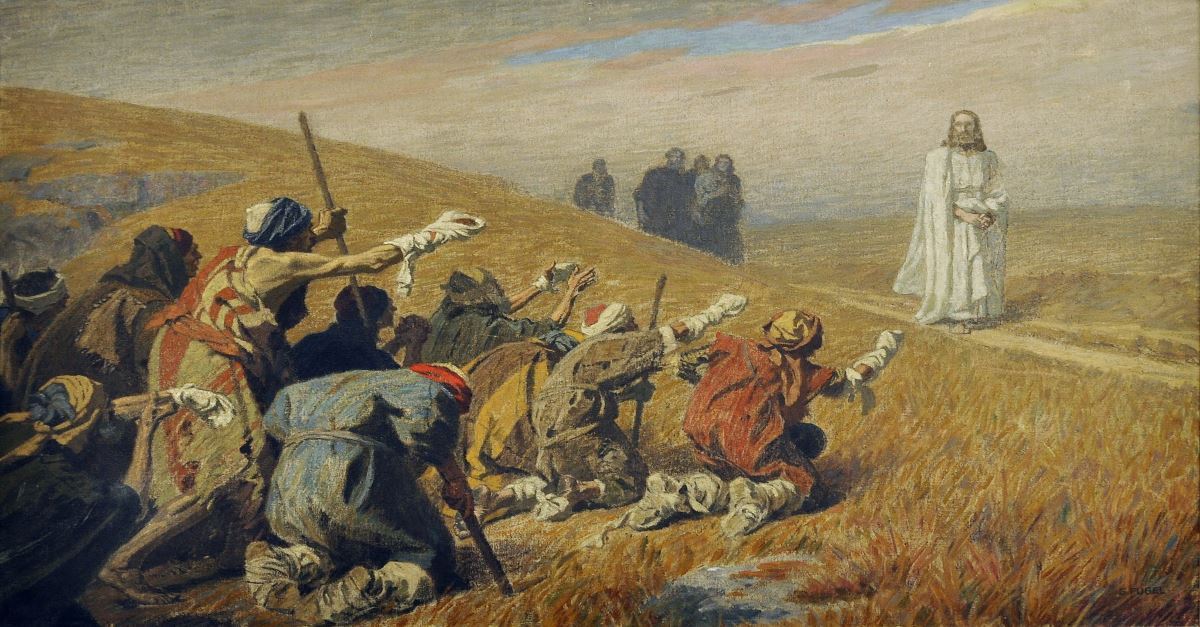
 Over this “cup of salvation” Jesus will later speak: “This cup is the new covenant in my blood.” In the Liturgy of the Eucharist, we bring bread and wine to the priest. The priest offers it to God. God accepts the sacrifice, and changes it into the even greater sacrifice of the meat/substance/reality of the Lamb of God, the perfect sacrifice. God then accepts that sacrifice, and then the priest gives it back to us for our thanksgiving feast with our family and friends, as we share with each other our stories of how God has saved us from our distress.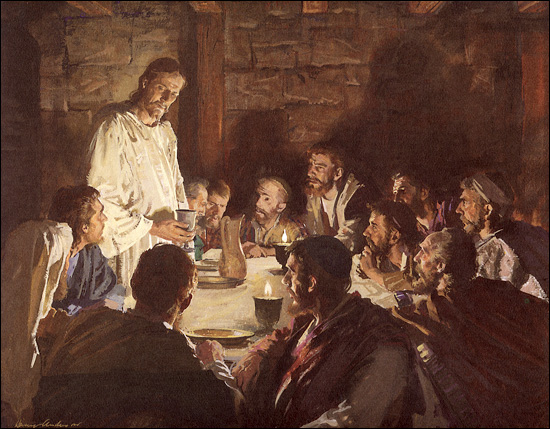

 But for mulberry trees, the distance was doubled to 60 feet, because of how notoriously spread out their roots would grow.
 He teaches us that if we are doing great works of generosity and kindness, and if we are faithfully living the teaching of the Church, and we’re fighting against sin… we shouldn’t be bragging about our greatness, and expecting a gold star sticker. Living out the truth God gave us is simply the expectation. And our response should be, “


 The Snarky Vicar