Unknown's avatar

About Fr. Steve Kelley

...is a happy Catholic Priest, ordained 2013 for the Diocese of Harrisburg. He is currently assigned as the pastor of Holy Trinity Parish in Columbia, PA. He started this blog to provide personal opinions, speculative theology, and commentary on various theological and social issues. "I ask that if you find anything edifying, anything consoling, anything well presented, that you give all praise, all glory and all honor to the Blessed Son of God Jesus Christ. If on the other hand, you find anything that is ill composed, uninteresting or not to well explained, you impute and attribute it to my weakness, blindness, and lack of skill." - St. Anthony of Padua

Transcript: Peter Kreeft’s Lecture “The Culture War”

Image result for peter kreeftI absolutely love this talk. I found a recording of the lecture available for free on Dr. Kreeft’s webpage when I first learned about him. I listened to this recording so much that excerpts of it unceasingly came to mind. I wanted to have easier access to the parts that I wanted to quote, so I took the time to transcribe the recording. I put it here, partly for my own convenience, and partly to share it for others.

And the key to this, of course, is not that the Culture War is “left vs. right,” or “liberal vs. conservative,” but the spiritual war of good vs. evil. The left and right must stop seeing each other as the enemy, and rather see each other as partly their ally, and partly the victim of the enemy. Because we will need to fight together against the greater enemy that can destroy us all: evil. 

imagesDr. Kreeft has a few newer talks on YouTube with the title “Culture War” (including one modeled on “The Screwtape Letters”). But this first one is still my favorite. For those who want to hear the actual recorded lecture, I’ve included a link to it here. You can download it and have it in your own media library. God bless you! Enjoy!


To win any war, and any kind of war, the three most necessary things we must know are

  • First, that we are at war.
  • Second, who are enemy is, and
  • Third, what weapons or strategies can defeat him.

We cannot win a war

  • First, if we are blissfully sowing peace banners on a battle field, or
  • Second, if we are too busy fighting civil wars against our allies, or
  • Third, if we are using the wrong weapons. For instance, we must fight fire with water, not fire.

So this talk is a very basic elementary three-point check list to be sure we all know this minimum, at least.


  • First, that we are at war.

I assume you would not even be coming to a talk titled, “How to Win the Culture War” if you thought all was well. If you are surprised to be told that our entire civilization is in crisis, I welcome you back from your nice vacation on the moon.

Many minds do seem moonstruck, puttering happily around the Titanic, blandly arranging the deck chairs. Especially the intellectuals, who are supposed to have their eyes more open, not less. But in fact, they are often the bland leading the bland. I have verified over and over again that the principle that there is only one thing needed for you to believe any of the one hundred most absurd ideas possible for any human being to conceive— you must have a PhD.

For instance, take Time magazine—please do. Henry David Thoreau said, “Read not the Times, read the Eternities.” Two Aprils ago, their lead article was devoted to the question, “Why is everything getting better? Why is life so good in America today? Why does everyone feel so satisfied and optimistic about the quality of life and the future?” I read the article very carefully, and found that not once did they even question their assumption. They just wondered “Why?” And you thought enlightenment optimism and the dogma of progress was dead? It turned out, upon reading the article, that every single aspect of life they mentioned, every reason why everything was getting better and better, was economic. People have more money. Period. End of discussion. Except the poor, of course, who are poorer. But they don’t count, because they don’t write Time. They don’t even read it.

I suspect that Time is merely Playboy with clothes on. For one kind of playboy, the world is one great big whorehouse. For another, it’s one great big piggybank. For both kinds of playboy, things are getting better and better. Just ask the 75% of Americans who love Bill Clinton, the perfect synthesis of the two.

They love him for the same reason that the Germans loved Hitler at first, when they elected him. Economic efficiency. Autobahns and Volkswagens. Jobs and housing. Hitler wrought the greatest economic miracle of the century in the 30’s. What else matters, as long as the emperor gives you bread and circuses? People are pigs, not saints, after all. They love slops more than honor. I think sexual pigginess and economic pigginess are natural twins. For lust and greed are almost interchangeable. In fact, our society sometimes doesn’t seem to know the difference between sex and money. It treats sex like money, and treats money like sex. It treats sex like money because it treats it like a medium of exchange, and it treats money like sex because it expects its money to get pregnant and reproduce all the time. So we need some very elementary sex education.

There is however, an irrefutable refutation of the pig philosophy: the simple, statistical fact that suicide—the most in-your-face index of unhappiness—is directly—not indirectly—proportionate to wealth. The richer you are, and the richer your country is, the more likely it is that you will find life so good that you will choose to blow your brains out. Perhaps that is a culmination of open-mindedness.

Suicide among pre-adults has increased 5000% since the “happy days” of the ’50’s. If suicide, especially of the coming generation, is not an indication of crisis, I don’t know what is. Just about everybody, except the deep thinkers, know that we are in deep doo-doo. The students know it, but not the teachers—the mind-molders, especially in the media. Everybody in the hospitals except the doctors know that we are dying. Night is falling. Mother Theresa said, simply—

“When a mother can kill her baby, what is left of civilization to save?”

What Chuck Olsen has called “a new dark age” is looming. A darkness that christened itself “the Enlightenment” at its birth three centuries ago. And this “Brave New World” has proved to be only a cowardly old dream. We are able to see this now, as the century of genocides closes—the century that had been called “the Christian century” at its birth by the founders of a magazine devoutly devoted to false prophesy.

We’ve also have some true prophets who have warned us—

  • Kierkegaard, 150 years ago, in The Present Age.
  • Spengler, almost a hundred years ago, in The Decline of the West
  • G. K. Chesterton, who wrote 75 years ago, “the next great heresy is going to be simply an attack on morality. And especially on sexual morality. And the madness of tomorrow will come not from Moscow but from Manhattan.”
  • Aldous Huxley, 65 years ago, in Brave New World
  • C. S. Lewis, 55 years ago, in The Abolition of Man
  • David Riesman, 45 years ago, in The Lonely Crowd
  • Aleksandr Solzhenitsyn, 25 years ago, in his Harvard Commencement Address.
  • And John Paul the Great—the greatest man in the worst century in history—who had even more chutzpah than Ronald Reagan, who called them the “evil empire,” by calling us, “the culture of death.” That’s our culture, and his—including Italy, which now has the lowest  birthrate in the entire world, and Poland, which now wants to share in the West’s great abortion holocaust.

If the God of Life does not respond to this culture of death with judgment, then God is not God. If God does not honor the blood of hundreds of millions of innocent victims of this Culture of Death, then the God of the bible, the God of Abraham, the God of Israel, the God of the Prophets, the God of orphans and widows, the defender of the defenseless, is a man-made myth. A fairytale. A comfortable idea as substantial as a dream.

But—you may object—is not the God of the bible forgiving? He is. But the unrepentant refuse forgiveness. Forgiveness, being a gift of grace, must be freely given and freely received. How can it be received by a moral relativist who denies that there is anything to forgive, except unforgivingness? Nothing to judge but judgmentalism? Nothing lacking but self-esteem? How can a Pharisee or a pop-psychologist be saved?

But—you may object—is not the God of the bible compassionate? He is. But he is not compassionate to Moloch, and Baal, and Asheroth. And to the Canaanites who do their work, who cause their children to pass through the fire. Perhaps your god is compassionate to the work of human sacrifice, the god of your demands, the god of your religious preference, but not the God of the bible. Read the book. Look at the data.

But—is not the God of the Bible revealed most fully and finally in the New Testament, rather than the Old? In sweet and gentle Jesus, rather than wrathful and warlike Jehovah? The opposition is heretical. It is the old Gnostic, Manichaean, Marcionist heresy, as immoral as the demons that inspired it. Our data refute it—our live data—which is divine data, and talking data, thus His name is the Word of God. This data refuted the heretical hypothesis in the question when he said, “I and the Father are one.”

The opposition between “nice Jesus” and “nasty Jehovah” denies the very essence of Christianity: Christ’s identity as the son of God. For, let us remember our biology as well as our theology: Like Father, like Son. That Christ is no more the son of that God than Barney is the son of Hitler.

Will the real Jesus please stand up?

He does so gladly. The gospels are pop-up books. Open their pages, and he leaps out. Let’s dare to open our data. Let’s see what sweet and gentle Jesus actually said about the sins of the Canaanites, about the Culture of Death.

Many centuries ago, those Canaanites used to perform their liturgies of human sacrifice, their infanticidal devotions to the devil in the valley of Gehenna, or Gehinnom, just outside Jerusalem. It was a vast abortuary, like our culture. When the people of God entered the promised land, the Prince of Peace [the Word of God] commanded them to kill the supernatural cancer of the Canaanites. Even after that was done, the Jews dared not to live in that valley, or even set foot there. They used it to burn their garbage. So the devil’s promised land became God’s garbage dump. And the fires never went out, day or night. No matches, remember.

Now, sweet and gentle Jesus chose this place, Gehenna, as his image for hell. And he told many of the leaders of his Chosen People that they were headed there, and that they were leading many others there with them. He said, to them, “Truly, truly I say to you: The IRS agents and White House interns will enter the kingdom of God before you.” That’s the modern dynamic equivalence translation.

He said, “Whoever causes one of these little ones who believe in me to sin, it would be better for him if a great millstone was hung around his neck and he were thrown into the sea.” That is our data. That is the real Jesus. And that is the Jesus who is the same yesterday, day, and forever. I do not think he has started manufacturing Styrofoam millstones.

But—is not God a lover, rather than a warrior? No, God is a lover who is a warrior. The question fails to understand what love is. What the love that God is, is. Love is at war with hate, and betrayal, and selfishness, and all love’s enemies. Love fights. Ask any parent. Yuppie-love, like puppy-love, may be merely compassion, the fashionable love today. But father-love and mother-love is war. God is love, indeed. But what kind of love? Back to our data! Does scripture call him “God the puppy” or God the yuppie”—or is it “God the Father”?

In fact, every page of this book bristles with spear-points, from Genesis 3 to Revelation 20. The road from Paradise Lost to Paradise Regained is soaked in blood. At the very center of the story is a cross—a symbol of conflict if there ever was one. The theme of spiritual warfare is never absent in scripture. And never absent in the life and writings of a single saint. But it is almost never present in the religious education of my students at BC ([Boston College]; BC, by the way, stands for “Barely Catholic”).

Whenever I speak of this they are stunned and silent as if they had suddenly entered another world. They have. They have gone through the wardrobe to meet the Lion and the Witch—past the warm-fuzzies, the fur coats of psychology disguised as religion, into the cold snows of Narnia, where the White Witch is the Lord of this world, and Aslan is not a tame lion, but a warrior. A world where they meet Christ the King, not Christ the kitten.

Welcome back from the moon, kids.

Who doesn’t know we’re at war? Who doesn’t know that the barbarians are at the gates? No—inside the gates, writing the scripts of the TV shows and movies and public-school textbooks and juridical decisions? Only the ones in the lunar-bubble of academia. Or the lunar bubble of establishment religion education programs, with their unprofitable prophets who cry, “Peace, Peace” when there is no peace, the ones who compose those dreary, drippy, little liberal lullabies we endure in contemporary hymns.

The drug dealers know we’re at war. The prostitutes know we’re at war. The beggars in Calcutta know we’re at war. The Polish grandmothers know we’re at war. The Cubans know we’re at war. The Native-Americans knew we were at war, until we gave them firewater and then gambling casinos to dull their dangerously awake minds.

Where is this Culture of Death coming from?

Here. America is the center of the Culture of Death. America is the world’s one and only cultural superpower. If I haven’t shocked you yet, I will now. Do you know what pious Muslims call us? “The Great Satan.” Impious Muslims call us that too, but that makes no difference, we are what we are. And do you know what I call them? I call them right.

But—America has the most just and most moral and most wise and most biblical historical constitution and foundation in the world. Yes, just like ancient Israel.

And America is one of the most religious countries in the world. Yes, just like ancient Israel.

And the Church is big and rich and free in America. Yes, just like ancient Israel.

And if God still loves his Church in America, he will soon make it small, and poor, and persecuted, just has he did to ancient Israel.

So that he can keep it alive, by pruning it. If he loves us, he will cut the dead wood away, and we will bleed, and blood of the martyrs will be the seed of the Church again, and a second spring will come, and new buds. But not without blood. It never happens without blood. Without sacrifice. Without suffering. Christ’s work—if it is really Christ’s work, and not a comfortable counterfeit—never happens without the cross. Whatever happens without the cross may be good work, but it is not Christ’s work. For Christ’s work is bloody. Christ’s work is a blood transfusion. That is how salvation happens.

And if we put gloves on our hands to avoid the splinters from this cross, if we practice safe spiritual sex, spiritual contraception, then his kingdom will not come, and his work will not be done, and our world will die.  I don’t mean merely that Western Civilization will die, that’s a piece of trivia. I mean eternal souls will die. Billions of Ramon’s and Vladimir’s and Tiffany’s and Bridget’s will go to hell. That’s what’s at stake in this war. Not just whether America will become a banana republic, or whether we’ll forget Shakespeare, or even whether some nuclear terrorist will incinerate half of humanity. But rather, whether our children and our children’s children will see God forever.  That’s what’s at stake in Hollywood vs. America. That’s why we must wake up and smell the corpses, the rotting souls, the dying children.

Knowing we are at war, at all times, but especially as such times as these, is the first prerequisite for winning it. The second prerequisite is knowing who is our enemy.


  • Second, who is our enemy?

For almost half a millennium, Protestants and Catholics have thought of the other as the enemy, the problem, and have addressed the problem by consigning their bodies to graves on battlefields and their souls to hell. Gradually, the light dawned. Protestants and Catholics are not enemies, they are separated brethren who are fighting together against the same enemy.

Who is that enemy?

For almost two millennia, many Christians thought it was the Jews, and did such Christ-less things to our fathers-in-the-faith that we made it almost impossible for the Jews to see their God—the true God—in us.

Today, many Christians think it is the Muslims. But they are often more loyal to their half-Christ than we are to our whole-Christ. And they live more godly lives following their fallible scriptures and their fallible prophet than we do in following our infallible scriptures and our infallible prophet. If you compare the stability of the family and the safety of children among Muslims and among Christians in today’s world, or if you compare the rate of abortion, divorce, adultery, and sodomy among Muslims and Christians in today’s world, and if you dare to apply to this data the principles announced by the prophets in our own scriptures, when they say repeatedly that God blesses those who obey his law, and punish those who do  not, then I think you will know why Islam is growing faster than Christianity today. Faithful Muslims serve under the same general God, though through a different and more primitive communications network. And the same I think is true of the Mormons, the Jehovah’s Witnesses, and the Quakers.

So who are our enemies?

Many of us think our enemies are the “liberals.” But for one thing that word is almost meaninglessly flexible, and for another thing, it’s a political term, not a religious one. Whatever is good or bad about any of the forms of political liberalism, it is neither the cause nor the cure of the spiritual cancer that makes this cultural war a spiritual one, a matter of life or death—eternal life or death, not political or economic life or death. Whether Jack and Jill go up the hill to heaven, or down the hill to hell will not be decided by whether government welfare checks increase or decrease.

Our enemies are not even the anti-Christian bigots who want to kill us, whether they are communist Chinese totalitarians who imprison and persecute Christians, or Sudanese Muslim terrorists who enslave and murder Christians. They are not our enemies, they are our patients. They are the ones we are trying to save. We are Christ’s nurses. Some of the patients think the nurses are their enemies, but the nurses must know better. Our word for them is, “Father forgive them, for they know not what they do.”

Our enemies are not even the cankerworm within our own culture—the media of the Culture of Death—the Larry Flints and Ted Turners and Howard Sterns and Time-Warners and Disneys. They, too, are victims, and they, too, are our patients, though they hate the hospital, and go running around poisoning other patients. But the poisoners are our patients, too, for whoever poisons, was first poisoned himself.

This is true also of gay and lesbian activists, and feminist witches and abortionists. If we are the cells in Christ’s body, we do what he did to these people: we go into their gutters, and pick up the spiritually dying, and kiss those who spit at us, and even shed our blood for them if necessary. If we do not all physically go into the gutters, as Mother Teresa did, we go into the spiritual gutters. For we go where the need is. If we do not physically give our blood, yet we give our life in giving our time, for life is time—life-time. Our time is our life blood. Please don’t have children unless you understand that.

Our enemies are not the heretics within the Church—the cafeteria Christians, the à la carte Christians, the “I did it my way” Christians. They are also our patients, though they are quislings. They are the deceived. They are the victims of our enemy, not our enemy.

Our enemies are not the theologians in some so-called Christian Theology Departments that have sold their souls for thirty pieces of scholarship, and prefer the applause of their peers to the praise of their God. Not even the Christo-phobes who wear spiritual condoms for fear that Christ will make their souls and the souls of their students pregnant with his alarmingly active life. Not even the liars who deny their students elementary truth in labeling. The robber-teachers who rob their students of the living Christ. They, too, are our patients, and we, too, do what they do, though unwillingly, in each of our sins.

Our enemy is not even the few really wicked ministers and pastors and priests and bishops and rabbis, the abusive babysitters who corrupt Christ’s little ones whom they swore to protect, and merit Christ’s “millstone of the month” award. They, too, are victims in need of healing.

Who, then, is our enemy?

Surely, you must know the two answers.

All the saints throughout the Church’s history have given the same two answers. For these answers come from the same two sources—from the Word of God on paper and the Word of God on wood; from every page of the New Testament, and from Christ. They are the reasons he went to the cross. Yet they are not well known. In fact the first answer is almost never mentioned today, outside so-called fundamentalist circles. Not once in my life can I recall ever hearing a sermon on it from a Protestant or a Catholic pulpit.

Our enemies are demons—fallen angels, evil spirits. Our secular culture believes that anyone who believes this is at least an uneducated, narrow-minded bigot, and probably mentally deranged. It follows logically, therefore, that Jesus Christ is an uneducated, narrow-minded bigot, and mentally deranged. Most of our religious culture is simply embarrassed at this idea. Therefore, it is embarrassed at Christ. For he is the one who gave us this answer: “Do not fear those who can kill the body and then have no power over you. I will tell you whom to fear: Fear him who has power to destroy both body and soul in hell.” That is Satan, of course, not God, whose work is to save souls, not to destroy them.

Jesus said to Simon Peter, “Simon, Simon, Satan has desired to have you, that he might sift you as wheat.” And Peter learned the lesson, and has passed it onto us, in his first epistle: “Be sober, be vigilant, because your adversary, the devil, as a roaring lion, walketh about, seeking him whom he might devour. Resist, steadfast in the faith.”

Paul, too, knew that we are not contending against flesh and blood, but against principalities, against the powers, against the world rulers of this present darkness, against the spiritual hosts of wickedness against the heavenly places.

Pope Leo XIII saw this truth. He received a vision of a coming 20th century, a vision that history has proved terrifyingly true. He saw Satan at the beginning of time, allowed one century to do his worst work in. And Satan chose the 20th. This pope, Leo—with the name and the heart of a lion—was so overcome by the terror of this vision that he fell into a swoon like a Victorian lady. When he revived, he composed a prayer for the whole Church to use for this whole century of spiritual warfare:

Saint Michael the Archangel,
defend us in battle.
Be our protection against the wickedness and snares of the devil.
May God rebuke him, we humbly pray;
and do Thou, O Prince of the Heavenly Host –
by the Divine Power of God –
cast into hell, Satan and all the evil spirits,
who roam throughout the world seeking the ruin of souls.

This prayer was known by every Catholic and prayed after every Mass until the 60’s—exactly when Leo’s Church was struck by the incomparably swift disaster which we have not yet named, but which future historians must—the disaster which has taken away half of our priests, three quarters of our nuns, and nine tenths of our children’s theological knowledge, by turning the faith of our fathers into the doubts of our dissenters, in a miraculous reversal of Christ’s first miracle at Cana—turning the wine of the gospel into the water of psychobabble. An anti-miracle by the anti-Christ.

The restoration of the Church and thus the world might well begin with the restoration of the Lion’s prayer and the Lion’s vision. Because this is the vision of all the saints, all the apostles, and the Lord himself. The vision of a real Satan, a real hell, and a real spiritual warfare.

I said there were two enemies. The second is even more horrible than the first.

There is one nightmare more terrifying than being chased by the devil, even caught by the devil, even tortured by the devil. That is, the nightmare of becoming the devil. The horror outside your soul is terrible enough, but not as terrible as the horror inside your soul.

The horror inside the soul, of course, is sin. Another word, which—if any were to dare to speak it today—elicits embarrassment from the Christian and condemnation from the secularist, who condemns only condemnation, judges only judgmentalism, and believes the only sin is believing in sin. All sin is the devil’s work, though he usually uses the flesh and the world as his instruments. Sin means doing the devil’s work. Tearing and damaging God’s work. And we do this. That’s the only reason that the devil can do his awful work in our world. God won’t allow him to do it without our free consent. And that’s the deepest reason why the Church is weak, and why the world is dying. Because we are not saints.

And that gives us our third necessary thing to know.


  • The weapon that will win the war and defeat our enemy.

All it takes is saints. Can you imagine what twelve more Mother Teresa’s, or twelve more John Wesley’s would do for this poor old world? Can you imagine what would happen if just twelve people in this room did it? Gave Christ 100% of their hearts, with 100% of their hearts, 100% of the time, and held back nothing—absolutely nothing? No, you can’t imagine it, anymore than anyone could have imagined how twelve nice Jewish boys could conquer the Roman empire. You can’t imagine it.

But you can do it. You can become a saint. Absolutely no one and nothing can stop you. It’s your free choice. Here is one of the most wonderful and terrifying sentences I have ever read. From William Law’s Serious Call.

“If you will look into your own heart, in utter honesty, you must admit, that there is one and only one reason why you are not even now a saint. You do not wholly want to be.”

That insight is terrifying because it is an indictment. But it is wonderful, and hopeful, because it is also an offer. An open door. Each of us can become a saint. We really can. We really can. I say it three times because I think we do not really believe that, deep down. For if we did, how could we endure being anything less?

What holds us back? Fear of paying the price. What is the price? The answer is simple. T. S. Eliot gave it when he defined Christianity as, “the condition of complete simplicity costing not less than everything.” The price is everything. 100%. Martyrdom, if required, and probably a worse martyrdom than the quick noose or stake—the martyrdom of dying daily. Dying every minute for the rest of your life. Dying to all your desires, and all your plans, including your plans on how to become a saint.

Or rather, not desiring to your desires, but dying to the you in your desires. I think this this sounds much more mystical than it is. It is simply giving God a blank check. It is simply Islam—complete submission. Fiat—Mary’s thing. Look at what it did two thousand years ago when she did it: it brought God down from heaven, and thus saved the world. It was meant to continue. If we do that Mary thing, that Islam, and only if we do that, then all our apostolates will work. Our preaching and teaching and writing and catechizing and missioning and fathering and mothering and studying and nursing and businessing and pastoring and priesting, everything.

Last year, an American Catholic bishop had asked one of the priests of the diocese for recommendations for ways to increase vocations to the priesthood. The priest replied in his report, “the best way to attract men in this diocese to the priesthood, your Excellency, would be your canonization.”

Why not yours? But how? We always want to know “how.” Give me a method, a technology, a means to this end. What does that question mean? How can I become a saint? Or give me a means to the end of sanctity. It means, “Give me something that is easier than sanctity, which will cause sanctity, so that if I do this something, or attain this something, than this something will be the middle term, the link, between me and sanctity.”

No. There is none. No prayers, no meditations, no 12-step programs, no yogas, no psychological techniques, no techniques at all. There can be no button to push for sanctity, any more than for love. For sanctity simply is love. Loving God with all your heart, and soul, and mind, and strength. How do you love? You just do it. A cause cannot produce an effect greater than itself. And nothing in the world is greater than sanctity. Nothing greater than love. Therefore no cause, no human cause, can produce sanctity. There can never be any technology for sanctity.

Of course, God is its cause, grace is its cause. The Holy Spirit is its cause. Oh, well, why doesn’t God cause it then? If sanctity isn’t a do-it-yourself thing, but an only-God-can-do-it thing, then why doesn’t God make me a saint? If only grace can do it, why doesn’t he give me that grace? Because you don’t want it. If you wanted it, he’d give it. He promised that—all that seek find. It’s back to “Just say ‘yes’.”

It’s infinitely simpler than we think, and that’s why it’s hard. The hard word in the formula, “Just say ‘yes'” is the word “just.” We are comfortable with Christ-and-theology, or Christ-and-psychology, or Christ-and-America, or Christ-and-the-Republican/Democratic-party, or Christ-and-phonics, or Christ-and-dieting— But just plain Christ, all Christ, Christ drunk straight, not mixed, we find far too dangerous for our tastes. Aslan is not a tame lion. Just say yes to him? You never know what he’d do with you.

I conclude with a claim to infallibility. I give you two infallible prognoses.

  1. If we do not use this weapon, we will not win this war.
  2. If we do use this weapon, we will win this war.

Or more subtly—

  1. Insofar as we use this weapon, we will this war, and
  2. Insofar as we do not, we will not.


We can win, because we wield here the world’s most unconquerable weapon, the strongest force in the universe. To translate it from the abstract to the concrete, the weapon is Christ’s blood. Not Christ without blood—not merely a beautiful ideal, and not blood without Christ—not a merely human sacrifice and martyrdom. But Christ’s blood.

Back when there were more communists in Russia than in American universities, Archbishop Fulton Sheen used to say that the difference between Russia and America was that Russia was the cross without Christ, and America was Christ without the cross. Neither will win. Neither will work. Neither sacrifice without love, nor love without sacrifice. But the blood of Christ will work. For that blood flows from his sacred heart. And the heart of that heart is agape—divine love. That is why it will work. Because love never gives up. And that is why we will never give up, and why we will win. Why we, whose food is this blood, are invincible.

The hard-nosed, successful secularist lawyer Jerry Spence writes, “a small boy and a bully meet. When the small boy is knocked down, he gets up and attacks again. Over and over. Until at last, he will win. For nothing in the world is as fearsome as a bloody battered opponent who will never surrender.” Never.

Winston Churchill delivered the shortest and most memorable commencement speech of all time at his Alma Mater during World War II:

“Never, never, never, never, never, never, never, never, never, never give up.”

That’s all. We will win the war because no matter how many times we fall down, no matter how many times we fail at being saints, no matter how many times we fail at love, we will never, never, never, never, never, never, never, never, never, never give up.



Homily: Blessed are you

wisdom_and_folly_by_bstrgncragus

Lady Wisdom and Lady Folly

Over the last few weeks, we’ve been talking about the call to be God’s prophetic people.

What does a prophet do? A prophet is (a man, a woman, a group) called by God to speak and to live divine truth, in season and out of season (when it’s popular and when it’s not), to provide an interpretation of reality (past, present, and future) through God’s message of mercy and hope, or correction and repentance. A prophet is not one who predicts the future, but one whose message can have a predictive aspect, because he speaks truth, and truth is beyond time. He reminds the world of what is true: that if we act in harmony with God’s truth of reality, we will receive the blessings of our choices; and if we act in conflict with God’s truth of reality, we will be subject to the curses of our choices. To use a great quote from a recent article (The “Wayward Daughters,” written by Haley Stewart) talking about female main characters in different books (Julia from Brideshead Revisited and Kristin from Kristin Lavransdatter, two wonderful books, very popular in Catholic circles), who suffered as the consequences of their bad choices, the author says, “The years of misery they suffer are not punishment inflicted by a parent or by God—the consequences of sin itself are what tortures them. They are punished by their sin, not for their sin.”


Our first reading is from the words of the prophet Jeremiah. We heard his call to prophetic ministry two weekends ago. God had told him, “…Tell them all that I command you… for it is I this day who have made you… a pillar of iron, a wall of brass …They will fight against you but not prevail over you.” We also remember the context of Jeremiah’s ministry: Israel was being tempted to rely on their military strength and their political alliances, and they weren’t in the practice of calling on God.

Now we read today’s reading from Jeremiah, “Cursed is the one who trusts in human beings, who seeks his strength in flesh, whose heart turns away from the LORD.” So Jeremiah is reminding Israel of their call to be faithful to God, that God is their strength, their salvation, and the prediction that if they believe that other people, other nations, will be their salvation, they will end up in misery, and the curse of death or slavery.

He is like a barren bush in the desert that enjoys no change of season, but stands in a lava waste, a salt and empty earth.” That’s a pretty desolate, lifeless, hopeless image. That, no doubt, was Jeremiah’s point. The crucial issue is not Israel’s working together with neighboring nations; the problem was Israel trusted in them, and had turned their hearts away from God. Once you turn away your heart from God, the source of life, you become like a shrub in the dry wilderness: not bearing any good (spiritual) fruit. But then on the other hand, 08ee2945540799.5607a6e8c3516Blessed is the one who trusts in the LORD, whose hope is the LORD. He is like a tree, planted beside the waters, that stretches out its roots to the stream: it fears not the heat when it comes; its leaves stay green; in the year of drought it shows no distress, but still bears fruit.” What is Jeremiah’s prophecy? If Israel remains faithful to the covenant with God, they will endure the time of difficulty and receive the blessings of their faithfulness, bearing good fruit. That doesn’t mean they won’t suffer, but that they will not end in suffering, and even in their suffering, they have the certain hope in God’s eventual vindication… which is a very different kind of suffering than one experienced as hopeless and meaningless.

What does it mean to remain faithful to the covenant with God? It’s more than just to believe that God will save them. It’s to live each day according to the truth of the Scriptures, the law, the commandments and worship that defines what it means to be God’s people.


I know I don’t usually reference the psalm, but today it’s Psalm 1, which sets the tone for the whole book of the psalms. two waysAnd like much of the Old Testament, and even the New Testament, it establishes the “two ways,” the way of wisdom, and the way of folly; the way of blessings, and the way of curses; the way of life, and the way of death. The psalm says, “Blessed the man who follows not the counsel of the wicked, nor walks in the way of sinners, nor sits in the company of the insolent, but delights in the law of the LORD and meditates on his law day and night.” So if you hang out with good, wise people, you learn from them goodness and wisdom. If you hang out with foolish, wicked people, you become like them.
That doesn’t mean we don’t hang out with our friends (or even strangers) who are on the wrong path. We do want to be friends with them; we want to walk with them, accompany them, support them, and ideally, to help them avoid things that will hurt them and lead them to greater happiness. But we don’t want to encourage or approve of their sins: we want to be the good, wise, holy friend in their life, who doesn’t judge them, but who gives them good counsel. We want to be the prophetic witness in their lives. And then we also need to have other people in our life for our own well-being, who are more good and wise than us. We need to pray the scriptures frequently, and even more frequently the more we’re with people who present bad influences to us. We need the word of God in our heart and on our lips, and the wisdom of how and when to share it in love, sometimes in tough love.

Sometimes people say to me, “My spiritual life is so dry. It’s hard to pray. I don’t feel God’s presence. I feel spiritually fruitless.” A good response to that might be, “How much time each day do you invest in praying with the Scriptures?” If the answer is, “I don’t; I’m too busy,” then the problem is a malnourished faith. The Scriptures are the living waters that our soul should be drinking from, and refreshing itself. It is the flesh and blood of the Word of God that gives life. The Scriptures are Christ. As St. Jerome said, “Ignorance of the Scriptures is ignorance of Christ.” We can’t expect to have spiritual life if our spirit hasn’t been nourished in weeks or months or more. And I don’t mean just to read the Scriptures, or even read a lot of scripture, but to read it deeply. The Psalm says, “…and meditates on his law day and night.” It is to gnaw on it, chew on it, listen to it, wrestle with it, squeeze all you can out of it, reconcile yourself with it, and live it. As I said before, lectio divina is a wonderful way of really interacting deeply with the Scriptures.


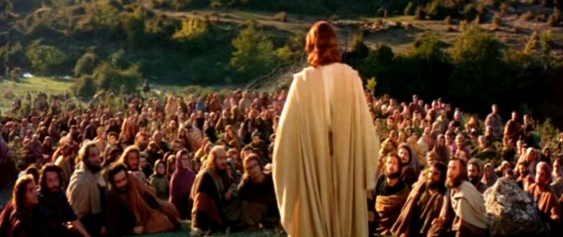
Our Gospel from Luke is what is often called “The Sermon on the plain,” compared to Matthew’s Gospel which has “The Sermon on the mount.” Even within the sources I used for preparation, they disagreed whether this was two accounts of the same event, or if this was two different events. On the one hand, the scripture says that Jesus went up the mountain to pray, and then came down to, in Greek, “a flat place,” which could mean a relatively flat part of the terrain, but still an elevated place. On the other hand, Jesus, like many public speakers, may have given the same or similar message a number of times to different audiences, and so this in Luke might be a different occasion than in Matthew. Since the Holy Spirit doesn’t make it clear, it’s not an important question. What’s important is what the Gospels say, and even how they compare. For one, Matthew speaks in the third person, “Blessed are they who…” and Luke speaks in the second person, “Blessed are you who…” Matthew only has blessings, he doesn’t include curses. But the blessings, like here in Luke, are not what you would expect. And while Matthew has 8 blessings, Luke has 4 blessings and 4 curses. And lastly (of the ones we’re going to mention), Luke’s are stated more simply. Matthew says, “Blessed are the poor in spirit,” while Luke simply says, “Blessed are you who are poor.” In both cases, Jesus is being presented as a new law-giver, a new David, and new Moses.

Related image

A lot of people don’t like Luke’s version, because in its simplicity, it’s kind of harsh. Sure, blessed are the poor in spirit, we can all strive to be “poor in spirit.” But in Luke, it’s simply “Blessed are you who are poor,” and then he says, “But woe to you who are rich, for you have received your consolation.” Wow. Ok. “Blessed are you who are now hungry, for you will be satisfied.” That’s comforting. “Woe to you who are filled now, for you will be hungry.” How does that big breakfast sound now? “Woe to you who laugh now, for you will grieve and weep. Woe to you when all speak well of you, for their ancestors treated the false prophets in this way.” So we also need to understand what Jesus meant, and what situation Luke was addressing his Gospel to.

Jesus was speaking to Jews who knew the Old Testament, and in the covenant-making, law-giving ceremonies, the blessings and curses depended on whether you followed the terms of the covenant. If you did, you received the blessings of lots of children, lots of livestock, lots of wealth and happiness. If you didn’t, you got the curses, the opposite of all that. And that, the blessings and curses, were received here in this life.

In the new covenant, Jesus orients us toward the next life, toward heaven. And the way to heaven… is through the paradox of the cross. Jesus was the perfect, most blessed man, and on the cross he endured the most egregious suffering for sin, although, not for his own sin, but ours. And then he resurrected. His hour of glory, his time on the cross when he poured out his love for us, was the way to the resurrection and eternal glory. “No cross, no crown.” You have to go through the tension of Good Friday to get to the release of Easter Sunday. And we follow him. “Blessed are you who are poor in this world. The kingdom of God is yours” in heaven. “Blessed are you who are now hungry, for you will be satisfied” fully in heaven. “Blessed are you who are now weeping, for you will laugh” in heaven. But woe to you who do not follow Christ in this world, in his suffering and sacrifice. Woe to you who rely on your wealth, for they make you feel self-sufficient and not in need of God’s mercy. And so you have received the consolation of your riches, in this world. Woe to you who are filled and sated and gluttonous in this world, which deafens your ears to the cry of the poor. At judgment, they will have plenty, and you will be hungry. Woe to you who laugh now, woe to you when all speak well of you, because you are of this world and like this world. When the shallow images of this world pass away, and you did not weep for your sins, and you did not endure hardship for the sake of the gospel, you will grieve and weep.

In the Beatitudes, the law of the Christian Covenant, the blessings are curse-like (in the view of this present world), because it is through the curse and suffering of the cross that we receive the blessing and happiness of resurrection glory. Jesus on the cross is the intersection of this world and the next world, judgment, heaven and hell. If we suffer like him and for him, and for the vulnerable members of his mystical body, then we will enter the kingdom of God. But if we have lived according to the immorality of this world, the pleasure and sins of this world, did what was popular, and complacently avoided the suffering that would come from being a heroic and prophetic witness to the gospel, then we will be locked out of the kingdom of God.

It’s not that laughing is sinful: laughing is joyful, and we are called to joy. It’s not that being rich is sinful: we are called to be blessed with abundance from living virtuously, and with prudent stewardship. But our laughing must frequently give way to suffering with those who are suffering, and working with compassion to minister to them in their suffering, and ultimately to help them out of their suffering, if possible. Now, there indeed might be some limited fulfillment in this life: those who suffer now may be vindicated, even in this world (e.g., Nelson Mandela freed from prison, and Jews freed from their concentration camps). Those who are poor do often get out of their poverty. The Israelites in slavery were eventually freed, in the course of history. But even that is a limited fulfillment of the deliverance to the perfect freedom, the perfect abundance, in heaven. 

It’s not that being rich is a sin, Jesus in his ministry had rich people among his disciples. But having wealth presents some real challenges in the spiritual life. For one, having wealth provides the temptation to lean on one’s wealth to solve their problems, and not having to suffer and trust in God’s mercy (that was Israel’s problem in Jeremiah’s time). Also, having wealth tends to siphon our attention toward itself and away from more important priorities in our life (hence the evangelical counsel of poverty, or simplicity of life: the freedom from the trappings of material wealth, to focus on spiritual matters). And there is an increased temptation toward being uncompassionate toward the poor (“I deserve this, I worked hard, I sacrificed, I invested, I deserve this, that is fair” instead of “love your neighbor as yourself,” not in a compulsory socialist or communist way, but in a voluntarily generous way). It’s a self-centeredness rather than other-centeredness. Jesus was spiritually rich, yet he became poor to share his richness with us, and lift us up out of our spiritual poverty. (J. K. Rowling, the author of the Harry Potter series, is the only modern billionaire who lost her billionaire-status because of how much she has donated to others). So again, it’s not that it’s wrong to be rich; it’s dangerous to be rich. There’s a lot more that can go wrong with our spiritual life. If you want the best chance for salvation, the only thing that really matters, then it’s better (blessed) to be poor than to be rich. It’s better to be weeping than to be happy. It’s better to be hungry than to be satisfied. It’s better to have an all-encompassing desire for the fullness of heaven than to be satisfied in this life, and think less about heaven. 

One of the major characteristics of Luke’s gospel is the reversal of expectations, very much like this “Sermon on the Plain,” and also very much like the Canticle of Mary, the Magnificat: “…He has thrown down the rulers from their thrones but lifted up the lowly. The hungry he has filled with good things; the rich he has sent away empty…” Luke’s target audience were affluent gentile Christians, who frequently had difficulty escaping the trappings of their affluence to identify with the poor, to minister generously and humbly to the poor and suffering. And so for the sake of their salvation, Luke highlights this aspect of Jesus’ ministry. 

An interesting linguistic point is that Jesus’ main word in these blessings, in the Greek, is not really “blessed,” eulogēmenos, but rather makarios: “happy.” And this parallels Psalm 1. The usual word for blessing in Hebrew is barak. But in the psalm, it is ashar, “happy.” Following God’s law (the Beatitudes, the moral teaching of the New Testament, and of the Church) is the path to happiness. It isn’t necessarily the path to pleasure, and indeed might bring about quite a lot of suffering (like crucifixion), but we are made for happiness (ultimately, the happiness of heaven), and suffering is often the way to happiness. That requires discipline, which involves one of my recently-acquired favorite quotes, “Discipline is choosing what you want most over what you want now.” If what we want most is eternal happiness, then we have to choose now those things that advance us toward that, and choose against those things which are inconsistent with it, such as many of the ways we pursue a shadow of happiness through immoral pleasures. Sin never really brings happiness, because the little bit of happiness from sin always carries with it a greater unhappiness. And sin, of course is addictive. So we get hooked on that little bit of apparent happiness, and end up getting buried under the burden of the greater unhappiness that comes with it. 


The second reading doesn’t usually relate to the other readings, but today, in a way it does. St. Paul says to the Corinthians, “How can some among you say there is no resurrection of the dead? If the dead are not raised, neither has Christ been raised, and if Christ has not been raised, your faith is vain; you are still in your sins.” The crucifixion and the resurrection are the key to the beatitudes. They are the key to unlock the paradox of human suffering. We unite ourselves to Christ who suffered and died and rose again. But if he didn’t rise again,  we’re locked in the paradox of endless meaningless suffering and sin. Our upward possibilities are blocked off without hope.

But Paul (who was given his personal encounter with the post-ascension risen Christ) knows first-hand that Christ most certainly is alive, he did rise from the dead, because Paul met him. Paul clearly affirms for us: “But now Christ has been raised from the dead.” We are free, we are saved, we can outlive our suffering, sometimes in this life, but definitively in heaven, where you who are poor are blessed with the kingdom of heaven; where you who are now hungry will be satisfied; where you who are weeping will laugh; where you are hated and denounced (for your prophetic witness) on account of the Son of Man can rejoice and leap for joy, for your reward will be great in heaven.


I asked God for strength, that I might achieve.
I was made weak, that I might learn humbly to obey.

I asked for health, that I might do great things.
I was given infirmity, that I might do better things

I asked for riches, that I might be happy.
I was given poverty, that I might be wise.

I asked for power, that I might have the praise of men.
I was given weakness, that I might feel the need of God.

I asked for all things that I might enjoy life.
I was given life, that I might enjoy all things.

I got nothing I asked for – but everything I had hoped for.
Almost despite myself, my unspoken words were answered.
I am, among men, most richly blessed.

(attributed to an unknown Confederate soldier)

Horizontal Rule Cross

Homily: Divine Encounter

Peter and Jesus Depart from me Lord

Last week, in the first reading, we heard the call from God to the prophet Jeremiah. The last two weeks in the gospel we heard Jesus speak about his call to be the Messiah. This week, we hear of two other calls. In our first reading, the call from God to the prophet Isaiah; and in the Gospel, the call to Simon, who Jesus will later give the new name, Peter. So in this weekend’s readings in particular, and here in the beginning of the season of Ordinary Time in general, we’re getting a sense of vocation (being called) and mission (being sent). It applies not just to men called to priesthood or those called to religious orders. It applies to all humanity. Every person conceived in the womb has their own unique call from God to their own unique life, with their own unique personality and gifts. Not one human soul is extra and unimportant. Not one. Every soul, every day, is here for a reason, even if we struggle to see, or understand it, or believe it.

In our gospel and in our first reading, we have two accounts of God calling someone to ministry. What’s important in the parallel between Isaiah and Peter is not that they experience the same steps—but that they experienced the same steps that we often experience when we have a divine encounter.

Just FYI, for those who are available, a few weeks ago we began offering a holy hour of Eucharistic Adoration at noon every Friday, a wonderful opportunity for divine encounter. No prayers, no readings, no homilies. Just you gazing with love at the Lord, and the Lord gazing with love at you. It’s certainly helped me in the last few weeks. So if you’re available at noon on Friday’s, the day of the Lord gave himself to us for our salvation, I encourage you to plan to come here for the divine encounter in Eucharistic Adoration.

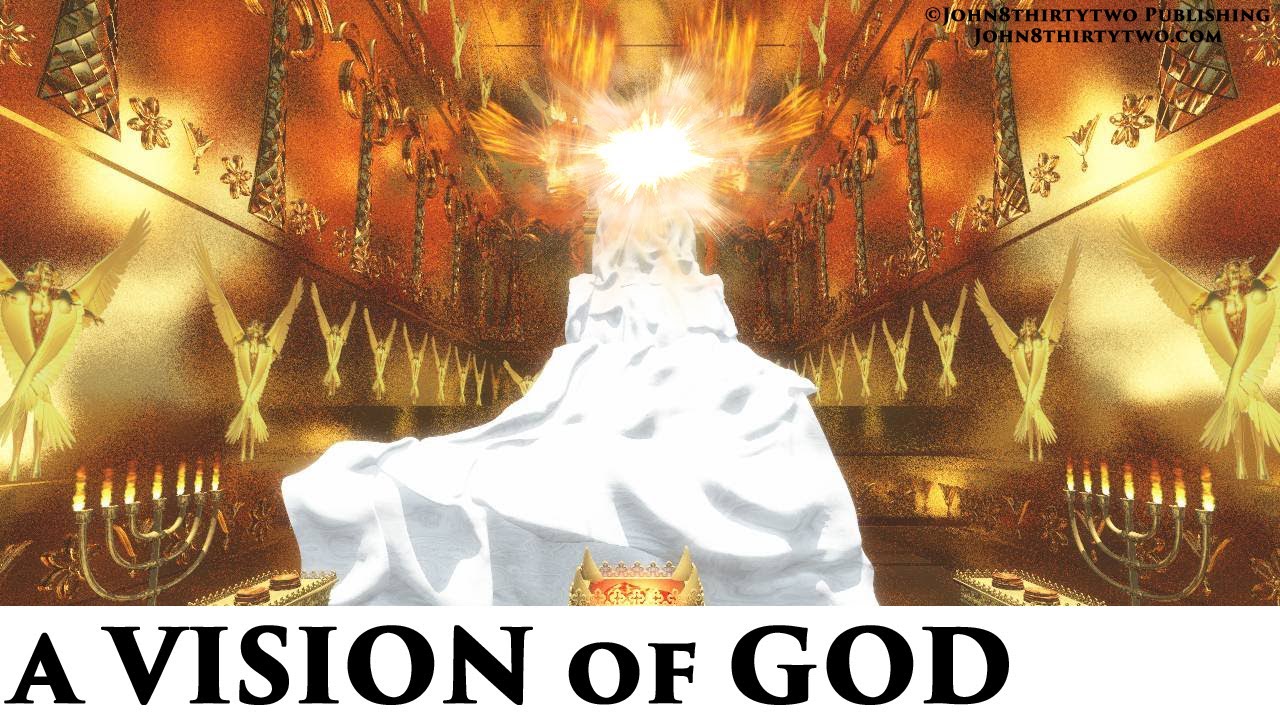
So the encounter. The first step is always God making the first move. He’s always reaching out to us, and sometimes we pick up on it (even we think we’re making the choice to do something good, like our choice to go to God, it’s really us finally responding to his grace). So God gave Isaiah this mystic encounter in which he saw the divine throne room, and the worship of God by the heavenly host. Image result for isaiah vision of heavenI saw the Lord seated on a high and lofty throne, with the train of his garment filling the temple. Seraphim were stationed above. They cried one to the other, ‘Holy, holy, holy is the LORD of hosts! All the earth is filled with his glory!’ At the sound of that cry, the frame of the door shook and the house was filled with smoke.” The image is of a king high above any earthly king, wearing not just an impressively regal garment, but so impressive it filled the temple. The Seraphim (or Seraphs) are the highest rank of angels, those closest to God. “Seraph” means “burning one” and in Hebrew, the “-im” ending is plural. So the Seraphim are the angels most intensely burning with God’s love, being the closest to his glory. They are so filled with awe at God’s majesty and burning love that they ceaselessly sing out, “Holy, holy, holy is the LORD of hosts!” (The Hebrew language lacks comparison and superlative modifiers, so the word is repeated to achieve this effect. “Holy, holy, holy” equals “holy, holier, holiest!”) We join our singing to theirs at every Mass, hopefully out of awe, and not just out of routine. The choir of angels sang with such vigor that the temple shook. And the house, the temple, was filled with smoke, which can be said to be the incense used in the Temple, and in the Mass, which is used to signify something consecrated as holy, such as the offerings on the altar, the Paschal candle, or a body before burial. Incense, as described in the Book of Revelation, also signifies the rising prayer of the saints. So Isaiah sees all this glory.

Simon Peter’s encounter was not a mystic vision of heaven, but this strange carpenter getting into Simon’s fishing boat, and telling him how to catch fish, which was not how you catch fish. You catch fish at night, near the shore, not during the day, out in the deep.

On a human level, this is a test for Simon. Simon and Andrew run a fishing business. Zebedee and his sons James and John are co-workers in this business. They’re professionals, who know what they’re doing. Jesus, on the other hand, is a tekton, a carpenter, a builder. And as a general rule, fishermen do not like carpenters telling them how to fish. These fishermen have done everything they knew to do, they fished all night, it’s now morning, they’re tired, they’re frustrated from having caught nothing, and then this carpenter comes along and says, “Well, hey, did you try the deep water? Go out into the deep water and try and put your nets down and see what happens.” It’s a real test. Yet Simon tells Jesus, “Master, we have worked hard all night and have caught nothing, but at your command I will lower the nets.”

Related imageBut Jesus had this big crowd following him. Simon, and his brother Andrew, and their co-workers James and his brother John, heard what Jesus was preaching. So when Jesus told Simon to go out to the deep and cast their net, he obeyed. And after not having caught anything all night, they filled two boats to almost sinking. Simon recognized that Jesus had performed this miracle, and that only God could have summoned such a quantity of fish to where there should not have been any. So Simon recognizes that Jesus is not just a strange carpenter, but the God of Israel.

On a deeper level, the ancient Church Fathers saw a spiritual significance in the fact that Christ teaches from the boat of Simon Peter. It’s Peter’s Boat—the “bark of Peter” (“bark” is an old word for a boat). Related imageThey saw in this the mystery of the ministry of Jesus through the successor of Peter in the life of the Church. The “Bark of Peter” is an ancient nickname of the Church. The successor of Peter (the Vicar of Christ) would teach the world from the Bark of Peter, and he would navigate the Church through the sometimes stormy waters of the ages. (Read St. John Bosco’s prophetic vision of the Bark of Peter anchored safely between the two columns, protecting it against the attacks of its enemies!) That’s part of the tradition for calling the main area of a Catholic church where the pews are the “nave.” According to Wikipedia, “The term nave is from navis, the Latin word for ship, an early Christian symbol of the Church as a whole, with a possible connection to the “ship of St. Peter” or the Ark of Noah. The term may also have been suggested by the keel shape of the vaulting of a church. In many Scandinavian and Baltic countries a model ship is commonly found hanging in the nave of a church…

Ok, second step. In the presence of the glory of God, the creator of the universe, the savior of Israel, the God of all majesty, wisdom, and holy glory, Isaiah and Simon become self-conscious of their unworthiness, their sinfulness, their imperfection. That’s the second step: humility, contrition, repentance. Isaiah says, “Woe is me, I am doomed! For I am a man of unclean lips, living among a people of unclean lips; yet my eyes have seen the King, the LORD of hosts!” The lips speak what is in the heart, and so he weeps for the uncleanness of his heart, and the unclean hearts of the people of Israel. He is filled with fear because no sinner can behold God face to face. Simon Peter says, “Depart from me, Lord, for I am a sinful man.” We don’t know what sinfulness Simon is guilty of, but in its place, we can put whatever sinfulness we might be guilty of, whatever we’re ashamed of, if we were to come into an encounter with God who can read and reveal the thoughts of our hearts. This repentance should be our second step. Often we think of the Church, and we are faced with the sorry state of our moral life. Often our way of dealing with this tension is then to stay away from Church (like Adam and Eve recognizing their shame, and hiding from God in the garden of Eden). But our response should be humble contrition and confession. It’s our choice how to respond to the tension, to the disconnect between God’s holiness and our sinfulness: we can choose to turn toward God in repentance, or away from God preferring our comfortable sins. Isaiah and Peter are afraid, not because they love their sins more than God, but because they become super-aware of their sin in God’s presence.

The third step is God’s mercy. Isaiah says, “Then one of the seraphim flew to me, holding an ember that he had taken with tongs from the altar. He touched my mouth with it, and said, ‘See, now that this has touched your lips, your wickedness is removed, your sin purged.’”Isaiah and seraph Now it should be clear that we’re not talking about an actual piece of charcoal. We are speaking in figures of spiritual/mystical realities. So the fire of God’s love, and of the Seraphim, is spiritual fire. And this coal is a figure of cleansing, purifying fire of the altar of prayer; and he takes it and places it on Isaiah’s lips and says “your sins are forgiven.” In a way, this burning ember is like a prefigurement of the Eucharist, which when it is taken from the holy altar and touches our lips, it removes our wickedness and purges our sin (that applies to venial sin—not mortal sin, by which we cut ourselves off from God’s grace; for that we are obligated to go to the particular sacrament given to us by God to reconcile ourselves with Him after committing mortal/deadly sin). But for the venial sins we commit every day, our frequent failures to follow the promptings of our conscience and God’s will, the grace and healing of the Mass give us this mercy. Receiving the Eucharist is a share in the burning love of the Sacred Heart of our Lord. As for Simon, Jesus simply said to Simon, “Do not be afraid.” He doesn’t say, no, it’s ok, your sins aren’t a big deal, you’re basically a good person. Jesus accepts Simons’ confession, and moves him through it.

God is not repelled by our sinfulness. His response is not disgust, but compassion. A parent who sees that his child is wounded is not disgusted and wrathful toward his child, but reaches out in tenderness and love, to give, within his power, comfort and healing. When we sin, we become tangled in that sin. God wants us to be free. But the way to free us from sin is not just to dismiss our sin, but to train us not to choose sin. And being trained, getting disciplined, is not fun, as the author of the Letter to the Hebrews confirms (Heb 12:11). This disciplining can feel like God being wrathful against us, when it is really our pulling away from God’s love trying to heal us. God’s wrath is really God’s love, as experienced through sin. God only loves. But when we’re on the discipline-end of that love, God doesn’t mind using tough love, if that’s what he knows will ultimately help us… even if He knows we’ll be angry at Him for a while. 

And lastly the fourth step: commission, vocation.Jesus said to Simon, ‘Do not be afraid; from now on you will be catching men.’ When they brought their boats to the shore, they left everything and followed him.” When we read other gospel accounts of this event, like Matthew’s, where Jesus just says “Follow me,” and we wonder why they just get up and go, here Luke gives a much fuller version of the encounter. It makes more sense after reading Luke’s gospel why these first disciples left everything and followed him. Jesus gave them reason to believe in him. Then he called them. And over time, he will teach them, form them, and ultimately, send them, to continue his ministry and lead the church.

As Brant Pitre points out, an interesting aspect of the Lord choosing fishermen to be the core of his disciples, is that professional fishermen would need to have cultivated certain virtues in their character that would be essential in their future ministry. First, the need to be observant. They need to pay attention to their surroundings, to conditions, to weather, to patterns. Second, the need to be patient. Fishing involves long times of nothing happening, at least by appearances. Fishermen can’t just pull up their equipment and move every time they get impatient. Third, the need to be persistent. Sometimes, you’re going to fish all night and not catch anything. Sometimes, there might be a rough season. But a fisherman needs to keep at it, keep learning, keep applying what he knows, and not give up. And finally, the need to rely on God. There’s a lot about being a fisherman that’s just out of the fisherman’s control. Weather, storms, safety, the fish biting, the nets not breaking, the market being good, there’s just a lot that the fisherman needs, that only trust in God will provide. 

In the Gospel of Matthew (remember, we’re in Luke), Jesus will compare this image of Peter’s great catch of fish to the Kingdom of Heaven: “Again, the kingdom of heaven is like a net which was thrown into the sea and gathered fish of every kind; when it was full, men drew it ashore and sat down and sorted the good into vessels but threw away the bad. So it will be at the close of the age. The angels will come out and separate the evil from the righteous, and throw them into the furnace of fire; there men will weep and gnash their teeth” (Matt. 13:47-50). In this image, Jesus affirms that many fish of different kinds, good and bad, are caught in the “net” of Peter’s boat, the Church. And, as Jesus reaffirms in another image, that of the wheat and the tares, the good and the bad will remain together in the church until the end of the age. 

Fr. Cantalamessa, the preacher of the papal household, makes the point that people might find this image a little insulting. No one likes to be fished for. Ordinarily, the fisherman is after his own good, not that of the fish. But in the Gospel, we find the opposite: the fisherman who serves the fish. Being “fished for” is not a disgrace, but for salvation. Imagine, he says, that you have survived a shipwreck, and you are floating in the sea, hoping to be rescued. Along comes a rescue helicopter, and fishes you out of the sea, saving you from death. You’re not insulted, you’re filled with inexpressible gratitude! 

And he also makes the point that this is not to put those who are in the role of fishermen in a superior position to those who are in the role of fish. Because every fisherman, every priest, religious, and faithful, are themselves also fish, who the Lord fished for many times before bringing them in. 

Isaiah said, “Then I heard the voice of the Lord saying, ‘Whom shall I send?  Who will go for us?’ ‘Here I am,’ I said; ‘send me!’” Isaiah, too, was not told that his sins were no big deal, but rather he was humble, confessed his sinfulness, and God’s response was to forgive his sins. And in both cases, of Simon Peter, and Isaiah, and in our case, the forgiveness of our sins is not just for our salvation, but for our mission, our being trained in the way of holiness, that we might respond to the invitation to be sent out. The dismissal of the Mass in English is, “The Mass is ended, go in peace.” But in Latin, the dismissal is, “Ite! Missa est!” “Ite” is the command to “Go!” And “Missa est” is the statement, “it is sent,” meaning the liturgy, the congregation, is sent out, to carry the grace of God’s love into the world.

(1) God comes to us in his glory. (2) We see our sinfulness and we humbly repent. (3) We receive God’s forgiveness. And (4) we are sent to minister to others. I read recently that spreading the gospel is just one beggar sharing with another beggar where to find bread. We can see in Isaiah’s response that having been healed and freed from sin, he shows an eagerness to share the good news, to invite others into God’s mercy. Let us take ownership of our mission to share the good news in our ministry to others—in our words, our actions, our life—for the glory of God, and the salvation of souls.

Horizontal Rule Cross

Homily: Prophets of God’s Word

Related image

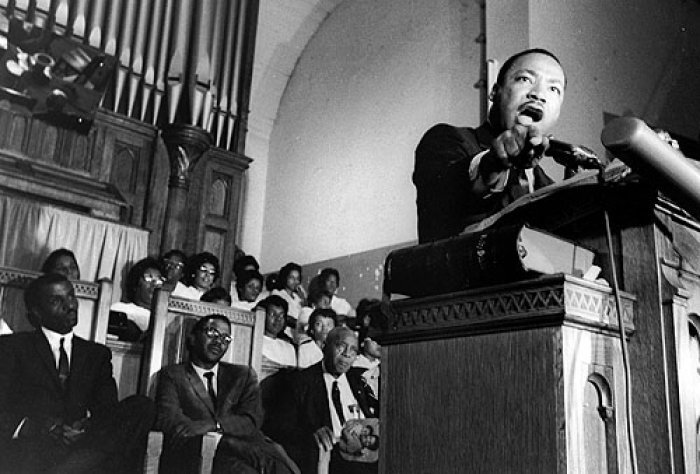
The Reverend Doctor Martin Luther King, Jr. wrote a letter now famously called, “Letter from a Birmingham Jail” (which I highly recommend). In the letter he responds to different criticisms he received from various local Christian ministers about the resistance demonstrations he orchestrated.

To the criticism that he is from Atlanta, Georgia, and has no business as an outsider protesting in Birmingham, Alabama, he confirms that first, as president of the Southern Christian Leadership Conference, which has ties all over the South, including Birmingham, he was invited to come by the black community there. And second, he says we can no longer think in terms of isolated communities, since all of society is interconnected, and that “injustice anywhere is a threat to justice everywhere.” Therefore even as a so-called outsider, he has a vested interest and right to stand against injustice, even in Birmingham.

To the second criticism, that he should be promoting negotiation instead of sit-ins and marches, he responds that yes, he absolutely agrees. But those invited to dialogue have failed to negotiate in good faith, either refusing to come to the table, or consistently failing to carry through on their agreements, and those suffering injustice have concluded that negotiation has sufficiently failed.

And third, he responds to criticism that his activity is extremist. And to that, he responds that he is standing between two opposing responses within the suffering black community: on the one hand, the “do nothings” of those so used to things as they are that they’ve lost their hope for change, or those who have enjoyed a bit of prosperity and have not advocated on behalf of those they left behind, and on the other hand, those who have given up on the current social and political system and are angry and ready for violence. He says, “I have tried to stand between these two forces, saying that we need emulate neither the ‘do nothingism’ of the complacent nor the hatred and despair of the black nationalist. For there is the more excellent way of love and nonviolent protest… So I have not said to my people: ‘Get rid of your discontent.’ Rather, I have tried to say that this normal and healthy discontent can be channeled into the creative outlet of nonviolent direct action.” King was a Christian leader, a prophetic voice in a time of tension, hope, and suffering. Like many prophets, he was not always well-received, especially by those comfortable with the injustice of the status quo. Like many prophets, he was killed for trying to change it.


In our gospel reading, we get the second half of the story of Jesus going to the synagogue in Nazareth. Last week we heard him read from the scroll of Isaiah of the anointing and ministry of the Messiah. Then Jesus follows this by telling them, “Today this Scripture passage is fulfilled in your hearing.” Today we see their response.

At first, it was a positive response. “All spoke highly of him and were amazed at the gracious words that came from his mouth.” Then it kind of begins to fall apart. “They also asked, ‘Isn’t this the son of Joseph?’” In other words, some of the crowd’s response was, “He’s claiming to be the Messiah?? Hmm. I doubt it, he’s just the kid of that carpenter Joseph. That’s all he is.”

Jesus picks up on their disbelief. “He said to them, ‘surely you will quote me this proverb, “Physician, cure yourself,” and say, “Do here in your native place the things that we heard were done in Capernaum.” Amen, I say to you, no prophet is accepted in his own native place.’” In other words, Jesus presses on their lack of faith. They will tell him, “You healed strangers in Capernaum, so now heal your own flesh and blood here in your home town. And then we’ll believe you’re more than just a carpenter’s son.”

Jesus instead replies with two well-known Old Testament references. We recently had the story of the Widow of Zarephath (1 Kings 17:8-16), a poor pagan woman gathering sticks at the city gates to prepare her last meal, when the prophet Elijah gave her the miracle of the flour and oil that didn’t run out for a year, until the famine was over. And we’ll hear later this year the story of Naaman (2 Kings 5:1-14), a pagan general in the army of one of Israel’s neighbors, who was cured of leprosy by the prophet Elisha.

Jesus is saying to his audience in Nazareth that in those times, Israel was wicked and faithless, and so God didn’t work His miracles for his people Israel, but instead sent his prophets to work miracles for the pagan nations. And now, he says to his audience, the promised Messiah is here among you, and you also are wicked and faithless, and so the working of miracles is withheld from you, and extended to strangers who actually have the faith you lack. And so yeah, the people got rather angry with Jesus at that point.

Image result for jesus synagogue nazarethWhen we see Jesus get angry like this, and offends people, we need to remember that Jesus is the living love of God. He loved the stubborn people of Nazareth with divine love, but they frustrated him because they were not open to receive the love that God wants to give them. Jesus destabilized the routine of the status quo. He was introducing a new thing that was different and better than the world as they’ve known it. But they preferred the way it’s always been done, and they resisted Jesus’ desire to open them up to God’s healing grace and forgiveness. They were too stuck to turn away from the sin and corruption of the status quo.

Several scripture commentators remark that here at the beginning of his earthly ministry, Jesus says to the people, “Surely you will quote me this proverb, ‘Physician, cure yourself.'” And at the end of his earthly ministry, as Jesus is dying on the cross, the people say to Jesus, (If you are the) Son of God, save yourself!

At the end of today’s gospel reading, it says, “They rose up, drove him out of the town, and led him to the brow of the hill on which their town had been built, to hurl him down headlong. But Jesus passed through the midst of them and went away.” Saint Ambrose (the teacher of St. Augustine), provides his explanation: “Understand that [Jesus] was not forced to suffer the passion of his body. He was not taken by the Jews but given by himself. Indeed, he is taken when he wants to be. He glides away when he wants to. He is hung when he wants to be. He is not held when he does not wish it. Here he goes up to the summit of the hill to be thrown down. But, behold, the minds of the furious men were suddenly changed or confused. He descended through their midst, for the hour of his passion had not yet come. He passes through the midst of them.


The kind of rejection that Jesus receives for his prophetic mission as the Messiah, first here in Nazareth, and then all throughout his ministry, is foreshadowed first by the Old Testament prophet Jeremiah. And our first reading is the calling of Jeremiah. “The word of the LORD came to me, saying: Before I formed you in the womb I knew you, before you were born I dedicated you.

A bit off topic, but that’s a very important scripture verse for pro-life advocacy. God creates a person in the womb, with His plan for that person, that person’s unique set of gifts, and with His intimate love for that person. And if we are to be God’s people, we must protect the life of that person, as our brother or sister, a child of God like ourselves, with infinite dignity, and a right to live out their days until God calls them from this life to Himself.

But gird your loins; stand up and tell them all that I command you… for I have made you… a pillar of iron, a wall of brass… against Judah’s kings and princes, against its priests and people. They will fight against you but not prevail over you, for I am with you to deliver you, says the LORD.” Jeremiah’s ministry as prophet was one of hardships, of opposition, and suffering. He was called to chastise a people who were not going to listen to him, but punish him for trying to correct their corruption and sin. He was called to bring them back to faith in God and the blessings of the covenant, but they would reject him. But he remained faithful, and God brought him consolations.

Image result for prophet jeremiah

Fr. Tony Kadavil describes this call to Jeremiah by showing how God makes four assertions: “I formed you” (as a potter forms clay), “I knew you” (referring to the intimate relationship between God and Jeremiah), “I dedicated you” (consecrating Jeremiah to do God’s work), and “I appointed you” (to a mission as His prophet to Israel). At the start of Jeremiah’s ministry, God warns the young prophet not to be intimidated by those to whom he prophesies. “They will fight against you,” God warns, “but will not prevail over you, for I am with you to deliver you.” During his lifetime, Jeremiah was considered a total failure, but in later times he has been recognized as one of Israel’s greatest prophets.

Dr. John Bergsma draws a good number of connections between the life of the prophet Jeremiah, and the life of Jesus, much which also fits the description of Isaiah’s mysterious Suffering Servant (e.g, Isa 52:13-53:12):

  1. chosen from the womb (Jer 1:5; Lk 1:31);
  2. destined for rejection and conflict with their people (Jer 1:18-19; Lk 2:34-35),
  3. called to celibacy (Jer 16:1-4; Mt 19:10-12),
  4. likened to a sacrificial lamb (Jer 11:19; Jn 1:29,36),
  5. betrayed by those closest to him (Jer 12:6; Jn 13:18,38 etc.)
  6. preached against the Temple and predicted its destruction (Jer 26:2-6; Mk 11:15-19, 13:1-2)
  7. opposed and persecuted by the chief priests for doing so (Jer 20:1-3; 26:7-9; Mk 11:18)
  8. condemned to death for doing so (Jer 26:8-9; Mk 14:57-58)
  9. tried by a vacillating, partly sympathetic, yet weak-willed civil magistrate (Jer 37:16-38:28; Jn 18:28–19:16)
  10. cast into a pit and raised up from it again (Jer 37:6-13; Jn 19:40–20:18).

This call to be “a pillar of iron, a wall of brass” does not mean that we can become hardened and callous in our mission. That’s what makes it even more difficult: Even though we will be attacked with (and ourselves accused of) injustice, our vocation is to continue to love, to appeal, to earnestly desire the conversion and salvation of those who oppose us.

Again, from Dr. Bergsma:

The reality of sin in human society means that the quest to be like God, to do the good, to attain holiness, will inevitably lead to conflict with others who are not on that quest.  Our Lord taught us so in his most famous sermon:

Blessed are those who are persecuted for righteousness’ sake, for theirs is the kingdom of heaven.  Blessed are you when men revile you and persecute you and utter all kinds of evil against you falsely on my account.  Rejoice and be glad, for your reward is great in heaven, for so men persecuted the prophets who were before you. (Matt 5:10-12)

That is usually the life of a prophet. Like the opposition experienced by Jesus. And like the opposition that Jesus promised would be experienced by his prophetic people who deny themselves, pick up their crosses, and follow him—People who weep when the world applauds. People who give generously when the world hordes. People who lay down their lives for truth, when the world kills for power and pleasure.


Why would we do that? What is it that marks the people of God as different than the world?

“Faith, hope, and love, and the greatest of these is love.”

In the second readings of the last few weeks, St. Paul has been teaching about the essence of Christian community, how it is a body, which needs all its members to work together in love, to care for one another, and generously share their gifts. In this beautiful chapter today, Paul teaches the community how each member (and how the community) is to know they’re using their gifts in the right way. We can have wonderful talents, we can have wealth, intellect, faith, generosity. But if our gifts (our charismata, as Paul says in the Greek) are not put at the service of love poured out for God and one another, it’s all for nothing.

The Corinthian community was being torn apart by their boasting of their gifts (tongues, prophecy, knowledge, faith, etc.), and here Paul puts them all rightly at the service of the one gift that gives them meaning, and without which they are wasted. But worse still, if they become a source of pride and rivalry, what a sinful betrayal of God’s gifts!

“If I speak in human and angelic tongues, but do not have love, I am a resounding gong or a clashing cymbal. And if I have the gift of prophecy, and comprehend all mysteries and all knowledge; if I have all faith so as to move mountains, but do not have love, I am nothing. If I give away everything I own, and if I hand my body over so that I may boast, but do not have love, I gain nothing.”

Paul then describes love. Like the Beatitudes that Our Lord gives us in the Sermon on the Mount, Paul’s description of love is really an image of Christ, a portrait in words.

Love is patient, love is kind. It is not jealous, it is not pompous, it is not inflated, it is not rude, it does not seek its own interests, it is not quick-tempered, it does not brood over injury, it does not rejoice over wrongdoing but rejoices with the truth. It bears all things, believes all things, hopes all things, endures all things. Love never fails.

Image result for faith hope loveOf course, this is a very popular and trendy reading for weddings, because it uses the word “love” over and over, and is a beautiful poem. But (hopefully) more importantly, it inspires couples to apply these attributes to their own love for one another; building up their dependence on grace to purify their wavering, imperfect, human love into enduring, perfect, divine love.

From a homily on this reading by Father Raniero Cantalamessa, O.F.M. Cap., the Preacher to the Papal Household:

Paul’s message is quite relevant today. The entertainment and advertising worlds seem bent on inculcating in young people that love is reducible to “eros” and that “eros” is reducible to sex. Life is presented as a continual idol in a world where everything is beautiful, young, and healthy… But this is a colossal lie that generates unrealistic expectations, which, once they are not met, provoke frustration…

In the love between a husband and wife “eros” prevails at the beginning, attraction, reciprocal desire, the conquering of the other, and so a certain egoism. If this love does not make an effort to enrich itself along the way with a new dimension, one of gratuity, of reciprocal tenderness, of a capacity to forget oneself for the other, and to project itself into children, we all know how it will end.

Because Paul’s description is an image of Christ, it should also be an image of every Christian who follows him. Because in the end, it is only generous divine love accepted into our hearts and poured out into our lives that matters.

“If there are prophecies, they will be brought to nothing; if tongues, they will cease; if knowledge, it will be brought to nothing. For we know partially and we prophesy  partially, but when the perfect comes, the partial will pass away. When I was a child, I used to talk as a child, think as a child, reason as a child; when I became a man, I put aside childish things. At present we see indistinctly, as in a mirror, but then face to face.
At present I know partially; then I shall know fully, as I am fully known.”

In the end, there will be no prophesies: all will be revealed. There will be no tongues: we will understand one another without difficulty. When we enter into God’s presence, we will see the triviality of worldly concerns. As God knows us in perfect light and truth, our partial light and truth will be perfected in Him, and we will behold Him (and one another, and ourselves, as we really are) in His perfect light and truth.

Christ loved his enemies and persecutors, and so must we. Christ loved sinners and the poor, and so must we. Because of his love, Christ suffered rejection, ridicule, injustice, and even death, and so must we.


Rev. Dr. King, in his last Christmas sermon (1967) before his assassination, puts this all in terms of his ministry against the racial tension, injustice, and violence of his time. It is an incredible call to how Christians must respond, to truly be a witness to the image of Christ, the living love of God, in our lives.

I’ve seen too much hate to want to hate, myself, and every time I see it, I say to myself, hate is too great a burden to bear. Somehow we must be able to stand up against our most bitter opponents and say: ‘We shall match your capacity to inflict suffering by our capacity to endure suffering. We will meet your physical force with soul force. Do to us what you will, and we will still love you. We cannot in all good conscience obey your unjust laws and abide by the unjust system, because non-cooperation with evil is as much a moral obligation as is cooperation with good, so throw us in jail and we will still love you. Bomb our homes and threaten our children, and, as difficult as it is, we will still love you. Send your hooded perpetrators of violence into our communities at the midnight hour and drag us out on some wayside road and leave us half-dead as you beat us, and we will still love you. Send your propaganda agents around the country and make it appear that we are not fit, culturally and otherwise, for integration, but we’ll still love you. But be assured that we’ll wear you down by our capacity to suffer, and one day we will win our freedom. We will not only win freedom for ourselves; we will appeal to your heart and conscience so that we will win you in the process, and our victory will be a double victory.'”

Horizontal Rule Cross

Homily: The Word of God

26678-jesusofnazsynagogue

“The word of God is living and effective, sharper than any two-edged sword.

“Your words, Lord, are Spirit and life.”

“In the beginning was the Word, and the Word was with God, and the Word was God.”

Our readings today are about the Liturgy of the Word. God’s holy word, his own divine being, spoken in a holy setting, a holy moment, a holy encounter.

In Jewish tradition, there is a traditional saying, “When two sit together and words of Torah pass between them, the Divine Presence rests between them” (Mishnah Avot 3:3). The Torah is the Word of God, the Holy Scriptures of the Law (“Instruction”) given from God to Moses. When God’s word is read, His divine presence is there among them. Hopefully, all the Christians reading that are immediately reminded of Jesus’ words in Matthew 18:20, “For where two or three are gathered in my name, there am I among them.” So Jesus, as usual, is not pulling his teaching out of thin air. But even better, he’s “making all things new,” showing, like he did on the Road to Emmaus, how everything God’s people received from God was actually preparing them for Jesus himself, the incarnation of the Living Word of God, who is himself Emmanuel, God among them.


Our first reading goes back to the Israelites having just recently returned to the ruins of Jerusalem after the Babylonian Exile. The Babylonians had been defeated by the Persians and Medes, and allowed the captive people to return to their homelands, but as subjects of the empire. The Israelite people remembered the great temple of Solomon, or heard stories of its grandeur, before it had been destroyed. But the temple they were able to build in its place, with Ezra as the priest, and with few supplies, was far from the splendor of its predecessor. Nehemiah, the governor sent from the Persians to maintain civil order, had led them in rebuilding the Jerusalem city walls. With the Temple and the city walls somewhat restored, Ezra and Nehemiah wanted to rally the morale of the people from their despondency and despair, and so they held this revival of their Jewish identity, a reading of the Law of Moses. Image result for nehemiah ezra readsThey built out this elaborate wooden platform, and had all the men, women, and older children assembled as they recommitted themselves to their once-proud Jewish heritage.
But the revival did not immediately have the effect they had hoped for. On hearing the great wonders that God had done for their people throughout their history, and then the terms of the covenant that they had entered into, they heard both the blessings they would receive for abiding by the covenant, and the curses they would suffer for betraying the covenant. And the people wept. They saw the incredible goodness of God, which itself causes us to weep in gratitude and humility (if only more people today allowed themselves to be moved to weeping for repentance on hearing the Word of God!). But also, they saw how their people’s history reflected the curses that God had foretold would happen to them, if they were unfaithful.

But the leaders brought encouragement to the people. “Today is holy to the LORD your God. Do not be sad, and do not weep… Go, eat rich foods and drink sweet drinks, and allot portions to those who had nothing prepared; for today is holy to our LORD.” They were rededicating themselves to the covenant. What is past is past, God has told us that our people have paid the price of our unfaithfulness. He has shown us mercy, and is giving us this day to enter into the covenant anew.

In his commentary on this First Reading, Dr. John Bergsma says beautifully:

The people of God finds its identity in worship.  In the absence of political power or economic prosperity, they find hope, joy, and peace in celebrating liturgy, which recalls God’s saving acts in the past and anticipates the ultimate salvation of God in the future.  In many ways, this paradigm remains in place for the people of the New Covenant.

And so what do we see in our reading? Well, we see the Word of God being read to the people, and explained, from a raised position above the people, and then calling the people to a great banquet, and the instruction to provide food also for others. It shows the people standing up, kneeling down, saying “Amen, Amen.” Now it does say that the readings went from daybreak until midday, so we get a bit of a break from that. But other than that, it sounds very much like… the Liturgy of the Word, and the Liturgy of the Eucharist: A very Old Testament precursor of the Mass. Visitors to Mass often ask, why do Catholics stand and kneel at different places? Because the Liturgical Tradition of the Mass grew organically from the worship of Israel, the Temple and the Synagogue, the religious experience of the first generations of Christians.


And now we’ll look at the Gospel. It’s kind of a strange selection. The first paragraph is from the beginning of the Gospel of Luke, his Prologue, chapter 1, verses 1-4. Then it jumps to chapter 4, Jesus reading and preaching in the synagogue in Nazareth.

In the Prologue to his Gospel, St. Luke makes it abundantly clear that his gospel is for the purpose of providing solid facts, from eye-witnesses, to the truth of Jesus Christ. This is not a fairy tale, this not a myth, this not a legend. This happened. Luke says, “Since many have undertaken to compile a narrative of the events that have been fulfilled among us, just as those who were eyewitnesses from the beginning and ministers of the word have handed them down to us, I too have decided, after investigating everything accurately anew, to write it down in an orderly sequence for you, most excellent Theophilus, so that you may realize the certainty of the teachings you have received.” Luke is well-educated, well-informed, intelligent, and articulate. The modern claim that Jesus might be make-believe is simply false. Luke is writing for “Theophilus.” The word means, “Friend of God” or “Beloved of God,” and so might be just a hypothetical person (meaning that Luke is really writing his Gospel to all the faithful). But it is very likely that Theophilus was really a person. That Luke addresses him as “most excellent” suggests that Theophilus was a person of high social and/or political standing. He might have been someone who paid for Luke to have the opportunity to write this account of Jesus. The translation of “orderly sequence” could be more closely translated as “accurate account,” “faithful to the event.” Also, the certainty of “the teachings you have received,” the Greek word is katēcheō, from which we get the word, “catechesis,” “to echo in the ears.” We hope that when we catechize, when we give an accurate account of our faith, it’s an echo of what what the Church teaches, of what the apostles have said, what truly happened. Luke’s gospel is catechetical, written to teach us, in the manner best laid out for his contemporary audience, of the truth of Jesus Christ. And after reading it, we must each give an answer to Jesus’ question, “Who do you say that I am?” Hopefully we give the answer that came to Peter, “You are the Messiah, the Son of the living God.”

Image result for pitre evidence jesusInterestingly, I just last week listened to Dr. Brant Pitre’s Lighthouse CD on his new book, which goes into the question of whether we can really reasonably believe in the historical truth of Jesus in the Gospels. I didn’t know when I was listening to it that it would include what he also provided as commentary on this week’s Gospel reading. I enjoyed listening to it, so I recommend you either read his book, or if you want to get the gist of it in an hour, listen to his CD about it! 

Then we skip three chapters of Luke’s Gospel (most of which are the birth narratives of St. John the Baptist and Jesus which we encountered during Advent and Christmas, Jesus’ baptism, which we had 2 weeks ago, and his temptations in the wilderness), and catch up with Jesus in his first public appearance after his baptism: in the synagogue in Nazareth.

The synagogue and the Temple were kind of a two-part system. The Jews traveled to the Temple in Jerusalem for the three major annual feasts: the Feast of Unleavened Bread (Passover), Feast of Tabernacles (the Day of Atonement), and the Feast of Weeks (Pentecost).

But for the weekly Sabbath, they went to the local synagogue, where they had, essentially, a Liturgy of the Word (similar to a synagogue service today). They would sing a psalms, they would read from the Torah, and have readings from the Prophets (the Law and the Prophets). Then someone, a rabbi, (often a scribe or Pharisee), would comment on the readings. They would sing a song and go home. Very different from the Temple sacrifice. The Temple was ministered by the Priests, the Levites. The Synagogue was a lay movement, not priests, but those who study the Scriptures and teach the people what they mean. I’ve heard it said that Protestant services are more like synagogue services, and the Catholic liturgy of the Mass is more like the Temple liturgy.

So Jesus is at the synagogue in Nazareth. Throughout his ministry Jesus is often referred to as “Rabbi.” Jesus was recognized for his intelligence, wisdom, and skill, but he wasn’t a Levitical priest. He wasn’t of the tribe of Levi, but of Judah. However, as we read in the New Testament Book of the Hebrews, Jesus was indeed a priest, the high priest—not of Levi, but of Melchizedek—a priesthood in which priests are called by their particular vocation, and not by bloodline.  And Jesus reads this excerpt we just heard from Isaiah 61. What’s special about this is that it is specifically about the Messiah, literally “the Anointed one.” And then they all look at Jesus to hear what he’s going to preach about it. Sometimes we might think that because Jesus sat down, that he was done. But in the synagogue the homily or sermon would be given sitting down, symbolizing that it was a teaching from the chair of Moses. On special occasions in the life of the Church, a bishop will give the homily sitting down, and when he (particularly the Bishop of Rome) teaches authoritatively, he is teaching ex cathedra, “from the chair” (of authority). And all Jesus says is, “Today this Scripture passage is fulfilled in your hearing.” We’ll hear in next week’s gospel reading what happened after that. But what Jesus read from Isaiah was the job description of the Messiah, how the people would know that the Messiah had really come. And they didn’t know it at that point, but looking back (reading the rest of the Gospel according to Luke), we can see that this is exactly what Jesus did. “The Spirit of the Lord is upon me, because he has anointed me (that was his baptism) to bring glad tidings to the poor. He has sent me to proclaim liberty to captives and recovery of sight to the blind, to let the oppressed go free, and to proclaim a year acceptable to the Lord.

The “year acceptable to the Lord” is a reference to the Old Testament tradition of the “Jubilee Year,” which was marked, among other things, that in that year, all debts are forgiven, all slaves are set free, and any land that has been appropriated, that used to belong to a family but they lost it through debt, will be returned to the original owners.

As Dr. Brant Pitre explains:

Now, just imagine if you lived in a Jubilee year and all your student debt, or all your house debt, or all your car debt, or all your credit card debt, whatever debt that you might have that’s weighing over your head, imagine if it was all gone, just like that in the Jubilee year. Now that would be an acceptable year, right? It would be a year of joy, a year of deliverance, and so what Jesus is saying here is that, or what Isaiah is saying, is that when the Messiah comes, his coming is somehow going to be coordinated with, conjoined with, a great Jubilee year. A great year of release, when all debts will be forgiven, and people will be set free from bondage; which, if you’ve been in debt, you’ll know, it is bondage. It is a burden, and to be freed from it is a source of great joy. 

How did Jesus deliver on this Jubilee Year? By freeing those in the bondage of sin, by exorcisms, by healing the blind, the deaf, the crippled, the leprous, by forgiving the debt of sin.

In both the First Reading and the Gospel Reading, we have a reading from the Word of God, which provides both a call to repentance, and hope for salvation. In Ezra’s reading of the Law, that salvation is still far off. But in Jesus’ reading of the prophecy of the Messiah, salvation is present now. Jesus fulfills the Law and the Prophets.


I often tell people who are going to be proclaiming the scriptures: Take your time, don’t rush! Savor it! Let the people feast on the Word! You don’t rush through good food, you taste and appreciate each juicy bite! You don’t read this like you’re reading from a textbook or a magazine. This is the Word of God! You don’t read it, you proclaim it, with reverence and patience, letting each sound and each word fill its proper time. This is an engagement with life-giving, living wisdom, that feeds the mind and the heart, a communion of the Person of God with each person who hears it. Let the people have that privilege, that they might open themselves to this experience, this encounter, with the Word of God, the Word that brings truth, light, and life!


I said in the homily on Christmas night, “Do we need to go to church to be good? For the most part, yes. Because sin darkens the intellect and weakens the will. We need to be taught and formed in mind and heart in what is good. It is human nature to seek what we see as good. But we’re often mistaken about what is good. Without being formed by the light of truth from our faith, we might be led to applaud faithful citizenshipNew York state lawmakers passing legislation that allows the killing of an unborn child up to the moment before he or she is born, instead of respecting the dignity of his or her human life received at the moment of conception. We might be tempted to villainize victims, and fail in our Christian duty to care for the poor and vulnerable. We need to not just be Catholic, but be actively Catholic, and fully engaged in what our Catholic faith requires in the context of contemporary social issues. Hence the periodically updated guide from the US Catholic Bishops, “Forming Consciences for Faithful Citizenship.”


Image result for lancaster catholic high school

Lancaster Catholic H.S.

This weekend begins Catholic Schools Week, and we are very proud to have our Catholic school. Our support of our Catholic schools, Our Lady of the Angels and Lancaster Catholic, is by far the largest expenditure in our parish finances, so we truly put our resources into what matters most: our children.

As they promised at their children’s baptisms, parents need to provide for the Catholic formation of their children, through their own homeschooling program, through the parish weekly religious education program, or best of all, full-time attendance at Catholic School. Of course, parents cannot abdicate their own responsibility to be the primary educators of their children (by bringing them to church every Sunday, by leading the family in prayer, by demonstrating how the Catholic faith guides daily life). But our Catholic School is, and has been for over a hundred fifty years, a valuable tool for parents to help in developing the “whole person” of their child: spiritually, academically, emotionally, socially, and physically.

This year we celebrate the 20th anniversary of the consolidation of Holy Trinity School and St. Peter’s School into Our Lady of the Angels School: 20 years under Mary’s protection.

ola school

Our Lady of the Angels Catholic School

So as we celebrate this Catholic Schools week, let us inform our minds and hearts by the living and effective Word of God, Jesus, who unites himself to us in the Eucharist, that our lives, formed in truth and love, might be God’s word active in the world.

Horizontal Rule Cross

Homily: Wedding Feast in Cana & Respect Life Mass

Related image


This is the homily I offered at the 2019 Diocesan Respect Life Mass at Good Shepherd Parish in Camp Hill. I am grateful for the opportunity. I hope it bears fruit, and that the horror of abortion is outlawed in our lifetime. Even more so, I hope that every single baptized Christian might be as consumed with the fire of divine love as St. Francis, St. Catherine, and St. Teresa of Calcutta. 

As usual, what is in grey was for the most part the original homily as delivered, plus the dark blue parts, as references to the readings, green parts, as external quotes, and bright red as just really important. The dark red text is what has been added for the online post, but couldn’t be included in the homily. 


Mother Teresa (Saint Teresa of Calcutta) once said, “At the end of life we will not be judged by how many diplomas we have received, how much money we have made, how many great things we have done. We will be judged by, ‘I was hungry, and you gave me something to eat, I was naked and you clothed me. I was homeless, and you took me in.’” Mother Teresa had spent her life allowing God to shape her heart to be like his, and her heart was full of his divine love. And since God’s love is inseparable from God’s truth, those who are very holy with God’s divine love, tend also to be very holy with God’s divine truth, and wisdom.

Mother Teresa’s reference to Our Lord’s words in Matthew 25, in the parable of the sheep and the goats (often called “The Judgment of the Nations”), sheds light on one of my favorite quotes from Dr. Peter Kreeft, which is that, the moral teaching in the Scriptures makes more sense when you think of it, not as a set of rules that we must obey to get into heaven, but rather as a school of formation. Because for us to get to heaven (that is, for us to want what heaven is), we need to be a certain kind of person. And God has given us the truth of moral law to shape us into that kind of person, the kind of person He created us to be in the first place. As C.S. Lewis said it, “We may think God wants actions of a certain kind, but God wants people of a certain sort.”

To bring it closer to our readings, Dr. Brant Pitre, in his book, Jesus the Bridegroom, points out that of all the images that God gives us to help us understand the deep relationship he seeks to have with us, the most fundamental is that of the nuptial love of a Bridegroom for His Bride, the two becoming one, surrendering to each other in self-giving love. God already loves us as his Bride. It is our task to love God as our divine Bridegroom, in all the ways that biblical marriage is often criticized: He is our provider, He is our protector, He is our head; and we serve Him, we honor Him, and love Him, because He lays down His life on our behalf, His love poured out for us, that we might flourish and have life. For us to respond to that invitation to be members of God’s mystical Bride, we must allow God to form us into His people of a certain sort.


In our first reading, Isaiah is prophesying to a nation suffering as a result of their own actions: they had sought security in human ways instead of in God. They were full of corruption, greed, indifference toward the poor and suffering, sins of every sort. They had forsaken their call to be God’s holy people. (The Northern Kingdom of Israel had already been occupied by the powerful Assyrian Empire, and Southern Kingdom, where Jerusalem is, was a vassal state. But rather than pay their tribute, they joined Egypt and their coalition in waging war on Assyria. Assyria responded by mowing down the Mediterranean coast, taking city after city, right to the walls of Jerusalem, to which they laid siege. The people of Jerusalem flocked to the Temple to try to appease God, whom they finally acknowledged they had offended. King Hezekiah pleaded with Isaiah to intercede with God to preserve Jerusalem, and God did.) Isaiah had warned them, he had chastised them, he had given them the bleak picture of what they would suffer unless they repented. But Isaiah’s words were not just of punishment and wrath. He also gave them words of encouragement and hope. Jerusalem’s time of desolation, of being forsaken, will end, and she will be more than restored: “You shall be a glorious crown in the hand of the LORD,” (deities were often depicted as having the image of their city on their crown; the God of Israel, the One True God, will have the image of Jerusalem as His glorious crown). …”a royal diadem held by your God.” Jerusalem—the mother (city) of the people of God—is being described as a royal bride, because she’s going to marry the divine king! He will call her “My Delight,” and “Espoused.” “For the LORD delights in you and makes your land his spouse. As a young man marries a virgin, your Builder shall marry you.” But we know by history, that Israel would never again be a united, independent kingdom. This divine promise given through Isaiah will have to wait. And so it was added to Israel’s hopes for the long-awaited age of the Messiah.

hbgcana

“Wedding Feast at Cana” Stained Glass Window in St. Patrick Cathedral in Harrisburg

As we just heard, the Gospel reading is the Wedding Feast at Cana. Isaiah had prophesied that when the Messiah comes, he will provide “a feast of… juicy rich food, and pure choice wines,” (Isa 25:6) and that all the nations will come to this feast, and their sins will be forgiven. In Jewish tradition it became the “messianic banquet”, which would be particularly characterized by super-abundant wine. Where are Jesus and Mary? At a Wedding Feast. Mary says to Jesus, “They have no wine.” Who is responsible when the wedding feast runs out of wine? The bride and bridegroom. Who fixes the problem? Mary and Jesus. Do we see anyone else named as the Bride and Bridegroom? Jesus responds that “It’s not time for that banquet just yet. My hour has not yet come.” Jesus provides the wedding with a superabundance of wine, for sure! But the real wedding feast of the Messiah, is not 180 gallons of wine in jugs (6 jugs, 30 gallons each, filled to the brim), but an infinite supply of his own Precious Blood in chalices throughout the world until the end of time.

There, at a wedding, Jesus— who is himself the wedding of humanity and divinity—performs his first Messianic sign, and his disciples begin to believe in him.

Jesus is the fulfillment of Isaiah’s messianic prophesy. In revealing his role as the Bridegroom, he reveals not just that he is the Messiah, but that he is divine. The Bridegroom (“Your Builder shall marry you“) is God Himself. The Bride, which we know by the Scriptures is the Church, is (the New) Jerusalem, the mother (city) of the children of God. And here at Cana, Mary plays the role of the Bride, the Church, for she, too, is the mother of the children of God (she who is mother of Jesus is also mother to the brothers and sisters of her Son). In the Eucharist, Jesus sacramentally provides himself, the Passover Lamb, as the “feast of… juicy rich food” and his Precious Blood as “pure choice wines,” to which all the nations come, and their sins are forgiven them. 

This event begins Jesus’ trajectory toward “his hour” of glory, his Paschal mystery. Perhaps this is why the Church puts these readings here before us at the very beginning of the Season of Ordinary Time, this holy time ordered toward our Spiritual growth and hope for salvation; this time of God forming us into people of a certain sort.


Mother Theresa once said, “Any country that accepts abortion is not teaching its people to love, but to use violence to get what they want.” What kind of people are we? What kind of people should we be? Should we be people who love sacrificially, who accept suffering for the sake of love, or should we be people who use violence to get what we want? What kind of world is that? Again, to quote Mother Theresa, “We must not be surprised when we hear of murders, killings, of wars, or of hatred… If a mother can kill her own child, what is left but for us to kill each other?

Our country has from its founding been abundantly blessed. “God shed his grace on thee.” But like every country, it has had its moral problems. Slavery, racism, corruption, greed, indifference toward the poor and suffering, sins of every sort. Abortion. Euthanasia. Capital Punishment.

The Magisterium of the Catholic Church forms our conscience well, in teaching that, “From the time that the ovum is fertilized, a life is begun which is neither that of the father nor of the mother, it is rather the life of a new human being with his own growth. It would never be made human if it were not human already.” (1) Again, she says, “no one, not even the father or mother, can act as its substitute—even if it is still in the embryonic stage—to choose in the child’s name, life or death. The child itself, when grown up, will never have the right to choose suicide; no more may his parents choose death for the child while it is not of an age to decide for itself.”(2) The Church also teaches us that even the most revolting criminal, who completely corrupts his moral character by his evil choices, can do nothing that affects the good of his inherent human dignity, and therefore, “in the light of the Gospel, that ‘the death penalty is inadmissible because it is an attack on the inviolability and dignity of the person’…”(3) Are we the kind of people who use violence to get what we want? Or can we help our nation to remember our role as the light of opportunity and hope we have been for the world? Our call to be God’s “certain sort of people”?

Note:
(1) Sacred Congregation for the Doctrine of the Faith (CDF), “Declaration on Procured Abortion,” 11/18/1974, paragraph 12 (emphasis added).
(2) ibid, paragraph 14.
(3) CCC 2267, as updated Aug 2, 2018.

I was invited to offer this Diocesan Respect Life Mass because of my privilege of working with the incredible people who offer Rachel’s Vineyard retreats, and the post-abortive men and women who are served and loved through that beautiful ministry. And I applaud Tom O’Neill, our diocesan Director of Family and Respect Life Ministries, for bringing the whole kit and caboodle of Project Rachel, the overarching response of the Catholic Church to the need for post-abortion ministry, into our diocese.

The Church will always be here to help people wounded by abortion. We will accept the broken pieces of men and women, and participate in God’s work of healing them back together again. But wouldn’t it be better to stop the thing that’s shattering people into broken pieces the first place? God love Abby Johnson! I mean, we’re working with men and women who have had one or two, maybe a couple of abortions. She’s working with former abortion industry workers, many of whom not only had abortions themselves, but participated in thousands of abortions. The level of suffering and guilt she handles in her ministry, “And Then There Were None,” is unfathomable. Her autobiography “Unplanned” was just made into a movie by the people that made “God’s Not Dead,” and is being released to theaters this spring.

The second reading, which I didn’t use in my homily, is actually very appropriate to the pro-life message! “To each individual the manifestation of the Spirit is given for some benefit. To one is given through the Spirit the expression of wisdom; to another, the expression of knowledge according to the same Spirit…Not every human “procreatve act” actually results in a new life. It takes more than man and woman. It also takes God putting a soul into the fruit of their act. And every soul God puts into a newly conceived human person, is given “the manifestation of the Spirit for some benefit.” Every conceived human being is a unique set of divine gifts to the world, with a mission to pour themselves out in divine love for others. Most of you know this apocryphal story: “Two women several years ago in Washington DC were attending the national prayer breakfast. One of the women, Hillary Clinton, said, ‘You know, I wonder why we have never elected a woman president?’ The other woman, Mother Teresa, said, ‘Maybe it is because you aborted her.’” There is an ancient Jewish phrase, which says in essence, “To save a human life is to save a world; to destroy a human life is to destroy a world.” Each person has the world of their own experiences, their own perceptions, their own thoughts, relationships, feelings, dreams, ambitions, their own destiny, their future accomplishments. Each of the millions of victims of abortion is a destroyed world. Those worlds came into existence, they were here, even if they never got to be greatly fulfilled. 

I also love Dr. Peter Kreeft’s (almost Chestertonian) comment connecting the words of Jesus’ self-giving sacrificing of himself for the sake of others, in diabolic contrast with the words of abortionists’ self-focused sacrificing of others for the sake of themselves:
Image result for kreeft abortion this is my body

Ben Shapiro had an amazing speech at Friday’s March for life. Watch it on YouTube. It will be the best 6 minutes you’ll spend today besides receiving Jesus in the Eucharist. He said, “Just this week, Canadian Prime Minister Justin Trudeau said that pro-lifers were not in line with ‘where we are as a society.’ To which I say, GOOD. So were the abolitionists. So were the Civil Rights marchers. So were the martyrs in Rome and the Jews in Egypt. Righteousness doesn’t have to be popular, it just has to be righteous.

(The first video I used was taken down by YouTube. Let me know if they remove this one, and I’ll try to find a new one!)


The time of being lukewarm Catholic has to end. The time of punching the clock for the minimum required time in church has to end. Saint Catherine of Siena said, “Be who God meant you to be, and you will set the world on fire.” My brothers and sisters, we need to set the world on fire. Not to destroy, but to give life. Not with violence, but with the transforming power of divine love. Only light can scatter darkness. Only God’s love poured out can heal sin. We are the Church. We are the Bride of Christ. Not just to receive God’s love, but to receive it and pay it forward into the world. Christian life is so much deeper than just not committing sins. “We may think God wants actions of a certain kind, but God wants people of a certain sort.” And His people of a certain sort are those molded by his truth, responsive to his will, and on fire with his love. God bless you.

Horizontal Rule Cross

Homily: Baptism of the Lord


17JohnBaptizesJesus

Before performing a child’s baptism, the priest approached the young father and said solemnly, “The baptism of your child is a serious step. Are you prepared for it?” “I think so,” the man replied. “My wife has made appetizers and we have a caterer coming to provide for our guests.” “I don’t mean that,” the priest responded. “I mean, are you prepared spiritually?” “Oh, that. Yes. I also got a case of whiskey!”

I guess that’s probably an Irish joke.


So the obvious question about the baptism of Jesus is, “why did Jesus get baptized”?

First, it was a moment of identification with us sinners. John’s baptism of repentance was a human baptism, a baptism of the sorrow for sins. But it could not satisfy the desire it expressed. It was not sacramental. It was simply a voice crying in the wilderness, desiring that which it could not achieve. Jesus joined himself to the people who longed for communion with God, but as humanity, could not reach it.

Second, it was a moment of conviction about his identity and mission. He had heard the voice from the heavens, “You are my beloved Son; with you I am well pleased.” Remember the final verse after the finding of Jesus in the Temple, “And Jesus advanced [in] wisdom and age and favor before God and man.” Now here, Jesus is a man, who had labored beside his father, prayed with his parents, and grew in holiness and virtue. He had been prepared by his life in Nazareth, and of course by his mother, the Immaculate Conception, for the identity she knew he was called to. He now had that affirmation from heaven for himself. And after all that preparation, he was affirmed and ready. He knew what his mission was: to be the suffering servant prophesied in Isaiah. To be the lamb who went to the slaughter that many might be saved by the outpouring of his blood. To be the Good Shepherd: to heal the sick, to seek and restore the lost, to give sight to the blind, to release captives, to feed the flock, to preach the good news of the Kingdom of God, to take onto himself the sins of humanity, that through him, humanity might be taken up to God. He wasn’t baptized because he needed the forgiveness of sins… but because we do. St. Maximus of Turin, in the 3rd century, said, “Christ is baptized, not to be made holy by the water, but to make the water holy… For when the Savior is washed, all water for our baptism is made clean, purified at its source for the dispensing of baptismal grace to the people of future ages.”

Third, it was a moment of equipment. At his baptism by John, Jesus saw the Holy Spirit descend on him as a dove. It is only in Luke’s gospel, that it is said so concretely: “the Holy Spirit descended upon him in bodily form like a dove.” Saint Augustine says, “The Holy Ghost is said to have descended on Christ in a bodily shape, as a dove, not… by reason of His being united to the dove: but… because the dove itself signified the Holy Ghost, inasmuch as it descended when it came upon Him…” and then St. John Chrysostom said, “sensible visions appear for the sake of them who cannot conceive at all an incorporeal nature; … so that, though afterwards no such thing occur, they may shape their faith according to that which has occurred once for all. And therefore the Holy Ghost descended visibly, under a bodily shape, on Christ at His baptism, in order that we may believe Him to descend invisibly on all those who are baptized.” This is to say, that it wasn’t that the Holy Spirit became a dove. Rather, the Holy Spirit descended on Jesus appearing as a dove, so that we remember the visible reality of the Holy Spirit at Jesus’ baptism, so that we can know that the Holy Spirit continues to descend on us at our baptism, even though we don’t see it. In his baptism, Jesus was equipped with the power of the Holy Spirit in a new way to do the works of the Spirit, to preach the good news of the Kingdom, to heal and to forgive sins, in his earthly mission.

And fourth, it was a moment of decision. At his baptism, he knew fully who he was, he knew fully what he was supposed to do. He knew we needed him to do it for us, because we couldn’t do it for ourselves. And at his baptism, Jesus consented to this. Like his mother before him at the Annunciation, Jesus offers himself as a perfect and unconditional “yes” to the will of the Father.

Why did Jesus get baptized? To give us entry into his own life, his own mission, his own relationship with the Father. Did he have to get baptized? No. But this is the way the Father willed that it should happen: that humanity, whom the Father made as body and spirit, would receive and experience his salvation through the sacraments: through visible signs that we could experience with our bodies, of the true spiritual realities that we can experience only by faith.

As we begin the season of Ordinary Time, it is not “ordinary” in the sense that it’s mediocre and blah (although it can be if you approach it that way). Ordinary time means it’s measured, it’s ordered; and it’s ordered toward our growing in holiness. The green liturgical color for ordinary time is the color associated with the virtue of hope, and the natural color of growth and life. It is time ordered toward our flourishing, which is what Christ came to invite us into. We can’t flourish if we’re bogged down in sin, if we’re trapped in patterns of sinful attachment, if we’re cut off from hope because we have no way to reconcile with God, if we’re stuck in the gloom of meaningless drudgery with no point.

That’s why Christmas is at the beginning of the liturgical year, with the four weeks of spiritual anticipation for it, for him, to come into our gloom, into our drudgery, and our hopelessness, and to set us captives free, to spread the good news of the kingdom of God, to seek the lost, to heal the wounded, and to give us the invitation to eternal life: to give divine meaning to our humanity, to open the gates of paradise to make all of our choices eternally meaningful, for or against our eternal salvation.

To the extent that we are attentive to grace, guiding us to do this and not do that; to the extent that we give God permission to shine his light in the darkness of our shameful sin, that he may free us; to the extent that we worship Him in the Mass, in our personal prayer; in our devotions; to the extent that we embrace our Christian call to be Christians (literally, “little anointed ones”) and witness to the truth and love of Christ (in the spiritual and corporal works of mercy), is the extent to which God will be able to use us for extraordinary things, and we will have a far from ordinary season of ordinary time. You will have a time of grace, a time of growth and hope, a time of flourishing… which is what God has sent Jesus to give us. This is why Jesus was baptized.


A Woman's ConcernThis is a shorter homily than usual, because our parish was honored to have a guest from A Woman’s Concern, Lancaster’s Pregnancy Resource Center, speak at the end of Masses to promote their annual Baby Bottle Blessings fundraising campaign.
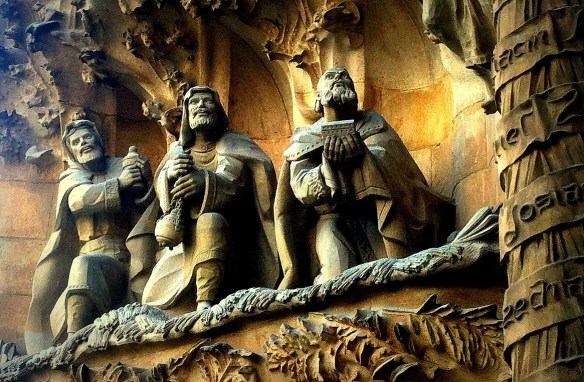

The outline of the four reasons given for Jesus’ baptism is by Fr. Tony Kadavil. Fr. Tony recently retired as a priest of the Archdiocese of Mobile, AL, and serves as the chaplain for Sacred Heart Home in Mobile. His homily resources are widely distributed and beautifully pastoral, and I am appreciative of his generosity and support.

Horizontal Rule Cross

Homily: Epiphany

magi at sacrada familia

 Sculptures of the Magi on the Basilica of the Sagrada Familia in Barcelona

While I was working in my office in Baltimore (in my previous life), the company had two 5-story buildings with a walled-in patio in between them. I would occasionally hit some technical problem I didn’t know how to solve. So after getting my head around the problem, I would take my cup of coffee, and whatever, and walk back and forth along the wall, talking through it, and then it would hit me, “A ha!” a solution! Sometimes people will call this a “Eureka!” moment, when the solution suddenly becomes clear. But another name for this, when a truth suddenly opens up before you, is an “epiphany,” from the Greek word meaning an unveiling, or manifestation: The solution manifests itself to you, it’s unveiled to you, and you see the light.

Related image

Today’s Feast of the Epiphany celebrates the unveiling, the manifestation, of the light of the world. In an ancient Greek use of the word, an epiphany was the visitation or appearance of the king to a province of his kingdom. Here, also, we have the revelation of the true, eternal king of all creation visiting and appearing to his people.

In the ancient feast of epiphany in the Eastern Church, this feast celebrated not just the visiting of the magi, but also Christ’s baptism by John, with the Holy Spirit coming down and remaining on him, and also the Wedding Feast of Cana, which ends with the words, “Jesus did this as the beginning of his signs in Cana in Galilee, and so revealed his glory, and his disciples began to believe in him.” All three of these events manifest and unveil Christ’s identity and his glory, and his mission as the Holy Messiah. Today the Feast of Epiphany focuses just on the magi. So let’s look at the magi.


When Jesus was born in Bethlehem of Judea, in the days of King Herod…

Ok, so who’s Herod? Well, there were four rulers named Herod.  The first was Herod the Great. He’s the one mentioned here, and we’ll come back to him. Second is his son, Herod Antipas, who had given in to the wiles of his step daughter’s slinky dance and got himself trapped into having St. John the Baptist beheaded, and also was the Herod in the Passion of the Lord Jesus. Related imageThe third was Herod Agrippa I, nephew of Herod the Great (so cousin of Herod Antipas), who executed St. James the Greater (the Apostle, brother of St. John) and imprisoned St. Peter. And the fourth was his son Herod Agrippa II, who St. Paul went before in Caesarea to be interrogated by Jewish accusers. Back to biggest and baddest, Herod the Great. He was at best half-Jewish, being an Arabian Idumite, descended from Esau (instead of Jacob, who was renamed Israel). Herod was chummy with the Romans, who installed him as a vassal king in Jerusalem. But he was excessively cruel, and excessively paranoid. He executed anyone who he perceived as a possible threat to his power and position, including his wives and children (He was played to the hilt by Ciarán Hinds in the 2006 Nativity movie!). So when it says “When King Herod heard this, he was greatly troubled, and all Jerusalem with him,” you can imagine the fear that struck people when Herod started getting paranoid. And knowing that he was only there as king because the Romans put him there, faced with the possibility of a true Jewish King foretold by prophecy? You can imagine he was more than reasonably troubled.

“…behold, magi from the east arrived in Jerusalem…”

Ok, so who are the Magi? There has been a lot of speculation, but little we can know with any sort of certainty. It suffices to say that they weren’t necessarily kings (we’ll come back to that, too), but philosophers, astrologers, scientists, seeking wisdom and truth. They were possibly royal court advisors, sought for their wisdom and their knowledge, as well as their ability to read the signs in nature and the heavens. Although tradition has given us that there were three, the Scriptures don’t tell us how many there were, or if women were among these seekers of wisdom. Some scholars have suggested that each of the magi presented three gifts as mentioned (gold, frankincense, and myrrh), not that three magi presented one gift each. But all of this is trivial, really, compared to their meaning in the story. And to do that, we look at some of the scripture verses being alluded to and fulfilled by our gospel reading. 

“We saw his star at its rising and have come to do him homage.”

Ok, so what’s the star? Again, a lot of speculation. The collusion of planets and/or stars, an exploding star, an angel, we don’t know. I think we should go with the angel theory, because stars would have a hard time suddenly coming to a stop over a particular little house in a little village of little houses.


So the first scripture verse being alluded to is way back in Numbers. In the Book of Numbers, the Israelites are passing through different kingdoms on their Exodus, and they send emissaries to ask permission to pass through their land. But the pagan kings instead send a military response, which the Israelites (with God’s help) decimate one after another. So Balak, the king of Moab, instead of sending a military response, sent a pagan prophet, Balaam, to curse Israel. Instead, God then spoke to Balaam, who then spoke the words God, oracles of blessing for Israel, much to the disappointment of his employer. That can happen when you hire a prophet. But in one of the oracles, Balaam says,

“I see him, though not now;
I observe him, though not near:
A star shall advance from Jacob,
and a scepter shall rise from Israel,
That will crush the brows of Moab,
and the skull of all the Sethites,
Edom will be dispossessed,
and no survivor is left in Seir.
Israel will act boldly,
and Jacob will rule his foes.”

This prophecy became part of the Messianic mythology and expectation. The scepter rising is a sign of kingly dominion, even over the foreign nations and enemies of Israel. And this kingly dominion will be marked by an advancing star. So this ancient prophecy of an advancing star marking the true king is manifest (epiphany!) in the Star of Bethlehem, which led the magi to the Christ child.

The second prophetic scripture being referenced in our gospel is 1 Samuel 16. Here, we meet “Jesse of Bethlehem,” whose eighth and youngest son was David, whom Samuel anointed as the future king. So while historically the “City of David” was always Jerusalem, the city David that ruled from for most of his reign, Bethlehem was the “city of David” in the sense that this is where David was born—and where the new Son of David, the Messiah and everlasting King of the Jews, would be born.

And that leads into the third prophetic scripture being referenced in our gospel, Micah 5:1, which is the prophecy the scribes read to Herod about the birth of the Messiah, the “newborn king of the Jews”: “And you, Bethlehem, land of Judah, are by no means least among the rulers of Judah; since from you shall come a ruler, who is to shepherd my people Israel.” Interestingly, Matthew tweaked the original prophecy from Micah, which originally says, “But you, Bethlehem-Ephrathah, least among the clans of Judah, from you shall come forth for me one who is to be ruler in Israel; Whose origin is from of old, from ancient times.” There has been much speculation as to why Matthew changed Micah’s words, with no clear consensus. And to clarify, Bethlehem-Ephrathah is the same as Bethlehem of Judah, to distinguish it from another Bethlehem, which is in Galilee.


Now. Back to the magi and their gifts. Our gospel reading says, “on entering the house, they saw the child with Mary his mother. They prostrated themselves and did him homage. Then they opened their treasures and offered him gifts of gold, frankincense, and myrrh.”

There’s a footnote in the New American Bible (the English version closest to the Catholic Lectionary) for this verse (Matthew 2:11), that says to consult Isaiah 60 and Psalm 72, and that these Old Testament texts led to the interpretation of the magi as kings. Guess what our first reading and our responsorial psalm are for today! Isaiah 60 and Psalm 72.


From our first reading, from Isaiah 60: Jerusalem, “raise your eyes and look about; they all gather and come to you: your sons come from afar, and your [young] daughters in the arms of their nurses. Then you shall be radiant at what you see, your heart shall throb and overflow…

Jeremiah had earlier personified Jerusalem as a mother wailing the loss of her children: “In Ramah is heard the sound of sobbing, bitter weeping! Rachel mourns for her children, she refuses to be consoled for her children—they are no more!” Rachel was the wife of Jacob/Israel, who died in childbirth in Ramah on the way to Bethlehem-Ephrata (Bethlehem of Judah). So while she was dying, her midwife gave her the consolation that she bore a son. Rachel’s tomb is a pilgrimage spot in Ramah, and Rachel is something of a maternal intercessor for the children of Israel, the Jewish people (maternal intercessor… that sounds familiar… ). In that oracle, Jeremiah continues, “Thus says the LORD: Cease your cries of weeping, hold back your tears! There is compensation for your labor… they shall return from the enemy’s land.” Ramah was the staging area for the exiles from Jerusalem before they were marched off to Babylon. So while the mother-city of the Jews, Jerusalem, echoed the weeping of Rachel, God gave her the consolation that “There is compensation for your labor,” for your children will return from the enemy’s land. A few verses after today’s Gospel reading from Matthew, we encounter the Slaughter of the Innocents, in which Matthew makes use of Jeremiah’s reference to Rachel, this time as Bethlehem’s infant boys are slaughtered by the paranoid fear of Herod. Matthew quotes Jeremiah as if to say to the traumatized town of Bethlehem, “There is compensation for your labor,” for amidst all this sorrow and death, your king, your light, has come to you, the savior is born, and has safely escaped, and shall return.

So in our first reading today, from Isaiah, he tells Jerusalem to “Raise your eyes and look about; they all gather and come to you:” see the throng of her children returning from their exile! “Then you shall be radiant at what you see, your heart shall throb and overflow!

The rest of the first reading is the ultimate hope of Israel, that Jerusalem would be known among the nations as the center of the world, and the city to come to for worshiping the One True God. For only Jerusalem has the blessing of divine light in the darkness, of freedom from the thick clouds of sin and despair over the rest of the nations: “Rise up in splendor, Jerusalem! Your light has come, the glory of the Lord shines upon you. See, darkness covers the earth, and thick clouds cover the peoples; but upon you the LORD shines, and over you appears his glory. Nations shall walk by your light, and kings by your shining radiance.” Ah, a reference to kings! “The riches of the sea shall be emptied out before you, the wealth of nations shall be brought to you. Caravans of camels shall fill you, dromedaries from Midian and Ephah; all from Sheba shall come bearing gold and frankincense, and proclaiming the praises of the LORD.” Ah, a reference to gold and frankincense! So here we have this image of the fulfillment of Israel’s hopes for the future age when kings would be bringing the wealth of all the nations to Jerusalem, bearing gold and frankincense, and proclaiming the praises of the LORD (the name of the True God). This is part of the scriptural tradition that contributed to transforming the magi into We Three Kings.

Incidentally, the line in the gospel “they saw the child with Mary his mother. They prostrated themselves and did him homage” is related to this personification of Jerusalem. The holy city of Jerusalem, the mother of the children of God, is personified in a way with Rachel, the mother of the children of God. The kings were going to offer their gifts and homage to the king in Jerusalem. The magi are offering their gifts and homage to Christ in the presence of His mother Mary, who by extension, is the personification of mother Church, the mother of the children of God. The magi don’t bring their gifts to the heart of Mother Jerusalem, but rather to the heart of Mother Mary.


Psalm 70 is a psalm by David, praying for his son, Solomon. The opening stanza says, “O God, with your judgment endow the king, and with your justice, the king’s son; He shall govern your people with justice and your afflicted ones with judgment.” This clearly affirms that it is being written by “the king” (David) in favor of “the king’s son” (Solomon). But it’s also clearly prophetic of far more than what Solomon or any of his immediate successors would accomplish. No, the fulfillment of the prophetic words of this psalm would have to wait for a future Son of David, in whom would be fulfilled this hope:

Justice shall flower in his days, 
and profound peace, till the moon be no more. 
May he rule from sea to sea, 
and from the River to the ends of the earth. 

The kings of Tarshish and the Isles shall offer gifts;
the kings of Arabia and Seba shall bring tribute.
All kings shall pay him homage,
all nations shall serve him.”

So here we have the other half (the rest of the story) on why we have three kings in all our nativity sets: the Messianic expectation of the future king, the future son of David, who would rule an everlasting kingdom, to the ends of the earth; that it will be to him that foreign kings would offer gifts, would bring tribute, and pay him homage… like the magi did.

Before we leave the magi, I just want to add one more aspect for us to consider. These magi were pagans, intelligent, wise, and skilled at discerning truth in the natural world. They followed truth where it led them. And where did it lead them? First, to Jerusalem, to inquire from the scribes, the theologians, what was written in the Holy Scriptures. Then, to Bethlehem, to come face-to-face with Christ, the incarnation of God. Sacred Tradition says that God has composed two beautiful books: The Book of Nature and the Book of the Holy Scriptures. The purpose of nature is both to surround us with joy and beauty (of which we are holy stewards), but also to teach us about the nature of God, for everything God has made has his fingerprint. And as such, when humbly taught by the observable nature of Creation, it leads us to the more explicit revelation of his Word, by whom nature was created. The magi could only get so far by nature, then they needed the scribes to help them decipher the final leg of their journey. Then they met the manifestation of their longing: Christ himself, God-with-us. Their humble but determined search for Truth led them face to face with the One Who is (the) Truth (the Way, and the Life).


Now, we do need to take a moment and include the second reading, because it unlocks a key theme to our feast for today, and of our readings: “The mystery was made known to me by revelation… which was not made known to human beings in other generations as it has now been revealed to his holy apostles and prophets by the Spirit, that the Gentiles are coheirs, members of the same body, and copartners in the promise in Christ Jesus through the gospel.”

I’ve mentioned a few times before that the heart of the Messianic expectation was the restoration of Israel. But because the Northern Kingdom, ten of the twelve tribes, had been dispersed among all the nations by the Assyrians, that for the new covenant of God to bring all of Israel into the covenant, the new covenant would necessarily include all nations, all the world. As it does. As St. Paul is teaching us in this letter. The New Covenant is not for Jews only, and not for Jews over the gentiles, but rather Jews and gentiles as coheirs and copartners in the promise of Christ Jesus. As Paul wrote one chapter earlier in Ephesians, the gentiles and Jews have been reconciled in the blood of the cross, and Christ has made the two into one (how nuptial of him!) thus establishing peace, for through him both have access in the one Spirit to the Father.

King Solomon, the Son of David, was hailed as supernaturally wise, and foreign kings brought gifts (including frankincense and myrrh!) when they came to seek his wisdom. “There is something greater than Solomon here!” Here is the infant Christ, less than two weeks out of the womb, and already kings, magi, the wise and influential of the nations, are bringing him gifts and paying him homage. A key aspect of today’s’ theme is that the magi are a first installment of what Christ would accomplish on a universal scale: the inclusion of the gentiles into the mystery of Christ, the gentiles coming to acknowledge Christ as King, and God the Father as the True God, as St. Paul describes in the second reading.


So what about the gifts? Gold, frankincense, and myrrh? Matthew names them in particular. We already saw that gold and frankincense are mentioned together in the two readings above, from Jeremiah 60 and Psalm 72. Myrrh appears in quite a few places in both the Old and New Testaments (sometimes together with frankincense), for anointing, or for its aromatic fragrance, or for numbing pain. But what about a theological significance?

Already in the second century, Saint Irenaeus of Lyons (France) would identify that gold represented royalty, the kingship of Jesus. The frankincense was used in the tabernacle for worship, and symbolized the divinity of Jesus. And myrrh, which was an ointment used in burial (it was used by Nicodemus to prepare to anoint the body of Jesus), pointed forward to Jesus’ Passion and death.

I’ve written a number of times of Jesus manifesting the triple role of priest, prophet, and king. The application of the gifts are similar to that by St. Irenaeus: gold for his being a king, frankincense, incense, for his being a priest, and myrrh, anointing oil, for his being a prophet.

A different schema from St. Gregory the Great: “Wisdom is typified by gold; as Solomon says in the Proverbs, ‘A treasure to be desired is in the mouth of the wise.’ By frankincense, which is burnt before God, the power of prayer is intended, as in the Psalms, ‘Let my speech come before you as incense.’ In myrrh is figured mortification of the flesh. To a king at his birth we offer gold (if we shine in his sight with the light of wisdom); we offer frankincense (if we have power before God by the sweet savor of our prayers); we offer myrrh (when we mortify by abstinence the lusts of the flesh).”

Another interesting association is that frankincense and myrrh are only mentioned together in the Song of Songs, where they are nuptial perfumes employed by the Lover and his Bride to prepare for their marriage. And as we said, gold and frankincense are only mentioned together in the readings above, where they are presented to a king. We’ve talked before (2 Sam 5:1) about the nuptial covenant of Israel’s kingship, that the people use the Genesis language of “bone and flesh” to represent a nuptial covenant where the people become the Bride, and the king the Bridegroom. And of course St. Paul in Ephesians 5 applies this to Christ the Bridegroom and his covenant of love with His Bride, the Church, the people. So there’s the royal bridegroom connection.


So to bring this home– We see in the gospel reading three groups of people, in their orientation, or their response, to the newborn king, at his birth, and ever after:

A. The Destructive Group: At first symbolized by Herod, who asked the magi to tell him of the newborn king’s whereabouts, not to adore him, but to dispose of him. Herod’s response was the Slaughter of the Innocents. This group also includes the religious leaders who rejected Jesus throughout his earthly ministry, ultimately orchestrating the injustice that led to his suffering and death. This group also contains those who have persecuted the Church, through unjust laws, and through torture of the faithful. We can, unfortunately, add to this group those within the Church who cause scandal and damage to the mission and credibility of the Church, and cause distress and division to the faithful, as well as personal wounds to victims.

B. The Indifferent Group: The Scribes and Pharisees knew of the multitude of prophecies associated with the Messiah. When Herod asked them, they could pinpoint exactly what town the Messiah was to be born in. The Messiah that they’ve been awaiting for centuries! But they didn’t even bother to go! They tended to their temporal affairs, and even argued against Jesus during his mission, as he unsuccessfully tried to call them to repentance and conversion. This is the lukewarm semi-faithful, who lack fervent, passionate devotion. Their religious identity is not their primary self-understanding, and their values come more from secular culture than from their Catholic faith.

C. The Devout Group: This is the group of those who not only hear the word but do it, who not only humbly recognize their need for a savior from their sin, but seek him out and with gratitude does what he says. This group was The Blessed Mother, and Joseph, Elizabeth, the shepherds, the magi. This group was the lepers, the blind, deaf, and crippled, the tax collectors and prostitutes, the Apostles and other disciples. This group is the saints and martyrs, the holy people who live and share their faith with wisdom and love.


The magi encountered Jesus, and returned differently than they had come. That is the call to us as we have prepared throughout advent to encounter Jesus in a new way at Christmas, and to go home differently than we had come. Like the shepherds, they returned home with more joy and love, spreading the good news that they had heard and seen.

The magi didn’t return to Herod. At the end of the gospel reading, the magi encountered Jesus, and returned differently than they had come. That is the invitation: to go home differently than we came, transformed by the encounter. The magi were following their search for wisdom. Love is the ultimate wisdom. These seekers of wisdom bowed before something greater than themselves: the Love of God. And they went home differently than they had come. That we might do the same.


And just for fun… Enjoy!

Horizontal Rule Cross

Homily: Mary, Mother of God

Pronechen-MOTHEROFGODA pastor with a poor memory was watching the Mass on TV one day, and the priest in the Mass started his homily by saying, “Yes, I have spent some of the happiest moments of my life in the arms of another man’s wife!”  The pastor could see the shocked reaction of the congregation. Then, the priest on the TV continued his homily, “That woman was my mother!” The audience exploded into laughter. A few weeks later this pastor thought that he would surprise his parishioners with this shocking sermon starter. So he started his preaching on Mary, the Mother of God. He began, “My dear brothers and sisters in Christ, I have to tell you, I have spent some of the happiest days of my life in the arms of another man’s wife!” The people, as he expected, were spellbound at the shocking confession of their holy pastor.  Then after a long pause, the pastor muttered meekly, “…but for the life of me, I can’t remember who she was!”


Today we have three themes woven together in our celebration. From our readings, you might notice a repeated reference to the name of Jesus. Second, we celebrate the liturgical feast of Mary as the Mother of God. And third, which you might not know, we celebrate the annual World Day of Peace. So, we’ll touch on each one of these in turn.


Pope Paul VI, in his 1969 apostolic letter, Mysterii Paschalis, reorganized the liturgical calendar, and established January 1 as the solemn feast day of Mary, Mother of God. But before that, this eighth (and last) day of the Christmas Octave, January 1, was the Feast of the Holy Name of Jesus, which is now January 3. However, the readings for the Mass of this day weren’t changed, so they still reflect the original feast, and that’s where we’ll start.

The second of the Ten Commandments is, “You shall not take the name of the LORD your God in vain.” In giving his holy name to Moses, I AM, God identifies that He is the God-Who-Is, and other gods are they-who-are-not. Related imageHe is Israel’s God, their deliverer from slavery, their protector, their way, their truth, and their life. In the Holy Scriptures, in ancient human culture in general, names are not just arbitrary, but revelations of the nature of the person. Many times in the Scriptures, God provides or changes the name of a person, to reflect that person’s significant role (or changing role) in salvation history. The name participates in the reality of the person. How holy then, is the name God reveals as his own! So just as the first commandment sets apart the people’s reverence for God, the second commandment sets apart reverence for his Holy Name. After Israel’s reconversion to God during the Exile in Babylon, from that time on, they practiced such reverence for God’s name that they not only avoided using it in vain, they avoided using it all (except for Yom Kippur, the Day of Atonement, when it was pronounced by the High Priest). They would substitute “Adonai,” which translated into Greek as “Kyrios,” and into English as “Lord.”

In the Scriptures, as we can see just below, when the word “Lord” appears in all capital letters (as seen below, or small capital letters), the original Hebrew is the holy name revealed to Moses, but which has been substituted out of reverence. The Church continues to observe this practice, inherited from its originally Jewish sensibility. Pope Benedict XVI directed a letter to be sent out in 2008, calling attention to the fact that “in recent years, the practice has crept in of pronouncing the God of Israel’s proper name,” but that this is foreign to Christian tradition, all the way back to the first generations. In the letter, Benedict issued the directive (reminder!) that “in liturgical celebrations, in songs and prayers, the name of God in the form of the tetragrammaton YHWH is neither to be used or pronounced.” 

Our first reading, from the book of Numbers, going way back to Moses and the high priest Aaron, describes the ceremony for the priestly blessing of the people, three times invoking God’s name, and that his face to smile upon them.

“This is how you shall bless the Israelites. Say to them: ‘The LORD bless you and keep you! The LORD let his face shine upon you, and be gracious to you! The LORD look upon you kindly and give you peace!’ So shall they invoke my name upon the Israelites, and I will bless them.”

It’s quite the fitting first reading! That we would enter into the New Year with the ancient priestly blessing by God’s holy name!

When we offer the First Eucharistic Prayer (the only one in constant use leading up to the liturgical reform of the 1970’s), we pray that the Father would look upon our offerings “with a serene and kindly countenance.” This word “countenance” is a fancy word for “face,” and in a way ties to our first reading: that the Lord accept our sacrifice, to look upon it favorably (to smile upon it), so that all of us… “may be filled with every grace and heavenly blessing.” 

As we see at the end of our Gospel reading, on the eighth day after the birth of Jesus, the circumcision and naming ritual was held, according to the Law. Here, Mary and Joseph name the child Jesus: “the name given him by the angel before he was conceived in the womb.” Jesus is a Latin form of the Hebrew Jeshua, which means “God saves,” or “salvation,” a name first belonging to Joshua, who succeeded Moses in leading the people of Israel across the threshold of the Jordan River and into the Promised Land. God has united himself to us, made himself intimate with us in our own nature, and approachable by us. And we use the new name that He has given us: Jesus (who saves us; who will lead us through the wilderness, across the threshold, and into the new Promised Land). We can use this name, his holy name, to praise him, to thank him, to call upon his help, or to intercede with him to help others. But still, he is God, and his name is holy—set apart—so we do not use his name in vain, disrespectfully, or carelessly. And we must work to break any bad habit we might already have of treating his holy name in the same manner as any other words.


The second aspect of our celebration today is that of Mary under the title of Mother of God. This title for Mary goes back to the Church Council of Ephesus in 431, what is called one of the early Christological Councils. These early councils were held to settle disagreements about the true nature of Christ, controversies about his humanity, his divinity, his soul, or his nature. In this particular case of Ephesus, there was controversy about the relationship between Christ’s human and divine nature, as it related to Mary. The bishop Nestorius and his friends argued that Jesus simply assumed human nature, and was incubated in Mary, taking nothing of her nature. They used the image of water passing through a hose, the water taking nothing of the hose, or light shining through a piece of glass, the light taking nothing of the nature of glass.

To their credit, they were trying to disassociate Jesus from the Greek myths like Hercules, who were the love-child of Zeus and some human mother. Perhaps this is also why the Church emphasizes that Mary conceived Jesus by the word of the angel, the hovering of the Holy Spirit, and not by more carnal means—as the Greek gods would have done.

But the position winning out as the true Christian belief is that Jesus indeed received his humanity from his mother Mary. He is, in his divinity, God, the Son of God, and in his humanity, the son of Mary, and the two are united in the Divine Messiah, who is Jesus.

Jesus is the union of the two natures, one of which is his eternal divinity, one of which came from his human mother, and the two bond together in Jesus, and Mary is the mother of the whole Jesus, although she is not the source of his divinity. The second person of the Holy Trinity humbled himself to become human and be born in the flesh, and the mother he was born of is Mary. So Mary is the mother of God, in the order of the flesh. She is not the mother of the Father, not the Mother of the Holy Spirit, not the Mother of the holy Trinity, but she is the mother of the Son, because he chose to come into humanity and be born of her.

The traditional term applied by the Council of Ephesus is that Mary is the theotokos – theo (God) + tokos (bearer), or “one who gives birth to God. This is translated into English as “Mother of God.” 

Christ is the head of the Body, and so the Mother of the Head is also the mother of the Body, and we are the mystical body of Christ. So in venerating Mary as the Mother of God, our human and divine Lord Jesus Christ, we are venerating her as our mother also, because we are members of the Body of Christ, as Saint Paul has said. One of the reasons our second reading was chosen is because it is the only glancing mention of Mary in the writings of St. Paul. “When the fullness of time had come, God sent his Son, born of a woman, born under the law, to ransom those under the law, so that we might receive adoption as sons (and daughters). If we are brothers and sisters of Jesus, the Son of God the Father, and He (the Father) is our Father, in Christ, then we are also brothers and sisters of Jesus, the Son of Mary, and she is our mother, in Christ. And our Lord taught us this, when he gave His mother to the Church, in the person of the blessed apostle at the cross, when our Lord said to him, “Behold your mother.”


And our third theme for today’s celebration: Pope Paul VI released a letter on January 1, 1968, with the opening paragraph, “We address Ourself to all men of good will to exhort them to celebrate “The Day of Peace”, throughout the world, on the first day of the year, January 1, 1968. It is Our desire that then, every year, this commemoration be repeated as a hope and as a promise, at the beginning of the calendar which measures and outlines the path of human life in time, that Peace with its just and beneficent equilibrium may dominate the development of events to come.”

You can access the US Catholic Bishops’ Conference (USCCB) page with information about the 2019 (and previous years’) celebration of the World Day of Peace here. You can access Pope Francis’ 2019 message for the World Day of World Peace (“Good politics is at the service of peace“) here

The social teaching of the Catholic Church describes peace not simplistically just as an absence of war, but of universal justice, first of humanity toward God, then humanity within the soul, then outward toward others and the natural world. We cannot legislate peace, we cannot achieve peace apart from the source of peace, who is God.

The Hebrew concept of peace is encrypted in their word, “shalom,” which is a greeting, and the word for “peace,” but… at its essence, signifies “wholeness.” Image result for shalom peaceTo greet someone (or bid them farewell) with the wish of shalom is to wish them wholeness, completeness, the satisfaction and fulfillment of the holy desires of their heart. Someone said something along the lines of (that’s how quotes work in my brain!) “Human nature is a question… and God is the answer.” Shalom is to have the yearning question within you answered by God. That is peace. The answer to our longing, the satisfaction of our desires, the satiation of our appetites, the pieces within us falling into place, with no additional need but to have ever more of God’s infinite love.

And so, for this new year, we dedicate ourselves to the pursuit of peace, by our words and actions, and by praying that the peace of God soothe the unrest and heal the sin in every human heart.


I have ended my homily on this feast day with this last segment every few years, and it is always well received, and much-requested to have in writing. So, it is my joy to provide it to you again this year…

For this new year, this opportunity for a new beginning, let us begin by consecrating our year and ourselves more intimately with the plan that God has for us, by daily prayer, by frequent confession, by spiritual reading, by frequent acts of corporal works of mercy. And to help, I have for you…

7 Ups for the New Year

  1. WAKE UP–Begin the day thanking the Lord. It is His day. Rejoice in it.
  2. LOOK-UP–Open your eyes to the Lord Jesus. Ask for his strength and protection from temptation. Ask for the anointing of his Holy Spirit, that his will be done. Unite your sufferings to His, and thank him for his blessings.
  3. DRESS-UP–Put on a smile. It improves your looks. It says something about your attitude. It enables Jesus, living within you, to smile at others.
    “Save us from sour-faced Saints!” – St. Theresa of Avila
  4. SHUT-UP–Watch your tongue. Don’t gossip. Don’t be judgmental. Say nice things. Learn to listen to others with love. Don’t be cynical; be empathetic. Don’t prepare your response, just be completely present, and really listen.
  5. STAND-UP–Take a stand for what you believe. Resist evil. Do good. Have the courage of your Christian convictions by practicing what you believe (what the Church teaches!). You may be the one to inspire someone’s conversion.
  6. REACH-UP–Spend time in prayer by talking to God, with your adoration, confessions, thanksgivings and supplications to the Lord—and by listening to Him by reading the Bible and by applying its message to your life.
  7. LIFT-UP–Be available to help those in need—serving, supporting, and sharing. Provide guidance in faith, hope, and love. Try to find Jesus in others and serve him, at every opportunity, in all that you do.

Horizontal Rule Cross

Homily: Feast of the Holy Family

20130614161955William_Holman_Hunt_-_The_Finding_of_the_Saviour_in_the_Temple1

The Feast of the Holy Family is celebrated on the Sunday between Christmas (the First Day of the Christmas octave) and New Year’s (the last day of the Christmas octave, the Solemnity of Mary, Mother of God), and gives us a supernatural perspective on what it means to be a family. Each member of the Holy Family of Nazareth has their own feast days (Joseph has two, Mary has bunches, and of course the Lord Jesus is the main attraction!). but this feast day celebrates their unity and relationship as a family, and the holiness that should mark family life.


Our Gospel reading, as we just heard, gives us the well-known story of Joseph and Mary finding Jesus in the temple in Jerusalem, after discovering that he was not in the caravan traveling from Jerusalem back to Galilee, and searching for him. Historians tell us that the men and the women traveled in separate groups, and children could be with either group. So each mistakenly thought Jesus was with the other, until they met up after the first day, and discovered he wasn’t with either one of them. Remember that making a mistake is not necessarily a sin, and so Mary did not sin in making the mistake of thinking Jesus had been traveling with Joseph and the other men.

One of the things we might notice is that the context of this story is the Holy Family having traveled in caravan from Nazareth to Jerusalem, which means that they were faithful in following the Law that the great feasts of their faith should be celebrated in Jerusalem. So Joseph, earlier identified as a just and righteous man, as father of the family was leading his family in religious devotion. Not every family would make the journey to Jerusalem all the way from Galilee (walking from Holy Trinity in Columbia, PA to the National Basilica in Washington, DC!), but Joseph led his family in doing so, as our reading begins, “Each year Jesus’ parents went to Jerusalem for the feast of Passover, and when he was twelve years old, they went up according to festival custom.”

Another thing we might notice as far as setting the scene is that we are told Jesus was 12 years old. Now in one respect, it might just be the historical reality. Jesus was 12 at the time. But more likely, there are layers of meaning to this verse. For one, 12 was the age of adolescence, when one transitions from being considered a child to entering the threshold of adulthood. And that ties to a second possible meaning, which is how several phrases in this scene echo the Old Testament story of the prophet Samuel. Samuel was the son of Hannah, a childless woman who had prayed in the Temple for a son, and had promised to give her son to the Lord should the Lord answer her prayer. The Lord did answer her prayer, she had Samuel, and when he was weaned, she brought Samuel back to the priest Eli at the Temple, offered an oblation, Samuel’s father offered a holocaust, and they left Samuel there with Eli. Image result for samuel here i amYou might remember the story of Samuel as a young boy sleeping near the ark, and hearing the Lord’s voice call his name, and twice, he got up and went to Eli, saying, “Here I am. You called me.” And Eli realized it was the Lord, and told Samuel, if he hears the voice again, to respond, “Speak, LORD, for your servant is listening.” According to Jewish Tradition, Samuel was 12 when this happened. And you might also remember that it was Samuel, the priest and the last of the judges of Israel,  who was the prophet who anointed Saul as king, and later, David as king. So in making this reference to Samuel, our gospel is saying that Jesus as a young boy, or young man, has likewise gone to the Temple to begin his service to the Lord God, to speak the word of the Lord in the house of the Lord, and whose life is going to be totally dedicated to God’s will, totally dedicated to the priestly sacrifice that he’s going to ultimately offer in himself. And to reinforce this connection, it says that he increased in wisdom and in stature and in favor with God and man, which is almost a direct quotation from the Book of Samuel.

Dr. John Bergsma brings up the thought that perhaps the boy Jesus may have understood himself as being brought up like Samuel, and that when his parents brought him up to the Temple on this occasion, he believed that the plan was that he would stay and begin his service in the Temple, as Samuel did. It would explain Jesus’ apparent confusion when his mother and father finally arrive: “Why were you looking? Did you not know I would be here?” In other words, Jesus  might have thought his parent’s plan was that he would stay. It’s just speculative, but an interesting proposition. 

So we get a window into the Holy Family’s interior life here when Mary finally finds Jesus in the Temple. She’s very blunt. and says “Son why have you treated us this way? Look how anxious your father and I were searching for you.” Although Mary was immaculately conceived, and although Joseph was righteous and devout, they were also fully human. They experienced real human fears and real anxiety at having lost their son.

And Jesus’ response here is striking, he says, Didn’t you know where I would be? “Why were you looking for me? Did you not know that I must be in my Father’s house?

We see that Joseph and Mary didn’t fully understand what Jesus was telling them. That, too, is helpful for us. Several times we read in the scriptures where it tells us, Mary kept these things and pondered them in her heart. So often we hear the words of Jesus, and we just don’t get it. We know there’s more to be understood in his cryptic words, but we just can’t penetrate into the mystery. We can get some consolation from the fact that his own mother, the Immaculate Conception, had the same problem. But she didn’t say, “I just don’t get it, I give up.” These things that she couldn’t get with her mind, she pondered in her heart. She mulled over his words, echoing them, holding them, and allowing them to feed into her love for her son, Jesus, even if she didn’t understand. What great humility she shows, and what great love! Just one of the reasons that she is held up as the model of the Christian life!

Besides that little insight, there are two great lessons as far as family life we get from this gospel story, before we move on.

The first is that even in a family of a saintly husband and father, the Immaculate Conception as the wife and mother, and the incarnate God as the son, misunderstandings can still happen, stress and anxiety can be present. How much more so then in our families? Faithful living of the Christian virtues can help to avoid many of the more profound problems in family life, but they are not a guarantee of freedom from all stress and difficulty. So it can be some consolation to us, as we struggle to maintain healthy, loving relationships in our families. It can be hard, and everyone struggles with it.

The second is the last line of our gospel reading, that we can learn from the humility of Jesus. He was already great in his wisdom, of course already divine, but he submitted to his parents and was obedient to them. So submitting and being obedient are not saying anything about dignity, as Jesus’ divine dignity was infinitely greater than his parents’.  In families, as in all human societies and groups, there has to be some organization and order of authority. Every person has gifts and weaknesses in different areas, and it often it happens that the one exercising authority is less gifted in various ways than those he or she is entrusted to lead and care for. Look at poor St. Joseph! (I always kind of felt for St. Joseph; if something went wrong in the household, who was the only one that wasn’t without sin!?) He was entrusted with leading the Holy Family, though he was neither immaculately conceived like his wife, nor divine like his son. Yet in his role as husband and father, he had the support of his obedient son and the trust of his wife, which certainly must have been a great encouragement.


And that then, brings us to the first reading. The book of Sirach is the summation of Jewish wisdom up until about 200 BC. It is part of the wisdom literature, and was written originally in Greek, which means it was excluded from the Jerusalem canon of the scriptures, hence also from Martin Luther’s bible, even though it was considered scriptural in Jesus’ time by most Jews, who lived outside of the Holy Land, and by all Christians, up until Luther. Because the book of Sirach provides such a thorough summary of the moral message of the Scriptures, the early Church used it heavily in catechesis, earning it the name “Ecclesiasticus,” that is, “the Church book.”

To quote from Dr. John Bergsma:

Early on, the Church realized that it was difficult to catechize pagan cultures that did not practice the natural virtues well. Theological virtues—faith, hope, and love—rest upon and elevate the natural virtues. The Book of Sirach was employed to form catechumens in basic Judeo-Christian morality and family life. Leading a moral and well-ordered natural life is, of course, not the ultimate goal of the Christian life—union with God is. However, it is very difficult to make progress in union with God in the midst of immorality and disorder. The teaching of the Book of Sirach frequently strikes us these days as quaint or dated. However, our modern alternatives to the moral vision of Sirach have not been empirically successful. By almost any psychological or sociological measure, our culture is growing more unhealthy and dysfunctional. Sirach has been treasured in Christianity (and even in Judaism) for centuries because its principles work.

On this Feast of the Holy Family as we’re celebrating the family of Jesus, the Church also puts before us an exhortation to honor our own fathers and mothers. The first paragraph of this reading from Sirach focuses on the responsibility of children to respect and revere their parents, even despite their weakness and sinfulness. One’s relationship with one’s parents affects one’s relationship to God. “For the Lord sets a father in honor over his children and confirms a mother’s authority over her sons. Those who honor their father atone for sins; they store up riches who respect their mother.”

Happy is the person who finds it easy to revere his father and mother, because they are virtuous and admirable people! But many of us meditating on these readings struggle with this command to revere parents, because we have been hurt by them: perhaps we are children of divorce, or were abandoned by our father or mother. Perhaps we suffered abuse of some kind. How then do we react to this reading? It is still applicable to us. Our identity is so strongly bound up with our parents that hatred of them becomes self-hatred, damaging us at the core of our being. So for the sake of our own health and our relationship to God, we need to pray for divine grace to forgive offenses that otherwise are beyond our ability to forgive, and ask God to show us whatever was good, true, and beautiful in our parents, in order that we may emphasize and dwell on that. Isn’t this part of “loving our neighbors as ourselves”? This reading is, in a way, an application to the child-parent relationship of the principle of the Lord’s prayer: “Forgive us our trespasses, as we have forgiven those who trespass against us,” because “if you forgive men their trespasses, your heavenly Father also will forgive you; but if you do not forgive men their trespasses, neither will your Father forgive your trespasses.”

The second paragraph of this First Reading especially commends honoring one’s father (and mother) in his old age. The Church has repeatedly taught that the moral measure of a society (and individuals, too) is how we treat the very old and the very young, those who don’t seem to “contribute” very much to society. Our society’s way of evaluating human worth based on usefulness is contrary to the wisdom of the Scriptures. The elderly deserve honor and care for their own sake, made in the image of God and infinitely loved by Him. Moreover, since there is an order to charity, those closest to us (like our parents) have the first claim on our love. Therefore, St. Paul will affirm: “If any one does not provide for his relatives, and especially for his own family, he has disowned the faith and is worse than an unbeliever”.


Now, we’ll finish out with the Second Reading, from St. Paul. This reading breaks down into two main sections.

The first part concerns how to behave individually as members of a family. It requires the virtues, it requires humility and forgiveness, it requires thankfulness. It requires individual holiness. This first part is the scriptural reading often used in the blessing of homes, because following its instruction leads to the holiness of the members of the family, and thus the family together.

The second part of the reading teaches the structure for peace within the family: our responsibilities of family members toward one another. St. Paul says, “Wives, be subordinate to your husbands, as is proper in the Lord. Husbands, love your wives, and avoid any bitterness toward them. Children, obey your parents in everything, for this is pleasing to the Lord. Fathers, do not provoke your children, so they may not become discouraged.” So we see that everyone has some homework to do. Women, wives, are to learn humility toward the authority of the husband, children are to learn humility toward the authority of their parents. And men as fathers are called to be the humble and holy steward of that authority and respect. It’s not a matter of pride or privilege, but the yoke of responsibility. None of these roles come easily. They all require grace, God’s holiness.

St. Paul gives this a bit more detail in the beautiful reflection of Ephesians Chapter 5, where he compares the love of husband and wife with Christ and his Bride, the Church. The husband is to follow the example of Christ: to offer up his life for the flourishing of his bride and her children, to lead them to holiness by example and word, with sacrificial love and devotion. The wife is to follow the example of the Church: to praise her husband, to follow him, to strengthen the bond between them. Again, neither of these roles come easily. It requires prayer, humility, and grace. 

Now as we said a little earlier, it may be that the husband, as human person with imperfections and limitations, is not the best candidate to lead, perhaps not in the opinion of the wife. She may be more intelligent, more financially responsible, relate better with the children, and may even make more money. And all these are wonderful gifts from God for the good of the family and the greater family of society. Still, to be the virtuous wife she is to entrust herself to the leadership of her husband. Now, a smart husband knows how to delegate tasks to those in his authority according to their gifts. So if she’s better at the checkbook, he’d be humble and wise to have her manage the family finances. It might be better for the family if the husband stays home with the children. And if she’s smart, she also knows how to effectively influence her husband. As the matriarch says in the movie My Big Fat Greek Wedding, “The husband might be the head, but the wife is the neck, and she can turn the head however she wants.” So there’s a playful tension there, if they can work well together, be patient and forgiving with each other, with love and trust, and humility, and a healthy sense of humor.

There are most definitely differences between male and female, masculine and feminine, as God has made us. But also most definitely sin has entered into these distinctions, and the chauvinistic, abusive, workaholic, alpha male, lording his authority (making his authority felt, as the pagans do…) over his family is a sinful distortion, as is the domineering bad-mouthing wife and the weak husband. This is not to say that a woman with a strong will or strong personality is a bad thing! Many women saints had strong personalities! But in the family, she puts her gifts at the service of the family, and thus at the direction of her husband, who is responsible for orchestrating the gifts of the family for the good of the family. They are a team, and they must be a holy team, pursuing virtue and holiness, and protecting their love and unity against threats and distortions. My mother once said to me (before I was considering the priesthood), that when you fight with your spouse, you don’t face against your spouse, so that one wins and one loses. You fight along with your spouse, side-by-side, against the problem. The problem is the enemy. And you win or lose together, but you’re together. 

Throughout Scripture, beginning with Adam, the ideal held up for the father and husband is to serve as the priest or spiritual leader of the family, the domestic church. To do this, he needs the support of his wife. He needs her both to expect and to respect him as the “family priest,” so to speak. If the children see she does not respect her husband or look to him for spiritual leadership, the family becomes disordered. Even the Blessed Mother—though she was the sinless Mother of God—looked with respect on St. Joseph and honored him as her husband. A wife exercising humble submission is not slavery, it’s not of a lower dignity or worth, and it’s not antiquated misogyny. It is virtue, humility, and trust.

Image result for beautiful ballroom dancingIn wedding homilies, I often bring up the example of ballroom dancing. It’s the man who leads the couple, providing structure and direction. But it’s the woman that captivates everyone’s attention, with the beautiful flowing dress and graceful movement. The man’s protection, structure, and leadership allows the grace and beauty of the woman to unfold. When she feels secure, her gifts will flower and flourish, because she trusts in his protection (that’s why marriage is for life: for the provision and protection of the mother and her children!)

It’s too common today for fathers (provided they’re even in the daily life of the family) to abdicate their responsibility, and the mother acts as the spiritual head. But statistics reveal the truth of God’s plan. Children are far more likely to leave the church when raised in homes where the mother is the spiritual leader rather than the father. One wise pastor said to a father who drops their kid off at Church and Sunday School that they would be using their time better to go to Mass themselves, which will have a far more positive and lasting impact on their child’s spiritual life. 

I do want to take a moment and address a difficult exception: that is, those families that have a single parent, who is doing the best he or she can to be both mother and father. It’s literally an impossible job, because he can only be father, and she can only be mother. But the single parent has to be the sole provider in many ways for the children, financially, emotionally, and spiritually, and it’s draining, stressing, and in many ways, selflessly heroic.

And lastly, another difficult exception: is that this well-ordering of authority within the family does not extend to doing something sinful. If the husband says, “We’re going to rob a bank,” the wife is not to be cooperative in that. That’s a silly example, of course, but it establishes the principle. Unfortunately, in the real world, the line of what is sinful is sometimes harder to distinguish. A husband is not to lead the family into sin. A wife is not to follow her husband into sin. Children are not to follow their parents into sin. We are obedient to the will of God as a higher priority to being obedient to the will of men.

This sometimes come into play, for example, when one spouse has a higher libido than the other. One spouse does not have a right to the gifts of the other, otherwise they are not gifts, they become property, and we do not reduce one another, especially spouses, to the status of property (again, submission in marriage is not servitude). Likewise, acts in the bedroom, so to speak, which violate the human dignity of the other (along the lines of “Fifty Shades of Grey”) are objectively sinful insofar as they do violate the human dignity of one or the other person, even with their consent.


Where does the family’s joy come from? For one, it comes from shared time together, shared memories and experiences, forming healthy, enjoyable relationships, being able to trust in mutual support and unconditional love; not from having almost completely separate lives, and not from secrets. It comes from the fear of (or reverence for) the Lord, it comes from obedience to God. And nobody exemplifies that better, of course, than the Holy Family of Joseph, Mary, and Jesus; all three of them who were obedient to the will of God the Father.

This Feast Day gives us the opportunity to meditate on the way in which the family structure, established by God and mirrored in the Holy Family, reflects His own familial nature (as the Father, the Son, and the Holy Spirit), and shows us the truth about ourselves in his image of selfless and self-giving love in relationship.

Whatever our role in our respective families, this Feast Day presents an excellent opportunity for us to make an examination of conscience concerning how well we are living the virtues that make for “happy and cheerful Christian homes” (a phrase of St. Josemaría Escrivà). Many of these virtues are listed in our second reading.

This Feast also presents us an opportunity to ask for the intercession of the Holy Family to live our roles as a holy family in our homes, in the larger holy family of the Church (both of which are under the patronage of St. Joseph, patron saint of fathers, of the family, and of the Church), and in our community, with virtue, humility, and love.

Horizontal Rule Cross

POST SCRIPT (from Dr. Brant Pitre):

Our Gospel reading is the fifth of the Joyful Mysteries of the Rosary. I want you to read the words of Pope Saint John Paul II in his 2002 apostolic letter “On the Most Holy Rosary,” regarding a kind of union with Mary in this scene: 

Mary lived with her eyes fixed on Christ, treasuring his every word: “She kept all these things, pondering them in her heart” (Lk 2:19; cf. 2:51). The memories of Jesus, impressed upon her heart, were always with her, leading her to reflect on the various moments of her life at her Son’s side. In a way those memories were to be the “rosary” which she recited uninterruptedly throughout her earthly life. Even now, amid the joyful songs of the heavenly Jerusalem… Mary constantly sets before the faithful the “mysteries” of her Son, with the desire that the contemplation of those mysteries will release all their saving power. In the recitation of the Rosary, the Christian community enters into contact with the memories and the contemplative gaze of Mary.

At times praying the rosary can be difficult, repetitive, and dry. But a beautiful way to look at the rosary is that the words, the repeated prayers, are like the body of the rosary, but the soul of the rosary is the mystery that you’re contemplating in each decade. With the mystery of the finding of Jesus in the Temple, we’re entering into Mary’s own memory of that event, and her own act of contemplating the mystery in her heart, meditating on it, pondering what it means for who Jesus is, and how he’s come to save. I wonder if these three days when they lost Jesus came to her mind the third day after she lost her Son Jesus in the tomb, and people were claiming that they had seen him alive. Think about it: In his youth, she loses her child Jesus for three days and then on the third day they find him in the Temple. It’s a kind of foretaste of what will happen on Calvary where Christ will be taken from her once again and then three days later, she will encounter him again in the joy and the mystery of the Resurrection.


POST-POST SCRIPT:

This particular homily was shared quite a few times beyond the normal little circle (for which I am grateful!). So just a disclaimer:

First, I rely heavily on the commentary by Dr. Brant Pitre and Dr. John Bergsma over at thesacredpage.com. I openly acknowledge that some text is copied from them, and I am thankful beyond words for their wisdom and knowledge.

Second, although the title of this post is that it is a homily, that’s not completely accurate. As with all my homilies on this blog, the text in default grey is the homily I gave at the weekend parish Masses. The italic text in blue is from the scriptural readings for the Mass. The dark red text is what I wish I could have also said in the homily, but that would have made it even more too-long than it already is. And if there is green text, that’s usually a quote from another source, such as the Catechism. So there is a system to it! Thank you to everyone who comments and shares. Creating homilies, for me, is a prayerful, sacrificial labor of love, and it makes me happy that others benefit from them, and come to a deeper appreciation of God’s loving wisdom, given to us for our salvation.