Unknown's avatar

About Fr. Steve Kelley

...is a happy Catholic Priest, ordained 2013 for the Diocese of Harrisburg. He is currently assigned as the pastor of Holy Trinity Parish in Columbia, PA. He started this blog to provide personal opinions, speculative theology, and commentary on various theological and social issues. "I ask that if you find anything edifying, anything consoling, anything well presented, that you give all praise, all glory and all honor to the Blessed Son of God Jesus Christ. If on the other hand, you find anything that is ill composed, uninteresting or not to well explained, you impute and attribute it to my weakness, blindness, and lack of skill." - St. Anthony of Padua

Homily: Praise the LORD, all you nations

21st Sunday in Ordinary Time, Year C (go to readings)


We know from rabbinic sources from around the time of Jesus that one of the big questions they were wrestling with was, “who will be saved?” You hear it a number of times in the New Testament, including in our Gospel reading today. Rabbis leaning toward the conservative side were saying that not all of Israel would be saved. The generation of Noah, the people of Sodom, the rebellious generation that left Egypt in the Exodus, the ten lost tribes of the Northern Kingdom. They were excluded. Other rabbis, leaning toward a more liberal interpretation, were saying that God would restore the lost tribes, and perhaps show mercy to all who had sinned, and perhaps all of Israel might be saved. But on both sides, the scope of who would be saved was still limited to Israel, God’s chosen people. Even the more liberal suggestion was that being an Israelite, a Jew, was a guarantee of salvation. And so, with this question circulating around Israel, someone finally asks the Messiah, the one who perhaps would know for sure, this burning question. And Jesus, being typical Jesus, doesn’t answer the question. In fact, he answers a whole different question, which wasn’t asked. In response to this one person’s question, he said to the crowd, “Strive to enter through the narrow gate, for many, I tell you, will attempt to enter but will not be strong enough.” So a few things in that important sentence: First, the narrow gate seems to favor the narrow interpretation of the question that was asked. Second, we might picture a crowd trying to get through a pass that narrows down to one person at a time. Like an amusement park gate or sports venue gate. The entrance seems wide, but as you get close, you see it’s rather narrow and guarded. And if there were a big rush trying to pass through that narrow gate, the strong would seem to have an advantage. But for this gate, it’s not the physically strong, but the spiritually strong. Those who have disciplined themselves and their appetites to be virtuous, because they have battled against their vices in prayer and surrender to God to grow in holiness. These are the ones who will be strong enough to pass through this gate. And third and most important about this, is that Jesus doesn’t answer the question of whether there will be few or many, but rather the instruction to make sure that no matter how many there are, you make sure that you are among them. Your call is not to be holier than the next person, but to be as holy as you can possibly be.

You stand outside knocking and saying, ‘Lord, open the door for us.’ He will say to you in reply, ‘I do not know where you are from. And you will say, ‘We ate and drank in your company, and you taught in our streets.’ Then he will say to you, ‘I do not know where you are from. Depart from me, all you evildoers!‘”

There’s a difference between “knowing about Jesus” and “knowing Jesus.” When Pope Leo XIV was elected, a lot of people got to know a lot about him. But not like his family knows him. It’s not enough to know about Jesus, to hear the bible stories, to say daily prayers, go to Mass, even receive communion, and be done with it until next time. We have to intentionally enter into spiritual communion with Jesus, give him permission to change our hearts, our lives, and then prayerfully respond to his invitation to these changes he’s leading us through, becoming closer to him, conforming our heart to his sacred heart, hearing his voice and obeying in love.

God makes each of us with great care. He is our heavenly father. But we can make ourselves into something else, we can distort ourselves, distort our humanity, our goodness, by sin, by rejection of God’s discipline, and then fearfully hear God say, “I do not know you. I do not know where you are from” as the gates of heaven are locked against us, and we are outside wailing in eternal sorrow, or even eternal anger, railing against God for having the audacity to exclude us.

It can apply to us in the church as much as it applied to the Jews hearing Jesus say, “when you see Abraham, Isaac, and Jacob and all the prophets in the kingdom of God and you yourselves cast out. And people will come from the east and the west and from the north and the south and will recline at table in the kingdom of God.” Jesus doubles down on that personal message: not just saying directly, “Strive to enter through the narrow gate,” but “you yourselves cast out.” The Greek word for strive there is “agonizomai,” where we get the word “agony” and “agonize,” which also appears in Paul’s first letter to the Corinthians, when he is talking about athletes exercising discipline, “agonizomai”, struggling, striving, with all their might, their mind, their heart, for their little reward, and how much more should we strive for salvation, which we could lose by vice, sin, and distraction?

We’re going to end with the last part of that quote: “And people will come from the east and the west and from the north and the south and will recline at table in the kingdom of God.” In this, Jesus is confirming Old Testament passages like our first reading in which Israel will be restored not for its own sake, but for the sake of the whole world. The Jews were angry with Jesus for being a Messiah that claimed to be not just Israel’s own private savior from the oppression of the Romans, but the universal savior of humanity from the oppression of sin. I love irony, but sometimes irony can be dark. Just as Eve in the Garden of Eden fell to the serpent’s lie that eating the fruit would make her like God, when she was already more like God than she would be after eating the fruit, the Jews were unhappy with Jesus, as we just said, but it was in being the Messiah, the Savior of the World, by which he would restore Israel to its special privileged place of being God’s holy city. And because of their angry rejection of Jesus, they crucified him just outside of Jerusalem, and fulfilled what Jesus had promised, the Messianic Age, but now in a way in which the Jews’ relationship to this fulfillment is difficult, and the city of the glory of the New Covenant people, the Church, is no longer Jerusalem, which was destroyed, as Jesus said would happen if they killed him. “If you destroy this temple, I will rebuild it in three days.”

But we’re going to sum all this up to two points Jesus gives us. First, we should focus more on our personal commitment to striving for our personal holiness without the distraction of asking if it will be many or few, or comparing ourselves to other people. There are places in the scriptures where it seems like a few, such as our gospel reading, and there are places where it seems like many, such as the numberless multitude in the book of Revelation.

Our faith teaches us that God has given humanity through the Catholic Church all the necessary means of salvation, which is to say the Sacred Scriptures, sacred Tradition, sacred Liturgy, and sacred sacraments, particularly the grace which protects the integrity of the Church and its Faith. The downside for us of course is not only are we more under attack by the enemy who wants to destroy the Church and its members, but that we are held to a higher standard. “To whom much is given, of them much is expected.” As Israel should have been the beacon of holiness to the ancient world, guided by the gift of the divine law, the Church ought to be even more so to the modern world, guided by the grace and truth of the New Covenant.

The Catholic Church teaches that although God instructs us about what is necessary for salvation, and we must take that with absolute seriousness, God himself is not limited to what he has given us. He is God, and he can freely choose to save whom he wills, how he wills, but he willed to reveal to us the way he intended to save us, and so we would be wise to obey, and foolish to be presumptuous.

Those who were raised outside the faith or with an immature faith will be judged less harshly, as we heard a few weekends ago. To the extent that they do good and avoid evil as they perceive it in their fallen and limited human nature, the good that they do outside the state of grace will not be salvific, but will help conform them and open them up more to goodness, and help them to more easily hear the call of God in them toward Jesus and his Church. However, even though whatever evil they choose is in greater ignorance, while their sinfulness is not as grave, they still must suffer the consequences of the evil of their actions. While those outside the Church have a hope of salvation by the mystery of God’s mercy beyond what he has instructed for the Church, it is still a great act of love to evangelize lost souls, because not only does it help them avoid sin and the consequences of evil choices, but more importantly it invites them to the joy of the life of grace, the beauty of the Church temporally and spiritually, the spiritual blessings of the sacraments, and the fuller blossoming of their particular gifts. While many consider the Catholic Church to be their enemy, the Church does not consider them to be her enemy. They are her lost children, her mission field, and those yet to be reborn to her in the womb of baptism and brought into full communion in her spousal relationship with the Lord.

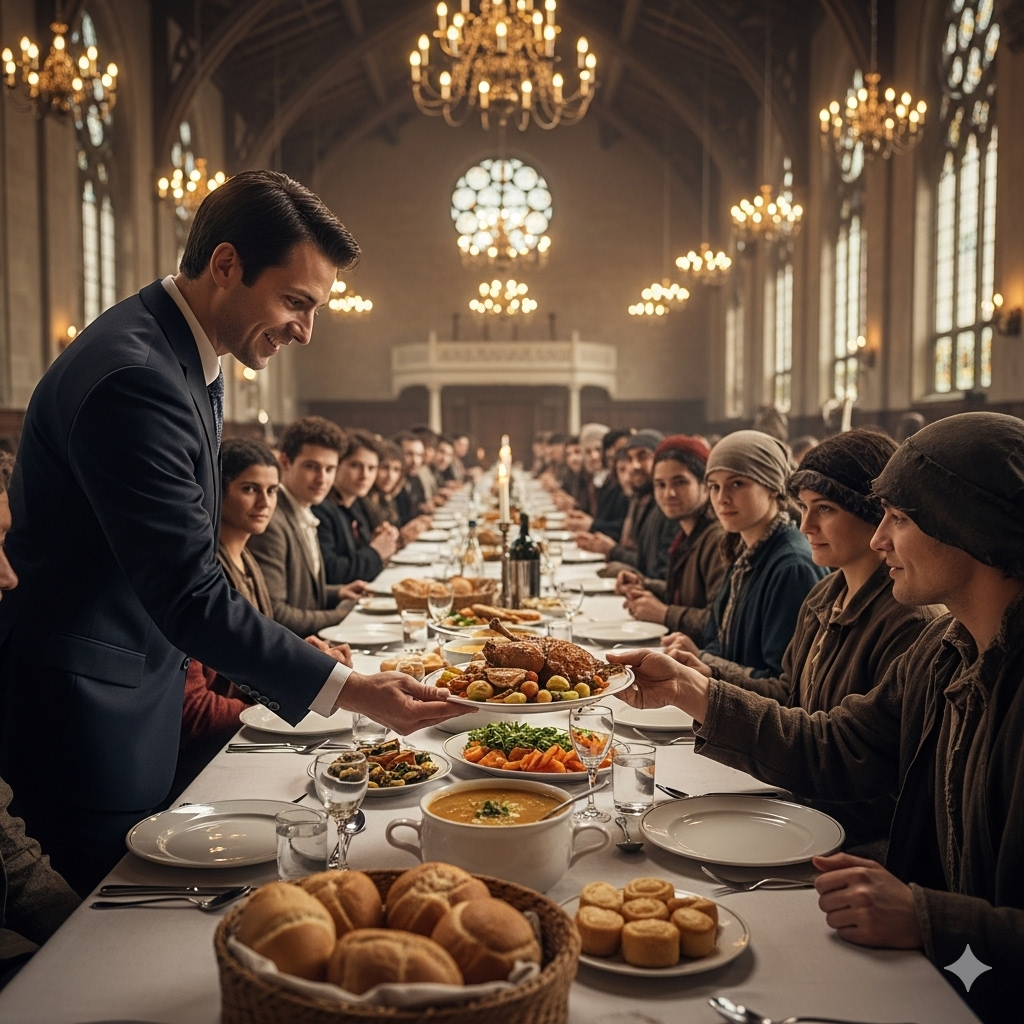
Jesus was and is the Messiah, sent to restore Israel, including the expectation of reuniting the ten lost tribes who had been dispersed among the nations of the world. And so, if the Messianic covenant is going to include the descendants in all the world, then all the world, those who are outside the covenant, must be invited. And so, after Pentecost until the end of the age, in the gift of the Holy Spirit, Jesus sends out his Apostles to north, south, east, and west, inviting all to enter into the New Covenant: responding to grace by living the life of love, faith, and obedience, striving for holiness as God has revealed it to us, including sharing the fullness of truth we have received. Although God loves all and calls all to accept the invitation, not all will humbly submit themselves to his discipline and formation, to be able to answer the call to the banquet. His love is unconditional, and our response is up to us. We can be those warned about being shut out. Or we can be the beneficiaries of our readings today: the ones invited from all the nations, north, south, east, and west. Blessed are those called to the supper of the Lamb.

Homily: The Assumption of Mary, our Co-Redemptrix

Solemnity of the Assumption of the BVM
Vigil Readings: Go to readings

1 Chronicles 15:3-4, 15-16; 16:1-2
Psalm 132:6-7, 9-10, 13-14
1 Corinthians 15:54b-57
Luke 11:27-28
Feast Day Readings: Go to readings
Revelation 11:19A; 12:1-6A, 10AB
Psalm 45:10, 11, 12, 16
1 Corinthians 15:20-27
Luke 1:39-56


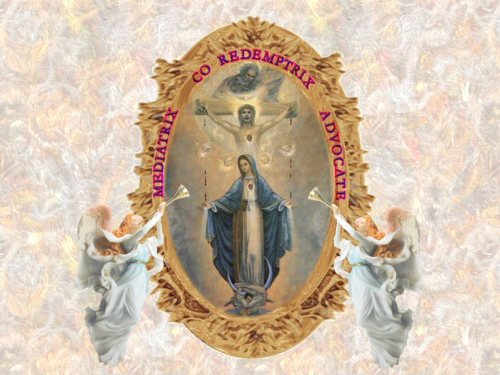
The Wisdom literature of the Bible says, “A three-ply cord is not easily broken” (Eccl 4:12). So, we are going to braid together three cords: the readings for the Vigil and for the Feast of the Assumption, and a timely article that just came out about Pope Leo XIV’s Marian devotion as displayed in his first 100 days as pope. The article is an interview with Dr. Mark Miravalle, a Catholic professor, on the topic of the Blessed Mother’s beautiful title as “Co-Redemptrix, Mediatrix of all graces, and Advocate for humanity.”

Pope Leo was elected on a Marian Feast Day, the Feast of Our Lady of Pompeii. Many popes across the centuries have prayed at this Marian shrine in Italy. It was from Pompeii that popular devotion began the call for the dogma of the Assumption. Our Lady of Pompeii is associated with the story of Blessed Bartolo Longo, a 20th century satanic priest who converted to the Catholic faith, became a Dominican tertiary, and had a deep, authentic devotion to Mary and the rosary. He became a friend of Pope Leo XIII (the first pope to approve the title for Mary as “coredemptrix”), and it was from Blessed Bartolo’s writings that Pope John Paul II developed the Luminous Mysteries of the Rosary. This feast of Our Lady of Pompeii, May 8, was previously the feast of Mary the Mediatrix of All Graces. So already just on day one, a lot of Marian connections for Pope Leo. He has not hesitated to make reference to Our Lady in the first moments of his papacy, calling us to pray with her, identifying her as our mother. It is his habit as pope to go to the basilica of Saint Mary Major to see the revered Byzantine icon Our Lady of Salus Populi Romani, held by Tradition to have been painted by the evangelist Saint Luke. His coat of arms has at the top of it the Fleur-de-lis, a heraldic symbol associated with Mary.


One of the difficulties between Catholics and Protestants regarding the Catholic devotion to Mary is that while the New Testament gives a few clues to Mary’s importance to the life and faith of Christians and the Church, the real revelation of Mary’s special importance lies in the Old Testament images she fulfills.

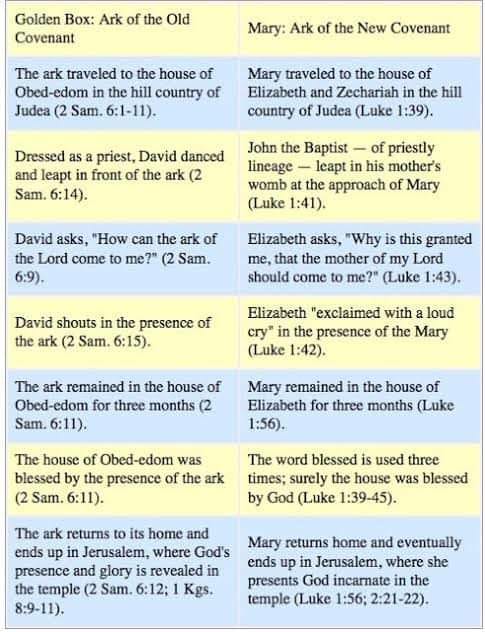
One of the best examples is the Marian title “The Ark of the New Covenant,” which we can see with first reading from the vigil with the first reading from the Feast Day, along with parts of the gospel reading from the Feast Day. The ark had been lost in battle and found, and King David was bringing it to Jerusalem. However, after a tragic accident, they postponed the procession, temporarily storing the ark in the home of Obed-edom whose home in the Judean hill country was blessed for the three months it stayed there. Then resuming the procession, David danced and shouted with joy before the Ark of the Lord as it was triumphantly enthroned in the sanctuary. David cried out, “Who am I, that the Ark of the Lord should come to me?” Remember the contents of the ark: it the staff of Aaron, a royal symbol of God’s power, a jar of mana, the bread of heaven, the answer to Moses’ priestly prayer on behalf of the people in the wilderness, and the broken tablets of the ten commandments, the prophetic word of God to guide his people in wisdom and righteousness (symbols of priest, prophet, and king). The ark was crowned with the mercy seat, on which the glory cloud of the Lord would overshadow and rest, the presence of the Lord with his people. We also see references to this in our psalm for this feast, “Lord, go up to the place of your rest, you and the ark of your holiness… Let us enter his dwelling, let us worship at his footstool.” The ark was lost again at the time of the Babylonian Exile and has never been found, and so the anticipation of the return of the ark was part of the hope of the Messianic fulfillment.

Putting that together with the gospel reading for the feast day, Mary had been, like the ark, overshadowed by the glory cloud, the Holy Spirit, and became the vessel of the Messiah, the Son of God, priest, prophet, and king, the presence of God amidst his people. When Elizabeth heard Mary’s voice, John the Baptist leapt in her womb, and Elizabeth shouted with joy, and said, “Who am I, that the Mother of my Lord should come to me” as David had leapt and shouted joyfully in the presence of the Ark. And their house, like that of Obed-edom, in the hill country of Judea, was blessed for the three months Mary was with them.

We see the ark again in the reading from the Book of Revelation of St. John, where he sees the Ark in the heavenly temple, and then goes on to describe this vision, “a woman clothed with the sun, with the moon under her feet, and on her head a crown of twelve stars. She was with child… She gave birth to a son, a male child, destined to rule all the nations…” John doesn’t change subjects, here—he’s saying that the ark is the woman with the crown of twelve stars. The figure of the ark has at last appeared again, in its fulfillment in Mary. Now we’re getting closer to our feast day.

Another helpful Old Testament connection is in the psalm for the feast day, “The queen stands at your right hand, arrayed in gold.” In the Kingdom of David, the queen wasn’t the king’s wife, he had many wives. The queen was the king’s mother. And she would sit at the right hand of the king, receiving the requests of the people and interceding on their behalf with her son, the king. So with Jesus being the new “Son of David”, whose kingdom will have no end, who would be the queen in this kingdom, but Mary, the king’s queen mother, who is a mother to all the children of the kingdom, and intercedes with her son on their behalf.


Now, the mystery of the Assumption is a fruit of the mystery of the Immaculate Conception. And the Immaculate Conception is a fruit of the mystery of the Annunciation. When the angel greeted Mary, he used a word in Greek that appears nowhere else: kecharitomēnē (κεχαριτωμένη). It refers to something, a person, whose very nature of existence is the act of receiving (being filled with) grace, and of course the definition of grace is “the life of God within us.” This word, kecharitomēnē, means more than “full of grace.” It is spoken only about this one special person, and the word is so special that the one time it is used it is said by an angel. So there’s something about Mary. Not only is she going to be the one to receive the life of God within her in the mystery of the Incarnation, but her whole life is a sinless response to this annunciation, as her whole life up to this moment has been a sinless preparation for it. God will receive his humanity from her (thus making her truly mother of God incarnate, Jesus), and she will have the role as queen intercessor of her people, as she showed at the Wedding Feast of Cana (Jn 2:2-11). This maternal care of Mary for the Church is further evidenced at the cross, as Jesus commends Mary, the woman, the mother, to John, the blessed disciple whom Jesus loved, which by extension is all of us.

Our gospel reading for the vigil has a woman calling out of the crowd to Jesus, “Blessed is the womb that carried you and the breasts at which you nursed.” He replied, “Rather, blessed are those who hear the word of God and observe it.” Some will say that this is Jesus distancing himself from Mary. But no one has heard the word of God and observed it better, with more purity of heart, than Mary. So indeed, blessed is the woman whose womb carried him, but not because of the physical bond of motherhood, but because of her spiritual role of motherhood and her spiritual role as the first and greatest disciple, the immaculately conceived, preserved, and protected vessel of grace. Mary herself confirms the immaculate conception when, 4 years after Pope Pius IX declares it as one of the Marian dogmas of the Christian faith in 1854, Mary says to Saint Bernadette at Lourdes, “I am the Immaculate Conception.”

But that begs the question, if Mary is the Immaculate Conception, perpetually without sin, did she suffer death, which is the consequence of sin? Adam and Eve, as the original parents of all humanity, introduced sin into humanity and propagated it to all their descendants. One of the titles of Mary is “The New Eve,” whose children live not unto death, but by the paschal mystery of the New Adam, who redeems and recreates humanity, live unto eternal life. The June 9th homily by Pope Leo, one of the clearest references to Our Lady’s co-redemption, says that Mary’s motherhood took an unimaginable leap to the cross where she becomes the new Eve and that Jesus has associated her in his redemptive death. That’s what the title co-redemptrix means: that Mary uniquely participates with Jesus, the new Eve with the new Adam, in the redemption of humanity. But the fact that Pope Leo brought the new Eve to Calvary is very significant. Jesus, who won infinite grace for our redemption, defers to the Blessed Mother in the distribution of those graces according to her maternal care of the children of God. She who loved with a perfect sinless heart could perfectly join herself in love to the sufferings of others, most especially her son, and then also all those who humbly call upon her intercession.


And so, we have our second reading from the feast day, Paul’s first letter to the Corinthians, quoting the prophet Hosea: “Death is swallowed up in victory. Where, O death, is your victory? Where, O death, is your sting?” And Paul continues, “The sting of death is sin, and the power of sin is the law. But thanks be to God who gives us the victory through our Lord Jesus Christ.”

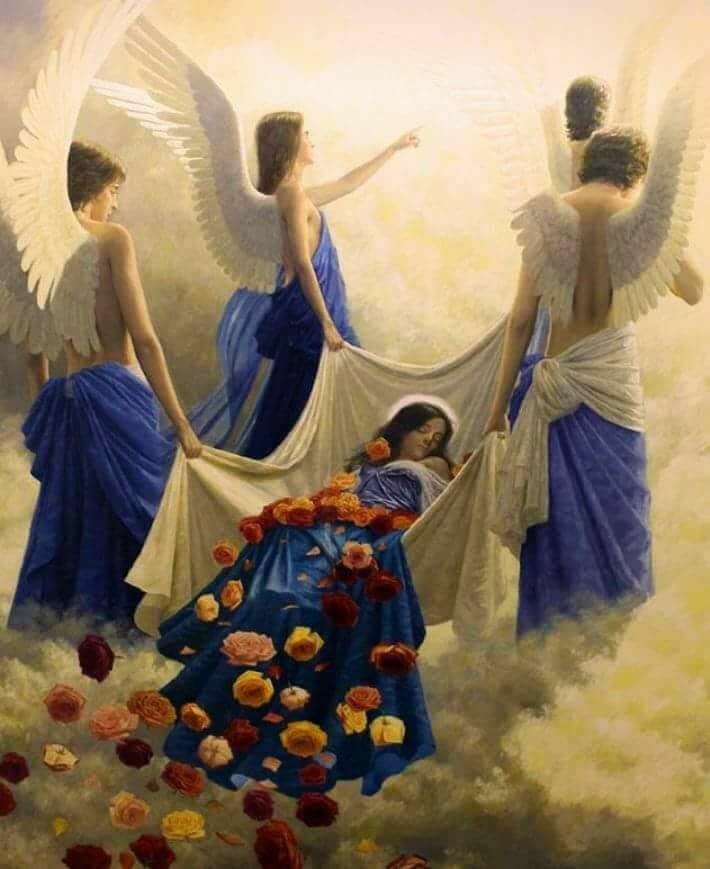
Mary perfectly lived the law, was not stung by sin, and so would not suffer death as a consequence. The Church carefully worded the dogma of the Assumption to not clearly resolve this question of whether Mary died. The definition of the dogma says, “that the Immaculate Mother of God, the ever Virgin Mary, having completed the course of her earthly life, was assumed body and soul into heavenly glory.” Jesus, by his divine nature, ascended to heaven by his own power. Mary, in her human nature, like ours, does not have that power, and was assumed into heaven by the power of God. There is a legend that Mary seemed to die, what the Eastern Church calls the mystery of the Dormition of Mary, and all the apostles buried her, except Thomas, who was working in India. When Thomas arrived, they re-opened the tomb and it was empty. Hence the seed planted in the apostolic tradition, nursed and developed over the centuries, until it was proclaimed by Pope Pius XII in 1950, not as something new, but as something whose time had come. In the face of the many modern human attempts that came after World War II and the rise of atheistic humanism to redefine humanity and our perfection, the Church puts forth in the Assumption the truth that God has defined the nature of humanity, and in God is the only real perfection of humanity; and the humble, prayerful, obedient Blessed Virgin Mary is the perfect image and example of how God exalts the soul that trusts in him, that he lifts up the lowly and glorifies the humble forever in eternal life.

Pope Leo XIV revealed his papal name to be a call-back to Leo XIII, who not only had a great Marian devotion, as we said earlier, but also a mission to protect the understanding of genuine human dignity in a time of global tension and injustice, just as Pope Pius responded to similar tensions in 1950, and also as Pope Leo XIV has in our time, against global tensions, injustice, and the potentially anti-humanistic threats latent in artificial intelligence: that he might safeguard what it means to be authentically human in an increasingly digital, virtual, and artificial world, but also to protect against a kind of digital idolatry, as people turn to AI to ask the profound questions of meaning, truth, good, and love, for which they should properly turn to God with prayer and dialogue, not to AI with a command prompt. Pope Leo gave a message to 50,000 young people at a youth festival in Rome, and said to them: “No algorithm can ever substitute an embrace, a glance, a true encounter, neither with God, nor our friends, nor our family. Think of Mary.” I think it revealed, in the mind of the Pope, that Our Lady has that ability of bringing back what is authentically human.

The truth of the importance of Mary is like Saint Augustine’s quote about scripture: the new is hidden in the old, and the old is revealed in the new. As we look at the mystery of the Blessed Mother, we are assured that our personal human nature was intentionally and personally designed with our body and soul, which is destined with meaning and for perfection. Mary as co-redemptrix is her privilege to participate in distributing the graces won by her son in his Paschal Mystery, as she was so painfully united to him in his suffering. He is the one mediator between God and humanity, but he generously shares the joy of distributing this grace, for those who call upon him in faith, especially through the intercession of the Blessed Mother, who for her humble faith and obedience in her special role in salvation history, was assumed body and soul into heaven, the sign of God’s promise of the fulfillment of our humanity and our eternal life.  

Homily: SUDS

Homily for the 19th Sunday of Ordinary Time, Year C (go to readings)
Wisdom 18:6-9
Psalm 33:1, 12, 18-19, 20-22
Hebrews 11:1-2, 8-19
Luke 12:32-48


Something that came across my social media feed this past week was an article called, “Principles of Neuroscience Embedded in the Spirituality of St. Francis de Sales – A Pastoral Approach to Addictive Behaviors.” This is the kind of thing some of us priests read for fun. But one of the concepts new to me brought up in the article was the acronym, “SUD”s, which stands for “Seemingly Unimportant Decisions” Examples might include a recovering alcoholic joining co-workers after-hours, and finding out their plan is to meet at a local bar, and still agreeing to go with them. Or taking a detour that goes past the home of someone with whom one committed adultery. Or spending time with an old friend who is a catalyst for risky, dangerous behaviors. Saint Francis de Sales might call all of these “occasions of sin.” Not sinful in themselves, but they present threats to sinful or dangerous behavior.

The idea of SUD’s in my mind, as I was also thinking about our weekend’s readings, is that seemingly unimportant decisions might be applied in the other direction, too. Seemingly unimportant decisions of virtue. Holding the door for the person behind you. Paying for the person after you at a store. Stopping to help someone fix a flat tire.

Our Lord speaks often about mercy: “Forgive us our trespasses, as we forgive those who trespass against us.” “Blessed are the merciful, for they will receive mercy.” The parable of the Good Samaritan. Why? Because the Lord wants to show us mercy, and he does show us mercy, but we can be unperceiving of it, not seeing, not being aware of it. How do we fix that? We have to attune our heart to the virtue of mercy. To God’s radio frequency. We can be on the wrong channel, listening to themes of revenge, pride, and anger. And we’re missing the important broadcast. We have to change the dial, turn to the channel that God’s message is going out on. And to hear God’s message of mercy, we have to change the frequency of our heart to the channel of mercy. We have to sensitize ourselves to the theme of mercy. And we do that by showing mercy to others. The more we get into that groove of living a life of mercy; the more we’re sensitized to opportunities of showing mercy, the more we will hear God’s message of how he is showing mercy to us. And, of course, even better, we will see more opportunities to show God’s mercy to others, and become his instrument of mercy. So sometimes these little SUDs, little seemingly unimportant decisions, can have big dividends in changing our heart little by little.

In the Old Testament reading, from the Book of Wisdom recalling the night of Passover, it says, “For in secret the holy children of the good were offering sacrifice and putting into effect with one accord the divine institution.” And so by this decision, they had disposed themselves to be sensitive to hearing God’s voice, and they were ready to respond when he gave the command to pack up and flee Egypt.

In our psalm it says, “See, the eyes of the LORD are upon those who fear him, upon those who hope for his kindness, to deliver them from death and preserve them in spite of famine. Our soul waits for the LORD, who is our help and our shield.” That listening closely for the voice of the Lord, hoping and trusting in the Lord, come what may, training the ear of faith to be attuned for that still small voice of the Lord among the loud voices around us, allows us to respond because we were ready. That image of our soul waiting for the Lord is not just one of being motionless, poised like runners on the starting blocks, but more like servants watching for the subtle gestures and signals of those they wait on, to be immediately responsive to the call to move.

Skipping over our second reading for a moment to go to the Gospel, Jesus is, as always, encouraging us to have that attentive yet active waiting on the Lord. If we practice that listening for the Lord, we can get a sense of what he is instructing us to do, not just in the word of the Scripture, but in the word of the Holy Spirit speaking to us in particular situations of our life.
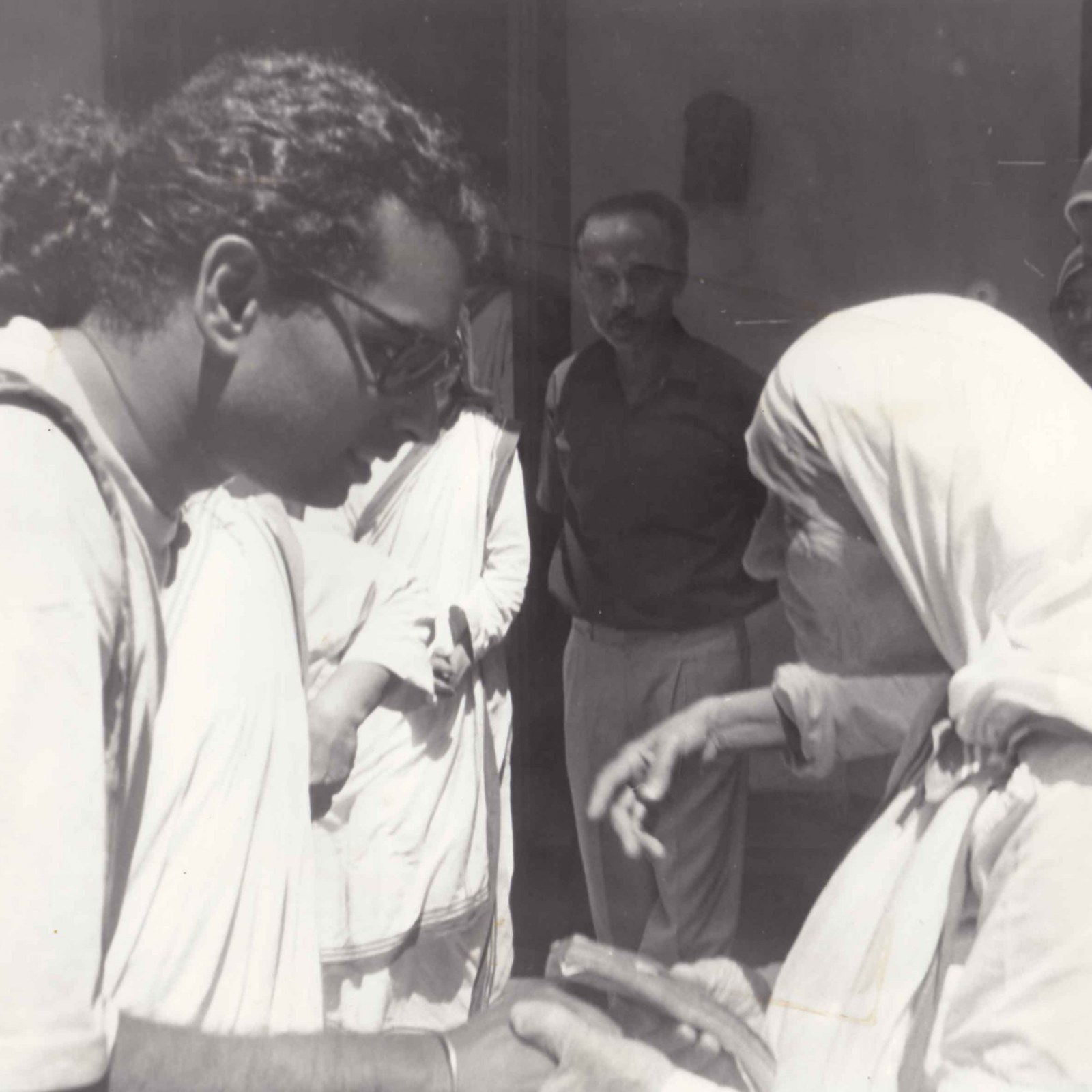
There was a man who spent a month working at the House of the Dying in Calcutta with Mother Teresa. He said that on the first morning, she asked him, “And what can I do for you?” He asked her to pray for him. “What do you want me to pray for?” He voiced the request he most desired for his discernment in God’s plan for his life. He asked her, “Pray that I have clarity.” She said “No.” That was that. When he asked why, she answered that clarity was the last thing he was clinging to and had to let go of. When he commented that she herself had always seemed to have the clarity he longed for, she laughed: “I never have had clarity; what I’ve always had is trust. So, I will pray that you have trust.”
Sometimes we can procrastinate following God’s will because we want more proof. We want a clearer instruction. We want the path marked out with lights and arrows. Believe me, I know, that was the story of my discernment for the priesthood. I was waiting for the divine 2’x4′ to remove any doubt of what I was supposed to do. But I came to understand I wasn’t going to have that removal of all doubt. It was going to take faith and trust. And the more I walked that path, praying and listening intently, the stronger my faith and trust got, and the assurance came later.

God willing, a soul becomes so attuned and responsive to the smallest whisper of the Holy Spirit that the will of the soul becomes united to the will of God. In the highest level of the spiritual life, Saint John of the Cross describes it this way: “The tenderness and truth of love by which the immense Father favors and exalts this humble and loving soul reaches such a degree… that the Father himself becomes subject to her for her exaltation, as though he were her servant and she his lord. And he is as solicitous in favoring her as he would be if he were her slave and she his god. So profound is the humility and sweetness of God.” We see that in our gospel reading where Jesus says, “Blessed are those servants whom the master finds vigilant on his arrival. Amen, I say to you, he will gird himself, have them recline at table, and proceed to wait on them.” Of course, that’s exactly what Jesus did as he took the role of a humble slave and washed the feet of the disciples at the Last Supper. Saint John of the Cross also says of the beautiful soul, “As she stretches heroically toward God, her love and trust in God explodes in strength. Her longing for God is spiritually all-consuming. And her will is achingly obedient to his slightest prompting. Her works of mercy and charity are heroic by normal standards.” This is the soul doing the Master’s will even when it feels he is absent. Those “seemingly unimportant decisions” to dispose the soul to the voice of God become the habitual life and radiant joy of the virtuous soul, and help her to hear his voice even more clearly, and respond even more generously. Peter asks, “Lord, is this parable meant for us or for everyone?” Jesus applies it universally. Everyone is called to be a steward of the spiritual, natural gifts they have received, the truth of the gospel they have received, and to share them generously in love as a participation in God’s generous unconditional love.

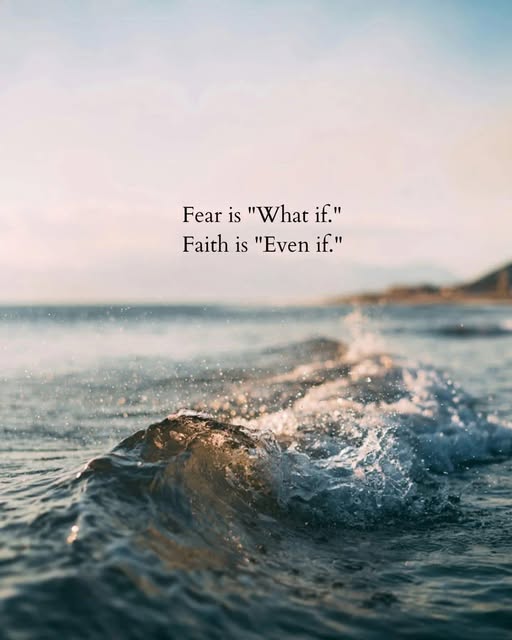
The end of the gospel reading I address in the bulletin column, but let’s wrap up here by going back to the second reading. I saw a Christian T-shirt some time ago, and I was very tempted to buy it, because in big letters it just said, “Even if.” Some of you might immediately get that reference. It’s a call-back to the book of Daniel when the three young men were threatened with being burned in the white hot furnace for being faithful Israelites. They respond to the king, “There is no need for us to defend ourselves before you in this matter. If our God, whom we serve, can save us from the white-hot furnace and from your hands, O king, may he save us! But EVEN IF he will not, you should know, O king, that we will not serve your god or worship the golden statue which you set up.” A few weeks ago I saw the next level of that, in a social media image, one of my favorites now, that says, “Fear says, ‘What if.’ Faith says, ‘Even if.’” Also related to our reading is the great quote by Saint Augustine, “Faith is to believe in what cannot be seen, and the reward of faith is to see that in which you have believed.” Saint Paul in our reading uses the beautiful example of the Old Testament mystics and prophetic figures who put their faith in God and were led through beautiful, sometimes excruciatingly difficult, acts of faith. They had listened to that voice that didn’t always tell them what they wanted to hear, but told them what they needed to do. And responding to that, they grew into the person they were called to be. They looked for and longed for the fulfillment of the great covenantal promises of God, when God would be all in all, and the world would be full of his glory and love. But these promises were not fulfilled in their time.

Paul says, “All these died in faith. They did not receive what had been promised but saw it and greeted it from afar.” They saw it through faith, and even if they didn’t see it fulfilled in their own time, they had so grown in faith in God by being obedient to his voice that they knew by faith that God was working all things toward that fulfillment. We have that fulfillment now, through Christ, however we have it only veiled in faith and mystery, signs and sacraments, awaiting the beautiful manifestation of the divine plan, even if we don’t see it in this life.

By our eager listening, waiting, and responding to the Word of God, and the whisper of the Holy Spirit within us, may we grow in our longing and love for him. May his will be done, through us, on earth as it is in heaven, through our “seemingly unimportant decisions,” which in faith are really our following the loving and beautiful will of God.

Homily: Teach Us How to Pray

17th Sunday in Ordinary Time, Year C
Genesis 18:20-32
Psalm 138:1-2, 2-3, 6-7, 7-8
Colossians 2:12-14
Luke 11:1-13


Saint Theresa of Avila said that you pay God a big compliment when you ask big things of him. Saint Augustine said that God sometimes delays answering our prayers because he wants to give us more than we prayed for, and our hearts aren’t big enough to receive what he wants to give us; so our waiting and longing grows our heart to be large enough to receive the abundance of God’s response to our prayer.

If we ask God for something in prayer, there are three possibilities: No, Yes, and Not yet. And unlike asking the sun, or the moon, or a shooting star, when we ask God, his answer to our prayers—even if his answer is not what we hoped for—we have faith and trust is what is best for us, his answer out of his perfect love for us. The sin of the garden of Eden was humanity’s failure to trust God. And our prayer in the Holy Spirit is the healing of that wound: we offer our prayers in trust in God’s love for us. That’s the last part of our gospel reading: being able to trust God that he’s going to give us the good that we need, the best things, and of course, the best thing is the gift of the Holy Spirit.

Our readings are on the theme of persisting in prayer. I remember someone saying, “Every time a woman prays in the bible, God answers that prayer.” Maybe it’s that men ask God for something in prayer, they wait a bit, and then if they don’t get a response, they shrug it off and move on. But women in prayer are more persistent. And that persistence is the key.

Our gospel reading has a bunch of different parts. One is a parable on being persistent. The man in the parable, like Martha last week, wants to show the virtue of hospitality. But he has an unexpected guest show up in the middle of the night, and this poor man has to go to his neighbor’s house, pound on the door, and ask for bread to give to his guest. And the neighbor’s like, “Are you out of your mind? Go away, it’s midnight, we’re in bed, and I’m not getting up to give you bread.” And the man keeps pounding at the door. I think it’s Father Mike Schmitz who defined persistence as “the shameless refusal to quit.” The shameless refusal to quit. That’s what we need to bring to prayer. I’m going to keep persistently pursuing the Lord and asking for what I need and trusting in him. And if he doesn’t seem to be answering, then I’m going to allow my trust and my desire to grow as I shamelessly refuse to quit until he responds. Of course, it’s not that we have to keep pounding at the door to change God’s mind, like in the parable. It’s that we have to persist because we need to grow in our desire to receive from the Lord.

The beginning of our gospel reading is the shorter version of the Lord’s Prayer found in the Gospel of Luke. The disciples of Jesus see him deep in prayer, and when he’s finished, they ask him to teach them, to give them his deep, beautiful relationship of prayer with the Father. One thing we can learn from the difference between Matthew’s version and Luke’s version is that our prayer should not be just the same formula of words.

Some people just rattle off the same prayers, day after day. Remember that prayer is our relationship with God, like a relationship with our spouse, or other loved one. We don’t say the exact same words, as fast as we can, and end the conversation. Our words should be organic, natural, flowing expressively; we  mean, from the heart, the words we say to our beloved God. Even if we’re persisting in the same prayers, even if we’re reading a given prayer, like the rosary, mean every word, every time. It’s a conversation, an invitation to a deeper relationship. I’ll often slow down people in confession: We just had this deep, beautiful, authentic conversation, and then they race through the Act of Contrition. And I’ll stop them. No, start again, slower, and mean from your heart what you’re saying.

The same is true in the Mass. The words of the Mass are important. They come down to us through Sacred Tradition as the participation of the people of God in the authentic worship of the Church. They’re meaningful, and they’re important. We should think about them and take them seriously. And they help us to shape our own prayer life according to the spirit of the Church.

For those of you who are musicians, you’ll appreciate this. When I was teaching ensemble music, especially marching band or horn lines for drum corps, I would tell them, there’s a difference between practice and rehearsal. Practice is your own work: to learn the parts, learning the notes, the articulations, the timing, dynamics, and getting past the mechanics into actually being musical. Then rehearsal is when we come together to unite our individual parts into the offering of the whole group, unifying all of our individual work. And also, what we learn in rehearsal then helps us when we go back home to practice better.

The same is true with prayer. People often say, “I pray to God all day long.” That’s good, depending on the prayer. If you’re just giving God your wish list, giving him his instructions for the day, maybe that’s not such a healthy prayer life. Just like if your relationship with your spouse was just the list of chores to do, and nothing else to your relationship. Not a healthy marriage. Have deep conversations; listen as well as talking; give and receive.

God isn’t a wish granter. He’s a loving father who loves you and wants a meaningful relationship with you. Sometimes as Catholics we can bristle at the phrase, “a personal relationship with God.” It sounds un-Catholic to some. But it is absolutely the heart of Catholic life. God is not just personal, but a communion of persons, and prayer is for us to get personal with God. We have that access through the gift of the Holy Spirit. Get comfortable with the idea of the truly personal essence of prayer.

Look at the dialogue between Abraham and God in our first reading. What courage Abraham has to dare to haggle with God to save Sodom, principally on Abraham’s part to save his relative Lot and his family. Abraham repeatedly shows his humility and his awareness of the audacity of his requests. And God accepts and responds to his requests. It’s a personal conversation. Of course, God does destroy Sodom, after warning Lot and his family to flee. But the point is Abraham’s persistence in prayer, and his personal relationship with God that allowed that closeness (and courage) in conversation.

So nourishing that beautiful life of prayer, then bring the grace of your relationship with God and unite that to the prayer of the communion of the church. Each person’s personal prayer fuels our communal prayer, and our communal prayer shapes our personal prayer. We need both parts, the parts we do on our own, and then bringing that personal energy into the power of the church’s prayers of the Mass. In the Mass, we’re not a passive audience to an entertaining performance; we’re active participants in the Church’s liturgical worship of God.

For example, when the archangel Gabriel greets the virgin Mary, some artwork portrays Gabriel, this great angelic presence, as bowing low to this innocent teenage girl, and Gabriel addresses her with reverence, a reversal of roles from what we would expect, as Gabriel waits for Mary’s humble “Fiat,” her consent, her “May what you have said be true,” to the message of the angel. Do we pray the “Hail Mary” with that kind of authentic reverence and awe, like Gabriel did. Or like Elizabeth, filled with Holy Spirit, announcing, “Blessed are you among women, and blessed is the fruit of your womb.” Another example: Pope Saint John Paul the II in his reflection, “On the Church of the Eucharist” says that when the faithful receive communion, “there is a profound analogy between the ‘Fiat’ which Mary said in reply to the angel, and the ‘Amen’ which every believer says when receiving the body of the Lord.” Do we rush through and mumble our “Amen,” like saying “thank you” at the convenience store when we’re being given a receipt? Or do we reverently consider the gravity of that moment of encounter and gift? How much holiness can we inject into our response to the minister who holds up the sacred host and says to us, “The Body of Christ” and awaits the word of our response? Our “fiat”; our “Amen.”

How much can we consider the important words of the creed we proclaim, for which people at various times suffered and gave their lives to define and defend, in preserving the one / holy / catholic / and apostolic / church? Do we bow our heads, as the Church instructs us, as we say the words announcing our faith in the incarnation, that God himself “by the Holy Spirit was incarnate of the Virgin Mary, and became man.”? Do we sing what we are called upon to sing? Do we say what we’re called upon to say? All of which the Church requires of us to help us strengthen and shape our Christian spiritual life rightly—our life as disciples of Christ, and through him, children of God, living out our faith, persevering in prayer, trusting that God will abundantly and lovingly give us the good things that we need.

Homily: Martha and Mary

The main thing is to keep the main thing the main thing.” There’s a good reason that the first commandment in the Old Testament, “I am the LORD your God, who brought you out of the land of Egypt, out of the house of slavery. You shall not have other gods beside me,” sounds quite a bit like the first and greatest commandment in the New Testament, “You shall love the Lord your God with all your heart, and with all your soul, and with all your strength, and with all your mind.” It’s because God, in the fullness of his divine Word, given to us for our salvation, wants to make sure that the main thing is that we keep the main thing the main thing. Or, “Put first things first.” Because that not only makes sure you take care of the first things, but also because it helps you view all the other things in light of the main thing.

Martha, Martha. Poor Martha. She gets such a bad rap from this gospel reading. She’s doing God’s work. The good and charitable work of hospitality. The Letter to the Hebrews says, “Do not neglect hospitality, for through it some have unknowingly entertained angels.” That seems to be a New Testament reference to our First Reading from the Old Testament. The reading starts out, “The LORD appeared to Abraham by the terebinth of Mamre, as he sat in the entrance of his tent, while the day was growing hot. Looking up, Abraham saw three men standing nearby.”

Now, strangely for the Old Testament, long before any revelation of the Holy Trinity, the reading gives us right up front who we’re talking about. “The Lord appeared,” and “Abraham saw three men standing.” In the Hebrew, it’s kind of peculiar, because Abraham inconsistently switches back and forth between singular and plural, like he’s not sure if he’s talking to one person or more than one. Maybe you have seen the beautiful 15th century icon, by Andrei Rublev called, “The Hospitality of Abraham” (sometimes just called “Rublev’s Trinity”). It shows three almost identical (with a few meaningful differences) figures sitting at a table, affirming the Christian belief that this Old Testament reading is giving a hint at the Holy Trinity. And I think this is quite fitting for the Church to have paired this with our gospel reading, in which Martha and Mary are definitely offering hospitality for a divine visit, with Jesus, Emmanuel, in their home. So, Martha is clearly doing something good and holy in offering hospitality to Jesus and his disciples. That’s not the trouble. Jesus doesn’t say anything like “don’t offer hospitality.” What does he say, “Martha, Martha, you are anxious and worried about many things.” That’s where the trouble is.

What did Martha say first, to elicit this response from Jesus? She said, “Lord, do you not care that my sister has left me by myself to do the serving? Tell her to help me.” Wow. Martha is… direct. Lord, do you not care? We can feel that way a lot of times. I’m suffering over here, there’s this injustice, don’t you care? Even in church, we can sometimes feel this way. Some kind of appreciation for my work, my visiting the sick, my stacking the chairs, my organizing this or that ministry, this or that committee, my this or that. “My God why have you abandoned me?” I’m left by myself to do the serving. All the cleaning up, the cooking, the drinks, the dishes… Meanwhile, Mary over there is just relaxing. Sure, I’d like to just sit and listen, too, but this meat and cheese tray ain’t gonna serve itself. You know what, Lord. That person over there enjoying themselves: You need to tell her to help me.

And that’s when Jesus… he doesn’t chastise her, doesn’t scold her… he frees her. He gives her a gentle, loving, knowing smile. I do see you, Martha. You are anxious and worried about many things. Important things, urgent things, things that have to get done. Getting the kids to soccer practice, working extra hours to pay the bills, sleeping in after getting home late last night. Getting ready for the things you have to do later. I see you. But you’re not making the main thing the main thing. Let go of those burdens for a while, and come sit with me. Listen to me. Just be with me. I’m here to spend time with you. Because I love you. Waste time with me, and just sit here and receive from me. That’s the cure to being anxious and worried about many things. That’s the cure to the poison of resentment to being busy, especially, in the church, when it becomes a burden instead of a gift of love.

Recharge your heart and soul by plugging them back into the Sacred Heart. “Jesus, meek and humble of heart, make my heart like unto Thine.” So Jesus here, he’s not condemning hospitality. He’s not saying don’t serve. He’s saying service is good, but intimacy with Christ is the better part. Service is good, but intimacy with Christ needs to come first. And that’s the fuel, and the right perspective, for everything else. We end up skipping church or prayer because we’re too busy, we don’t have time. And then we get upset that we feel that we’re just spinning our wheels, and we’re always busy and tired.

 And on the other side, we can fall into a kind of entitlement mentality. Why am I not being recognized? Why am I not getting the good things? I’ve been doing everything right. I’ve been praying. I’ve been being faithful. Why would God let this bad thing happen to me? Show me where in the Bible where Jesus said that bad things wouldn’t happen, that by being a good person we won’t suffer. He even warns them in the Last Supper about all these terrible things that are going to happen. And then he says, I tell you all this now, so you will know that I know you are suffering, and I am with you always. In this world, you will have trouble, but take courage, I have overcome the world. You will not overcome it. But if you have me, I will provide a way. I am the way. And that’s our bridge into our last section here, the second reading.

I remember a lecture by Dr. Scott Hahn in which he said that Colossians 1:24 was one of the key verses of his Catholic conversion. “I am filling up what is lacking in the afflictions of Christ.” We know that the afflictions of Christ are perfectly sufficient for our salvation. So what could Paul mean by this? Dr. Hahn said he looked up dozens of different commentaries and explanations and ended up dividing them into three piles. Ones which just ignored the difficulty, ones which gave a rather unsatisfactory explanation, and ones which gave a pretty convincing explanation. And he noticed that the third category was all from Catholic sources. To sum up, it is what we call, “redemptive suffering.” It’s behind what a Catholic means when we say, “Offer it up.” It means that we unite our sufferings into the suffering of Christ, and he draws us more deeply into the mystery and grace of his suffering. We then receive the two-fold benefit of having our suffering unite us more perfectly to Christ’s perfect love, purifying ourselves of distractions and errors and self-pity, to be made into a more selfless, self-surrendering gift to God. But also, God allows our suffering with Christ to give us grace through Christ that we can offer for a particular holy intention, such as our loved ones. What is lacking in the afflictions of Christ is our offering up of our suffering, our affliction, into the afflictions of Christ, so that we become sanctified by our own suffering with Christ, and through that, we also become vessels of the grace of the afflictions of Christ into the world around us.

And what strikes me, personally, as a priest, is the rest of Paul’s sentence. He says: “Now I rejoice in my sufferings for your sake, and in my flesh I am filling up what is lacking in the afflictions of Christ on behalf of his body, which is the church, of which I am a minister in accordance with God’s stewardship given to me to bring to completion for you the word of God, the mystery hidden from ages and from generations past.” Paul feels that, by his ordained vocation as their spiritual father, he has a special obligation and privilege of offering his afflictions for the people he is appointed by God to care for, to offer the grace of his redemptive suffering on behalf of the church, to help bring his people into the fullness of the mystery, now revealed in Christ, which is God’s suffering and saving love for us.

So what do we do with this? We tie it back to Martha and Mary. Mary chose the better part, the one thing, which is uniting herself, forming her heart, by intimate discipleship of Christ. We need to do the works of Martha, but in the spirit of Mary. Fill your heart with Christ, unite yourself to his love poured out for you, and nourished from that source, do your work. Serve God and others, as your participation, your unique personal share of loving others, offering your suffering for others, from the overflowing wellspring of divine life and love within you, out into the world and the people around us. That’s why putting God first is the first thing. That’s the main thing, of not being distracted and worried about many things. Not only avoiding our trying to pour out of an empty tank, trying to do the divine work before us with only our own human resources, but also to understand what is the most important work for us that we are called to do, and how the other things are rightly sorted after it. There is need of only one thing, the better part, and it will not be taken from us.

Homily: Gathering the Harvest

14th Sunday in Ordinary Time (Year C)
Isaiah 66:10-14c
Psalm 66:1-3, 4-5, 6-7, 16, 20
Galatians 6:14-18
Luke 10:1-12, 17-20 


St. Philip Neri, who earned the title “Apostle of Rome”, is an example of the missionary zeal in today’s Gospel. Philip came to Rome in the early 1500s as an immigrant. He was horrified by the moral condition of the city. Philip prayed to God to learn what he might do. He read the letters that St. Francis Xavier had sent back from India, where he had been converting tens of thousands. Philip thought that God was calling him to follow the great missionary to India. When he told his spiritual director what he thought God was asking of him, the wise old priest affirmed his desire to bear witness to Christ. However, he told Philip to focus his attention on re-evangelizing those around him, declaring, “Rome is to be your India!” Philip, relying on God’s help, started — first as a layman, then as a priest — to convert Rome. He would cheerfully go to street corners and say, “Friends, when are we going to start to do good?” He developed various social and religious activities to give the people better alternatives for their hearts and time than those offered by the culture around them. When he died in 1595, much of Rome had been reconverted. This would also be a good example of what the Church in the 20th century is calling “The New Evangelization,” to call back to faithful discipleship those who already received the gospel yet have fallen away from following it. The same God who spoke to Philip almost five hundred years ago challenges each one of us this morning through the Scriptures, “Your home and your family, your workplace and your parish are your mission field!” Or to use one of my favorite phrases, “Bloom where you’re planted.

Our Gospel reading reminds us of when Jesus first sent out his twelve apostles. And he had given them a share in his power and authority. It says, “He summoned the Twelve and gave them power and authority over all demons and to cure diseases, and he sent them to proclaim the kingdom of God and to heal [the sick].

The scene in our gospel reading is in the chapter of Saint Luke’s gospel after that, and here Jesus sends out seventy-two disciples. Here it says, “At that time the Lord appointed seventy-two others whom he sent ahead of him in pairs to every town and place he intended to visit. He said to them, ‘The harvest is abundant, but the laborers are few; so, ask the master of the harvest to send out laborers for his harvest. Go on your way; behold, I am sending you like lambs among wolves.

So, some interesting things to notice here. First, we might hear it said by some Christians that Jesus didn’t have organization to his followers, they were a motley crew of believers who just went out and shared the good news about Jesus. However, the gospels, especially Matthew, present Jesus as a new Moses, a new prophetic lawgiver. Moses was instructed by God to ordain Aaron and his two sons, and then, again instructed by God, appointed seventy elders to help him in his ministry over the twelve tribes of Israel. Jesus frequently set apart Peter, James and John as special witnesses of his works, he had twelve apostles, and now commissions seventy (or seventy-two) to assist him in his ministry. Just as in Jesus’ time, there was the High Priest, and the Sanhedrin, or high council, of seventy (or seventy-two) elders. So, Jesus is not being random here, it is very intentional. He is establishing something new, but in a well-established structure.

He tells them of their purpose: not only prepare the way for him, but also recruit more laborers; to reap the harvest that the master of the harvest has already prepared in the hearts of those who will respond and join in the work to be done for the kingdom.

And he tells them that it will not necessarily go smoothly, like lambs among wolves. There’s a quote attributed to G. K. Chesterton that says, “Jesus promised his disciples three things—that they would be completely fearless, absurdly happy, and in constant trouble.” We sometimes need to remember that the gospels are written after Pentecost to often suffering communities of the faithful, to both better instruct them in the faith, and also to inspire them to live out the faith. And so sometimes the current experiences of the community, such as suffering persecution, feeling like lambs among wolves, are written in the gospels as part of that affirmation that they are living out what Jesus had taught.

The rest of the instructions that Jesus gives the seventy-two are almost the same as what he had told the twelve in the previous chapter. But the ending here is wonderfully important. “The seventy-two returned rejoicing, and said, ‘Lord, even the demons are subject to us because of your name.’ Jesus said, ‘I have observed Satan fall like lightning from the sky. Behold, I have given you the power to ‘tread upon serpents’ and scorpions and upon the full force of the enemy and nothing will harm you.  Nevertheless, do not rejoice because the spirits are subject to you, but rejoice because your names are written in heaven.’” So obviously as we all know, there is great joy in seeing how God has worked through us to help someone else. He has given his Church a share in his power and authority to vanquish demons and other evils, represented here by Old Testament references to serpents and scorpions, by Jesus’ authority. And he says something we’ve often heard, the war of good and evil is already won. But the spiritual battles continue. There’s another old quote, “When Satan reminds you of your past, you remind him of his future.” But there we see the crux of the gospel reading: don’t rejoice just because you saw the losing side losing; rejoice because by your faith you are on the winning side winning. You’re on the right side, even when it doesn’t seem that way. Again, that affirmation and encouragement the Word of God provides us for difficult times.

This ties in beautifully with our first reading from the Old Testament prophet Isaiah, giving Israel, represented by its mother city of Jerusalem, God’s promise of victory and consolation. And we know that this promise, this victory, is won by the fulfillment of the long-awaited Messiah of Israel, Jesus Christ, and in the Church, the fulfillment of Israel. Isaiah says, “Thus says the LORD: Rejoice with Jerusalem and be glad because of her, all you who love her; exult with her, all you who were mourning over her!” Another great quote, again by Chesterton, “Christianity has died many times and risen again; for it had a God who knew the way out of the grave.” Back to the reading, with God speaking through Isaiah, “Lo, I will spread prosperity over Jerusalem like a river, and the wealth of the nations like an overflowing torrent… as a mother comforts her child, so will I comfort you; in Jerusalem you shall find your comfort. When you see this, your heart shall rejoice…the LORD’s power shall be known to his servants.” The traditional understanding of the prophecy of the world’s treasures flowing toward Jerusalem, is the opposite of how it was ultimately fulfilled: not that they would come to Jerusalem, but that the faith and the divine kingdom that started in Jerusalem, the Church, would flow out to include all the world. And we find our greatest comfort, our peace and affirmation of love in the Church, in God, and when we see this, the Lord’s power is known to those who serve him, and our hearts rejoice. So beautiful. Dr. Scott Hahn has a book called, “A Father Who Keeps His Promises,” and it’s about things like this, how the promises of the Old Testament are fulfilled in the New Testament.

And lastly, as is often the case, Saint Paul brings it home in the second reading. “Brothers and sisters: may I never boast except in the cross of our Lord Jesus Christ, through which the world has been crucified to me, and I to the world. For neither does circumcision mean anything, nor does uncircumcision, but only a new creation.” We don’t put our hearts, our worth, our identity, our priority, on anything in this passing world. Certainly, there are things that are both urgent and important, and cause us stress, but never to the extent that they interfere with the faith and worship we owe to God, and nourishing our relationship with Him. We are made a new creation in Him, still body and spirit, still with bills to pay and problems to solve, but one who has peace that the world cannot give. Happiness that comes from knowing we have a great purpose, even to our suffering, and in God’s plan for our life and our salvation, he included how dumb we can be sometimes, and to me, that is a great comfort. So let us continue detaching our sense of self and priorities from this world and strengthen their hold on the true and eternal world to come. And help and inspire others to do the same. “The grace of our Lord Jesus Christ be with your spirit, brothers and sisters. Amen.

Solemnity of Saints Peter and Paul, Apostles

Saint Peter, with upside-down cross of his crucifixion and the keys of the kingdom.
Saint Paul, with the sword, both the instrument of his martyrdom, and the Word of God

Solemnity of Saints Peter and Paul, Apostles (go to readings)
Acts 12:1-11
Psalm 34:2-3, 4-5, 6-7, 8-9
2 Timothy 4:6-8, 17-18
Matthew 16:13-19


One of my favorite movies is “Big Fish,” a 2003 Tim Burton movie with Albert Finney, Ewen McGregor, Steve Buscemi, and of course, Helena Bonham Carter, because it’s a Tim Burton movie. In the movie, the main character, Ed Bloom, is in a hospital on his deathbed, and he has a strained relationship with his son, because everything the father has ever said about his own life is encoded in fantastic stories of mythic proportion, which the son feels has kept them from having an honest relationship. But as the movie goes on, you start to wonder if the myth isn’t in fact more fact than myth, and in fact, the distinction is easy to myth (I mean, “miss”!). The common becomes extraordinary, and vice versa. We’re made for stories, and myth makes the stories memorable and inspiring. And even in myth, the truth is just under the surface. An old Irish priest, Fr. McNeil, once told me, “All stories are true. And some of them actually happened.”

Our story as Christians is encapsulated between the inspired books of Genesis and the Apocalypse, our origin story and our destiny. The rest of Scripture and Tradition fills in details, while our Catholic faith informs it so that our lives are our own personal part of this great epic drama of salvation history.

The poet Virgil, in his epic poem, the Aeneid, tells the ancient story of the founding of the city of Rome. Aeneus takes his family and flees from the fall of Troy to start a new city on the Italian peninsula (The Aeneid is from the first century BC, and builds on earlier stories of Aeneus, most popularly Homer’s 8th century BC epic poem, the Iliad). He becomes the ancestor of the twin brothers Romulus and Remus, about whom there are many stories, some more believable than others, sometimes involving being brought up by a mother wolf. Eventually, they were raised as shepherds. When they were grown to adulthood, they one day got into a pastoral altercation with another nearby shepherd, and the brothers decided to build a fortified city. But they could not agree on where.

The Seven Hills of what would become Rome were the general area, but Romulus chose the Palatine Hill, while Remus preferred the Aventine. Each set out to build, and when Remus made fun of Romulus’ defensive walls by having the audacity to jump over them to show their uselessness, Romulus ended the matter by killing his brother. Thus, in a story echoing the tragic account from Genesis, a sort of “original sin” came to Rome by way of fratricide. In his work, The City of God, Saint Augustine, who was well acquainted with Roman myths, would compare the story of Romulus and Remus to that of Cain and Abel.

By the time we come to the mid-fifth century, the era of persecution now mostly a thing of the past, the City of Rome having been substantially Christianized, a newer founding narrative comes into the Roman consciousness: This narrative depicts the Holy Apostles Peter and Paul, shepherds, pastors, brothers in the faith and in the Apostolic College, as the founders of the new and eternal Rome, something better and more noble than its pagan origin story. In a homily preached for the Feast of Saints Peter and Paul in the year 441, Pope Saint Leo the Great says:

That reverence which today’s festival has gained from all the world, it is to be honored with special exultation in our city, that there may be a predominance of gladness in the place where the chief of the Apostles met their glorious end. For these are the men, through whom the light of Christ’s gospel shone on you, O Rome, and through whom you, who was the teacher of error, was made the disciple of Truth. These are your holy Fathers and true shepherds, who built you under much better and happier auspices than they, by whose zeal the first foundations of your walls were laid: and of whom the one that gave you your name defiled you with his brother’s blood. These [the apostles] are they who promoted you to such glory, that being made a holy nation, a chosen people, a priestly and royal state [1 Peter 2:9], and the head of the world through the blessed Peter’s holy See, you attained a wider sway by the worship of God than by earthly government. For although you were increased by many victories, and extended your rule on land and sea, yet what your toils in war subdued, is less than what the peace of Christ has conquered.

Thus, we will often see in the ancient documents and doctors of the Church references to “Peter and Paul” as a pair, as brothers in the Christian Faith, as the tradtional foundation of Christendom.

 Like Mary and Martha, the sister virtues of “ora et labora” (to take a traditional Benedictine phrase), “prayer and work,” we see a holy complementarity in this pairing. As Mary is often associated with the virtues of the contemplative life, sitting at the feet of the Lord, and Martha with the virtues of the active life, showing hospitality, caring for the needy, providing food for the hungry, etc., we also see a complementarity in the figures of Peter and Paul. Peter is often associated with the charisms of the hierarchical church, the structure of organization and the sacraments, the noble grandeur of the Mass and the great basilicas and cathedrals, the organization of laws and instructions for order and discipline in the People of God. Meanwhile Saint Paul is more often associated with the charismatic evangelization, going out to the fringes to make disciples, preaching the gospel, as well as the building up of the mystical body of Christ through the spiritual gifts given to its members for serving the community.

This complementarity is not strictly mutually exclusive. Peter also had mystical visions and experiences and the holy charisms of his office received from Jesus and which Peter passed on to his successors. And Paul also taught rules and boundaries for discipline and correction within the Christian communities. And of course, both of them, in Peter’s denial in the garden, and Paul’s zealous persecution of the Church, had stories of their shame and forgiveness that inspired their personal love of the Lord and their mission to spread the gospel.

Our readings contemplate key moments in the holy lives of these Apostles, particularly near their end. After Herod had already martyred Saint James, Saint Peter is arrested, as it says, during the feast of unleavened bread, with intention of having him brought out, presumably for a meaningless trial and tortuous martyrdom, after Passover. So we see Peter, now full of the Holy Spirit after Pentecost, courageously living out that love of God and the Church that he was unable to muster in dialogue with Jesus by the seashore, but in which Jesus calls him both to be his shepherd of his flock, and also to follow him, and we see in Saint Peter an echo of the passion of Christ. Saint Paul is writing to Timothy in our second reading, aware, as the Spirit has told him, that his martyrdom is also drawing close. “I… am already being poured out like a libation, and the time of my departure is at hand. I have competed well; I have finished the race; I have kept the faith… so that through me the proclamation might be completed, and all the Gentiles might hear it.”

And so to end, I want to contemplate an interesting contrast between Peter and Paul that we can take with us today. I had a gentleman in spiritual direction, a successful business owner, pose this question to me. We have this scene in our first reading from Acts 12, of Peter in prison, and he’s given an out, a way to escape prison. And he goes, and it’s the right thing. But later, in Acts 16, we have the scene of Paul in prison with Silas. And because of an earthquake, the jail’s foundation was broken, the doors and chains came loose, and he’s given an out, a way to escape, but he stays, and it’s the right thing. So, the same or similar situation, and one time the right thing was one thing, and another time the right thing was the almost-opposite thing. So how do we know what we’re supposed to do?

I had to think about that, and we talked, as we exchanged ideas, exploring this question. And what we came up with was very interesting, I think. Our reasoning for asking the question, “Given these sets of circumstances, how do I know what choice to make?” can be a way of asking, “How do I make a rule so that I know what I should do, without having to ask God what I should do?” It’s a subtle attempt to substitute a relationship with God with our independence from him. Certainly, rules and principles of ethical and moral choices are important. But instead of (or in addition to) setting out to create a schema in which we want to always know the right response to every moral dilemma, we should always be turning toward God, after the example of St. Peter and St. Paul, and ask Him, in every circumstance, “God, what do you want me to do? Here I am, Lord. Send me. Lead me. Help me to love you, to listen to you, and to follow you.” Let Him be the writer of your amazing story, so full of miracles it’s almost hard to believe it’s all true.

Homily: Behold God’s Love for You

Solemnity of the Body and Blood of Christ – June 22, 2025 (Year C) go to readings
Genesis 14:18-20
Psalm 110:1, 2, 3, 4
1 Corinthians 11:23-26
Luke 9:11b-17


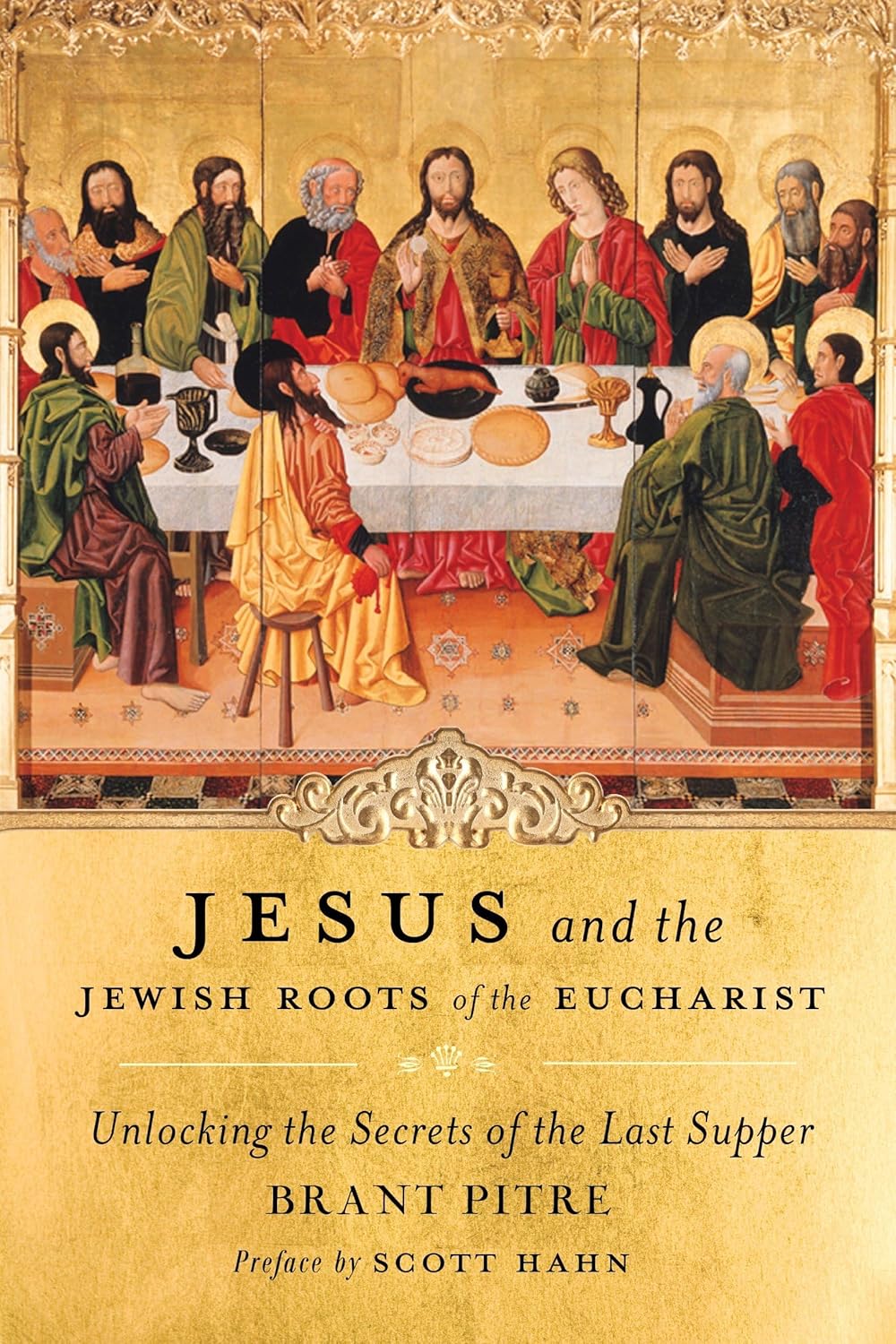
“Behold God’s Love for You!” In his book, “Jesus and the Jewish Roots of the Eucharist,” Catholic author Dr. Brant Pitre poses the question, “Why did the early Christians so strongly believe in the real presence of Jesus in the Eucharist, and yet modern Christians struggle with this belief? And he proposes the answer that it is “because the early Christians knew the Jewish scriptures, the Old Testament, better than most modern Christians do.” And in his book, he traces the Eucharist along three threads that weave through the Old Testament. He looks at the Passover Lamb, the Manna in the wilderness, and my favorite one, the bread of presence in the Holy Place in the Temple.

To make a long story less long, the proper translation of the Jewish “lahem ha panim” is “the Bread of the Face of God.” It was a visible presentation of the invisible God, and it was twelve cakes of bread, a grain offering, also called an oblation, on a golden table, also with a flagon of wine, that were always to be present in the Holy Place with the golden lampstand. The golden lampstand, in Hebrew, a menorah, was always lit in the presence of the Lord, represented by the mercy seat on the golden box that was the ark of the covenant. And the bread and wine were an offering to the Lord by the priest on behalf of the children of Israel as an everlasting covenant, says the book of Leviticus.

Here is my favorite part. On the major pilgrimage feasts of Jewish Tradition (Passover, Pentecost, Tabernacles), all Jewish men were required to go to the Jerusalem Temple. In fact, the law didn’t just say they were required to go to the Temple, but they were required “see the face of the LORD”. How many psalms are there of an impatient pilgrim on his journey to Jerusalem singing, “when may I come to see the face of God?” And on these feasts, the temple priests would solemnly carry the table of the holy bread, from the holy place in the Temple to the outer courts, and while they lifted up the table, they would proclaim, “Behold God’s love for you!

The holy bread of the presence of God was called the bread of the covenant, not a sign or symbol of the covenant, along with the wine that was poured out as a libation offering. The bread made present the invisible God, as it was a promise of the invisible temple of which the visible temple was a participation and promise. The bread, before it was offered, could be placed on any surface, but after it was consecrated, it was the miraculous food of the holy place, and could only be laid on a surface of gold.

Toward the end of this chapter, Dr. Pitre raises two points: First, in the Holy Place in the temple, as we said, there was the gold box of the presence of God, whom we would call God the Father; there was the lampstand, the tongues of fire, always present with the ark of the Lord, who do we associate with tongues of Fire? The Holy Spirit. And so we have the Father, the Holy Spirit, and this “bread of the presence of God,” the bread of the everlasting covenant, so this would be…God the Son. We have the Holy Trinity presented in the Holy Place in the Temple way back in the beginnings of the Old Testament! And what do we have front and center in the holiest place of a Catholic sanctuary? A gold box! And what is always close to the gold box in every Catholic sanctuary? A sanctuary candle, always lit in the presence of the Lord. And what do we have on the altar in the Eucharist in every Catholic sanctuary? The bread of the presence of God, and the offering of wine. The sanctuary is based on the holy place of the Temple, which was based on the image God showed Moses in constructing the Tent of Meeting.

In the Passover, the tradition would have been to have a lamb (also called “the body”) on the table. And of course, one of the criteria of completing the Passover is not just that you sacrifice the lamb, but you have to eat the body of the lamb. If the New Testament lamb of the Passover—Jesus, the Lamb of God, who said that the bread was his body—must be greater than the Old Testament lamb of the Passover, then it can’t be a symbol—it can’t be what Jesus intended—because we have to eat the body of the Lamb, not just a symbol of it. It was pretty clear he intended it when he said, “My body (flesh) is true food and my blood is true drink, and unless you eat my flesh and drink my blood, you have no life in you.”

But more to the point, why didn’t Jesus just identify his body with “the body” of the Passover lamb? That would have been an easier image! But where might Jesus have pulled the notion that a he as a person (a divine person!) can be made present in bread and wine? From the Temple: the sign of God’s real presence to Israel, and the covenant offering from Israel to God.

And so, in the Mass, after the people of God chant the Agnus Dei, the Lamb of God, the priest holds up the consecrated bread and wine, the body and blood of Jesus, crucified and resurrected for our salvation, and the priest proclaims, “Behold the Lamb of God!” But also, in my heart as I proclaim that, I’m also thinking, “Behold God’s love for you! Behold the face of the God who loves you so much, that he became human for you, was crucified and died for you, and rose again for you, to send the Holy Spirit upon you, and through that same Holy Spirit, now gives himself to you, to feed and nourish you with the bread that came down from heaven!”

And again, if the Old Testament manna was really understood to be bread from heaven, then the New Testament manna, the Eucharist, must be really understood to be bread from heaven and more, not less. It cannot be merely a symbol or reminder of bread from heaven, it must be a greater reality in the New Testament. It must be more than the miraculous bread that God gave his people in the Old Testament to nourish them as their food for the journey, to strengthen them through their preparations to become His people and live as His people and worship him, set apart, consecrated, as his peculiar and holy people, as a sign and promise for the world.

The Eucharist is more than the manna, and it is more than the sacrificial lamb of the Passover, and it is more than the bread and wine of the Temple that became the presence and the face of God. When we are on our knees receiving the gift of Jesus of Himself in the Eucharist, raised up to draw all men to himself, through the Holy Spirit, when the minister of communion holds up the host in front of you, in that moment of Eucharistic Adoration, and proclaims to you, “The body of Christ,” you should also hear the words in your heart, “Behold God’s love for you,” and you can respond with a reverent and joyful profession of faith, “Amen.”

Homily: Important and Urgent

The Third Sunday in Ordinary Time (Year B) go to readings
Jonah 3:1-5, 10
Psalm 25:4-5, 6-7, 8-9
1st Corinthians 7:29-31
Mark 1:14-20


I have often spoken of my appreciation of Steven Covey’s book, “The Seven Habits of Highly Effective People,” and I have used his principles as examples. Today we have another one. It’s about urgency and importance. You can put them on a grid of four quadrants. The top row are high urgency things, and the bottom row are low urgent things. The left side are high importance things, and the right side are low importance things.

In the first quadrant, you have those things that are both urgent and important. Important deadlines. Things that have to be done as soon as reasonably possible, or bad things will happen if you don’t. At work, it’s putting out the fires. Down in the Quadrant 3, we have things that are high in urgency and low and importance. Things that seem like we have to do them right now, but really if we took a longer look, they’re not that important. They’re the annoying or procrastinating things that aren’t that important that get in the way of being more productive. You don’t want to be organizing your collection of trolls when you should be doing what your boss asked you to do. Over in quadrant 4, you have the things that are low in importance, and low in urgency. It doesn’t really matter much if they get done, and it doesn’t really matter when. For example, organizing your collection of trolls.

But the magic happens in Quadrant 2: This is the category of things that are high importance, but rarely get the attention they deserve because we’re too busy putting out the fires of Quadrant 1 stuff. Quadrant 2 is the stuff that we know we should invest time in. Preparing our investment portfolio. Reading the pile of books we mean to get to. Calling or visiting that friend that keeps coming to mind. Practicing our musical instrument or hobby. All those things that make our life richer, make our future more positive, builds relationships, and we keep putting it off because we’re too busy. So it either becomes urgent, and rushes into Quadrant 1, when we now have to take care of a long term project with insufficient time, or it gets puts down in Quadrant 4, where we just never get to it, and our life is less flourishing by its neglect.

Most of us put our religion, our relationship with God, building a habit of prayer, and getting to know our faith, out in quadrant 2. Yeah, I know it’s important, but I’ll have time to do that later when I’m not so busy with the stuff I need to do now. Our readings today, here at the beginning of the liturgical year, are to teach us to put our faith where it belongs: In quadrant 1. It’s important and urgent. It’s every day, every moment, every situation, every relationship. It’s everything.


Last week we saw in the Gospel of John, Andrew and another disciple, possibly John, have their first encounter with Jesus, after they were directed to him by John the Baptist. Then Andrew introduced his brother Peter to Jesus. This week we have the Gospel of Mark, and we have a different version of the story. Jesus is walking along the shore, and happens to see Peter and Andrew, and simply says, “Follow me,” and they immediately go. Then John and James, who leave their nets and their father, follow also. No long intro, no discourse. Call and response.

We might take issue with these two gospel versions of Jesus gathering his disciples. Which one is right? The Gospel of John or the Gospel of Mark? Notice that in John, John the Baptist is there pointing out Jesus, and the disciples spend an evening talking with him. Here in the beginning of our reading from Mark, it starts out, “After John had been arrested.” So this is clearly a later event. And perhaps that’s why the disciples leave so quickly: they’ve been prepared, their hearts have been set on fire with the hope of encountering Jesus again, and when he calls them, they jump at the invitation.

His invitation to these fishermen, that Jesus will make them “Fishers of men” is not just a neat play on words. It’s also fulfillment of prophecy. The prophet Jeremiah taught the Israelites to look forward to a new exodus which would eclipse the original exodus in its significance. And this exodus will be the restoration of Israel when he calls them and they all come streaming back from all the nations of the world. The kingdom of the northern tribes of Israel had been conquered and scattered by the great enemy to the northeast, the Assyrian Empire, in the 7th century BC, because of the northern kingdom’s corruption and other sins against God. Jeremiah says, “Therefore, behold, the days are coming, says the LORD, when it shall no longer be said, `As the LORD lives who brought up the people of Israel out of the land of Egypt,’ but `As the LORD lives who brought up the people of Israel out of the north country and out of all the countries where he had driven them.’ For I will bring them back to their own land which I gave to their fathers. Behold, I am sending for many fishers, says the LORD, and they shall catch them…

Also, there’s another prophecy in play, from the book of Daniel. The Babylonian king Nebuchadnezzar received an image in a dream of a large statue of different materials, gold, iron, and clay, which Daniel, an Israelite slave in the king’s court, interpreted for him to mean that there would be a succession of kingdoms: The Babylonian Empire, the Median/Persian Empire, Greek Empire, and the Roman Empire. Then in the dream a stone falls from heaven onto the statue, and the statue crumbles, and the stone grows to become a great mountain. And this is the kingdom of God. This prophecy from Daniel was popular among the Jews of Jesus’ time. So when Jesus comes on the scene saying, “This is the time of fulfillment. The kingdom of God is at hand. Repent, and believe in the good news,” and “Follow me, and I will make you fishers of men,” it caused quite a stir in Israel.

Our first reading, about Jonah, has this same urgent call as our gospel. Jonah, much to his dislike, was called by God to minister to the capital city of that same pagan empire: the Assyrians, that had attacked and destroyed the northern tribes of Israel. Jonah had already tried fleeing to the other end of the world. That’s when the storm caused Jonah to be thrown overboard where he was eaten by a fish, and three days later found himself alive, back where he started, like Groundhog Day, with the firm order from God to go to Nineveh. So he did. He proclaimed the message God gave him: “Forty days more and Nineveh shall be destroyed.” It seems like Jonah didn’t really want Nineveh to be saved, and said no more than he had to, in the hopes that God would destroy this enemy city. But Nineveh was saved. They repented of their evil, petitioned the God of Israel, not even their own God, to spare them, and God did so. Again, we might balk at how the scripture states it: “God saw by their actions how they turned from their evil way, he repented of the evil that he had threatened to do to them.” First, how can God repent, and second, why would he have threatened evil? Well first, the implied fuller message to Nineveh was “If Nineveh doesn’t repent within 40 days, it will be destroyed.” So since Nineveh repented, God’s ultimatum was satisfied, and he didn’t have to carry through with his sentence. That’s not a change in God. And second, in ancient Hebrew, there was no word for suffering. So all the related words were communicated by the same term: suffering, evil, misery, distress, etc. So it’s not that God was threatening to do evil, but that he was threatening them with the suffering for their sin. An interesting observation is that Nineveh repented at the preaching of the prophet, and they were saved. Israel did not repent, and God used Assyria to punish them.

In our second reading, the urgency of the Christian life reaches its highest pitch. Saint Paul writes, “I tell you, brothers and sisters, the time is running out…For the world in its present form is passing away.” And he tells them, live in this world, but detached from it. Be ready to sacrifice all for God when he calls, that’s our first priority. Love your wife, your home, your job, your life in the world, but love God more and be ready. Whatever you’re going through, grieving, rejoicing, whatever you’re doing, buying, selling… this is like a description of the people of Noah’s day, who were doing all the everyday “important” things, instead of listening to Noah and preparing for the flood.

And lastly, our psalm connects with an important part of this weekend. “Your ways, O LORD, make known to me; teach me your paths; Guide me in your truth and teach me.” Saturday evening our students in 8th grade entered into the last stage before receiving the Sacrament of Confirmation. This is the sacrament giving us the grace of witnessing to the world as a Christian, responsible for our actions, for our habits and lifestyle, for our example to others, for our salvation. They leave the school of childhood formation in the faith, and take their place among the ranks of Christians who must know their faith and live it out in a world that might be opposed to us on important, life-or-death matters. Hopefully by this point they have a discipline of daily prayer, of growing in relationship with our Lord and with the Blessed Mother, and they have a firm foundational understanding of our faith on which to build their character and their future faith development. We pray for them, as we pray for the whole world, that we may urgently serve our Lord in His truth, love, and mercy.


Homily: The Baptism of the Lord

The Baptism of Jesus (Year B) (go to readings)
Isaiah 55:1-11
(Responsorial) Isaiah 12:2-3, 4bcd, 5-6
1 John 5:1-9
Mark 1:7-11


The best way to start this, I think, is to ask the question most people ask: Why would Jesus go to get baptized, if he had never sinned? I hope that by the end of this, you’ll have a good answer to that question. Now, you can take the snarky approach, and answer the question with, “For the same reason that Jesus went to get crucified, although he had never sinned.” That touches upon the real answer to the question, so we’re going to look at this close connection between the Baptism and the Crucifixion.


In God’s revelation of himself as the Holy Trinity, God the Father is the source of all being, all that is life, all that is good, true, and beautiful. God the Son is the communication, the logos, the expression, the Word, of God, to everything outside of God. Every outward expression of God is an interaction with the Son, an act of, or through, the Son. It is through the Son that the angels and the heavenly host and our material world is created; it is through the Son that God reveals himself in the world, most especially to humanity. God the Holy Spirit then is the enduring presence of God that sustains everything. It is by the Holy Spirit that the heavenly host exists and praises God; it is by the Holy Spirit that the logic and order and being of all creation is sustained; it is the Holy Spirit that breathed into Adam, giving us not just natural life, but particularly human spiritual life, that enables us to be persons oriented toward communion. That is why it was not good for Adam to be alone, and God created Eve for them to be in communion, in a particular relationship only available to those with a spirit.  

In the fall of humanity in Adam and Eve, our spirits were distorted from their original likeness; we lost our communion with God, we wounded our relationship with each other, and even within ourselves. In losing our relationship with God because of sin (although God never stopped loving us), we are unable to be in the presence of God, the infinite furnace of divine love. It would burn us up. And since our souls are immortal, we would not die, we would be burning for eternity, which is far from the eternity of peace and communion that God wants for us. And so heaven, God’s presence, is unavailable to us. We cannot reconcile with God by our own power. Humanity created a barrier, from our side of the relationship, which we cannot tear down.

And so God began the long process of preparing humanity for his gift of reconciliation. In the fullness of time, with the consent and cooperation of the Blessed Virgin Mother Mary, the Word of God, God the Son, entered into our fallen human nature, fully retaining his infinite divine nature.

His mission was to tear down the barrier from the human side of the relationship between humanity and divinity. Only in his divinity did he have the infinite power to do so, so only the infinite God in his perfect mercy and love for us could do this. He didn’t have to do this; this was his free choice, made in love.

When Jesus, humanity and divinity united in one person, reached the fullness of his maturity, which at the time was believed to be about 30 years old, he began his earthly ministry, his divine mission, to tear down the barrier, and to bring humanity back into common union, communion, with God the Father, that we may have the way of eternal life restored to us. Jesus entered into this act of baptism, being washed in the waters of the Jordan River, the river that Israel had crossed to complete their exodus and enter into the Promised Land. From that point forward, Jesus was guided by the Holy Spirit, in union with the Father, for they are all one, and began collected into his humanity all the sin, death, suffering, illness, and burdens of fallen humanity.

As he neared the completion of his mission, he gave his disciples, who were the foundation stones of the Church that would continue his presence and mission on earth, the way by which they could forever re-enter into and renew their participation in the covenant of his saving act of self-sacrifice: the Holy Eucharist.

In the final act of his humanity, in the moments of his death, he says, “It is finished,” or in the Latin, “Consummatum est,” it is consummated. In this act, all the sin that separated us from God was itself put to death. The Son of God had consummated his mission that began with his baptism. The Word achieved the mission for which it was sent.

For just as from the heavens
  the rain and snow come down
And do not return there
  till they have watered the earth,
  making it fertile and fruitful,
Giving seed to him who sows
  and bread to him who eats,  
So shall my word be
  that goes forth from my mouth;
It shall not return to me void,
  but shall do my will,
  achieving the end for which I sent it.

(Isa 55:10-11)

In the Gospel of Mark, he only combines the words “torn” and “Son” in two places: when the heavens were torn open at his baptism, as the voice proclaimed to Jesus that “You are my Son in whom I am well pleased”; and at his crucifixion, when the temple veil was torn down the middle, and the Roman centurion proclaimed, “Truly, this was the Son of God.” The Temple veil was blue and embroidered with the constellations, representing the heavens, and it veiled the entrance to the Holy of Holies, the place of the Ark of the Covenant, the place of God’s presence. In the consummation of his mission, God the Son, the Word in our humanity, tore the veil that separates us from God. He paid the price and reconciled us, as only he, in his great mercy and power, could do for us.

I myself have installed my king
on Zion, my holy mountain.
I will proclaim the decree of the LORD,
he said to me, “You are my son; today I have begotten you.
Ask it of me, and I will give you the nations as your inheritance,
and, as your possession, the ends of the earth.

Psalm 2:6-8

Here is my servant whom I uphold,
my chosen one with whom I am pleased.
Upon him I have put my spirit;
he shall bring forth justice to the nations.
A bruised reed he will not break,
and a dimly burning wick he will not quench.
I formed you, and set you
as a covenant for the people,
a light for the nations,
To open the eyes of the blind,
to bring out prisoners from confinement,
and from the dungeon, those who live in darkness.

Isa 42:1, 3, 6-7

When Jesus’ side was pierced with a lance, water and blood flowed out. Water was the sign of baptism; blood the sign of the crucifixion. Jesus had asked James and John, “Can you drink the cup that I drink or be baptized with the baptism with which I am baptized?” (Mk 10:58). The Holy Spirit unites these events and fills them with divine life, and communicates that life to us. “And no one can say, ‘Jesus is Lord,’ except by the holy Spirit” (1 Cor 12:3).

This is the one who came through water and blood, Jesus Christ,
not by water alone, but by water and blood.
The Spirit is the one who testifies,
and the Spirit is truth.
So there are three that testify,
the Spirit, the water, and the blood,
and the three are of one accord.

If we accept human testimony,
the testimony of God is surely greater.
Now the testimony of God is this,
that he has testified on behalf of his Son.

1st John 5:6-12

Then, in his glorious resurrection, Jesus shows us the restoration of human life free of the burden and despair of sin. He reveals human life in glory, in reconciliation and communion with God, God the Holy Spirit joyfully and beautifully infused into human nature and filling humanity with divine life, which is grace.

In this victory, in this reconciliation, he invites all humanity to follow him through this journey on which he has led the way, the first fruit of the resurrection. And our first step on this journey to follow him is our baptism.

Heed me, and you shall eat well,
  you shall delight in rich fare.  
Come to me heedfully, listen,
  that you may have life.
Let the scoundrel forsake his way,
  and the wicked man his thoughts;
Let him turn to the LORD for mercy;
  to our God, who is generous in forgiving.  

Isa 55:2-3, 7

In this way we know that we love the children of God
when we love God and obey his commandments.
For the love of God is this,
that we keep his commandments.

1st John 5:2-3

In our baptism, we enter into the mystery of his baptism, which points toward, and is empowered with, the mystery of his death and resurrection. We enter into the tomb of baptism. We die to our sin, our old way of life, our fallen human nature full of sin and despair, just as he was laid in the tomb, having borne the cost of our sin. And in the same moment, we rise from the baptismal water, filled with his victory, his freedom from sin, his divine life in us, reconciled to God through him. We become members of his mystical body, as we embrace his life in us.

Or are you unaware that we who were baptized into Christ Jesus were baptized into his death? We were indeed buried with him through baptism into death, so that, just as Christ was raised from the dead by the glory of the Father, we too might live in newness of life. For if we have grown into union with him through a death like his, we shall also be united with him in the resurrection.

Rom 5:3-5

The muddy waters of the Jordan River are infused with the waters of the river of life that flow from the wellspring of divine love, and flow through the heavenly city of God. And we are washed clean in this supernatural water, and united with the heavenly communion and Holy Trinity in eternal life, which we possess and live in faith even in this world.

With joy you will draw water
at the fountain of salvation.

Isa 12:3

Without baptism, we would still be stuck in our sin, without hope, without salvation. Of course, God can do what he wills, and we can always hope that those who are not baptized, by no fault of their own, might be saved. But this is what he has revealed to us for our life, and it would be foolish not to listen to him. But even those who are not themselves baptized, any hope they may have they have through the mystery of Jesus’ mission of reconciliation.


So, why would Jesus go to get baptized, if he had never sinned? Because by entering into his baptism, he gives us our entrance into his death to sin and its consequences, and our rebirth to the life of grace and reconciliation with God, so that we may enter into our earthly mission to witness to Jesus as the Son of God, through the power of the Holy Spirit, and our life in His Church, for the glory of God and the salvation of souls.