

Twenty-Third Sunday of Ordinary Time, Year C (go to readings)
Wisdom 9:13-18b
Psalm 90:3-4, 5-6, 12-13, 14 and 17
Philemon 9-10, 12-17
Luke 14:25-33
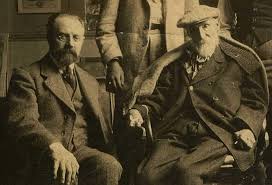
French artists Henri Matisse and Auguste Renoir were close friends and frequent companions, even though Renoir was twenty-eight years older than Matisse. During the last several years of his life, Renoir was virtually crippled by arthritis; nevertheless, he painted every day, and when his fingers were no longer supple enough to hold the brush correctly, he had his wife, Alice, attach the paintbrush to his hand in order that he might continue his work. Matisse visited him daily. One day, as he watched his older friend wincing in excruciating pain with each colorful stroke, he asked, “Auguste, why do you continue to paint when you are in such agony?” Renoir’s response was immediate, “The beauty remains; the pain passes.” Passion for his art empowered Renoir to paint until the day he died. Those who continue to admire the enduring beauty of his smiling portraits, his landscapes, his still-life studies, will find no trace therein of the pain required to create them. Most will agree that the temporary cost was worth the enduring result.
Our readings today give us the theme of putting what is eternal over what is temporal, what is true, good, and beautiful, what endures forever, over what will pass away, like dust in the wind. But the problem is that this is very difficult for us. The power of what is visual, what is seen, what is pleasing to the physical senses, what is urgent (regardless of whether it is important) and short term, immediately in front of us, claims a great, even overwhelming, demand on our attention.
But our readings are trying to pull us out of this materialistic, temporal mindset and fix our attention on what is higher, of higher reality, higher importance, higher dignity, and requires a higher level of priorities to understand, believe, and practice.
In our gospel reading, Jesus is giving us the true understanding of what it costs to be his disciple. People want to call themselves Christian, and claim the reward of being Christian, without wanting to understand the cost, consider the cost, and pay the cost. They want Christianity on their own terms, and that’s not at all how Christianity works. As someone said, “All are welcome, but on Christ’s terms, not on their own.” And it’s not that Christ’s terms have become more strict, more out of touch with society, but rather that society has become more out of touch with Christ’s terms, the cost of what takes to make our lives about what is above, resplendent with divine wisdom, rather than the dust on the wind that is what the world wants us to focus on.
In the first part of our gospel reading, Jesus teaches that he has a greater calling on his disciples than even the relationships of family. In ancient Israel, family was everything, who your family is was who you are, your role in society, how you were related to Israel, the ancient hereditary Father of the Israelites. This is why genealogies were so important in the bible and in Israel. And the only thing more important than one’s family was God himself. So for Jesus to teach that “He who loves father or mother more than me, is not worthy of me; he who loves son or daughter more than me, is not worthy of me” is to say that Jesus is the one thing more important than family; Jesus is revealing his divine identity, by taking this divine prerogative of being the one thing more important than family. In fact, in other places of the gospels (“ For whoever does the will of my Father in heaven is my brother and sister and mother” Mt 12:50), Jesus teaches that one’s spiritual family of the Church is more important than one’s blood family of the flesh; and its no wonder why he attracted attention, both positive and negative.
Jesus then teaches “Whoever does not carry his own cross and come after me cannot be my disciple.” We’ve heard this many times. In the time of the early Church, when Christians were persecuted and executed for their faith, this could have been taken literally. To be a disciple, you had to accept that you have to hold to this faith all the way. At many times during the Church’s history, we see Christians not only executed, but their property confiscated, their professional credentials and opportunities disappear, their public reputation and privileges destroyed. And we see this script being replayed today, not only in other countries where Christians are literally executed, but even in our own society. Christian bakers and venue owners are targeted for refusing to cooperate in supporting same-sex marriage, medical staff are persecuted for refusing to participate in (or even criticize) abortion or transgender affirmation, and the Little Sisters of the Poor are being sued by the Pennsylvania attorney general for the seventh time (after they’ve been exonerated in 6 previous lawsuits) for refusing to include contraception in their employee healthcare packages. To be Christian is to lay all of what we are and all that we have on the altar of God, to be sacrificed if called to do so for the sake of faithfulness to the kingdom of heaven.
But since many of us will hopefully not be called to such explicit examples of carrying the cross of the faith, we can also understand this requirement as crucifying those things in our life—our evil habits, our unhealthy attachments, our disordered attractions—that are incompatible with the call to holiness and the teaching of the Church. That doesn’t mean that these things aren’t good. Families are good. Our reputation, our businesses we have built up, our money and resources and security, these are all good—even some of our attachments and attractions, although they might be wounded and distorted, and need to be healed to be healthy and holy. But nothing else is the ultimate good, which is God. We have to put first things first, and other things afterward. If we put secondary things in the place that only God should be, we lose everything.
Jesus then teaches his disciples that this is a high calling, the very highest demand, and before deciding to be a Christian, it is foolish to start if you’re not going resolve to take it all the way to the finish, come what may (as a man considering building a tower, or a general considering engaging in battle). If you quit, or compromise, what it means to be Christian, what the Christian faith teaches and requires, you lose the only thing that matters, and you also become a stumbling block for others. As Yoda said to Luke Skywalker, “Do, or do not; there is no try.” If we tell ourselves we are merely trying, it’s a preparation to have an excuse for failing, instead of fully committing everything to what is required.
Dietrich Bonhoeffer, the Lutheran minister who died resisting against the Nazi’s, talked about cheap grace: “Cheap grace is the preaching of forgiveness without requiring repentance, baptism without church discipline, Communion without confession, absolution without personal confession. Cheap grace is grace without discipleship, grace without the cross, grace without Jesus Christ… Costly grace is the treasure hidden in the field; for the sake of it a man will go and sell all that he has. It is the pearl of great price to buy which the merchant will sell all his goods. It is the kingly rule of Christ, for whose sake a man will pluck out the eye which causes him to stumble… It is costly because it costs a man his life, and it is grace because it gives a man the only true life. It is costly because it condemns sin, and grace because it justifies the sinner.” So, what we might call the “bad news” is that there is a high cost to identifying oneself as a Christian, and only those who are all-in deserve the name. But the good news is that we receive the grace to do exactly that, if we surrender ourselves completely to it, to allow God to work on us, perfect us, and unite us to the incredible heavenly beauty and joy of his own divine life.
Our first reading expounds on the beauty of the heights of divine wisdom and truth we are called to center our life on, and the utter difficulty, or rather impossibility, of this without God. “For the deliberations of mortals are timid, and unsure are our plans. For the corruptible body burdens the soul and the earthen shelter weighs down the mind that has many concerns. And scarcely do we guess the things on earth, and what is within our grasp we find with difficulty; but when things are in heaven, who can search them out? Or who ever knew your counsel, except you had given wisdom and sent your holy spirit from on high?”
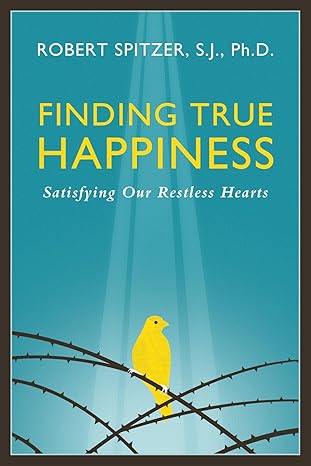
Again, not that our physical nature is evil, but it distracts us from what is most important. Our bodies are good. God gave us our bodies. And Jesus even united himself to our bodily nature to restore the goodness of our human nature, which is body and soul as a unity of a human person. Fr. Robert Spitzer wrote a beautiful book called, “Finding True Happiness,” which, among other things, outlines four levels of happiness we pursue and enjoy, from the lowest and most immediate gratification that flees as soon as the act is completed, to the highest and most abstract levels of happiness, which give us an enduring, fulfilling happiness. But to attain the higher, more spiritual levels, we often have to say “no” to the lower, more physical levels.
Our psalm today has the beautiful line, “Teach us to number our days aright, that we may gain wisdom of heart.” When we contemplate the reality that we have a limited amount of time to become what we will be forever, either holy or hell-bound, it should inspire us to always be moving upward. Blessed Carlo Acutis, a young person who is being canonized as a saint this weekend by Pope Leo XIV, said, “I die serene because I have not wasted even a minute of my life in things God does not like.” He had a great devotion to young saints, and now he is one of them.
And lastly, our second reading from one of the shortest books in the bible, Saint Paul’s letter to Philemon. It is one of the letters written by Paul while in prison. And in prison, Paul meets and converts a man named Onesimus, who was a slave who fled from his master Philemon, who Paul knows, as he was a prominent Christian in the community of the Colossians. And so Paul is writing to Philemon not only to tell him, “Hey, I just found your escaped slave,” but also, “Hey, I’m sending your escaped slave back to you as a member of the church, a brother in Christ, who is dear to my heart, so treat him as you would treat me.” Obviously, this is going to make for an awkward reunion. Ordinarily, Onesimus would be flogged and branded. But Paul is reminding Philemon that our spiritual relationships, such as brothers and sisters in the family of Christ, as children of God our Father, take a higher place than our relationships in the flesh. Also, note that Paul says, “I appeal to you for my child, Onesimus, whose father I have become…” for those who condemn Catholics for calling priests their spiritual “father.”
And so again, to end with this example from Saint Paul, we must put the high demand, even sacrificial demand, of the Christian faith, first in our lives, the solid rock foundation of our lives. We must be Christian first, and everything else we are, we do, and we have in our lives is to serve, witness, and reinforce our Chrisitan identity, over all the things of this fallen world, and our temporary existence as part of it. We are called to be in the world, but not of the world, witnessing to the world by the faith, hope, and love of our Christian life.
















 The Snarky Vicar