Homily: Martha and Mary

The main thing is to keep the main thing the main thing.” There’s a good reason that the first commandment in the Old Testament, “I am the LORD your God, who brought you out of the land of Egypt, out of the house of slavery. You shall not have other gods beside me,” sounds quite a bit like the first and greatest commandment in the New Testament, “You shall love the Lord your God with all your heart, and with all your soul, and with all your strength, and with all your mind.” It’s because God, in the fullness of his divine Word, given to us for our salvation, wants to make sure that the main thing is that we keep the main thing the main thing. Or, “Put first things first.” Because that not only makes sure you take care of the first things, but also because it helps you view all the other things in light of the main thing.

Martha, Martha. Poor Martha. She gets such a bad rap from this gospel reading. She’s doing God’s work. The good and charitable work of hospitality. The Letter to the Hebrews says, “Do not neglect hospitality, for through it some have unknowingly entertained angels.” That seems to be a New Testament reference to our First Reading from the Old Testament. The reading starts out, “The LORD appeared to Abraham by the terebinth of Mamre, as he sat in the entrance of his tent, while the day was growing hot. Looking up, Abraham saw three men standing nearby.”

Now, strangely for the Old Testament, long before any revelation of the Holy Trinity, the reading gives us right up front who we’re talking about. “The Lord appeared,” and “Abraham saw three men standing.” In the Hebrew, it’s kind of peculiar, because Abraham inconsistently switches back and forth between singular and plural, like he’s not sure if he’s talking to one person or more than one. Maybe you have seen the beautiful 15th century icon, by Andrei Rublev called, “The Hospitality of Abraham” (sometimes just called “Rublev’s Trinity”). It shows three almost identical (with a few meaningful differences) figures sitting at a table, affirming the Christian belief that this Old Testament reading is giving a hint at the Holy Trinity. And I think this is quite fitting for the Church to have paired this with our gospel reading, in which Martha and Mary are definitely offering hospitality for a divine visit, with Jesus, Emmanuel, in their home. So, Martha is clearly doing something good and holy in offering hospitality to Jesus and his disciples. That’s not the trouble. Jesus doesn’t say anything like “don’t offer hospitality.” What does he say, “Martha, Martha, you are anxious and worried about many things.” That’s where the trouble is.

What did Martha say first, to elicit this response from Jesus? She said, “Lord, do you not care that my sister has left me by myself to do the serving? Tell her to help me.” Wow. Martha is… direct. Lord, do you not care? We can feel that way a lot of times. I’m suffering over here, there’s this injustice, don’t you care? Even in church, we can sometimes feel this way. Some kind of appreciation for my work, my visiting the sick, my stacking the chairs, my organizing this or that ministry, this or that committee, my this or that. “My God why have you abandoned me?” I’m left by myself to do the serving. All the cleaning up, the cooking, the drinks, the dishes… Meanwhile, Mary over there is just relaxing. Sure, I’d like to just sit and listen, too, but this meat and cheese tray ain’t gonna serve itself. You know what, Lord. That person over there enjoying themselves: You need to tell her to help me.

And that’s when Jesus… he doesn’t chastise her, doesn’t scold her… he frees her. He gives her a gentle, loving, knowing smile. I do see you, Martha. You are anxious and worried about many things. Important things, urgent things, things that have to get done. Getting the kids to soccer practice, working extra hours to pay the bills, sleeping in after getting home late last night. Getting ready for the things you have to do later. I see you. But you’re not making the main thing the main thing. Let go of those burdens for a while, and come sit with me. Listen to me. Just be with me. I’m here to spend time with you. Because I love you. Waste time with me, and just sit here and receive from me. That’s the cure to being anxious and worried about many things. That’s the cure to the poison of resentment to being busy, especially, in the church, when it becomes a burden instead of a gift of love.

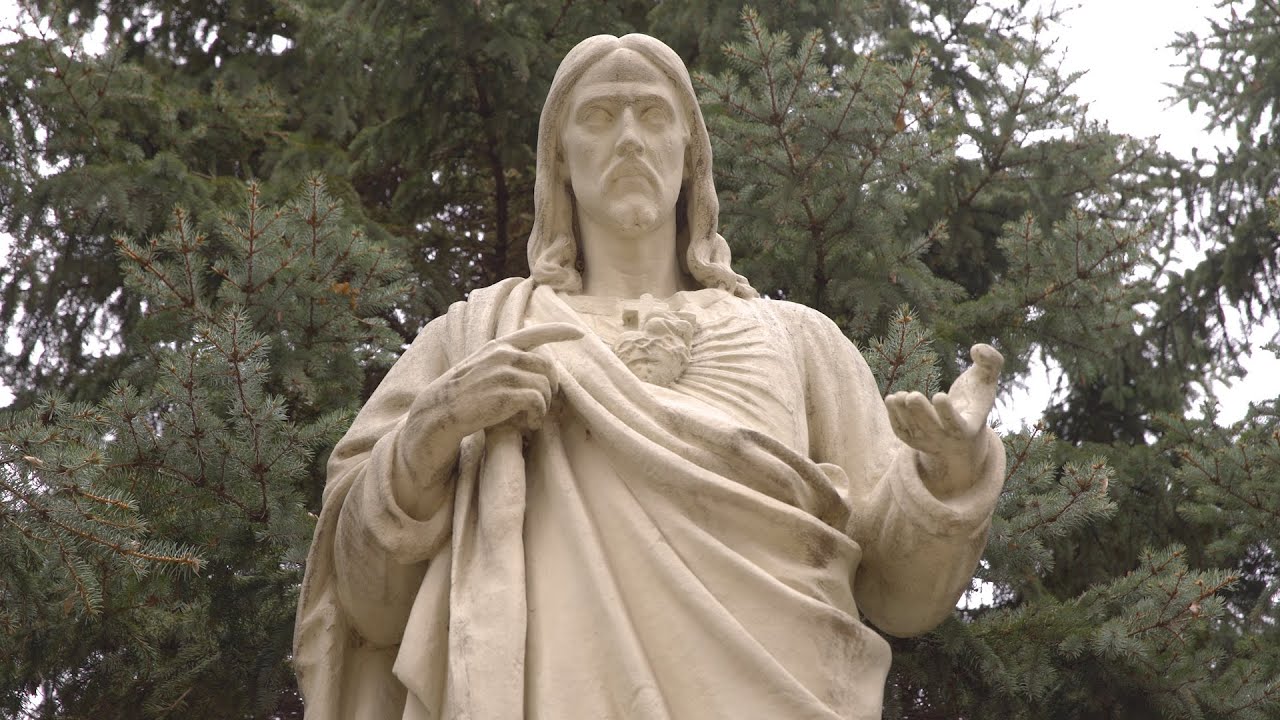
Recharge your heart and soul by plugging them back into the Sacred Heart. “Jesus, meek and humble of heart, make my heart like unto Thine.” So Jesus here, he’s not condemning hospitality. He’s not saying don’t serve. He’s saying service is good, but intimacy with Christ is the better part. Service is good, but intimacy with Christ needs to come first. And that’s the fuel, and the right perspective, for everything else. We end up skipping church or prayer because we’re too busy, we don’t have time. And then we get upset that we feel that we’re just spinning our wheels, and we’re always busy and tired.

 And on the other side, we can fall into a kind of entitlement mentality. Why am I not being recognized? Why am I not getting the good things? I’ve been doing everything right. I’ve been praying. I’ve been being faithful. Why would God let this bad thing happen to me? Show me where in the Bible where Jesus said that bad things wouldn’t happen, that by being a good person we won’t suffer. He even warns them in the Last Supper about all these terrible things that are going to happen. And then he says, I tell you all this now, so you will know that I know you are suffering, and I am with you always. In this world, you will have trouble, but take courage, I have overcome the world. You will not overcome it. But if you have me, I will provide a way. I am the way. And that’s our bridge into our last section here, the second reading.

I remember a lecture by Dr. Scott Hahn in which he said that Colossians 1:24 was one of the key verses of his Catholic conversion. “I am filling up what is lacking in the afflictions of Christ.” We know that the afflictions of Christ are perfectly sufficient for our salvation. So what could Paul mean by this? Dr. Hahn said he looked up dozens of different commentaries and explanations and ended up dividing them into three piles. Ones which just ignored the difficulty, ones which gave a rather unsatisfactory explanation, and ones which gave a pretty convincing explanation. And he noticed that the third category was all from Catholic sources. To sum up, it is what we call, “redemptive suffering.” It’s behind what a Catholic means when we say, “Offer it up.” It means that we unite our sufferings into the suffering of Christ, and he draws us more deeply into the mystery and grace of his suffering. We then receive the two-fold benefit of having our suffering unite us more perfectly to Christ’s perfect love, purifying ourselves of distractions and errors and self-pity, to be made into a more selfless, self-surrendering gift to God. But also, God allows our suffering with Christ to give us grace through Christ that we can offer for a particular holy intention, such as our loved ones. What is lacking in the afflictions of Christ is our offering up of our suffering, our affliction, into the afflictions of Christ, so that we become sanctified by our own suffering with Christ, and through that, we also become vessels of the grace of the afflictions of Christ into the world around us.

And what strikes me, personally, as a priest, is the rest of Paul’s sentence. He says: “Now I rejoice in my sufferings for your sake, and in my flesh I am filling up what is lacking in the afflictions of Christ on behalf of his body, which is the church, of which I am a minister in accordance with God’s stewardship given to me to bring to completion for you the word of God, the mystery hidden from ages and from generations past.” Paul feels that, by his ordained vocation as their spiritual father, he has a special obligation and privilege of offering his afflictions for the people he is appointed by God to care for, to offer the grace of his redemptive suffering on behalf of the church, to help bring his people into the fullness of the mystery, now revealed in Christ, which is God’s suffering and saving love for us.

So what do we do with this? We tie it back to Martha and Mary. Mary chose the better part, the one thing, which is uniting herself, forming her heart, by intimate discipleship of Christ. We need to do the works of Martha, but in the spirit of Mary. Fill your heart with Christ, unite yourself to his love poured out for you, and nourished from that source, do your work. Serve God and others, as your participation, your unique personal share of loving others, offering your suffering for others, from the overflowing wellspring of divine life and love within you, out into the world and the people around us. That’s why putting God first is the first thing. That’s the main thing, of not being distracted and worried about many things. Not only avoiding our trying to pour out of an empty tank, trying to do the divine work before us with only our own human resources, but also to understand what is the most important work for us that we are called to do, and how the other things are rightly sorted after it. There is need of only one thing, the better part, and it will not be taken from us.

Homily: Gathering the Harvest

14th Sunday in Ordinary Time (Year C)
Isaiah 66:10-14c
Psalm 66:1-3, 4-5, 6-7, 16, 20
Galatians 6:14-18
Luke 10:1-12, 17-20 


St. Philip Neri, who earned the title “Apostle of Rome”, is an example of the missionary zeal in today’s Gospel. Philip came to Rome in the early 1500s as an immigrant. He was horrified by the moral condition of the city. Philip prayed to God to learn what he might do. He read the letters that St. Francis Xavier had sent back from India, where he had been converting tens of thousands. Philip thought that God was calling him to follow the great missionary to India. When he told his spiritual director what he thought God was asking of him, the wise old priest affirmed his desire to bear witness to Christ. However, he told Philip to focus his attention on re-evangelizing those around him, declaring, “Rome is to be your India!” Philip, relying on God’s help, started — first as a layman, then as a priest — to convert Rome. He would cheerfully go to street corners and say, “Friends, when are we going to start to do good?” He developed various social and religious activities to give the people better alternatives for their hearts and time than those offered by the culture around them. When he died in 1595, much of Rome had been reconverted. This would also be a good example of what the Church in the 20th century is calling “The New Evangelization,” to call back to faithful discipleship those who already received the gospel yet have fallen away from following it. The same God who spoke to Philip almost five hundred years ago challenges each one of us this morning through the Scriptures, “Your home and your family, your workplace and your parish are your mission field!” Or to use one of my favorite phrases, “Bloom where you’re planted.

Our Gospel reading reminds us of when Jesus first sent out his twelve apostles. And he had given them a share in his power and authority. It says, “He summoned the Twelve and gave them power and authority over all demons and to cure diseases, and he sent them to proclaim the kingdom of God and to heal [the sick].

The scene in our gospel reading is in the chapter of Saint Luke’s gospel after that, and here Jesus sends out seventy-two disciples. Here it says, “At that time the Lord appointed seventy-two others whom he sent ahead of him in pairs to every town and place he intended to visit. He said to them, ‘The harvest is abundant, but the laborers are few; so, ask the master of the harvest to send out laborers for his harvest. Go on your way; behold, I am sending you like lambs among wolves.

So, some interesting things to notice here. First, we might hear it said by some Christians that Jesus didn’t have organization to his followers, they were a motley crew of believers who just went out and shared the good news about Jesus. However, the gospels, especially Matthew, present Jesus as a new Moses, a new prophetic lawgiver. Moses was instructed by God to ordain Aaron and his two sons, and then, again instructed by God, appointed seventy elders to help him in his ministry over the twelve tribes of Israel. Jesus frequently set apart Peter, James and John as special witnesses of his works, he had twelve apostles, and now commissions seventy (or seventy-two) to assist him in his ministry. Just as in Jesus’ time, there was the High Priest, and the Sanhedrin, or high council, of seventy (or seventy-two) elders. So, Jesus is not being random here, it is very intentional. He is establishing something new, but in a well-established structure.

He tells them of their purpose: not only prepare the way for him, but also recruit more laborers; to reap the harvest that the master of the harvest has already prepared in the hearts of those who will respond and join in the work to be done for the kingdom.

And he tells them that it will not necessarily go smoothly, like lambs among wolves. There’s a quote attributed to G. K. Chesterton that says, “Jesus promised his disciples three things—that they would be completely fearless, absurdly happy, and in constant trouble.” We sometimes need to remember that the gospels are written after Pentecost to often suffering communities of the faithful, to both better instruct them in the faith, and also to inspire them to live out the faith. And so sometimes the current experiences of the community, such as suffering persecution, feeling like lambs among wolves, are written in the gospels as part of that affirmation that they are living out what Jesus had taught.

The rest of the instructions that Jesus gives the seventy-two are almost the same as what he had told the twelve in the previous chapter. But the ending here is wonderfully important. “The seventy-two returned rejoicing, and said, ‘Lord, even the demons are subject to us because of your name.’ Jesus said, ‘I have observed Satan fall like lightning from the sky. Behold, I have given you the power to ‘tread upon serpents’ and scorpions and upon the full force of the enemy and nothing will harm you.  Nevertheless, do not rejoice because the spirits are subject to you, but rejoice because your names are written in heaven.’” So obviously as we all know, there is great joy in seeing how God has worked through us to help someone else. He has given his Church a share in his power and authority to vanquish demons and other evils, represented here by Old Testament references to serpents and scorpions, by Jesus’ authority. And he says something we’ve often heard, the war of good and evil is already won. But the spiritual battles continue. There’s another old quote, “When Satan reminds you of your past, you remind him of his future.” But there we see the crux of the gospel reading: don’t rejoice just because you saw the losing side losing; rejoice because by your faith you are on the winning side winning. You’re on the right side, even when it doesn’t seem that way. Again, that affirmation and encouragement the Word of God provides us for difficult times.

This ties in beautifully with our first reading from the Old Testament prophet Isaiah, giving Israel, represented by its mother city of Jerusalem, God’s promise of victory and consolation. And we know that this promise, this victory, is won by the fulfillment of the long-awaited Messiah of Israel, Jesus Christ, and in the Church, the fulfillment of Israel. Isaiah says, “Thus says the LORD: Rejoice with Jerusalem and be glad because of her, all you who love her; exult with her, all you who were mourning over her!” Another great quote, again by Chesterton, “Christianity has died many times and risen again; for it had a God who knew the way out of the grave.” Back to the reading, with God speaking through Isaiah, “Lo, I will spread prosperity over Jerusalem like a river, and the wealth of the nations like an overflowing torrent… as a mother comforts her child, so will I comfort you; in Jerusalem you shall find your comfort. When you see this, your heart shall rejoice…the LORD’s power shall be known to his servants.” The traditional understanding of the prophecy of the world’s treasures flowing toward Jerusalem, is the opposite of how it was ultimately fulfilled: not that they would come to Jerusalem, but that the faith and the divine kingdom that started in Jerusalem, the Church, would flow out to include all the world. And we find our greatest comfort, our peace and affirmation of love in the Church, in God, and when we see this, the Lord’s power is known to those who serve him, and our hearts rejoice. So beautiful. Dr. Scott Hahn has a book called, “A Father Who Keeps His Promises,” and it’s about things like this, how the promises of the Old Testament are fulfilled in the New Testament.

And lastly, as is often the case, Saint Paul brings it home in the second reading. “Brothers and sisters: may I never boast except in the cross of our Lord Jesus Christ, through which the world has been crucified to me, and I to the world. For neither does circumcision mean anything, nor does uncircumcision, but only a new creation.” We don’t put our hearts, our worth, our identity, our priority, on anything in this passing world. Certainly, there are things that are both urgent and important, and cause us stress, but never to the extent that they interfere with the faith and worship we owe to God, and nourishing our relationship with Him. We are made a new creation in Him, still body and spirit, still with bills to pay and problems to solve, but one who has peace that the world cannot give. Happiness that comes from knowing we have a great purpose, even to our suffering, and in God’s plan for our life and our salvation, he included how dumb we can be sometimes, and to me, that is a great comfort. So let us continue detaching our sense of self and priorities from this world and strengthen their hold on the true and eternal world to come. And help and inspire others to do the same. “The grace of our Lord Jesus Christ be with your spirit, brothers and sisters. Amen.

Solemnity of Saints Peter and Paul, Apostles

Saint Peter, with upside-down cross of his crucifixion and the keys of the kingdom.
Saint Paul, with the sword, both the instrument of his martyrdom, and the Word of God

Solemnity of Saints Peter and Paul, Apostles (go to readings)
Acts 12:1-11
Psalm 34:2-3, 4-5, 6-7, 8-9
2 Timothy 4:6-8, 17-18
Matthew 16:13-19


One of my favorite movies is “Big Fish,” a 2003 Tim Burton movie with Albert Finney, Ewen McGregor, Steve Buscemi, and of course, Helena Bonham Carter, because it’s a Tim Burton movie. In the movie, the main character, Ed Bloom, is in a hospital on his deathbed, and he has a strained relationship with his son, because everything the father has ever said about his own life is encoded in fantastic stories of mythic proportion, which the son feels has kept them from having an honest relationship. But as the movie goes on, you start to wonder if the myth isn’t in fact more fact than myth, and in fact, the distinction is easy to myth (I mean, “miss”!). The common becomes extraordinary, and vice versa. We’re made for stories, and myth makes the stories memorable and inspiring. And even in myth, the truth is just under the surface. An old Irish priest, Fr. McNeil, once told me, “All stories are true. And some of them actually happened.”

Our story as Christians is encapsulated between the inspired books of Genesis and the Apocalypse, our origin story and our destiny. The rest of Scripture and Tradition fills in details, while our Catholic faith informs it so that our lives are our own personal part of this great epic drama of salvation history.

The poet Virgil, in his epic poem, the Aeneid, tells the ancient story of the founding of the city of Rome. Aeneus takes his family and flees from the fall of Troy to start a new city on the Italian peninsula (The Aeneid is from the first century BC, and builds on earlier stories of Aeneus, most popularly Homer’s 8th century BC epic poem, the Iliad). He becomes the ancestor of the twin brothers Romulus and Remus, about whom there are many stories, some more believable than others, sometimes involving being brought up by a mother wolf. Eventually, they were raised as shepherds. When they were grown to adulthood, they one day got into a pastoral altercation with another nearby shepherd, and the brothers decided to build a fortified city. But they could not agree on where.

The Seven Hills of what would become Rome were the general area, but Romulus chose the Palatine Hill, while Remus preferred the Aventine. Each set out to build, and when Remus made fun of Romulus’ defensive walls by having the audacity to jump over them to show their uselessness, Romulus ended the matter by killing his brother. Thus, in a story echoing the tragic account from Genesis, a sort of “original sin” came to Rome by way of fratricide. In his work, The City of God, Saint Augustine, who was well acquainted with Roman myths, would compare the story of Romulus and Remus to that of Cain and Abel.

By the time we come to the mid-fifth century, the era of persecution now mostly a thing of the past, the City of Rome having been substantially Christianized, a newer founding narrative comes into the Roman consciousness: This narrative depicts the Holy Apostles Peter and Paul, shepherds, pastors, brothers in the faith and in the Apostolic College, as the founders of the new and eternal Rome, something better and more noble than its pagan origin story. In a homily preached for the Feast of Saints Peter and Paul in the year 441, Pope Saint Leo the Great says:

That reverence which today’s festival has gained from all the world, it is to be honored with special exultation in our city, that there may be a predominance of gladness in the place where the chief of the Apostles met their glorious end. For these are the men, through whom the light of Christ’s gospel shone on you, O Rome, and through whom you, who was the teacher of error, was made the disciple of Truth. These are your holy Fathers and true shepherds, who built you under much better and happier auspices than they, by whose zeal the first foundations of your walls were laid: and of whom the one that gave you your name defiled you with his brother’s blood. These [the apostles] are they who promoted you to such glory, that being made a holy nation, a chosen people, a priestly and royal state [1 Peter 2:9], and the head of the world through the blessed Peter’s holy See, you attained a wider sway by the worship of God than by earthly government. For although you were increased by many victories, and extended your rule on land and sea, yet what your toils in war subdued, is less than what the peace of Christ has conquered.

Thus, we will often see in the ancient documents and doctors of the Church references to “Peter and Paul” as a pair, as brothers in the Christian Faith, as the tradtional foundation of Christendom.

 Like Mary and Martha, the sister virtues of “ora et labora” (to take a traditional Benedictine phrase), “prayer and work,” we see a holy complementarity in this pairing. As Mary is often associated with the virtues of the contemplative life, sitting at the feet of the Lord, and Martha with the virtues of the active life, showing hospitality, caring for the needy, providing food for the hungry, etc., we also see a complementarity in the figures of Peter and Paul. Peter is often associated with the charisms of the hierarchical church, the structure of organization and the sacraments, the noble grandeur of the Mass and the great basilicas and cathedrals, the organization of laws and instructions for order and discipline in the People of God. Meanwhile Saint Paul is more often associated with the charismatic evangelization, going out to the fringes to make disciples, preaching the gospel, as well as the building up of the mystical body of Christ through the spiritual gifts given to its members for serving the community.

This complementarity is not strictly mutually exclusive. Peter also had mystical visions and experiences and the holy charisms of his office received from Jesus and which Peter passed on to his successors. And Paul also taught rules and boundaries for discipline and correction within the Christian communities. And of course, both of them, in Peter’s denial in the garden, and Paul’s zealous persecution of the Church, had stories of their shame and forgiveness that inspired their personal love of the Lord and their mission to spread the gospel.

Our readings contemplate key moments in the holy lives of these Apostles, particularly near their end. After Herod had already martyred Saint James, Saint Peter is arrested, as it says, during the feast of unleavened bread, with intention of having him brought out, presumably for a meaningless trial and tortuous martyrdom, after Passover. So we see Peter, now full of the Holy Spirit after Pentecost, courageously living out that love of God and the Church that he was unable to muster in dialogue with Jesus by the seashore, but in which Jesus calls him both to be his shepherd of his flock, and also to follow him, and we see in Saint Peter an echo of the passion of Christ. Saint Paul is writing to Timothy in our second reading, aware, as the Spirit has told him, that his martyrdom is also drawing close. “I… am already being poured out like a libation, and the time of my departure is at hand. I have competed well; I have finished the race; I have kept the faith… so that through me the proclamation might be completed, and all the Gentiles might hear it.”

And so to end, I want to contemplate an interesting contrast between Peter and Paul that we can take with us today. I had a gentleman in spiritual direction, a successful business owner, pose this question to me. We have this scene in our first reading from Acts 12, of Peter in prison, and he’s given an out, a way to escape prison. And he goes, and it’s the right thing. But later, in Acts 16, we have the scene of Paul in prison with Silas. And because of an earthquake, the jail’s foundation was broken, the doors and chains came loose, and he’s given an out, a way to escape, but he stays, and it’s the right thing. So, the same or similar situation, and one time the right thing was one thing, and another time the right thing was the almost-opposite thing. So how do we know what we’re supposed to do?

I had to think about that, and we talked, as we exchanged ideas, exploring this question. And what we came up with was very interesting, I think. Our reasoning for asking the question, “Given these sets of circumstances, how do I know what choice to make?” can be a way of asking, “How do I make a rule so that I know what I should do, without having to ask God what I should do?” It’s a subtle attempt to substitute a relationship with God with our independence from him. Certainly, rules and principles of ethical and moral choices are important. But instead of (or in addition to) setting out to create a schema in which we want to always know the right response to every moral dilemma, we should always be turning toward God, after the example of St. Peter and St. Paul, and ask Him, in every circumstance, “God, what do you want me to do? Here I am, Lord. Send me. Lead me. Help me to love you, to listen to you, and to follow you.” Let Him be the writer of your amazing story, so full of miracles it’s almost hard to believe it’s all true.

Homily: Behold God’s Love for You

Solemnity of the Body and Blood of Christ – June 22, 2025 (Year C) go to readings
Genesis 14:18-20
Psalm 110:1, 2, 3, 4
1 Corinthians 11:23-26
Luke 9:11b-17


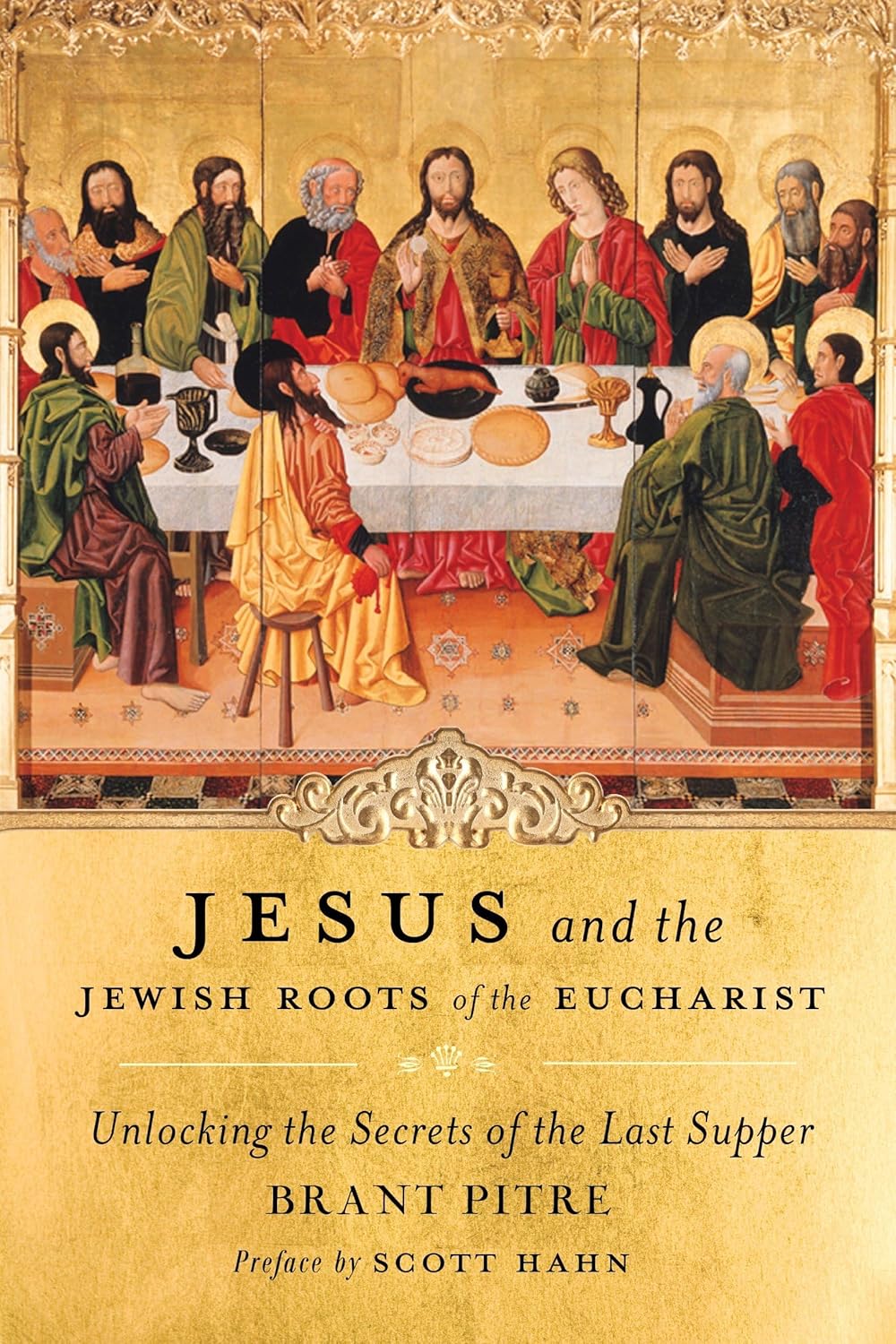
“Behold God’s Love for You!” In his book, “Jesus and the Jewish Roots of the Eucharist,” Catholic author Dr. Brant Pitre poses the question, “Why did the early Christians so strongly believe in the real presence of Jesus in the Eucharist, and yet modern Christians struggle with this belief? And he proposes the answer that it is “because the early Christians knew the Jewish scriptures, the Old Testament, better than most modern Christians do.” And in his book, he traces the Eucharist along three threads that weave through the Old Testament. He looks at the Passover Lamb, the Manna in the wilderness, and my favorite one, the bread of presence in the Holy Place in the Temple.

To make a long story less long, the proper translation of the Jewish “lahem ha panim” is “the Bread of the Face of God.” It was a visible presentation of the invisible God, and it was twelve cakes of bread, a grain offering, also called an oblation, on a golden table, also with a flagon of wine, that were always to be present in the Holy Place with the golden lampstand. The golden lampstand, in Hebrew, a menorah, was always lit in the presence of the Lord, represented by the mercy seat on the golden box that was the ark of the covenant. And the bread and wine were an offering to the Lord by the priest on behalf of the children of Israel as an everlasting covenant, says the book of Leviticus.

Here is my favorite part. On the major pilgrimage feasts of Jewish Tradition (Passover, Pentecost, Tabernacles), all Jewish men were required to go to the Jerusalem Temple. In fact, the law didn’t just say they were required to go to the Temple, but they were required “see the face of the LORD”. How many psalms are there of an impatient pilgrim on his journey to Jerusalem singing, “when may I come to see the face of God?” And on these feasts, the temple priests would solemnly carry the table of the holy bread, from the holy place in the Temple to the outer courts, and while they lifted up the table, they would proclaim, “Behold God’s love for you!

The holy bread of the presence of God was called the bread of the covenant, not a sign or symbol of the covenant, along with the wine that was poured out as a libation offering. The bread made present the invisible God, as it was a promise of the invisible temple of which the visible temple was a participation and promise. The bread, before it was offered, could be placed on any surface, but after it was consecrated, it was the miraculous food of the holy place, and could only be laid on a surface of gold.

Toward the end of this chapter, Dr. Pitre raises two points: First, in the Holy Place in the temple, as we said, there was the gold box of the presence of God, whom we would call God the Father; there was the lampstand, the tongues of fire, always present with the ark of the Lord, who do we associate with tongues of Fire? The Holy Spirit. And so we have the Father, the Holy Spirit, and this “bread of the presence of God,” the bread of the everlasting covenant, so this would be…God the Son. We have the Holy Trinity presented in the Holy Place in the Temple way back in the beginnings of the Old Testament! And what do we have front and center in the holiest place of a Catholic sanctuary? A gold box! And what is always close to the gold box in every Catholic sanctuary? A sanctuary candle, always lit in the presence of the Lord. And what do we have on the altar in the Eucharist in every Catholic sanctuary? The bread of the presence of God, and the offering of wine. The sanctuary is based on the holy place of the Temple, which was based on the image God showed Moses in constructing the Tent of Meeting.

In the Passover, the tradition would have been to have a lamb (also called “the body”) on the table. And of course, one of the criteria of completing the Passover is not just that you sacrifice the lamb, but you have to eat the body of the lamb. If the New Testament lamb of the Passover—Jesus, the Lamb of God, who said that the bread was his body—must be greater than the Old Testament lamb of the Passover, then it can’t be a symbol—it can’t be what Jesus intended—because we have to eat the body of the Lamb, not just a symbol of it. It was pretty clear he intended it when he said, “My body (flesh) is true food and my blood is true drink, and unless you eat my flesh and drink my blood, you have no life in you.”

But more to the point, why didn’t Jesus just identify his body with “the body” of the Passover lamb? That would have been an easier image! But where might Jesus have pulled the notion that a he as a person (a divine person!) can be made present in bread and wine? From the Temple: the sign of God’s real presence to Israel, and the covenant offering from Israel to God.

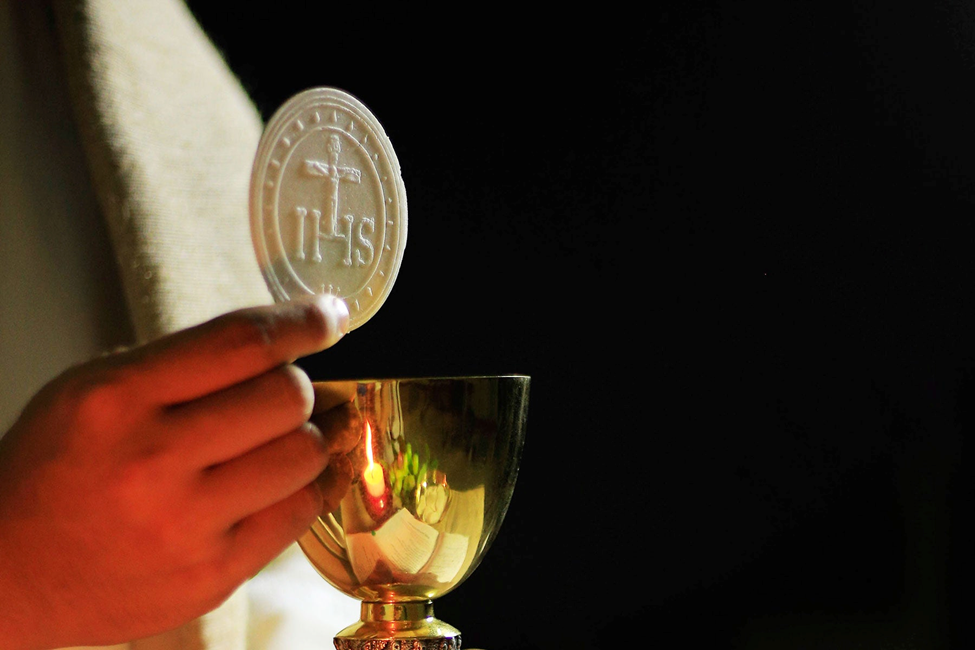
And so, in the Mass, after the people of God chant the Agnus Dei, the Lamb of God, the priest holds up the consecrated bread and wine, the body and blood of Jesus, crucified and resurrected for our salvation, and the priest proclaims, “Behold the Lamb of God!” But also, in my heart as I proclaim that, I’m also thinking, “Behold God’s love for you! Behold the face of the God who loves you so much, that he became human for you, was crucified and died for you, and rose again for you, to send the Holy Spirit upon you, and through that same Holy Spirit, now gives himself to you, to feed and nourish you with the bread that came down from heaven!”

And again, if the Old Testament manna was really understood to be bread from heaven, then the New Testament manna, the Eucharist, must be really understood to be bread from heaven and more, not less. It cannot be merely a symbol or reminder of bread from heaven, it must be a greater reality in the New Testament. It must be more than the miraculous bread that God gave his people in the Old Testament to nourish them as their food for the journey, to strengthen them through their preparations to become His people and live as His people and worship him, set apart, consecrated, as his peculiar and holy people, as a sign and promise for the world.

The Eucharist is more than the manna, and it is more than the sacrificial lamb of the Passover, and it is more than the bread and wine of the Temple that became the presence and the face of God. When we are on our knees receiving the gift of Jesus of Himself in the Eucharist, raised up to draw all men to himself, through the Holy Spirit, when the minister of communion holds up the host in front of you, in that moment of Eucharistic Adoration, and proclaims to you, “The body of Christ,” you should also hear the words in your heart, “Behold God’s love for you,” and you can respond with a reverent and joyful profession of faith, “Amen.”