
Feast of the Exulatation of the Holy Cross (Sept 14) (go to readings)
Numbers 21:4b-9
Psalm 78:1bc-2, 34-35, 36-37, 38
Philippians 2:6-11
John 3:13-17
Last week in the gospel reading we heard Jesus tell his disciples, “Whoever does not carry his own cross and come after me cannot be my disciple.” Today we celebrate the Feast of the Exaltation of the Cross. So let’s look at the mystery of the cross.
Our first reading is from one of the first books in the bible, the book of Numbers. It presents the people of Israel on their exodus from Egypt to the promised land, and this book picks up after they enter into the covenant and set out from Mount Sinai.
All along the journey, the Israelites have been murmuring against Moses and against God. Just a note, my friends, the people murmuring among themselves is never a good thing in the bible. Always a temptation; never a good thing. In response to their complaining that they would rather go back to Egypt to full bellies and slavery, than embraces the invitation to the challenges to purify their hearts from slavery and become truly free as the people of God, God had given them the encouragement of the miracle of the manna, the miraculous bread of heaven that covered the land each morning, except for the Sabbath, and which would finish with their first Passover in the Promised Land. And each evening God sent quail into the camp and people ate them. And to slake their thirst, God provided water from the rock in the wilderness. And that kept them content, for a moment. Then we pick up with our reading today: “With their patience worn out by the journey, the people complained against God and Moses, ‘Why have you brought us up from Egypt to die in this desert, where there is no food or water? We are disgusted with this wretched food!’” Their response to the miraculous bread of heaven is “we are disgusted with this wretched food!?” Now, to borrow from the Hebrew language, that’s some chutzpah. Or to say it in English, “the audacity!”
God, in punishment, overruns their camp with seraph serpents. Seraph is from the Hebrew word for “burning.” The highest choir of angels are the “seraphim,” the “burning ones,” the ones closest and who most intimately participate in the burning furnace of divine love. So presumably the bite of these seraph serpents caused inflammation, a burning reaction, and many of the people died. And this divine punishment on Israel had its intended effect. “Then the people came to Moses and said, ‘We have sinned in complaining against the LORD and you. Pray the LORD to take the serpents from us.’” Holy punishment is always out of love, and with the hope of conversion, reconciliation, and salvation. The same with the regulations taught by the Church. It’s not intended to exclude but given out of love for the integrity of the person and the faith, and with the hope of conversion, reconciliation, and salvation. How people respond to it is up to their free will, and their choice of humility or pride.
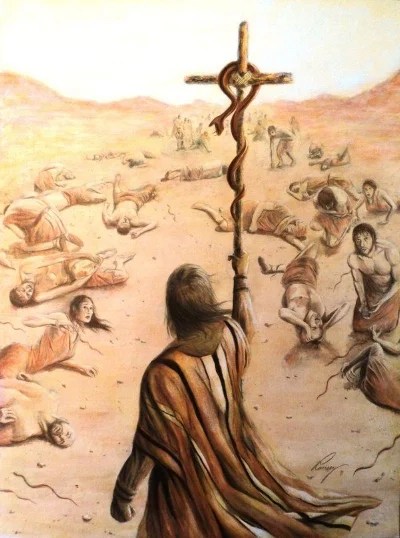
So now we get to why this reading was chosen for today’s feast: “So Moses prayed for the people, and the LORD said to Moses, ‘Make a seraph and mount it on a pole, and if any who have been bitten look at it, they will live.’ Moses accordingly made a bronze serpent and mounted it on a pole, and whenever anyone who had been bitten by a serpent looked at the bronze serpent, he lived.” Now, while the psalm and second reading are important for today’s feast, I want to skip to the gospel reading, with these words fresh in our minds.
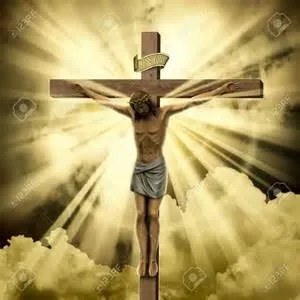
“Jesus said to Nicodemus… ‘And just as Moses lifted up the serpent in the desert, so must the Son of Man be lifted up, so that everyone who believes in him may have eternal life.’” Why does Jesus make a reference to the serpent on the pole? I’ve heard people say that the serpent is one of the Old Testament images of Jesus. I’m sorry, I don’t think so. The biblical image of a serpent is usually the opposite of Jesus. So, what is it then? It’s an image of the cost of our rebellion against God. Think about what Jesus looked like on the cross. Scourged at the pillar, crowned with thorns, carried and was nailed to the cross (bloody, beaten, and naked). Now, some people rightly say that thousands of people were crucified by the Roman Empire; Jesus wasn’t unique in being crucified. True. But Jesus was unique in carrying the enitre weight of humanity’s rebellion against God, our sin and anger and resentment and pride and infidelity and disobedience against God, bearing all that in his humanity, held together by his divinity. His appearance on the cross was horrific to behold. Like the Israelites being instructed to look at the bronze serpent, the consequence of their rebellion against God, we can look at a crucifix and see the consequence of our rebellion against God. And we can see the love of God in that he accepted the consequence of our sin to save us. The word “salvation” and the word “healing” come from the same root. Something that is “salutary” is both for our salvation and for our healing. So, it isn’t just that Jesus was crucified to save us, like he wrote a check to cover our debt to let us off the hook. He was crucified also to heal us, to root out from within us the poisonous spirit of sin and death, that he might put in us his Holy Spirit of light and eternal life.
We have the obligation to live out, in this life and in this world, this holy spirit of light and eternal life. I often say at funerals that we often say that our dearly departed has recently entered eternal life. In a way, yes, but that’s not really accurate. They entered eternal life at their baptism (when they die to the spirit of fallen humanity, and take on the spirit of Christ). And hopefully that person had discerned and lived out this new spiritual life, by how they exercise their free will, live out their vocation to holiness, and fulfill their particular mission in the Body of Christ for God’s plan of salvation for the world. That’s what all of us are called to, obligated to. It’s what every human being is created for, and where we find our deepest joy, peace, and fulfillment. And so it is our obligation of love to share that message and call people to this truth, that they, also, would know the deep joy, peace, and fulfillment of living out their vocation.
This week, as we were just recovering from all the media coverage and reactions to the shooting at Annunciation Catholic School in Minneapolis two weeks earlier, then on the eve of remembering how September 11, 2001 rocked our American society with shocking tragedy, on Wednesday, September 10 our American society was again rocked with shocking tragedy at the killing of Charlie Kirk in the middle of a conversation with an opponent about mass shooters and gun violence.

Mass media and social media have been flooded with messages of his noble and friendly character, his strong Christian faith, and how they informed his well-defended political and social values, but most especially, how he saw it as his mission to talk, to engage, to listen, to ask questions, to be truly open to the joy of meeting other people, even (or maybe especially) if they disagreed with him, and doing what he could, as he saw it, to lead them more deeply into truth. Of course many people, especially on the college campuses where he did much of his public debates, disagreed with his Christian or conservative views, and many saw him as a dangerous voice promoting what they saw as hate. But to his core, even publicly acknowledging that he had received death threats against himself and his family, Charlie led his life courageously, engaged opponents with genuine openness, and fully giving God the credit for any of his success, professionally or personally, including the virtues of his character, and the beautiful gift of his family. He saw and accepted the inherent danger and vulnerability of his public events as the cross he was called to carry for his personal vocation to spread the gospel and speak the truth.
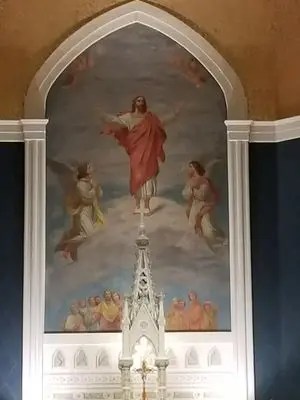
And this then is the final part of our reflection. The area in our life where we know we are most weak, where we are most tempted, where we most sin, where know we need God’s grace to help us, requires the cross of our humility, to acknowledge we need God, and to reach up, like a little child, to ask God for his help. And because we know God will give us his help, and that this area of weakness is where we will experience his love and grace poured into our life, we can exalt in the cross of our weakness, because asking God into our life is what will save us, and that area of weakness is where we are most of aware of our need for that. St. Paul was never ashamed to speak about his weakness, “I will rather boast most gladly of my weaknesses, in order that the power of Christ may dwell with me.”, “I was once a blasphemer and a persecutor and an arrogant man, but I have been mercifully treated…Indeed, the grace of our Lord has been abundant,” and “It is not I who live, but Christ who lives within me.” And in our gratitude we lift up our praise to Jesus, we lift up Christ, who came into our humanity with his divinity. That’s the meaning of our incarnation. We lift up Christ as our hope in God. Jesus is our perfect offering of prayer and worship of the Father. Jesus said, “When I am lifted up, I shall draw all men to myself.” That means a number of things. It means when he is lifted up on the cross for our repentance, and to pay the cost of the salvation of all humanity. It means when he is lifted up in the resurrection in victory over death. It means when he is lifted up in the ascension and crowned with glory. It means when he is lifted up in our hearts and acknowledged, worshiped, and obeyed as our Lord and our God. The Greek for that “lifted up”, also means exalted, hupsoó. It is similar to what we find in our second reading from the letter to the Philippians, “God highly exalted him, hyper-hupsoó, for his obedient, faithful, incomprehensible sacrifice in love in embracing his part in the plan of salvation, his death and resurrection to save us.
So, in our feast we celebrate today we lift up, we exalt, the cross, because by his holy Cross he has redeemed the world. We lift up the cross we carry of our own weakness, because in entrusting our weakness to Christ as an offering to be transformed by his grace, we are made strong in Him.”For God so loved the world that he gave his only Son… [not] to condemn the world, but that the world might be saved through him.”

 The Snarky Vicar