Homily: The Main Thing

Twenty-fifth Sunday of Ordinary Time (Year C) (go to readings)
Amos 8:4-7
Psalm 113:1-2, 4-6, 7-8
1 Timothy 2:1-8
Luke 16:1-13


A recent article about an interview with Pope Leo XIV summarizes his message, “My priority is the Gospel, not solving the world’s problems.” In the interview, Pope Leo says, “I don’t see my primary role as trying to be the solver of the world’s problems. I don’t see my role as that at all, really, although I think that the Church has a voice, a message that needs to continue to be preached, to be spoken and spoken loudly.”

In today’s social and political climate, it’s too easy to get pulled away from what should be our main mission. In the words of Stephen Covey, “The main thing is to keep the main thing the main thing.” And the main thing for the Church is to carry forward the message of the gospel of Jesus Christ, in how we think, how we see the world, how we speak, and how we live.

In a recent parish meeting we were talking about the call to evangelization, and how Catholics seem to be notoriously shy about stepping up as messengers of the gospel. And the comment was made that the last few generations of Catholics feel very underequipped to talk about our faith. And there is so much that the Catholic Church has taught and done across two thousand years, it’s difficult for anyone to feel comfortable with their understanding of all this and to have what feels like an awkward conversation about the faith.

Fair enough. But is that what evangelization is? Teaching theology and Church history? How many people have seen the Lord of the Rings movies? Did you like them? Were they amazing? Inspiring? Did you tell anyone that? Did you suggest that they watch them? Maybe even suggest that they read the books? That’s the basic idea of evangelization. We’re not sharing the good news about the Church teachings or history. That’s important, but not the main thing. The main thing is how much we love Jesus, how inspired we are by him, by our relationship with him, by his words in the scriptures and in our hearts, how our lives have more joy, hope, beauty, and love, because our faith in Jesus enriches our life. It can even be our story of how we once were so lost, and the effect of our encounter and putting our faith in him to work in our lives, and how that has been a risk that has paid unbelievable dividends. Saint Paul made his conversion story the basis of all his ministry (“I was once a blasphemer and a persecutor and an arrogant man, but I have been mercifully treated because I acted out of ignorance in my unbelief. Indeed, the grace of our Lord has been abundant, along with the faith and love that are in Christ Jesus.” he says in 1 Tim 1:13). Or the beautiful line of Mary Magdalene which she says to Nicodemus in the Chosen, “I was one way, and now I am completely different. And the thing that happened in between was Him.” And then we ask if they might like to see if coming to Church and hopefully having an encounter with Christ might help them, and we tell them we’ll meet them at Church.

I think Catholics sometimes use our poor catechesis (which indeed is a tragic reality) about our faith as a delay tactic. After I take some bible courses or join this prayer group, or this catechesis class, and maybe after that, I’ll feel comfortable sharing the gospel. First, please do learn more about our faith (to learn it more is to love it more). Do keep growing your relationship with Jesus (such as spending time in the Adoration Chapel) and sharing with others the peace and joy that comes from that quality time with the Lord. Your own words flowing from your heart shining with the love of Christ are your best tools of evangelization! But second, that will not make you comfortable sharing the gospel. The only thing that will make it comfortable is to keep doing it, like other things that feel awkward at first, but you get better at it.

But it’s easy to get caught up in the world. To have a strong opinion, the right opinion, and get fixated on correcting the other side for their errors of judgment, facts (or ignorance of facts), and beliefs. It’s easy to get caught up in defending one side or the other, or a particular figure, perhaps one villanized or silenced by the machinations of political opponents. And of course we know of the rash of shocking tragedies that have rocked our society, especially the police officers shot near Spring Grove. We thank them for their service, pray for the three who died, and the two recovering in the hospital, and their families and fellow officers and other first responders, and for an end of violence and the taking of innocent human life. This is an important thing, but not the main thing.


Our Old Testament reading from the prophet Amos harshly criticizes those caught up in the values of the world, particularly the greed and selfishness that gives God the minimum while being impatient to get back to “real life” and making money, even to the extent of being dishonest in business. “When will the new moon be over,” you ask, “that we may sell our grain, and the sabbath, that we may display the wheat?” How much longer is Mass going to last? Why do I have to go to Mass on Holy Days of Obligation? These get in the way of work and my schedule, “my time.”  Maybe I can sneak out before it’s over, especially if it means I don’t have to deal with other people in the parking lot. Why does the Church say we have to do this or that, or it says we can’t do this or that? Everyone else seems more free to do what they want.

God has given us everything, he gave the maximum sacrifice, he gives the maximum revelation, the maximum grace, he even made the best possible most beautiful world, which he then entrusted to our stewardship in our free will. God is perfect in all things, including his generosity. And our response should not only be what is required of us, but it should be with joy and thanksgiving, and to return the maximum to him in his glory and goodness. If we made our entire life, our maximum offering, to him, with the same family, job, vocation, and gifts that he has given us, how would our life look different? Not only staying for all of the Mass, but having read and prayed on the readings as our preparation, arriving early to focus our hearts, being as engaged as possible during the liturgy and our spoken and sung participation, receiving the Eucharist with maximum reverence, and staying a few minutes after Mass to give thanks and ask for his blessings throughout the upcoming week. Giving intentionally and generously a portion of our material resources to the support of the Church and to various charitable opportunities. Praying with the scriptures daily, driving with patience and safety, working our best at our jobs (or at school) with maximum virtue, kindness, preparation, and wisdom, living out the various teachings of the Church in their intent to sanctify and open every moment of our lives to glorify God and receive the grace of God available to us, that we might “pray without ceasing” by making our every moment, every aspect of our humanity and our time, talent, and treasure, an offering to him. Would your life be more or less holy? More or less successful? More or less happy? God’s way is always the best way. But that’s just the fruit of keeping the main thing the main thing—making our life about loving and serving God, including serving him in our neighbors. And if our neighbors don’t know him, inviting them into that relationship and inviting them to church.


Our gospel reading has long been considered one of Jesus’ most difficult parables to understand. Why does he tell of the rich master (usually an image of God in the parables of Jesus), praising a dishonest thief? Without getting into the weeds on the parable, I want to just take a few lines out of it in the time we have here.

For the children of this world are more prudent in dealing with their own generation than are the children of light.” The people committed to worldly life are better at being worldly than the people of faith are at being commited to living like people of faith. The life of faith is meant to be transformative. And a lot of times, people of faith are more like the worldly than we are at living like we are set apart from it. I recently heard a quote that said, “Jesus called us to be salt and light. What do salt and light have in common? They change the environments they come in contact with. They don’t conform, they don’t affirm, they transform what they come in contact with. Are you transforming the environment you are coming in contact with? …We must challenge people to be greater, to reach higher, to be biblical, to be Christlike, as we continue to be salt and light.” That was quoting Charlie Kirk. He may have talked about politics and social issues, but he always kept the main thing the main thing: bringing people to Christ. And in the wake of his death, young adults are checking out church, some for the first time, in a way they haven’t in generations (especially at that stage of life when most Christians drift away from church).

Then one of the difficult phrases of this parable, maybe made even harder with the translation, “I tell you, make friends for yourselves with dishonest wealth, so that when it fails, you will be welcomed into eternal dwellings.” Jesus is using the phrase dishonest wealth to mean the things of this world, passing material things, earthly money. And by making friends with it he means use it to wisely invest it in spiritually beneficial ways, in holy ways, knowing how unimportant it really is in terms of eternity, so that when you leave this world and you can’t take it with you, that you have made yourself into a spiritually rich person, having been a good and holy steward of what was entrusted to your care.

If you are not trustworthy with what belongs to another, who will give you what is yours?” If you are a good and virtuous steward of God’s gifts entrusted to your care, investing them to become rich in what matters to God, you will receive the reward of your responsible care of those gifts: the greatest gift, your eternal life, the perfect fulfillment of your humanity in God, what you were created for. Because you kept the main thing the main thing. You kept your focus on God, on your eternal soul, and the eternal souls of those around you, which you have a responsibility for, to the extent that you have a potential impact on them. Read C. S. Lewis’ essay, “The Weight of Glory,” it’s a beautiful reflection on that topic, of the weight of obligation we have of being a holy influence on others for the sake of their eternal heavenly glory.


And so, it’s easy to think that what is most important is what the world is telling us to be emotionally invested in, or even the worldy effects of the gospel and the Church teachings that flow from it. Yes, there are political, social, and moral dimensions of Church teaching—care for the poor, the environment, for peace, for morality, for human rights, which have their source in God’s generous Creation and our God-given image and dignity.  And as Christians we do need to be involved in the public dialogue, and in voting wisely for what the gospel requires of us. But these are indirect ways of serving the gospel. Secondary things. Not the main thing. The main thing is not solving the problems of the world. The main thing is the gospel. The Church has a prophetic role in the world, the voice of conscience, reminding us of good and evil, life and death, and we should understand, share, and live the prophetic truth of the gospel in our lives. Is it Jesus that comes out of our mouth? That comes out in our actions? Is it Jesus alone that sits on the throne of our heart? He has given us everything. Everything we do is by his generosity poured upon us. Do we respond by serving him as generously in return? Do we praise him, glorify him, serve him, share him, speak to others of him, and keep him as the center of our life?

Because that’s the main thing.

Homily: Exaltation of the Cross

Feast of the Exulatation of the Holy Cross (Sept 14) (go to readings)
Numbers 21:4b-9
Psalm 78:1bc-2, 34-35, 36-37, 38
Philippians 2:6-11
John 3:13-17


Last week in the gospel reading we heard Jesus tell his disciples, “Whoever does not carry his own cross and come after me cannot be my disciple.” Today we celebrate the Feast of the Exaltation of the Cross. So let’s look at the mystery of the cross.

Our first reading is from one of the first books in the bible, the book of Numbers. It presents the people of Israel on their exodus from Egypt to the promised land, and this book picks up after they enter into the covenant and set out from Mount Sinai.

All along the journey, the Israelites have been murmuring against Moses and against God. Just a note, my friends, the people murmuring among themselves is never a good thing in the bible. Always a temptation; never a good thing. In response to their complaining that they would rather go back to Egypt to full bellies and slavery, than embraces the invitation to the challenges to purify their hearts from slavery and become truly free as the people of God, God had given them the encouragement of the miracle of the manna, the miraculous bread of heaven that covered the land each morning, except for the Sabbath, and which would finish with their first Passover in the Promised Land. And each evening God sent quail into the camp and people ate them. And to slake their thirst, God provided water from the rock in the wilderness. And that kept them content, for a moment. Then we pick up with our reading today: “With their patience worn out by the journey, the people complained against God and Moses, ‘Why have you brought us up from Egypt to die in this desert, where there is no food or water? We are disgusted with this wretched food!’” Their response to the miraculous bread of heaven is “we are disgusted with this wretched food!?” Now, to borrow from the Hebrew language, that’s some chutzpah. Or to say it in English, “the audacity!”

God, in punishment, overruns their camp with seraph serpents. Seraph is from the Hebrew word for “burning.” The highest choir of angels are the “seraphim,” the “burning ones,” the ones closest and who most intimately participate in the burning furnace of divine love. So presumably the bite of these seraph serpents caused inflammation, a burning reaction, and many of the people died. And this divine punishment on Israel had its intended effect. “Then the people came to Moses and said, ‘We have sinned in complaining against the LORD and you. Pray the LORD to take the serpents from us.’” Holy punishment is always out of love, and with the hope of conversion, reconciliation, and salvation. The same with the regulations taught by the Church. It’s not intended to exclude but given out of love for the integrity of the person and the faith, and with the hope of conversion, reconciliation, and salvation. How people respond to it is up to their free will, and their choice of humility or pride.

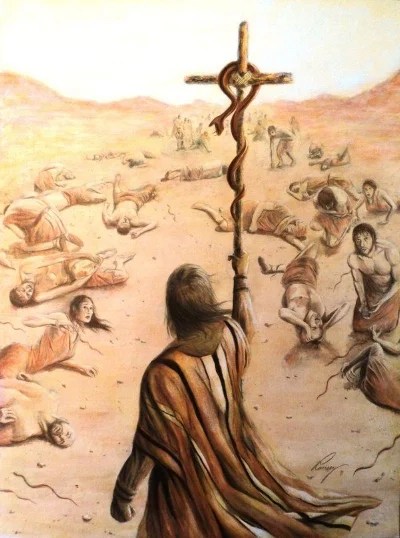
So now we get to why this reading was chosen for today’s feast: “So Moses prayed for the people, and the LORD said to Moses, ‘Make a seraph and mount it on a pole, and if any who have been bitten look at it, they will live.’ Moses accordingly made a bronze serpent and mounted it on a pole, and whenever anyone who had been bitten by a serpent looked at the bronze serpent, he lived.” Now, while the psalm and second reading are important for today’s feast, I want to skip to the gospel reading, with these words fresh in our minds.

Jesus said to Nicodemus… ‘And just as Moses lifted up the serpent in the desert, so must the Son of Man be lifted up, so that everyone who believes in him may have eternal life.’” Why does Jesus make a reference to the serpent on the pole? I’ve heard people say that the serpent is one of the Old Testament images of Jesus. I’m sorry, I don’t think so. The biblical image of a serpent is usually the opposite of Jesus. So, what is it then? It’s an image of the cost of our rebellion against God. Think about what Jesus looked like on the cross. Scourged at the pillar, crowned with thorns, carried and was nailed to the cross (bloody, beaten, and naked). Now, some people rightly say that thousands of people were crucified by the Roman Empire; Jesus wasn’t unique in being crucified. True. But Jesus was unique in carrying the enitre weight of humanity’s rebellion against God, our sin and anger and resentment and pride and infidelity and disobedience against God, bearing all that in his humanity, held together by his divinity. His appearance on the cross was horrific to behold. Like the Israelites being instructed to look at the bronze serpent, the consequence of their rebellion against God, we can look at a crucifix and see the consequence of our rebellion against God. And we can see the love of God in that he accepted the consequence of our sin to save us. The word “salvation” and the word “healing” come from the same root. Something that is “salutary” is both for our salvation and for our healing. So, it isn’t just that Jesus was crucified to save us, like he wrote a check to cover our debt to let us off the hook. He was crucified also to heal us, to root out from within us the poisonous spirit of sin and death, that he might put in us his Holy Spirit of light and eternal life.

We have the obligation to live out, in this life and in this world, this holy spirit of light and eternal life. I often say at funerals that we often say that our dearly departed has recently entered eternal life. In a way, yes, but that’s not really accurate. They entered eternal life at their baptism (when they die to the spirit of fallen humanity, and take on the spirit of Christ). And hopefully that person had discerned and lived out this new spiritual life, by how they exercise their free will, live out their vocation to holiness, and fulfill their particular mission in the Body of Christ for God’s plan of salvation for the world. That’s what all of us are called to, obligated to. It’s what every human being is created for, and where we find our deepest joy, peace, and fulfillment. And so it is our obligation of love to share that message and call people to this truth, that they, also, would know the deep joy, peace, and fulfillment of living out their vocation.


This week, as we were just recovering from all the media coverage and reactions to the shooting at Annunciation Catholic School in Minneapolis two weeks earlier, then on the eve of remembering how September 11, 2001 rocked our American society with shocking tragedy, on Wednesday, September 10 our American society was again rocked with shocking tragedy at the killing of Charlie Kirk in the middle of a conversation with an opponent about mass shooters and gun violence.

Mass media and social media have been flooded with messages of his noble and friendly character, his strong Christian faith, and how they informed his well-defended political and social values, but most especially, how he saw it as his mission to talk, to engage, to listen, to ask questions, to be truly open to the joy of meeting other people, even (or maybe especially) if they disagreed with him, and doing what he could, as he saw it, to lead them more deeply into truth. Of course many people, especially on the college campuses where he did much of his public debates, disagreed with his Christian or conservative views, and many saw him as a dangerous voice promoting what they saw as hate. But to his core, even publicly acknowledging that he had received death threats against himself and his family, Charlie led his life courageously, engaged opponents with genuine openness, and fully giving God the credit for any of his success, professionally or personally, including the virtues of his character, and the beautiful gift of his family. He saw and accepted the inherent danger and vulnerability of his public events as the cross he was called to carry for his personal vocation to spread the gospel and speak the truth.


And this then is the final part of our reflection. The area in our life where we know we are most weak, where we are most tempted, where we most sin, where know we need God’s grace to help us, requires the cross of our humility, to acknowledge we need God, and to reach up, like a little child, to ask God for his help. And because we know God will give us his help, and that this area of weakness is where we will experience his love and grace poured into our life, we can exalt in the cross of our weakness, because asking God into our life is what will save us, and that area of weakness is where we are most of aware of our need for that. St. Paul was never ashamed to speak about his weakness, “I will rather boast most gladly of my weaknesses, in order that the power of Christ may dwell with me.”, “I was once a blasphemer and a persecutor and an arrogant man, but I have been mercifully treated…Indeed, the grace of our Lord has been abundant,” and “It is not I who live, but Christ who lives within me.” And in our gratitude we lift up our praise to Jesus, we lift up Christ, who came into our humanity with his divinity. That’s the meaning of our incarnation. We lift up Christ as our hope in God. Jesus is our perfect offering of prayer and worship of the Father. Jesus said, “When I am lifted up, I shall draw all men to myself.” That means a number of things. It means when he is lifted up on the cross for our repentance, and to pay the cost of the salvation of all humanity. It means when he is lifted up in the resurrection in victory over death. It means when he is lifted up in the ascension and crowned with glory. It means when he is lifted up in our hearts and acknowledged, worshiped, and obeyed as our Lord and our God. The Greek for that “lifted up”, also means exalted, hupsoó. It is similar to what we find in our second reading from the letter to the Philippians, “God highly exalted him, hyper-hupsoó, for his obedient, faithful, incomprehensible sacrifice in love in embracing his part in the plan of salvation, his death and resurrection to save us.

So, in our feast we celebrate today we lift up, we exalt, the cross, because by his holy Cross he has redeemed the world. We lift up the cross we carry of our own weakness, because in entrusting our weakness to Christ as an offering to be transformed by his grace, we are made strong in Him.”For God so loved the world that he gave his only Son… [not] to condemn the world, but that the world might be saved through him.

Homily: “The beauty remains; the pain passes.”

‘Landscape at Beaulieu’, Pierre-Auguste Renoir, 1893

Twenty-Third Sunday of Ordinary Time, Year C (go to readings)
Wisdom 9:13-18b
Psalm 90:3-4, 5-6, 12-13, 14 and 17
Philemon 9-10, 12-17
Luke 14:25-33


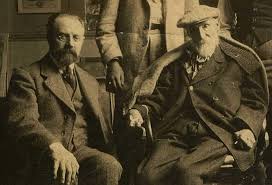
French artists Henri Matisse and Auguste Renoir were close friends and frequent companions, even though Renoir was twenty-eight years older than Matisse. During the last several years of his life, Renoir was virtually crippled by arthritis; nevertheless, he painted every day, and when his fingers were no longer supple enough to hold the brush correctly, he had his wife, Alice, attach the paintbrush to his hand in order that he might continue his work. Matisse visited him daily. One day, as he watched his older friend wincing in excruciating pain with each colorful stroke, he asked, “Auguste, why do you continue to paint when you are in such agony?” Renoir’s response was immediate, “The beauty remains; the pain passes.” Passion for his art empowered Renoir to paint until the day he died. Those who continue to admire the enduring beauty of his smiling portraits, his landscapes, his still-life studies, will find no trace therein of the pain required to create them. Most will agree that the temporary cost was worth the enduring result.


Our readings today give us the theme of putting what is eternal over what is temporal, what is true, good, and beautiful, what endures forever, over what will pass away, like dust in the wind. But the problem is that this is very difficult for us. The power of what is visual, what is seen, what is pleasing to the physical senses, what is urgent (regardless of whether it is important) and short term, immediately in front of us, claims a great, even overwhelming, demand on our attention.

But our readings are trying to pull us out of this materialistic, temporal mindset and fix our attention on what is higher, of higher reality, higher importance, higher dignity, and requires a higher level of priorities to understand, believe, and practice.

In our gospel reading, Jesus is giving us the true understanding of what it costs to be his disciple. People want to call themselves Christian, and claim the reward of being Christian, without wanting to understand the cost, consider the cost, and pay the cost. They want Christianity on their own terms, and that’s not at all how Christianity works. As someone said, “All are welcome, but on Christ’s terms, not on their own.” And it’s not that Christ’s terms have become more strict, more out of touch with society, but rather that society has become more out of touch with Christ’s terms, the cost of what takes to make our lives about what is above, resplendent with divine wisdom, rather than the dust on the wind that is what the world wants us to focus on.

In the first part of our gospel reading, Jesus teaches that he has a greater calling on his disciples than even the relationships of family. In ancient Israel, family was everything, who your family is was who you are, your role in society, how you were related to Israel, the ancient hereditary Father of the Israelites. This is why genealogies were so important in the bible and in Israel. And the only thing more important than one’s family was God himself. So for Jesus to teach that “He who loves father or mother more than me, is not worthy of me; he who loves son or daughter more than me, is not worthy of me” is to say that Jesus is the one thing more important than family; Jesus is revealing his divine identity, by taking this divine prerogative of being the one thing more important than family. In fact, in other places of the gospels (“ For whoever does the will of my Father in heaven is my brother and sister and mother” Mt 12:50), Jesus teaches that one’s spiritual family of the Church is more important than one’s blood family of the flesh; and its no wonder why he attracted attention, both positive and negative.

Jesus then teaches “Whoever does not carry his own cross and come after me cannot be my disciple.” We’ve heard this many times. In the time of the early Church, when Christians were persecuted and executed for their faith, this could have been taken literally. To be a disciple, you had to accept that you have to hold to this faith all the way. At many times during the Church’s history, we see Christians not only executed, but their property confiscated, their professional credentials and opportunities disappear, their public reputation and privileges destroyed. And we see this script being replayed today, not only in other countries where Christians are literally executed, but even in our own society. Christian bakers and venue owners are targeted for refusing to cooperate in supporting same-sex marriage, medical staff are persecuted for refusing to participate in (or even criticize) abortion or transgender affirmation, and the Little Sisters of the Poor are being sued by the Pennsylvania attorney general for the seventh time (after they’ve been exonerated in 6 previous lawsuits) for refusing to include contraception in their employee healthcare packages. To be Christian is to lay all of what we are and all that we have on the altar of God, to be sacrificed if called to do so for the sake of faithfulness to the kingdom of heaven.

But since many of us will hopefully not be called to such explicit examples of carrying the cross of the faith, we can also understand this requirement as crucifying those things in our life—our evil habits, our unhealthy attachments, our disordered attractions—that are incompatible with the call to holiness and the teaching of the Church. That doesn’t mean that these things aren’t good. Families are good. Our reputation, our businesses we have built up, our money and resources and security, these are all good—even some of our attachments and attractions, although they might be wounded and distorted, and need to be healed to be healthy and holy. But nothing else is the ultimate good, which is God. We have to put first things first, and other things afterward. If we put secondary things in the place that only God should be, we lose everything.

Jesus then teaches his disciples that this is a high calling, the very highest demand, and before deciding to be a Christian, it is foolish to start if you’re not going resolve to take it all the way to the finish, come what may (as a man considering building a tower, or a general considering engaging in battle). If you quit, or compromise, what it means to be Christian, what the Christian faith teaches and requires, you lose the only thing that matters, and you also become a stumbling block for others. As Yoda said to Luke Skywalker, “Do, or do not; there is no try.” If we tell ourselves we are merely trying, it’s a preparation to have an excuse for failing, instead of fully committing everything to what is required.

Dietrich Bonhoeffer, the Lutheran minister who died resisting against the Nazi’s, talked about cheap grace: “Cheap grace is the preaching of forgiveness without requiring repentance, baptism without church discipline, Communion without confession, absolution without personal confession. Cheap grace is grace without discipleship, grace without the cross, grace without Jesus Christ… Costly grace is the treasure hidden in the field; for the sake of it a man will go and sell all that he has. It is the pearl of great price to buy which the merchant will sell all his goods. It is the kingly rule of Christ, for whose sake a man will pluck out the eye which causes him to stumble… It is costly because it costs a man his life, and it is grace because it gives a man the only true life. It is costly because it condemns sin, and grace because it justifies the sinner.” So, what we might call the “bad news” is that there is a high cost to identifying oneself as a Christian, and only those who are all-in deserve the name. But the good news is that we receive the grace to do exactly that, if we surrender ourselves completely to it, to allow God to work on us, perfect us, and unite us to the incredible heavenly beauty and joy of his own divine life.

Our first reading expounds on the beauty of the heights of divine wisdom and truth we are called to center our life on, and the utter difficulty, or rather impossibility, of this without God. “For the deliberations of mortals are timid, and unsure are our plans. For the corruptible body burdens the soul and the earthen shelter weighs down the mind that has many concerns. And scarcely do we guess the things on earth, and what is within our grasp we find with difficulty; but when things are in heaven, who can search them out? Or who ever knew your counsel, except you had given wisdom and sent your holy spirit from on high?

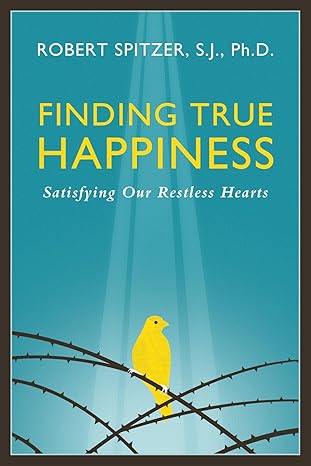
Again, not that our physical nature is evil, but it distracts us from what is most important. Our bodies are good. God gave us our bodies. And Jesus even united himself to our bodily nature to restore the goodness of our human nature, which is body and soul as a unity of a human person. Fr. Robert Spitzer wrote a beautiful book called, “Finding True Happiness,” which, among other things, outlines four levels of happiness we pursue and enjoy, from the lowest and most immediate gratification that flees as soon as the act is completed, to the highest and most abstract levels of happiness, which give us an enduring, fulfilling happiness. But to attain the higher, more spiritual levels, we often have to say “no” to the lower, more physical levels.


Our psalm today has the beautiful line, “Teach us to number our days aright, that we may gain wisdom of heart.” When we contemplate the reality that we have a limited amount of time to become what we will be forever, either holy or hell-bound, it should inspire us to always be moving upward. Blessed Carlo Acutis, a young person who is being canonized as a saint this weekend by Pope Leo XIV, said, “I die serene because I have not wasted even a minute of my life in things God does not like.” He had a great devotion to young saints, and now he is one of them.

And lastly, our second reading from one of the shortest books in the bible, Saint Paul’s letter to Philemon. It is one of the letters written by Paul while in prison. And in prison, Paul meets and converts a man named Onesimus, who was a slave who fled from his master Philemon, who Paul knows, as he was a prominent Christian in the community of the Colossians. And so Paul is writing to Philemon not only to tell him, “Hey, I just found your escaped slave,” but also, “Hey, I’m sending your escaped slave back to you as a member of the church, a brother in Christ, who is dear to my heart, so treat him as you would treat me.” Obviously, this is going to make for an awkward reunion. Ordinarily, Onesimus would be flogged and branded. But Paul is reminding Philemon that our spiritual relationships, such as brothers and sisters in the family of Christ, as children of God our Father, take a higher place than our relationships in the flesh. Also, note that Paul says, “I appeal to you for my child, Onesimus, whose father I have become…” for those who condemn Catholics for calling priests their spiritual “father.”

And so again, to end with this example from Saint Paul, we must put the high demand, even sacrificial demand, of the Christian faith, first in our lives, the solid rock foundation of our lives. We must be Christian first, and everything else we are, we do, and we have in our lives is to serve, witness, and reinforce our Chrisitan identity, over all the things of this fallen world, and our temporary existence as part of it. We are called to be in the world, but not of the world, witnessing to the world by the faith, hope, and love of our Christian life.