Solemnity of the Body and Blood of Christ – June 22, 2025 (Year C) go to readings
Genesis 14:18-20
Psalm 110:1, 2, 3, 4
1 Corinthians 11:23-26
Luke 9:11b-17
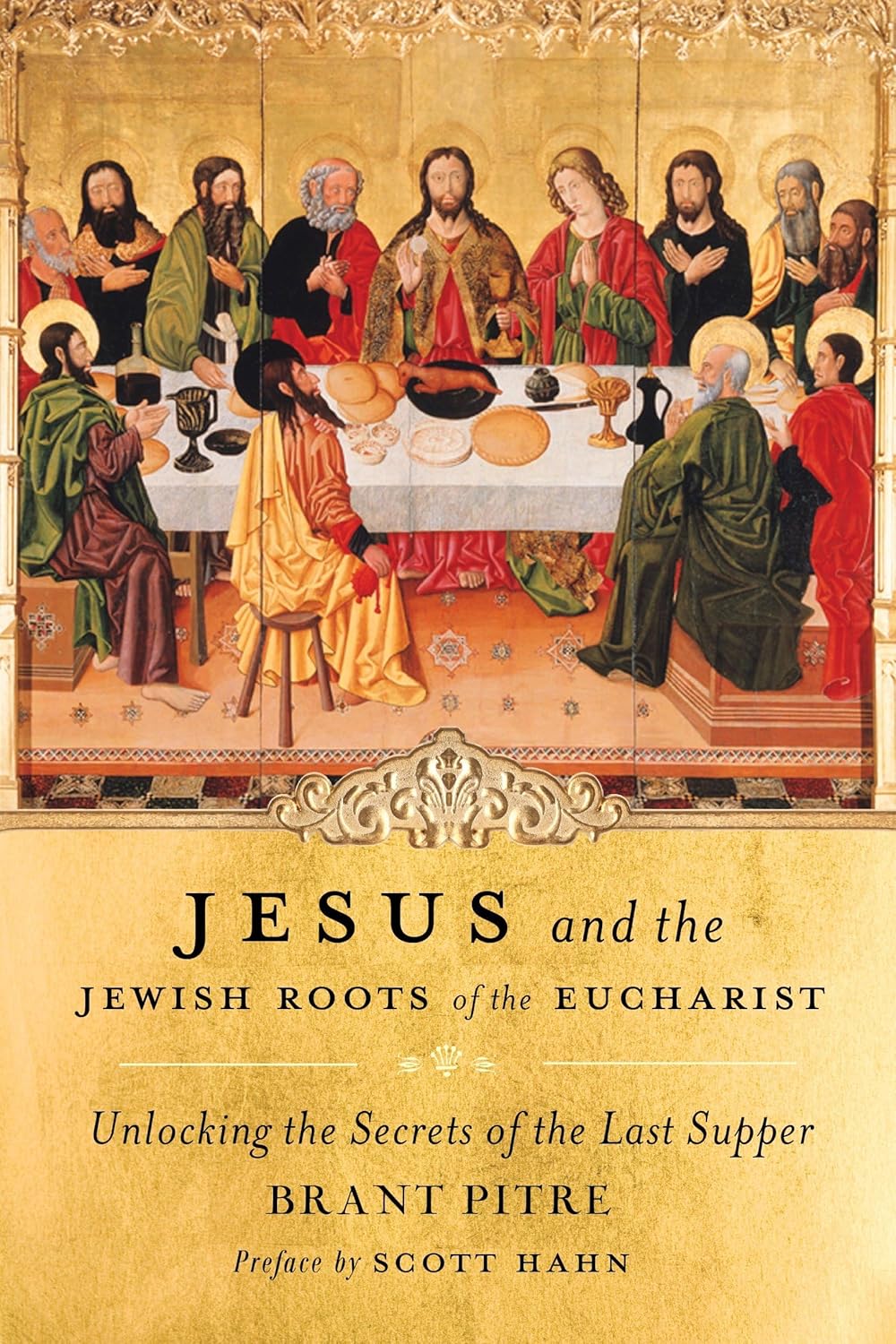
“Behold God’s Love for You!” In his book, “Jesus and the Jewish Roots of the Eucharist,” Catholic author Dr. Brant Pitre poses the question, “Why did the early Christians so strongly believe in the real presence of Jesus in the Eucharist, and yet modern Christians struggle with this belief? And he proposes the answer that it is “because the early Christians knew the Jewish scriptures, the Old Testament, better than most modern Christians do.” And in his book, he traces the Eucharist along three threads that weave through the Old Testament. He looks at the Passover Lamb, the Manna in the wilderness, and my favorite one, the bread of presence in the Holy Place in the Temple.
To make a long story less long, the proper translation of the Jewish “lahem ha panim” is “the Bread of the Face of God.” It was a visible presentation of the invisible God, and it was twelve cakes of bread, a grain offering, also called an oblation, on a golden table, also with a flagon of wine, that were always to be present in the Holy Place with the golden lampstand. The golden lampstand, in Hebrew, a menorah, was always lit in the presence of the Lord, represented by the mercy seat on the golden box that was the ark of the covenant. And the bread and wine were an offering to the Lord by the priest on behalf of the children of Israel as an everlasting covenant, says the book of Leviticus.
Here is my favorite part. On the major pilgrimage feasts of Jewish Tradition (Passover, Pentecost, Tabernacles), all Jewish men were required to go to the Jerusalem Temple. In fact, the law didn’t just say they were required to go to the Temple, but they were required “see the face of the LORD”. How many psalms are there of an impatient pilgrim on his journey to Jerusalem singing, “when may I come to see the face of God?” And on these feasts, the temple priests would solemnly carry the table of the holy bread, from the holy place in the Temple to the outer courts, and while they lifted up the table, they would proclaim, “Behold God’s love for you!”
The holy bread of the presence of God was called the bread of the covenant, not a sign or symbol of the covenant, along with the wine that was poured out as a libation offering. The bread made present the invisible God, as it was a promise of the invisible temple of which the visible temple was a participation and promise. The bread, before it was offered, could be placed on any surface, but after it was consecrated, it was the miraculous food of the holy place, and could only be laid on a surface of gold.
Toward the end of this chapter, Dr. Pitre raises two points: First, in the Holy Place in the temple, as we said, there was the gold box of the presence of God, whom we would call God the Father; there was the lampstand, the tongues of fire, always present with the ark of the Lord, who do we associate with tongues of Fire? The Holy Spirit. And so we have the Father, the Holy Spirit, and this “bread of the presence of God,” the bread of the everlasting covenant, so this would be…God the Son. We have the Holy Trinity presented in the Holy Place in the Temple way back in the beginnings of the Old Testament! And what do we have front and center in the holiest place of a Catholic sanctuary? A gold box! And what is always close to the gold box in every Catholic sanctuary? A sanctuary candle, always lit in the presence of the Lord. And what do we have on the altar in the Eucharist in every Catholic sanctuary? The bread of the presence of God, and the offering of wine. The sanctuary is based on the holy place of the Temple, which was based on the image God showed Moses in constructing the Tent of Meeting.
In the Passover, the tradition would have been to have a lamb (also called “the body”) on the table. And of course, one of the criteria of completing the Passover is not just that you sacrifice the lamb, but you have to eat the body of the lamb. If the New Testament lamb of the Passover—Jesus, the Lamb of God, who said that the bread was his body—must be greater than the Old Testament lamb of the Passover, then it can’t be a symbol—it can’t be what Jesus intended—because we have to eat the body of the Lamb, not just a symbol of it. It was pretty clear he intended it when he said, “My body (flesh) is true food and my blood is true drink, and unless you eat my flesh and drink my blood, you have no life in you.”
But more to the point, why didn’t Jesus just identify his body with “the body” of the Passover lamb? That would have been an easier image! But where might Jesus have pulled the notion that a he as a person (a divine person!) can be made present in bread and wine? From the Temple: the sign of God’s real presence to Israel, and the covenant offering from Israel to God.
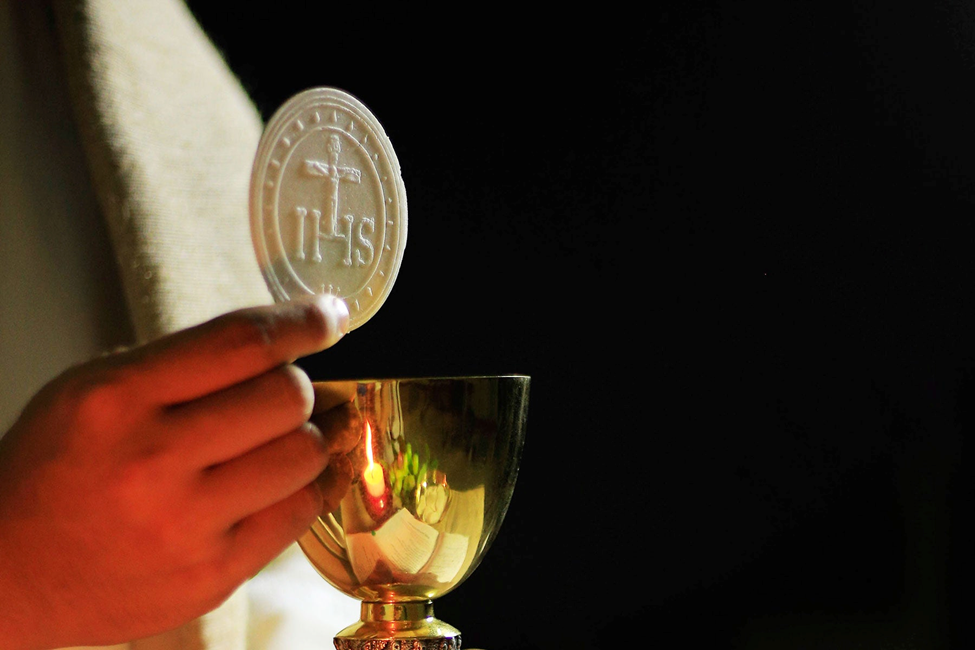
And so, in the Mass, after the people of God chant the Agnus Dei, the Lamb of God, the priest holds up the consecrated bread and wine, the body and blood of Jesus, crucified and resurrected for our salvation, and the priest proclaims, “Behold the Lamb of God!” But also, in my heart as I proclaim that, I’m also thinking, “Behold God’s love for you! Behold the face of the God who loves you so much, that he became human for you, was crucified and died for you, and rose again for you, to send the Holy Spirit upon you, and through that same Holy Spirit, now gives himself to you, to feed and nourish you with the bread that came down from heaven!”
And again, if the Old Testament manna was really understood to be bread from heaven, then the New Testament manna, the Eucharist, must be really understood to be bread from heaven and more, not less. It cannot be merely a symbol or reminder of bread from heaven, it must be a greater reality in the New Testament. It must be more than the miraculous bread that God gave his people in the Old Testament to nourish them as their food for the journey, to strengthen them through their preparations to become His people and live as His people and worship him, set apart, consecrated, as his peculiar and holy people, as a sign and promise for the world.
The Eucharist is more than the manna, and it is more than the sacrificial lamb of the Passover, and it is more than the bread and wine of the Temple that became the presence and the face of God. When we are on our knees receiving the gift of Jesus of Himself in the Eucharist, raised up to draw all men to himself, through the Holy Spirit, when the minister of communion holds up the host in front of you, in that moment of Eucharistic Adoration, and proclaims to you, “The body of Christ,” you should also hear the words in your heart, “Behold God’s love for you,” and you can respond with a reverent and joyful profession of faith, “Amen.”

 The Snarky Vicar